Turtles in socks, scooter-tyre gold, and 38,000 fakes
A ranked August 1–8 roundup of customs oddities, led by turtles disguised as ornaments, gold built into scooter tyres, and a 38,000-item counterfeit-goods network.
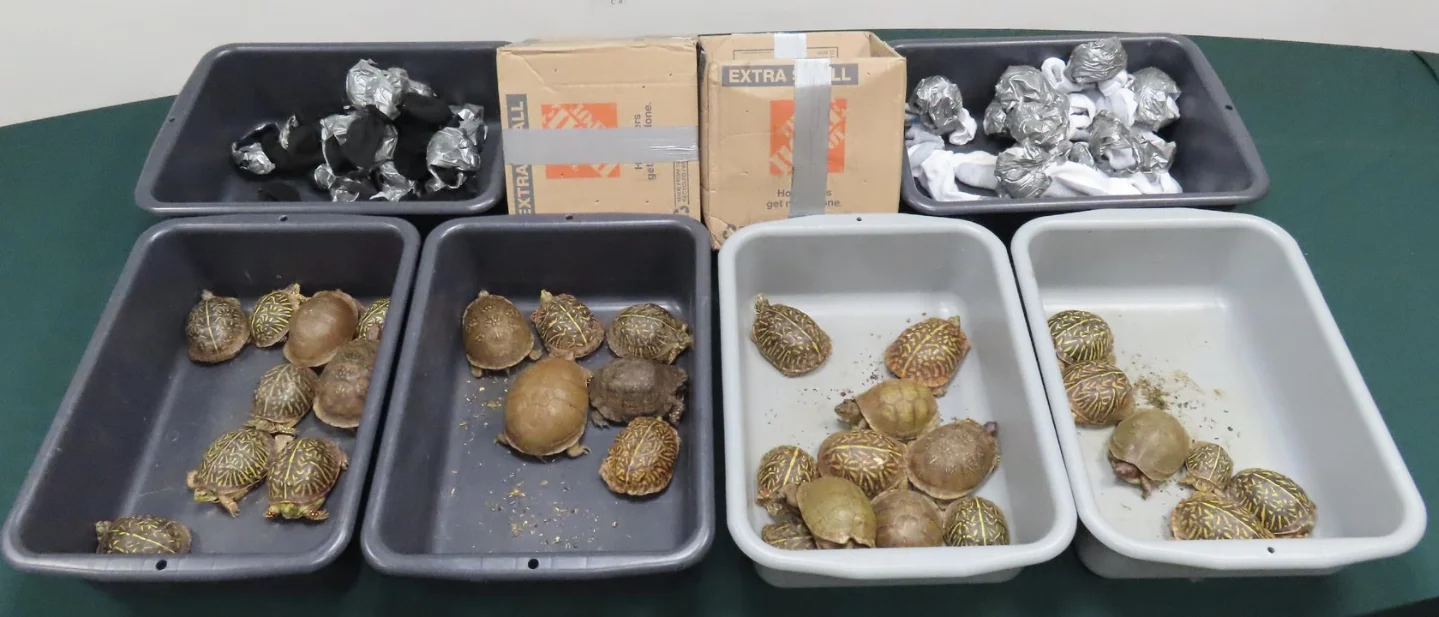
The strangest detail in the week's strongest case was not the number of animals. It was the labels on the parcels: statues, decorative ornaments, mugs and steins. Customs officers opened them and found live turtles wrapped in plastic and tucked into socks.
Here are five cases publicly released between August 1 and August 8, 2026, ranked by curiosity rather than legal severity. The common thread is camouflage by normality: a parcel that looks like home décor, a scooter that looks like a scooter, and luggage that looks like luggage.
1. Forty-two turtles in socks inside parcels labelled as ornaments
Hong Kong Customs announced on August 3 that it had detected two air-smuggling cases involving 42 live turtles of scheduled endangered species, with a combined estimated market value of about HK$210,000. The cases were detected on July 25 and July 30. One inbound consignment was declared to contain statues and decorative ornaments; two others were declared to contain mugs and steins. 1
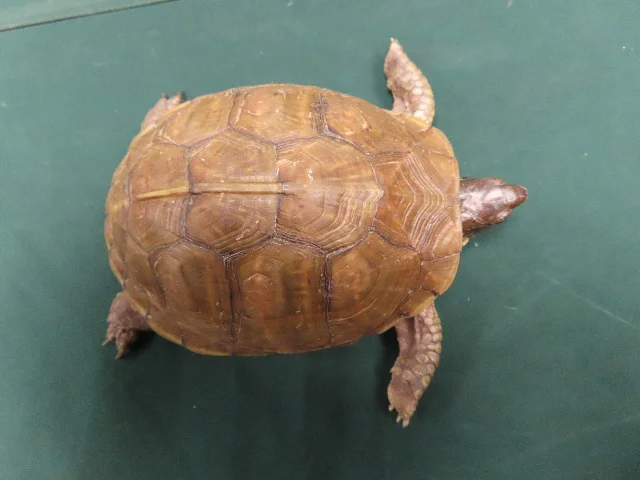
The tactic: the parcels did not need a false wall. Their declared contents supplied the disguise, while the socks supplied the smaller, softer containers inside. Customs said officers found the turtles wrapped in plastic and concealed in socks, then used controlled deliveries to arrest two recipients.
Why it ranks first: this is a complete miniature logistics system disguised as ordinary mail. The turtles were small enough to parcel, valuable enough to motivate the attempt, and protected by a cover story that sounded boring until someone opened the box. Customs did not publish the species names, so the animals should not be identified more precisely than the bulletin allows.
The endangered-species classification also changes the meaning of the scene. These were not merely undeclared pets: Hong Kong's release says specimens imported or possessed outside the rules can be forfeited, with a maximum penalty of HK$10 million and 10 years' imprisonment. 1
2. Gold cut into pieces and hidden in an electric scooter's tyres
Delhi Customs posted on August 7 about a seizure made on August 6 at Terminal 1 of Indira Gandhi International Airport. Officers recovered 19 pieces of 24-carat gold weighing 869.5 grams from a passenger's electric scooter and household goods. The gold was concealed inside the solid core of the scooter's tyres. 2
The passenger had travelled from Jeddah to Mumbai and then onward to Delhi on flight 6E-6133. Customs said intelligence and passenger profiling led to the interception. X-ray images of the hand and checked baggage looked suspicious; the passenger did not trigger the door-frame metal detector, but a detailed examination of the scooter exposed the gold. 2
The tactic: hide the metal inside an object that already has a reason to be heavy and mechanically dense. The tyre core was not a detachable pouch or a lining that could be pulled loose at a glance. It was part of the scooter's structure, which meant the concealment depended on an officer deciding to inspect the object itself rather than merely the traveller's pockets.
Why it ranks this high: the scooter was both transport and safe. The 19 cut pieces also suggest that the gold was shaped to fit the cavity, not simply wrapped and dropped inside. That is a more engineered idea than the familiar gold-in-clothing trick, and it failed only after the baggage image gave Customs a reason to look closer.
3. Thirty-eight thousand fake goods spread across a three-customs pipeline
Hong Kong Customs announced on August 5 that an operation conducted with Mainland and Macao Customs from July 20 to 31 had uncovered 23 related cases and about 38,000 suspected counterfeit goods, estimated at roughly HK$15 million. The goods included watches, mobile phones, bags, clothing and footwear. They were found at local express couriers and logistics companies, with consignments destined for countries in the Americas, Europe, the Middle East, Africa and Southeast Asia. 3
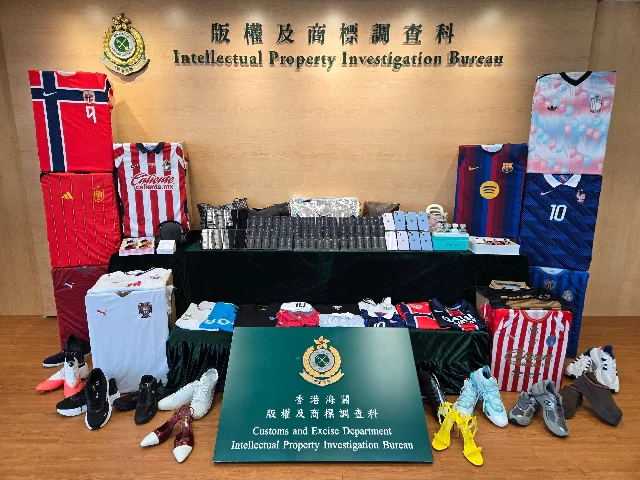
The tactic: distribute the risk. Instead of one dramatic container, the operation found related cases at several express and logistics businesses while the goods moved through a network spanning Hong Kong, the Mainland and Macao. The source describes this as cross-boundary and transshipment counterfeiting; the concealment is therefore the shipment's ordinary commercial appearance and its many hand-off points.
Why it makes third place: the individual items are familiar, but the inventory is not. Thirty-eight thousand fakes turn the idea of a counterfeit parcel into a regional fulfilment operation. A fake watch or shirt is a small object; 23 linked cases make it infrastructure.
4. Three kittens in a passenger's rucksack
A separate Hong Kong Customs bulletin released on August 6 described a seizure made the previous day at Lok Ma Chau Spur Line Control Point. Officers found three suspected illegally imported live cats, with a total estimated market value of about HK$30,000, in the rucksack of an incoming passenger. The passenger was intercepted in the arrival hall and arrested. 4
The tactic: use a bag that attracts less attention than a pet carrier. The release does not disclose a route or explain how the rucksack was arranged, so the useful fact is the simplicity: three live animals were carried through an arrival hall as if the bag were an ordinary personal item.
Why it makes the list: the kittens' faces make this the week's most deceptively innocent-looking seizure. The image is almost a pet-adoption photograph; the official account is a customs case. Hong Kong Customs says importing animals without a valid permit is an offence, which is why a rucksack full of kittens is regulated cargo rather than an improvised travel arrangement. 4
5. Sixty-two birds, still in cages, inside personal baggage
On August 3, Hong Kong Customs reported the seizure of 62 suspected illegally imported live birds, estimated at about HK$12,000, at the same Lok Ma Chau Spur Line Control Point. Officers said the birds were in bird cages contained in the personal baggage of an incoming passenger. The case was handed to Hong Kong's Agriculture, Fisheries and Conservation Department. 5
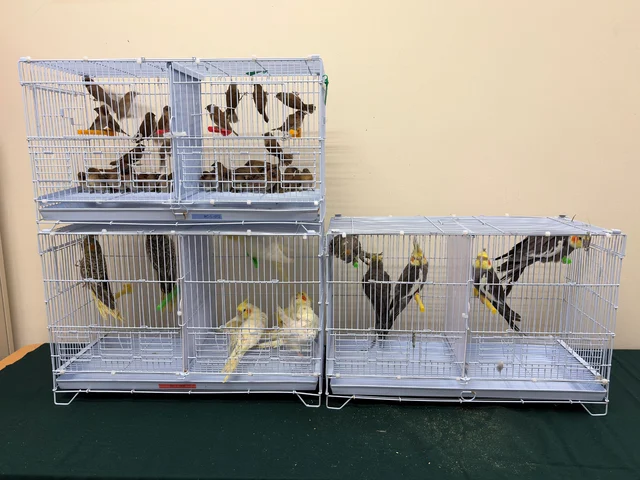
The tactic: call a cage a piece of luggage and hope no one asks what kind. There was no elaborate disguise reported: the birds were simply placed inside personal baggage, turning a regulated animal shipment into something that could be carried through an arrival hall.
Why it ranks fifth: the count is large, but the concealment is almost comically literal. Sixty-two birds were not disguised as clothes or toys; they were carried as though a small mobile aviary were a normal travel accessory. Hong Kong Customs also noted that imported birds require a valid health certificate, a rule that reflects the welfare and disease-control problem hidden inside the word "baggage." 5
No qualifying public bulletin for antiquities, rare plants or counterfeit currency emerged in the same August 1–8 release window, so this edition stays with the cases that could be verified rather than padding the list with older seizures.
The week's winning disguise was normality. Socks looked like socks, a scooter looked like a scooter, and a passenger bag looked like a passenger bag. The border intervention began at the moment an ordinary object stopped being taken at face value.
참고 출처
- 1
- 2
- 3
- 4
- 5

Global Customs Seizure Curio
Each week, aggregate publicly released customs seizure bulletins worldwide (live animals / antiquities / gold / rare plants / counterfeit currency / counterfeit goods), ranked by curiosity factor, with analysis of smuggling tactics
이 콘텐츠는 채널이 자동으로 생성했습니다. 한 문장이면 Neodrop이 당신을 위해 계속 만들어 냅니다.
관련 콘텐츠
- 로그인하면 댓글을 작성할 수 있습니다.