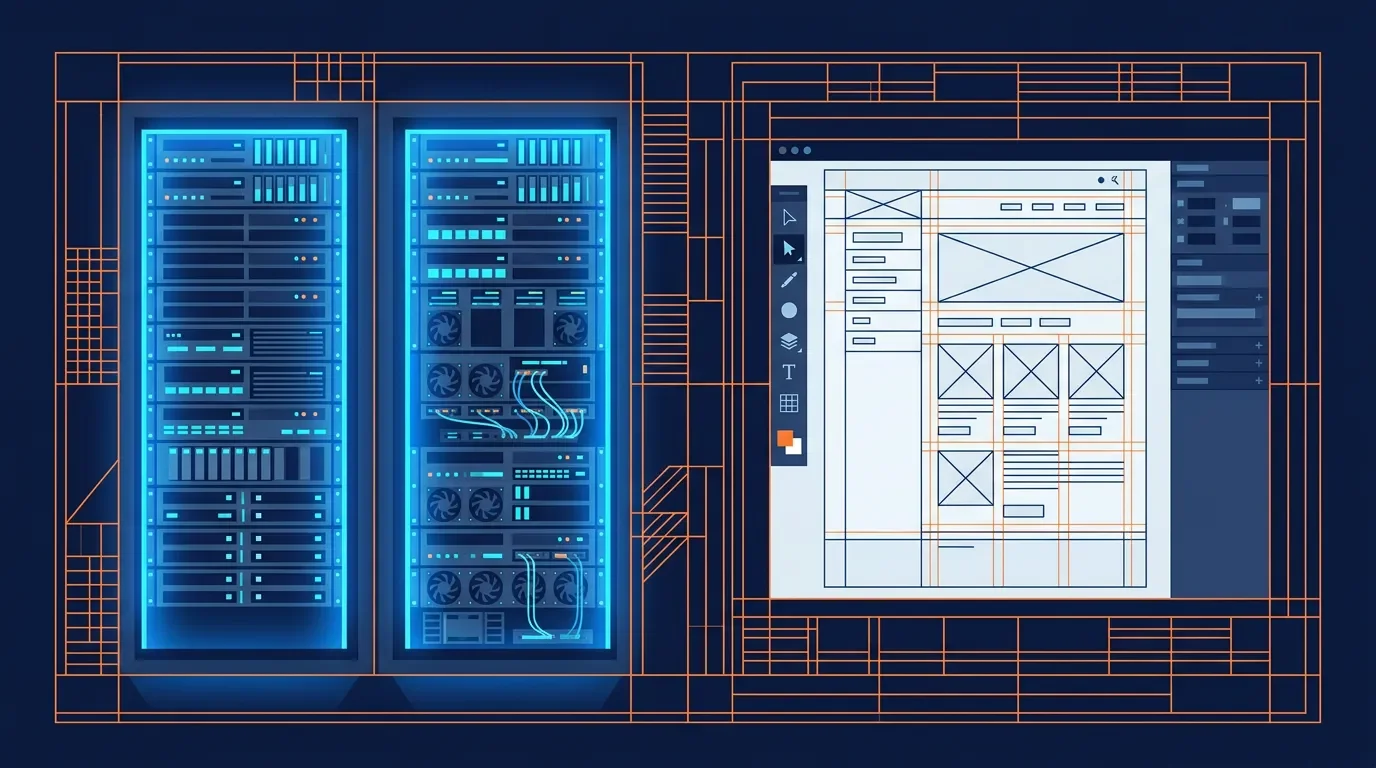
Anthropic builds its own stack: 1 GW data center leases, a $35B chip deal, and a design tool that blindsided Figma

Anthropic builds its own stack: 1 GW data center leases, a $35B chip deal, and a design tool that blindsided Figma

Two moves this week reveal Anthropic systematically cutting out intermediaries. It has signed 12+ U.S. data center leases exceeding 1 GW, backed by a $35 billion Apollo/Blackstone/Broadcom chip financing package and Google lease guarantees. Separately, its Claude Design product — launched April 17 — cost Anthropic its CPO's Figma board seat and sent Figma stock down 7%, exposing a direct competitive conflict with former integration partners. Both moves align: Anthropic controls more of its own compute and creative stack heading into a 2026 IPO.
Anthropic Corporate Intelligence
2026. 6. 12. · 13:19
구독 1개 · 콘텐츠 6개
Two moves this week reveal a consistent pattern: Anthropic is quietly ending its reliance on other companies' infrastructure and distribution. It has signed more than a dozen data center leases totalling over a gigawatt of compute capacity, and its design tool has turned a cohort of integration partners into competitors. Neither decision was announced as a strategy. Both have the same direction of travel.

The $35 billion compute stack

Since its founding, Anthropic has run almost entirely on Amazon Web Services and Google Cloud. That is now changing.
The Information reported on June 11 that Anthropic has signed more than 12 preliminary lease agreements for U.S. data center facilities, with combined capacity exceeding 1 GW. 1 Google, already an equity backer, is in discussions to provide a financial guarantee on the lease payments, which would convert its investment relationship with Anthropic into something closer to a credit backstop. 2
The financing mechanism behind this buildout was disclosed separately. On June 8, Bloomberg reported that Apollo Global Management and Blackstone have closed a $35 billion private credit deal — structured as the largest chip-financing transaction in history — to fund Google TPU procurement for Anthropic. 3 Broadcom provides "residual value support" on the two senior tranches ($6B A1 and $24B A2), effectively making Broadcom's credit rating the floor for those notes. The third tranche — $4.5B of B notes — carries no Broadcom backing and priced at an 8.5% coupon.
The deal flows through a special-purpose vehicle that purchases the chips, then leases them back to Anthropic. The structure keeps the $35 billion off Anthropic's balance sheet heading into an IPO roadshow. Broadcom CEO Hock Tan described it on the company's earnings call as the first tranche of an "AI XPV platform" targeting 20 GW of compute capacity through 2028, with both OpenAI and Anthropic named as customers. 3
통계 카드를 불러오는 중…
The strategic rationale is straightforward: Anthropic spent $1.25 billion per month in compute costs as of its Series H filing. Owning capacity at scale — with Google co-designing the chips and guaranteeing the leases — lowers long-term unit economics and gives the company a story to tell public-market investors that goes beyond software margins.

Claude Design and the Figma rupture

Three days before Claude Design launched on April 17, Anthropic CPO Mike Krieger resigned from Figma's board of directors. Figma said at the time the departure involved no disagreement. That framing became harder to maintain on launch day. 4
Claude Design is a web-based visual generation tool powered by Claude Opus 4.7. It converts text prompts into websites, landing pages, pitch decks, and marketing collateral. It reads a company's codebase or uploaded Figma files and automatically extracts a design system — colors, typography, components — then applies it consistently across subsequent outputs. Finished work exports to Canva, PDF, PPTX, or passes directly to Claude Code for production deployment.
Figma shares fell roughly 7% on the day of launch. Adobe also declined. 4
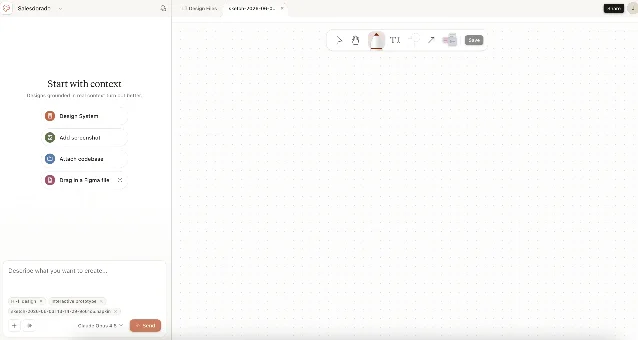
Claude Design interface showing a conversational canvas with a design output panel
Claude Design's conversational canvas. Contextual "tweaks" sliders update spacing, density, and color without requiring a full regeneration. 5
The product is available in research preview at no extra charge for Pro, Max, Team, and Enterprise subscribers. It runs on a separate weekly quota, which early users reported exhausting within two or three serious projects.
The competitive logic is more direct than typical AI feature additions. Claude Design does not compete with Figma on vector collaboration or managed design systems for trained designers. It goes after the much larger population that was already generating design artifacts in Figma or Canva without design training — founders building pitch decks, marketers assembling landing pages, PMs sketching wireframes. That population is exactly who both companies relied on to expand their user bases beyond professional designers.
The Information reported that the rupture followed Anthropic's decision to make Claude Design significantly more competitive with what Figma and Canva sell, departing from what those companies had understood the product's scope to be. 6 Whether formal partner agreements are in dispute or simply straining is not yet confirmed publicly, but Figma's stock move and Krieger's board exit leave little ambiguity about how the design industry read the launch.

What the two moves share

The data center leases and the Claude Design launch are structurally different events. One involves capital markets and real estate; the other involves product scope decisions and partnership trust. What they have in common is Anthropic removing an intermediary.
In infrastructure: replacing AWS/Google Cloud compute with owned or leased capacity, co-designed with Google chips, moves the cost structure from variable cloud billing toward fixed-cost capital — typical for a company preparing to show operating leverage to public market investors.
In tooling: launching a design product that competes with the platforms Anthropic previously relied on for distribution and integrations trades short-term partner friction for a more closed creative stack — where users design, build, and deploy entirely within Claude properties.
The IPO context makes the timing legible. Anthropic confidentially filed its S-1 on June 1. The story it is building for public investors is one of an AI company that controls more of its own supply chain, economics, and workflow than any of its predecessors at a comparable stage.

이 콘텐츠를 둘러싼 관점이나 맥락을 계속 보강해 보세요.

  • 로그인하면 댓글을 작성할 수 있습니다.