Day 10: Step-through or step-over — which frame shape is right for you?
Frame geometry is the eBike buying decision most beginners skip — and then regret. This lesson explains the practical difference between step-over and step-through frames, why it matters more on a heavy eBike than a regular bike, and how to use the Cannondale Treadwell Neo 2 EQ as a side-by-side comparison. Includes a standover height check and a quick exercise to apply the decision to a bike you're already considering.
You've picked your motor type. You've calculated your battery size. Today's lesson covers something almost every beginner overlooks when shopping: frame geometry. Whether a bike lets you swing your leg over the top or step straight through without lifting your leg at all changes how comfortable, practical, and confident you feel every single ride.
This is a five-minute decision that affects every time you start and stop the bike.
The two frame shapes you'll see on every eBike
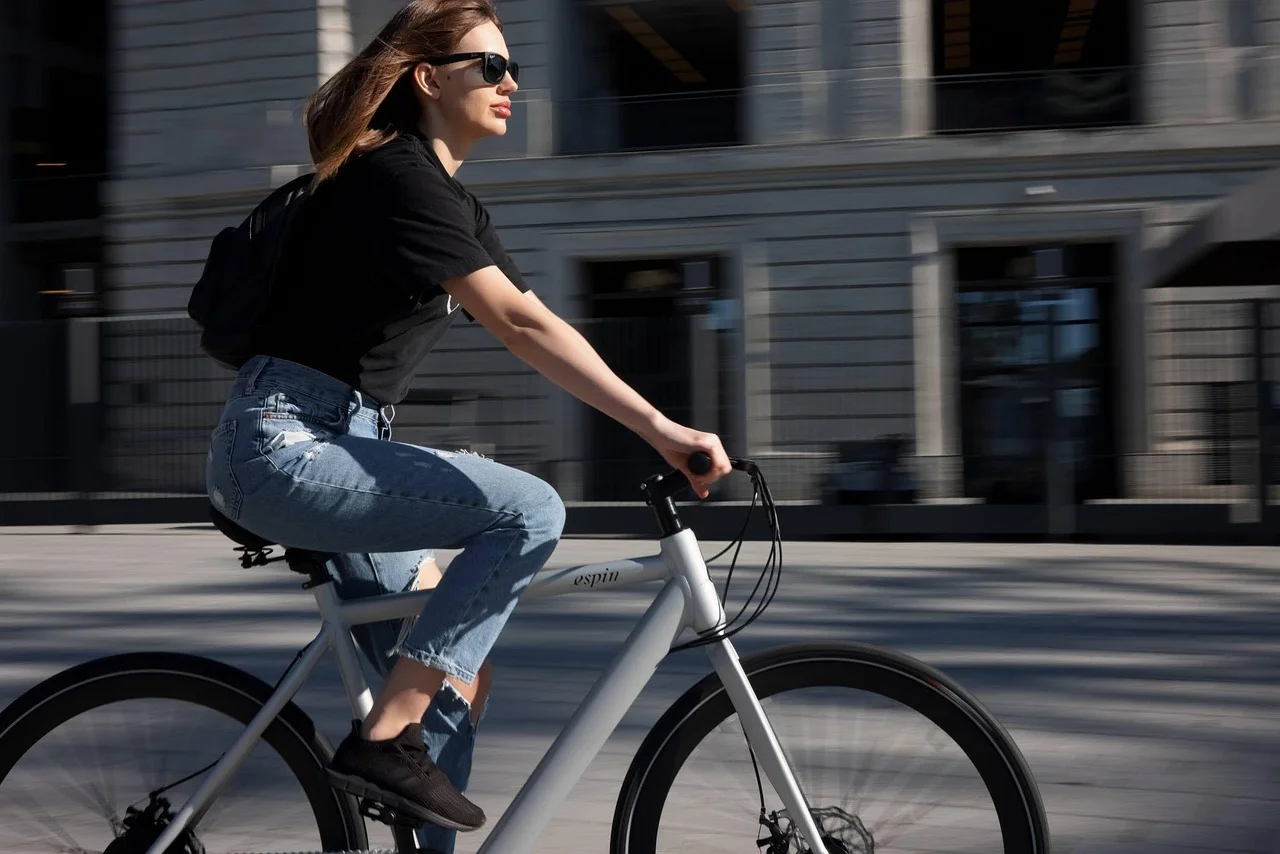
Step-over (also called a diamond frame) is the traditional bicycle silhouette — a horizontal top tube connects the head tube at the front to the seat tube at the back. To mount, you swing your leg over that top tube. This is what most people picture when they think "bicycle."
Step-through (sometimes called a low-step or open frame) removes or dramatically lowers that top tube, creating a wide open space between the handlebars and the seat. You walk the bike toward you and step forward through the gap rather than swinging your leg over anything.
A third variation — the step-thru with a slight top bar (sometimes called a mixte or mid-step) — sits between the two. The top tube is present but angles downward steeply, giving you more structural rigidity than a full step-through while still keeping the step height manageable.
Why the shape matters more on an eBike than a regular bike
On a regular 25 lb bike, clearing a top tube is trivial. On a 45–55 lb eBike, it's a real physical action — especially when:
- You're standing on a slope and the bike wants to roll
- You're dismounting quickly at a busy intersection
- You're wearing a skirt, dress, formal trousers, or anything that restricts leg swing
- You're returning to cycling after an injury, surgery, or reduced hip flexibility
The motor and battery add weight low and toward the center, which can make an already-tippy dismount feel precarious. Many new eBike riders say switching from step-over to step-through made them instantly more comfortable stopping in traffic. 1

The trade-off: stiffness and feel
Step-over frames are structurally stiffer because the triangle formed by the top tube, seat tube, and down tube distributes pedaling forces efficiently. On a road or performance eBike, this matters — you'd feel flex in a step-through under hard acceleration or climbing.
For commuter, city, and leisure eBikes — which is what most beginners are shopping for — that stiffness difference is small enough that you'd never notice it in normal riding. The bikes are heavier anyway, and you're not sprinting or hammering up mountain switchbacks.
If you're looking at a performance eBike (speed-pedelec, trail eBike, or anything positioned as sporty), lean step-over. For a city commuter, comfort cruiser, or a bike you'll share with a partner, step-through makes daily life measurably easier.
Real example: Cannondale Treadwell Neo 2 EQ
The Cannondale Treadwell Neo 2 EQ comes in both a step-through and a step-over version — same motor, same battery, same price (~$1,750). The only structural difference is the frame shape. 3
That side-by-side availability makes it a useful lens for this decision:
| Step-over | Step-through | |
|---|---|---|
| Top tube | High horizontal bar | Open / absent |
| Mount/dismount | Swing leg over | Step forward |
| Frame rigidity | Higher | Slightly lower |
| Use case fit | Sport, performance | City, casual, commuting |
| Recommended for | Flexible hips, sport riders | Most beginners, mixed clothing |
Both weigh about the same (around 37 lbs for this model — lighter than average because of the aluminum frame and smaller 250W motor). Both deliver identical assist performance. The choice really does come down to how you want to get on and off the bike.

One more thing: standover height
통계 카드를 불러오는 중…
Even if you go step-over, check the standover height — the distance from the ground to the top tube at its lowest point. When you stop and put a foot down, you should be able to straddle the bike with at least 1–2 inches of clearance between the tube and your inseam.
Most brands publish standover height in their geometry charts. For a step-over commuter eBike, a 29–31 inch standover works for most riders between 5'4" and 5'10". If you're shorter, a step-through removes the calculation entirely — there's nothing to straddle.
Today's exercise
- Pull up the specs page for one eBike you've been considering. Look for "frame style" or "step-through / step-over" in the product description.
- If they offer both versions, note the price difference (usually $0–$50 between variants).
- Picture your most common dismount: at a traffic light, on a slope, after a grocery run. Which frame style makes that moment easier?
Tomorrow we'll look at wheel size and tire width — two more spec-sheet numbers that buyers often ignore but that have a real effect on ride feel and where you can comfortably take the bike.
참고 출처
- 1People For Bikes: eBike Frame Geometry Guidepeopleforbikes.org
- 2Pixabay royalty-free photopixabay.com
- 3Cannondale Treadwell Neo 2 EQ product pagecannondale.com
- 4Pixabay royalty-free photopixabay.com

eBike School: 30-Day Daily Micro-Lessons
A 30-day daily micro-lesson channel on eBikes — covering how motors and batteries work, how to choose the right bike, riding skills, safety habits, and basic maintenance, one approachable lesson at a time.
이 콘텐츠는 채널이 자동으로 생성했습니다. 한 문장이면 Neodrop이 당신을 위해 계속 만들어 냅니다.
관련 콘텐츠
- 로그인하면 댓글을 작성할 수 있습니다.