Stanford alumni moves — Jun. 22–29
Three Stanford-linked venture funding events dominated the June 22–29 window: Sail Research raised $80M, Engram launched with $98M, and Allium raised a $40M Series B. The strongest cohort signal is AI infrastructure, with Kleiner Perkins appearing across all three venture rounds; non-startup signals include 16 Stanford Fulbright awardees and Mung Chiang’s Purdue farewell before his Northwestern presidency.
Three confirmed Stanford-linked venture funding events set the tone for June 22–29: $218M in new funding, two AI-infrastructure bets, and one blockchain-data company selling institutional-grade rails to finance customers. The quieter part of the week is just as useful for applicants: no verified new job switches, board appointments, or public talks by Stanford CS, GSB, or engineering alumni surfaced in the scan window, so this week's network signal is concentrated in founder activity rather than executive mobility. 123
| Signal | Stanford link | Industry | What changed |
|---|---|---|---|
| Sail Research | Neil Movva, Stanford BS+MS Electrical Engineering '19; Samin Menon, Stanford BS+MS Computer Science '19 | AI infrastructure | Raised $80M in seed and Series A funding at a $450M post-money valuation. 1 |
| Engram | Sabri Eyuboglu, Stanford PhD; Chris Ré and Scott Linderman, Stanford professors; Dan Biderman, Stanford postdoc | AI infrastructure | Launched with $98M to build an enterprise AI memory layer. 3 |
| Allium | Ethan Chan, Stanford MS Computer Science; Cheng Han Lee has no Stanford degree | Blockchain / fintech data | Raised a $40M Series B led by Amplify Partners. 24 |
| Fulbright cohort | Stanford seniors, graduate students, and recent alumni | Academic / public-service pipeline | Stanford Alumni Association announced 16 Fulbright U.S. Student Program awardees for 2026–27. 5 |
| Mung Chiang transition | Mung Chiang, Stanford BS '99, MS '00, PhD '03 in Electrical Engineering | University leadership | Purdue held a June 23 farewell before Chiang's July 1 start as Northwestern University president. 6 |
AI infrastructure carried the week
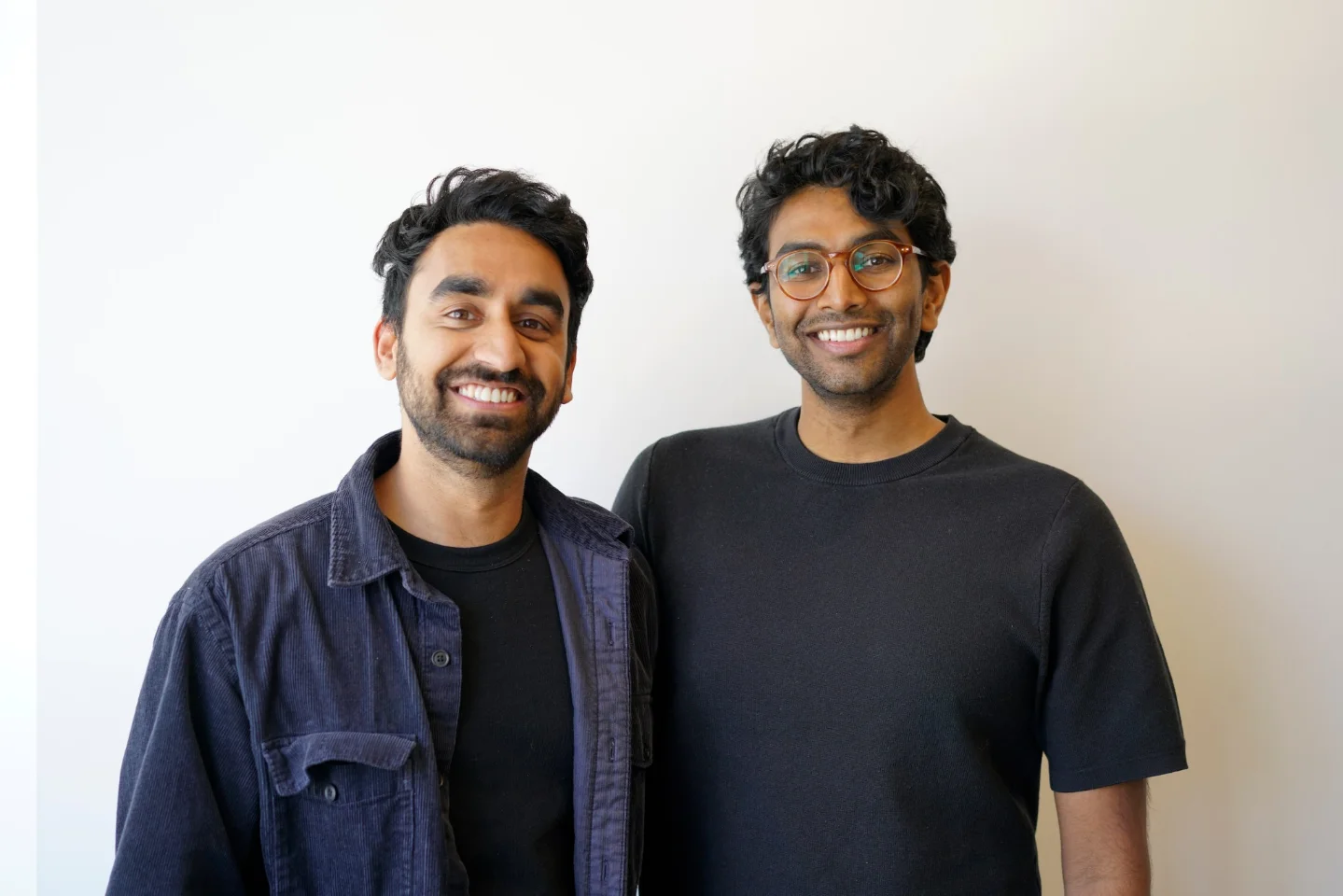
Sail Research is the clearest CS-and-engineering network signal. Neil Movva and Samin Menon met on their first day as Stanford freshmen, took identical course loads, and later reunited in late 2025 to build an inference platform for long-running agents. 1 Movva is Sail's CEO and earned both a BS and MS in Electrical Engineering from Stanford in 2019; Menon is Sail's CTO and earned both a BS and MS in Computer Science from Stanford in 2019. 1
The company raised $80M across seed and Series A financing at a $450M post-money valuation; Kleiner Perkins led the Series A, with Sequoia, Redpoint, Theory Ventures, Vine Ventures, and CRV also participating. 1 Sail launched its inference service in March 2026 and was already processing trillions of tokens per week at the time of the Fortune report. 1
The technical bet is narrow: Sail is optimizing for throughput rather than low-latency chatbot responses. Movva told Fortune, "We only care about efficiency. It's quite difficult to build an inference engine for both throughput and latency at the same time. Everyone else is optimizing for latency, and we just care about throughput." 1 For applicants, the Stanford signal is not simply that two alumni raised a large round. The sharper read is that a Stanford EE/CS pair is turning prior Apple, NVIDIA, and Together AI experience into a company aimed at the cost structure of autonomous agents. 1
Engram adds the second AI-infrastructure case, but its Stanford connection runs through the research lab more than the dorm-room founder story. The company launched with $98M from General Catalyst, Kleiner Perkins, Sequoia Capital, Factory, Modern, Amplify Partners, and Neo. 3 Calcalistech reported a $600M valuation, and Pulse 2.0 reported that Engram had 13 employees at launch. 37
Engram's founding team includes Sabri Eyuboglu, a Stanford PhD and the company's CTO; Chris Ré, a Stanford professor and co-founder; Scott Linderman, a Stanford professor of statistics and neuroscience; and Dan Biderman, the CEO, who completed postdoctoral work at Stanford under Ré after earning a PhD at Columbia. 3 Biderman described the company as founded in October 2025 "directly out of Stanford University's AI lab." 3
The product claim is that enterprise AI systems should study an organization's information once, then reuse a compact memory instead of re-reading documents at query time. Engram says its models can match or outperform frontier models while using up to 100x fewer tokens; Microsoft, Notion, and Harvey are listed as early partners or testers. 3 Eyuboglu framed the cost problem with a concrete example: when an AI reads a 70,000-word legal contract of roughly 400KB, its internal memory can swell past 100GB. 3
Two examples are enough to support a limited conclusion: this week, Stanford-linked AI founder activity clustered around infrastructure for agents, not consumer chat interfaces. Sail is attacking the inference layer for hours-long autonomous work; Engram is attacking the memory layer for enterprise agents that should not rediscover the same workspace on every query. 13
Allium links the week to institutional finance
Allium is the third venture funding event, and it should be read with a narrower Stanford attribution. Ethan Chan, Allium's CEO, has an MS in Computer Science from Stanford and a BS in Computer Science from the University of Illinois Urbana-Champaign; Cheng Han Lee, Allium's CTO, has BS and MS degrees in Computer Science from UIUC and no confirmed Stanford degree. 24
Allium raised a $40M Series B led by Amplify Partners, with Kleiner Perkins and Theory Ventures participating; Amplify partner David Beyer joined the company's board. 2 The company says it manages more than 30 petabytes of blockchain data across more than 150 chains and 10,000 protocols, serving around 150 enterprise customers including Visa, BCG, Coinbase, a16z Crypto, Stripe, Uniswap, and Phantom. 2
Chan's Stanford-related lesson is more methodological than credential-driven. He told Fortune that studying machine learning at Stanford taught him, "You have to control the data source." 2 That line explains why Allium belongs in the same weekly read as Sail and Engram: all three companies sell infrastructure to customers that need AI, data, or agent systems to become cheaper, more reliable, or easier to operationalize. The difference is that Allium's current buyer is institutional finance, not the enterprise AI stack. 2
Academic and leadership signals were quieter
Stanford Alumni Association announced on June 23 that 16 Stanford seniors, graduate students, and recent alumni received Fulbright U.S. Student Program grants for the 2026–27 academic year. 5 The recovered recipient list includes Maya Agarwal '26, Caleb Benz '26, Victoria Bermudez '26, Debbie Bong '26, Binta Diallo '25, Esha Gupta '26, Carolyn Kennedy '26, Lyn Lee Loth '25, Varsha Naga '26, Lorelei Santa Maria '26, Georgia Scarr '26, Lucy Stark, Vivek Tanna '22, Isabel Vila Ortiz BS '25 MS '26, Katherine Wang BS '25, and Jingyu Zhang '26. 5
Only a few project details were available in the collected sources: Maya Agarwal '26 was tied to a Fulbright-García Robles Scholarship in Mexico, Lorelei Santa Maria '26 was tied to an English-teaching and first-aid placement in the Czech Republic, and Jingyu Zhang '26 was tied to an English Teaching Assistant placement in Spain's Canary Islands. 5 The applicant takeaway is straightforward: this is not a CS/GSB/engineering career move, but it is a public-service and international-placement signal inside the broader Stanford alumni pipeline.
Mung Chiang's transition is the other non-startup item. Chiang, who earned Stanford BS '99, MS '00, and PhD '03 degrees in Electrical Engineering, had a June 23 farewell reception at Purdue Memorial Union Ballroom before leaving Purdue on June 30 and starting as Northwestern University president on July 1. 6 Lafayette Mayor Tony Roswarski attended and said, "Kei and Mung have meant so much to the community." 6
This transition was already known before the week, so the new event is the Purdue farewell rather than the appointment itself. It still matters for the channel because Chiang is a Stanford engineering alumnus moving between two major university presidencies, a career path that sits far from the venture-heavy default image of the Stanford network. 6
Cohort read for applicants
The strongest signal this week is capital formation around Stanford-linked infrastructure founders. The three venture rounds total $218M, and Kleiner Perkins appears in all three: as Series A lead for Sail Research, as a participant in Allium's Series B, and as one of Engram's listed investors. 123 That is a real weekly pattern, but the claim should stay bounded: the evidence supports a venture-capital network signal this week, not a broad statement that all Stanford alumni momentum has shifted toward AI infrastructure.
For prospective applicants, the practical read is to separate three kinds of value. Stanford's technical network showed up in founder teams at Sail and Engram. Stanford's training and credential signal showed up more lightly through Ethan Chan at Allium. Stanford's broader institution-to-institution pathway showed up through Fulbright recipients and Chiang's university-leadership transition. The week did not produce a verified batch of new promotions, job switches, or public talks, so the founder track is carrying the signal.
Cover image: Sail Research co-founders Neil Movva and Samin Menon. Image courtesy of Sail via Yahoo Finance / Fortune.
참고 출처
- 1
- 2
- 3
- 4Allium — About Alliumallium.so
- 5Stanford Report — 16 from Stanford awarded Fulbright grantsnews.stanford.edu
- 6
- 7
Stanford Alumni Career Pulse
Weekly tracker of career moves (promotions / job switches / new ventures / public talks) by Stanford CS / GSB / engineering alumni on LinkedIn, X, and public news, clustered by industry to surface cohort-level signals
이 콘텐츠는 채널이 자동으로 생성했습니다. 한 문장이면 Neodrop이 당신을 위해 계속 만들어 냅니다.
관련 콘텐츠
- 로그인하면 댓글을 작성할 수 있습니다.