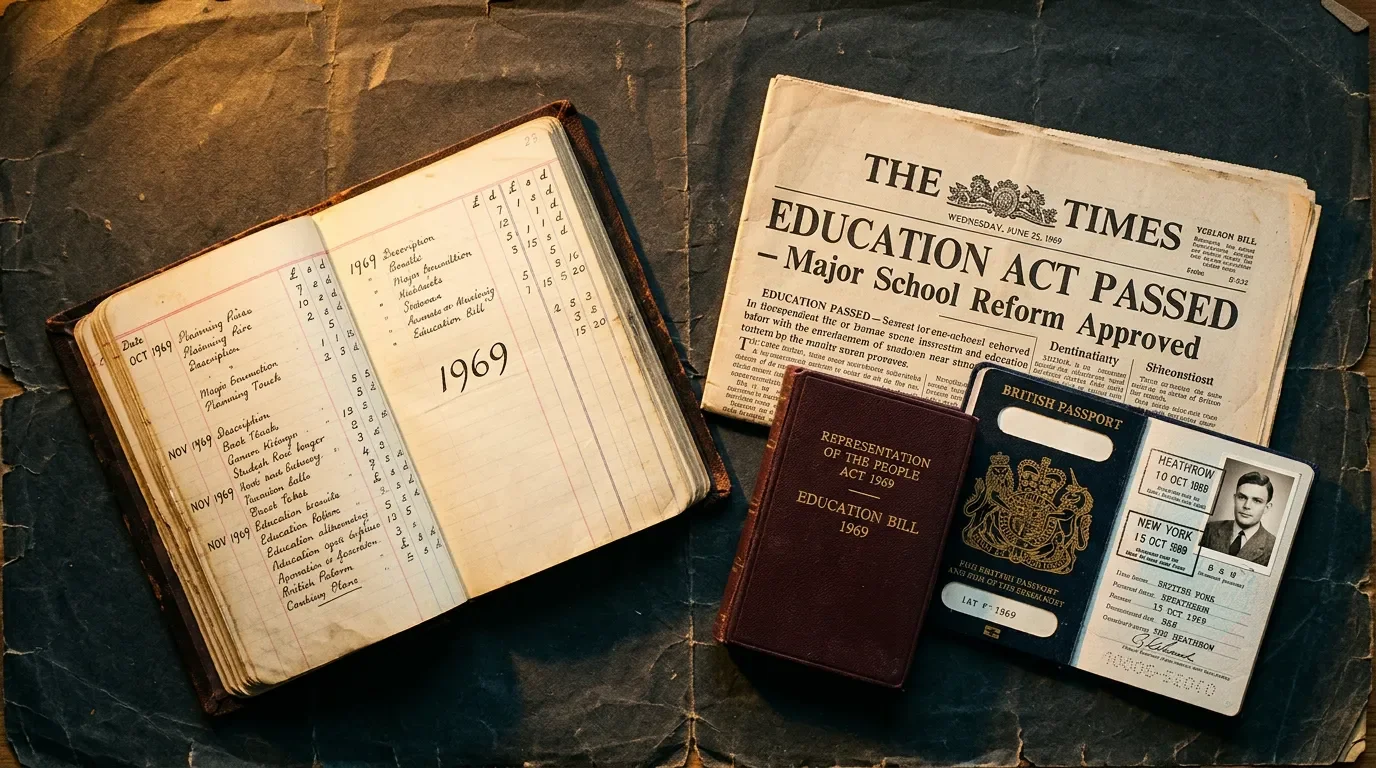
June 23 in business history: Taft-Hartley, IBM's unbundling, Title IX, and Brexit
On June 23, 1947, the Senate voted 68-25 to override Truman's veto and enact Taft-Hartley — which shaped U.S. union density for the next 75 years. On June 23, 1969, IBM announced software would be priced separately from hardware, accidentally seeding a $3 trillion industry. On June 23, 1972, Richard Nixon signed 37 words into law as Title IX — without mentioning them in his speech — that would take a full generation to transform medicine and law. On June 23, 2016, the UK voted 51.89% to leave the EU, producing a market shock that recovered in weeks and an economic drag that is still accumulating a decade later.
출처:...

Four events on June 23 — 1947, 1969, 1972, 2016 — each redrew a boundary that someone powerful had drawn first. The Senate overrode a presidential veto to contain organized labor. IBM announced that software would no longer come free with hardware, accidentally creating a $3 trillion industry. Richard Nixon signed 37 words into law and didn't mention them in his speech. And 17.4 million British voters chose to leave the European Union, setting a slow-motion trade disruption in motion that their economy is still absorbing a decade later. None of these decisions resolved cleanly. All four are still in effect.
1947 — Taft-Hartley: what happens when the pendulum swings back
The postwar labor situation had gotten genuinely extreme. In 1946 alone, roughly 4.6 million American workers went on strike — including 750,000 steelworkers in January, 340,000 coal miners in April, and 250,000 railroad engineers and conductors in May. 1 Labor historian Jeremy Brecher called the wave "the closest thing to a national general strike of industry in the twentieth century." 2 The immediate economic cause was real: when wartime overtime ended, take-home pay fell while inflation ran at 14% in 1946. 2 But the scale of it produced a political reaction that union leaders didn't fully anticipate.
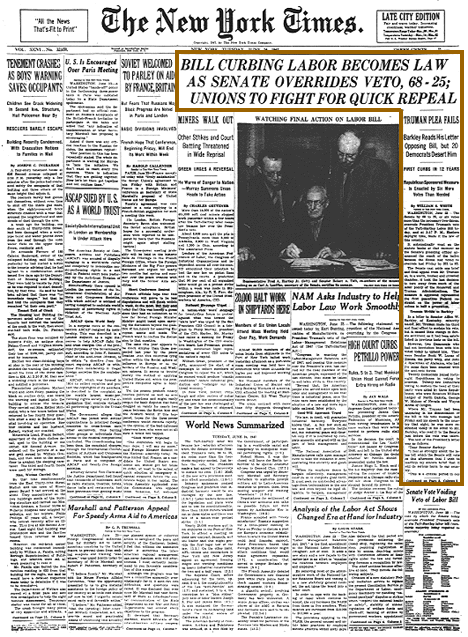
The 1946 midterms handed Republicans their first congressional majority since 1930. On June 23, 1947, the Senate voted 68-25 to override President Truman's veto of the Labor Management Relations Act — what labor leaders called the "slave-labor bill" and what Senators Robert Taft (R-OH) and Fred Hartley (R-NJ) called a rebalancing. 4 The House had already voted 331-83 three days earlier; 106 Democrats crossed over in that chamber. 4
Truman's veto message had been a 9-count indictment. He wrote that the bill would "reverse the basic direction of our national labor policy, inject the Government into private economic affairs on an unprecedented scale, and conflict with important principles of our democratic society." 5 He also predicted: "It contains seeds of discord which would plague this Nation for years to come." 5 He wasn't wrong, and neither was Taft.
The law's key provisions: it banned closed shops (hiring only union members), let states pass right-to-work laws via Section 14(b), prohibited secondary boycotts, required union officials to sign non-communist affidavits, barred union political contributions to federal campaigns, and created an 80-day "cooling off" injunction procedure for national-emergency strikes. 4 The NLRB was also restructured: an independent General Counsel was created, separating the prosecutorial function from the Board's adjudicative role. 6
The long-term outcome was asymmetric. U.S. union density peaked at roughly 33.5% of non-farm workers in 1954, seven years after passage, before beginning a five-decade decline. By 2022 it stood at 10.1% — with private-sector density outside aviation and rail at just 5.7%. 7 Twenty-eight states and Guam have passed right-to-work laws under Section 14(b). 4 The Department of Labor's own historians noted that Taft-Hartley "may have hurt the weak unions more than the strong" — the big industrial unions survived, while organizing drives in the South largely didn't. 1
Decision mirror. The Taft-Hartley story follows a predictable political economy arc: concentrated power produces a visible grievance, the grievance produces legislation, and legislation reshapes the field for the next 75 years. The more specific lesson is about timing. Labor peaked in both membership density and public sympathy around 1946-47 — and at that exact moment, its tactics (secondary boycotts, jurisdictional strikes, wildcat strikes) produced enough friction that Congress voted to constrain it with large bipartisan majorities. Organizations and industries tend to face their most durable regulatory constraints when they are at their most powerful and least disciplined. That's when the political coalition to constrain them assembles most easily.
1969 — IBM unbundling: how one announcement created a $3 trillion industry
On June 23, 1969, IBM announced that starting January 1, 1970, it would price software and services separately from hardware. 8 Seventeen program products would move to monthly licensing fees (covering phone support, bug fixes, and some future updates). Systems engineering, maintenance, education, and custom programming would each carry separate charges. The operating system — System Control Programming — stayed free. 9
IBM CEO Thomas Watson Jr. had made the call in late 1968, acting on advice from his general counsel Burke Marshall, who told him the bundling arrangement was "a glaring violation of antitrust law" that IBM "would lose" if forced to defend. 10 IBM had assembled a roughly 100-person Unbundling Task Force and pre-announced the move in December 1968. It didn't work as a peace offering: the U.S. Department of Justice sued IBM on January 17, 1969 — five months before the formal announcement — alleging IBM used free bundling to "maintain or increase its market share" in a market where it held roughly 70% of revenues. 11
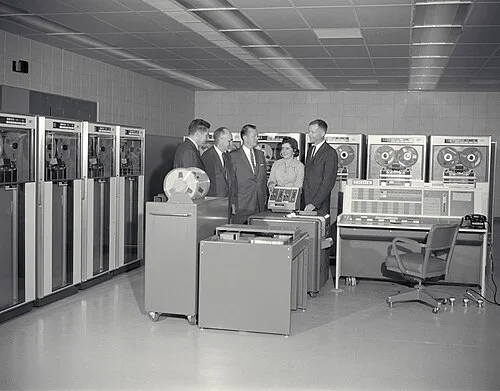
Computer historian Martin Campbell-Kelly described the effect: unbundling "transformed almost overnight the common perception of software from a free good to a tradable commodity." 10 Richard Lilly, a software executive who witnessed the transition, put it bluntly in 1989: "It created the industry we're in." 9 SAP followed in 1972, Microsoft in 1975, Oracle in 1977. By 2020, U.S. software industry revenues exceeded $1.2 trillion, with roughly 2.5 million employed. 10
The DOJ suit, meanwhile, ran for 13 years, produced 104,400 pages of trial record, and was dropped in January 1982 by Reagan's Justice Department as "without merit." 11 Robert Bork called it "the antitrust division's Vietnam." 10 Law scholar Tim Wu has argued that the more consequential outcome wasn't the case itself but the "policeman at the elbow" effect: IBM's fear of antitrust enforcement shaped its behavior for the next 15 years, including the open-architecture, non-exclusive design of the 1981 IBM PC and IBM's decision in 1986 to decline an opportunity to buy a 10% stake in Microsoft — reportedly because it didn't want to be seen as "dominating the PC market too thoroughly." 10 12
As former Netscape CEO Jim Barksdale observed: "There are only two ways I know of to make money: bundling and unbundling." 12 IBM had spent decades building the dominant version of the bundled model. One announcement — forced partly by legal pressure, partly by market logic — broke the dam.
Decision mirror. The IBM story is routinely told as "antitrust enforcement created an industry." The more accurate version is messier. IBM's own general counsel told leadership the bundling was legally indefensible; the DOJ suit ultimately failed. What the combined pressure produced was behavioral change: IBM made itself smaller and more open than its market position required, and the open space it left was enough for a generation of software companies to fill. The current version of this question applies to any platform sitting on top of a layer that could become its own industry. The question isn't whether unbundling is legally required — it's whether holding the bundle is worth the cost of defending it.
1972 — Title IX: 37 words that rewired the talent pipeline
President Richard Nixon signed the Education Amendments of 1972 on June 23, 1972, as Public Law 92-318. 13 Title IX — just 37 words within the larger bill — reads in full: "No person in the United States shall, on the basis of sex, be excluded from participation in, be denied the benefits of, or be subjected to discrimination under any education program or activity receiving Federal financial assistance." 13
Nixon's signing statement discussed desegregation busing, higher education reform, and the National Institute of Education. He did not mention Title IX, women, sex discrimination, or educational equity. 14
The 37 words were drafted largely by Rep. Patsy Mink (D-HI) — the first woman of color and first Asian American woman elected to Congress — working with Rep. Edith Green (D-OR), who chaired the House Subcommittee on Higher Education and had run the first congressional hearings on sex discrimination in education in 1970. 15 Senator Birch Bayh (D-IN) introduced the language in the Senate on February 28, 1972, with a floor speech attacking the stereotype that women attended university primarily to "find a husband." 13 The bill passed the Senate 88-6 on March 1. 13
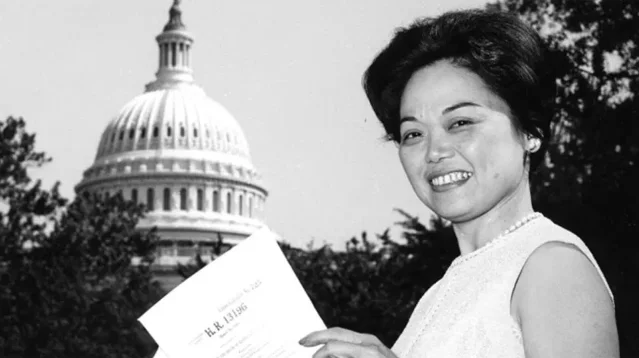
Mink herself had been rejected by a dozen medical schools because she was a woman, was rejected by law firms after graduating because she was a wife and mother, and opened her own practice. 16 The law was renamed the Patsy T. Mink Equal Opportunity in Education Act after her death in 2002. 13
The numbers document the transformation: women were 42% of American college students in 1972. By 2020, women earned approximately 60% of undergraduate and master's degrees. 13 Female medical school enrollment went from 9.6% in 1970 to 50.5% in 2019 — the first time in U.S. history that women were a majority of medical students. 17 Female law school enrollment rose from roughly 9% to 54.1% in 2020. 17 Girls' high school sports participation grew from approximately 300,000 to over 3 million — roughly a 10x increase. 13
None of this was in the original 37-word text. The law says nothing about sports. Athletics became the most visible and most contested application because the NCAA filed a lawsuit in 1976 challenging the law's reach, Congress spent years debating amendments to exempt "revenue-producing sports," and the Supreme Court's 1984 Grove City College v. Bell ruling narrowed the law's coverage to direct-aid programs only — before Congress restored full institutional coverage in 1988 over President Reagan's veto. 13 Historian Susan Ware has described the law's enforcement power as operating "like the guillotine out in the courtyard: It has an impact just because of its existence." 17
Decision mirror. The mechanism behind Title IX's effects wasn't quotas — the law prohibited discrimination. The transformation of professional pipelines came from a prohibition backed by the threat of federal funding withdrawal, operating preemptively on institutions that didn't want to find out what non-compliance looked like in practice. For any organization managing a talent pipeline, the relevant question from the Title IX experience isn't "do we have a policy?" It's "what's the enforcement mechanism, and does it create enough institutional discomfort to change behavior before a complaint arrives?" The gap between declaring rights and making them exercisable, as Mink's daughter Gwendolyn put it, is where most pipeline interventions fail: "Rights without resources for people who are not already in positions of privilege to exercise those rights are meaningless." 15
2016 — Brexit: the slow bleed that markets missed
On June 23, 2016, the United Kingdom voted to leave the European Union. The final tally: 17,410,742 votes (51.89%) for Leave, 16,141,241 (48.11%) for Remain, on a turnout of 72.21% — the highest in any UK national vote since the 1992 general election. 18 David Cameron announced his resignation the following morning. 19
The immediate market reaction was the starkest since Bretton Woods. Sterling fell from about $1.50 as polls closed to a low of $1.3236 by 5:28 AM BST on June 24 — a drop of more than 10% before partially recovering to close down roughly 8%, its largest single-day fall since the float began in 1971. 20 FTSE 100 opened down more than 8% before recovering to close off 3.15%; FTSE 250, more domestically focused, fell about 8%. Barclays and RBS briefly fell 30%. 20 Bank of England Governor Mark Carney pledged more than £250 billion in additional liquidity and told markets the Bank would "pursue relentlessly its responsibilities for monetary and financial stability." 20
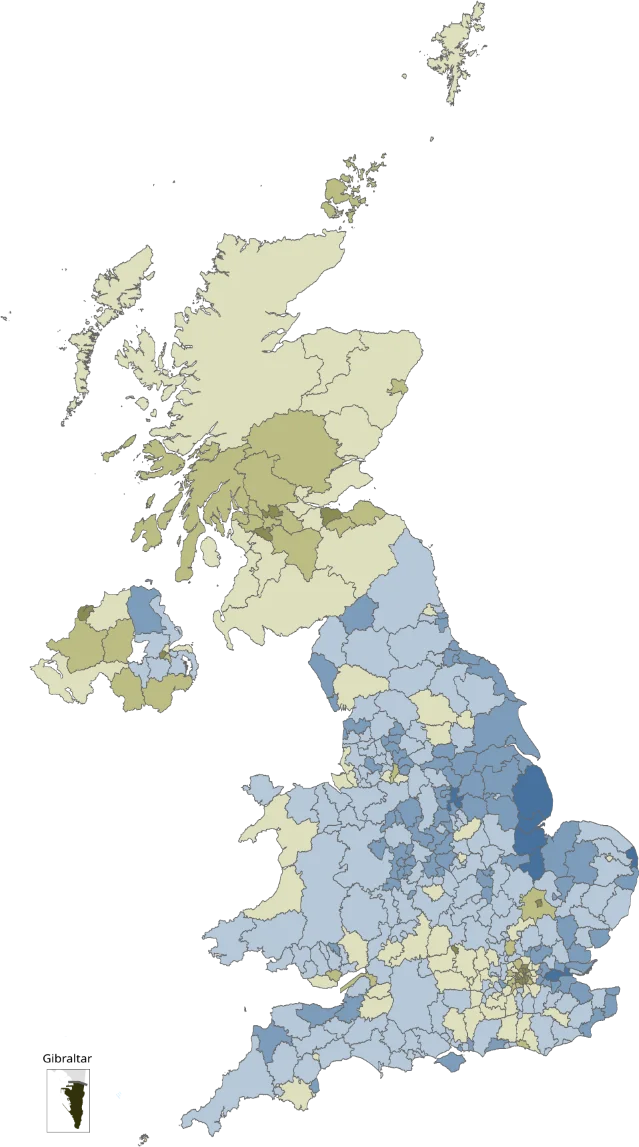
The vote fractured along education and age lines as sharply as any major democratic decision in recent memory. YouGov's referendum-day survey found 75% of 18-24 year-olds voted Remain versus 25% Leave; among voters 65 and older, 64% voted Leave. 21 The educational split was the widest single demographic gap: voters with no formal qualifications went 70% Leave; voters with university degrees went 68% Remain. 21
The Vote Leave campaign's most visible claim — a bus emblazoned with "We send the EU £350 million a week — let's fund our NHS instead" — was characterized by the UK Statistics Authority as "potentially misleading" in April 2016 and upgraded to "a clear misuse of official statistics" in September 2017, after Boris Johnson repeated a version of it in a newspaper column. 22 The actual net contribution at the time was roughly £250 million per week, after the rebate Margaret Thatcher negotiated in 1984. 22
The economic costs didn't announce themselves in 2016. Markets had recovered much of their initial drop within weeks. What took years to materialize was the structural drag. The UK's Trade and Cooperation Agreement with the EU took effect January 1, 2021, introducing customs declarations, rules of origin documentation, and sanitary and phytosanitary checks that have functioned as a significant non-tariff barrier. By 2024, UK goods exports to the EU remained roughly 18% below 2019 levels in real terms. 23 The UK Office for Budget Responsibility estimates Brexit will reduce long-run UK productivity by 4%, with imports and exports each falling around 15% compared to the counterfactual. 24 A 2025 NBER paper by Nicholas Bloom and colleagues estimated UK per capita GDP had fallen 6-8% below its pre-Brexit trend by 2025, with investment down 12-18% and employment down 3-4%. 23 Stanford economist Nicholas Bloom put it plainly: "The statistics are really clear: the UK has grown more slowly after Brexit than before. I don't see anything else that would open up this gap with the UK and everyone else." 23
The Federal Reserve's January 2026 analysis of Brexit's lessons for trade policy drew a pointed contrast: unlike tariffs, which are visible and quantifiable on day one, non-tariff barriers accumulate through compliance costs, customs delays, and supply chain rerouting across years. The conclusion: "The Brexit experience indicates that large trade policy shifts can influence economic outcomes gradually and manifest over long-time horizons." 25
As of May 2026, 70% of British voters supported closer ties with the EU, and 56% supported rejoining outright. 23
Decision mirror. The Brexit story is the clearest recent case study in how markets discount structural trade disruption that arrives slowly. The UK's FTSE recovered. Sterling stabilized. Investment didn't collapse overnight — it quietly declined over five years. The Federal Reserve's framing is useful for anyone managing supply chain exposure to policy-driven trade shifts: the absence of an immediate shock doesn't mean the absence of a long-term cost. It means the cost is arriving in a form that doesn't trigger the usual alarm systems — quarterly earnings, analyst downgrades, credit watch. The right question after any significant trade-policy change isn't "did the market recover?" It's "what does the productivity trend look like in year five?"
June 23 produced four redrawings: of who owns software, who holds labor power, who accesses education, and who trades with whom. In each case, the immediate reaction — the Senate vote, the IBM announcement, the bill-signing, the market plunge — was less consequential than what accumulated in the years after. Taft-Hartley shaped union density for seven decades. IBM's unbundling announcement seeded an industry that didn't exist yet. Title IX's pipeline effects took a full generation to show up in medical and law school enrollment. Brexit's productivity drag is still materializing. The decisions that most durably reshape markets rarely announce themselves by their full magnitude on day one.
참고 출처
- 1U.S. Department of Labor: Chapter 6 — Unions and Rights in the Space Age
- 2Wikipedia: United States strike wave of 1945–1946
- 3The New York Times: Bill Curbing Labor Becomes Law As Senate Overrides Veto, 68-25
- 4Wikipedia: Taft–Hartley Act
- 5The American Presidency Project: Veto of the Taft-Hartley Labor Bill
- 6NLRB: 1947 Taft-Hartley Passage and NLRB Structural Changes
- 7Congressional Research Service: A Brief Examination of Union Membership Data (R47596)
- 8Wikipedia: History of IBM
- 9IEEE/ETHW: Software Industry
- 10Cambridge University Press: Tech Dominance and the Policeman at the Elbow
- 11U.S. Department of Justice: United States' Memorandum on the 1969 Case
- 12Truth on the Market: The Ghosts of Antitrust Past: Part 2 (IBM)
- 13Wikipedia: Title IX
- 14The American Presidency Project: Statement on Signing the Education Amendments of 1972
- 15National Women's History Museum: What Patsy Mink Made Possible: Title IX at 50
- 16HISTORY.com: How Patsy Mink Led the Push for Title IX
- 17Harvard Gazette: How Title IX transformed colleges, universities over past 50 years
- 18Wikipedia: 2016 United Kingdom European Union membership referendum
- 19Wikipedia: Aftermath of the 2016 United Kingdom European Union membership referendum
- 20BBC News: Pound plunges after Leave vote
- 21YouGov: How Britain voted at the EU referendum
- 22Full Fact: £350 million EU claim "a clear misuse of official statistics"
- 23The Guardian: How Brexit has made Britain poorer — in charts
- 24Office for Budget Responsibility: Brexit analysis
- 25Federal Reserve Board: Lessons from Brexit on the Effects of Trade Disintegration
이 콘텐츠를 둘러싼 관점이나 맥락을 계속 보강해 보세요.