Yongle Emperor: the rebel prince who rebuilt Ming China around Beijing
Wikipedia's August 12 Featured Article follows Zhu Di from a frontier prince's civil-war victory to Beijing's capital, the Grand Canal, the Yongle Encyclopedia, Zheng He's fleets, and the wars his grand projects could not settle.
Zhu Di took the throne after a three-year civil war, then made Beijing the Ming empire's political center, rebuilt the Grand Canal, commissioned the Yongle Encyclopedia, and sent fleets across the Indian Ocean. Wikipedia's August 12, 2026 Featured Article follows the man behind that transformation—and the wars and coercion that made it possible. 12
The source in one glance
| Question | Answer |
|---|---|
| Who was he? | Zhu Di, the fourth son of the Hongwu Emperor and the third emperor of the Ming dynasty, reigning from 1402 to 1424. 2 |
| Where did his power begin? | As Prince of Yan, he governed Beiping, present-day Beijing, and commanded a frontier military stronghold. 2 |
| How did he become emperor? | He rebelled against his nephew, the Jianwen Emperor, in 1399, captured Nanjing in July 1402, and took the throne days later. 2 |
| What did he change? | He shifted the capital to Beijing, restored the Grand Canal, strengthened the central administration, and sponsored enormous scholarly and maritime projects. 2 |
| Where did his ambition stop? | His Mongolian campaigns brought no lasting settlement, and the war in Đại Việt continued through the end of his reign. 2 |
Full summary: a frontier prince remakes the state
The future emperor learned power at the northern edge
Zhu Di was born in 1360, when his father Zhu Yuanzhang was still a leader in the Red Turban Rebellion against the Mongol-led Yuan dynasty. Zhu Yuanzhang founded the Ming in 1368 and became the Hongwu Emperor. The official story identified Zhu Di's mother as Empress Ma, but the Wikipedia article preserves a serious dispute: other sources describe his mother as a consort who may have been Mongolian or Korean. Later official histories increasingly emphasized Zhu Di's legitimacy, so even his family tree became part of the political argument. 2
In 1370, Zhu Di became Prince of Yan, with his fief at Beiping, the city now known as Beijing. The appointment gave him more than a title. Beiping had been a capital under the Yuan and was now a heavily militarized Ming stronghold facing the northern frontier. It held soldiers, officials, artisans, and laborers, all of whom needed food. The young prince learned that governing a frontier meant moving grain, organizing troops, and keeping a large city supplied. 2
He received a broad education in classics, history, agriculture, irrigation, and government, but military affairs held his attention. He trained in command and logistics at Fengyang, sometimes disguising himself as an ordinary soldier. In the 1380s and 1390s, he joined campaigns against the Mongols and built a reputation among soldiers. By the time his father died, Zhu Di had something his elder brothers did not possess in the same combination: a fortified base, experienced officers, and an army used to the northern war. 2
The rebellion was presented as a rescue mission
The Hongwu Emperor's eldest son, Zhu Biao, was the designated heir, but he died before his father. The throne therefore passed in 1398 to Zhu Biao's son, Zhu Yunwen, who became the Jianwen Emperor. Jianwen's advisers saw the princes as a threat because they controlled large military forces. Their response was to reduce princely power, using exile, house arrest, and forced suicide against several princes. Zhu Di was the most dangerous target. 2
In August 1399, after two of his officials were arrested, Zhu Di raised troops in Beiping. He said he was acting to protect the emperor from corrupt advisers and to restore the laws of his father. The name of the war, the Jingnan campaign, meant a campaign to clear away disorder. He repeatedly denied that he wanted the throne. That denial mattered: he was not simply declaring a new dynasty, but building a moral and legal case for overthrowing the court. 2
The government had more soldiers and resources, but Zhu Di's troops were experienced, his cavalry included Mongol forces, and the court's generals failed to coordinate their advantages. The fighting moved through the north and along the Grand Canal. In 1402, Zhu Di abandoned the attempt to advance directly along the canal, moved west, crossed the Yangtze after a government fleet defected, and entered Nanjing on July 13. The imperial palace burned. Three bodies found afterward were declared to be those of the Jianwen Emperor, his wife, and their son, though the circumstances helped create one of the enduring mysteries around Zhu Di's rise. 2
Zhu Di became emperor on July 17, 1402. His first problem was not administration but legitimacy. He erased the Jianwen era from the official chronology, extended the Hongwu era through the rest of 1402, and then adopted the era name Yongle, meaning "perpetual happiness." He restored the privileges of princes, destroyed most of the Jianwen government's archives, executed leading opponents, and purged many of their relatives, teachers, students, and followers. The court then rewrote the Veritable Records of Taizu to present Zhu Di as a legitimate son of Empress Ma, a favored military heir, and the person his father intended to succeed. 2
Beijing was both a strategy and a personal base
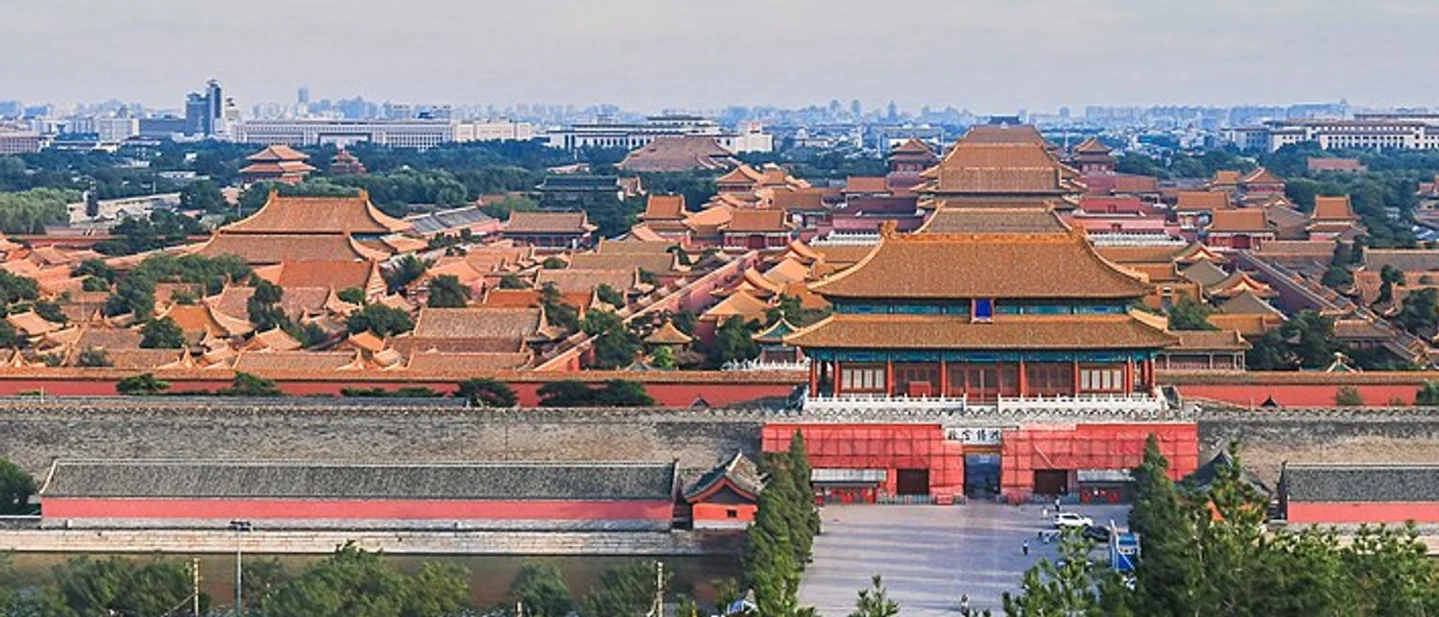
Zhu Di did not leave the northern frontier behind when he became emperor. He made it the center of the empire. In 1403, Beiping became Beijing, the Northern Capital, while Nanjing remained the Southern Capital. The choice had a practical logic: Beijing sat near the Mongolian frontier, had access to the sea and the Grand Canal, and was the city where Zhu Di's political and military power was strongest. It also carried the memory of earlier northern capitals under the Liao, Jin, and Yuan dynasties. 2
The move required much more than changing a name on a document. Ten thousand families from Shanxi were relocated in 1404. In the following year, more than 120,000 landless households from the Yangtze Delta were moved north. Timber, labor, and skilled artisans came from across the empire. Construction of the palace and government complex proceeded slowly at first because the supply chain itself was difficult to assemble. By 1420, the city was ready. Beijing became the principal capital on October 28, 1420, and government agencies moved there by February 1421. 2
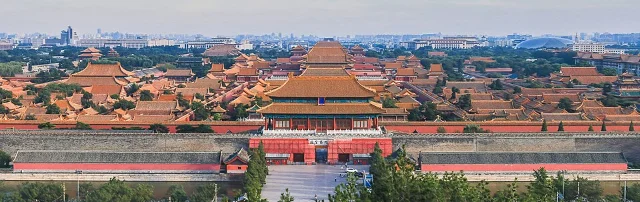
The project immediately exposed its cost. Northern China suffered a famine in 1421, and three major audience halls in the new Forbidden City burned. Zhu Di treated the fire as a sign of Heaven's displeasure and invited officials to criticize the government. When a junior secretary blamed the decision to build the northern capital, he was executed. Beijing was not a neutral administrative upgrade. It was an expensive commitment that the emperor would defend even when the omens and the treasury turned against it. 2
The Grand Canal made that commitment workable. Before Zhu Di's reign, sections of the canal were unusable, so grain reached the north either by a dangerous sea route exposed to storms and piracy or by a chain of inland waterways that required repeated transfers. The government mobilized 165,000 workers, rebuilt the route, and constructed 15 locks in western Shandong. The continuous waterway was completed in 1415, making transport faster and cheaper. 2
That repair changed the map of the economy. The canal stimulated trade along its route and helped Suzhou regain its position as a commercial hub. It also helped turn Nanjing from the empire's political center into a regional city, even though Nanjing remained culturally important. The same infrastructure that made Beijing possible redistributed political and economic weight toward the north. 2
His administration mixed stability with personal rule
Historians have sometimes called Yongle's reign a "second founding" of the Ming. The phrase points to a real institutional shift. Compared with the Hongwu Emperor's frequent turnover and large purges, the upper levels of Yongle's administration were relatively stable. Capable ministers were rewarded, and the regular civil-service examinations supplied officials for the bureaucracy. The emperor could be severe, but he did not rely on constant destruction of the senior administration. 2
The system was not simply gentler. Eunuchs and generals handled major political and military affairs, while civil officials managed finance, law, and routine administration. The Grand Secretariat, created in 1402, began as an intermediary between the emperor and the government. Its grand secretaries gradually became influential policy makers, and the institution would matter even more under later emperors. Zhu Di's personal mobility and campaigns strengthened people whose authority depended on access to him. 2
He also created a military nobility tied closely to the throne. Generals received hereditary titles, but they did not receive permanent regional armies or broad civil authority. Instead, they led forces assembled for particular campaigns and often marched beside the emperor. This arrangement reduced the chance that a powerful general would become an independent regional threat, while making the military elite personally loyal to Yongle. 2
The court tried to gather the world's knowledge—and the world's tribute
Yongle presented himself as a Confucian ruler and promoted traditional education. In 1414, scholars were asked to assemble authoritative commentaries on the Four Books and Five Classics for teaching and examinations. The project that became the Yongle Encyclopedia was larger still: 2,169 scholars worked for four years to gather material from known books, completing the compilation in December 1407. 2
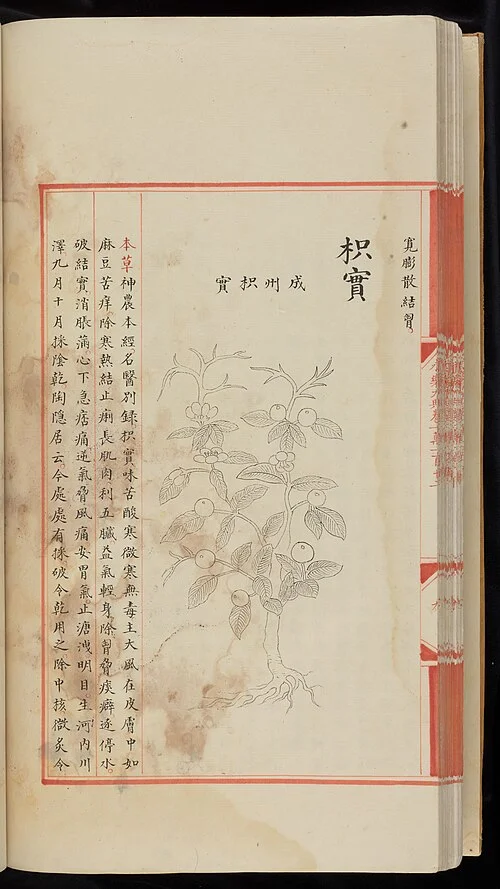
The encyclopedia was not an isolated scholarly hobby. Education helped make an usurper look like a guardian of order. By standardizing Neo-Confucian texts and using them to train officials, Yongle gave the state a common intellectual curriculum. Later historians credited him with restoring institutions but also criticized the orthodoxy he imposed, arguing that it narrowed scholarship and intellectual development. The same ruler could therefore appear as a collector of knowledge and a limiter of thought. 2
The outward version of that ambition was maritime. In 1405, Yongle appointed the eunuch admiral Zheng He to lead a fleet meant to expand China's influence and collect tribute. The first voyage carried either 250 or 317 ships, depending on which source is used, including 62 large treasure ships, and 27,800 people. Under Yongle, Zheng He made six voyages between 1405 and 1421, reaching South and Southeast Asia, India, Persia, Arabia, and East Africa. The voyages also mapped foreign places and brought back plants and animals, including a giraffe from Bengal that Chinese observers associated with the mythical qilin. 2
The fleet's scale came with a political price. Long-distance expeditions were expensive, and eunuchs controlled the funds and the emperor's access to overseas information. After Yongle and Zheng He died, a Confucian-led government discontinued the large expeditions in part to reduce naval spending and eunuch power. The voyages were not simply a story of exploration; they were one part of a contest inside the court over who controlled the empire's resources. 2
The frontier kept defeating the emperor's preferred solution
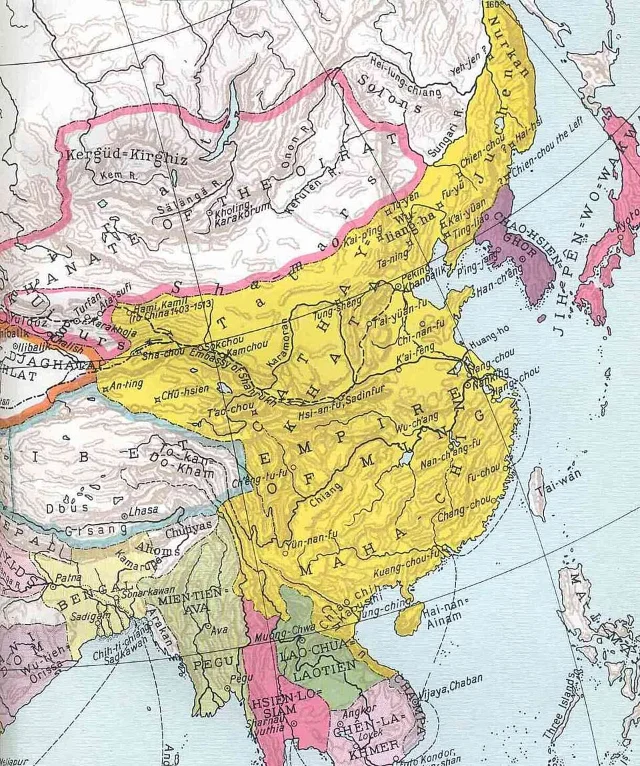
The Mongols remained the central security problem. The Ming court tried to manage them through regulated tribute trade: horses and livestock could be exchanged for paper money, silver, silk, cloth, and titles, but the permitted volume was limited. When nomadic groups could not obtain enough through trade, raiding became more likely. The court also tried to exploit divisions between Eastern Mongols and Oirats, with mixed results. 2
After a Ming defeat in 1409, Yongle personally led an army into Mongolia in 1410 and defeated Öljei Temür Khan and his chancellor Arughtai. A second campaign in 1414 used Ming artillery against Oirat cavalry. But the balance shifted again. In 1422, 1423, and 1424, Yongle launched further campaigns against Eastern Mongol raids. The Mongols often avoided direct battle, using mobility and the size of the steppe to cancel out the Ming army's larger resources. 2
The southern frontier was no cleaner. In 1406, after a diplomatic incident and escalating disputes, Ming forces invaded Đại Ngu in present-day northern Vietnam. Resistance was subdued and the territory was annexed as Jiaozhi Province in 1407, but rebellions followed in 1408, 1417, and later. The rebellion led by Lê Lợi could not be suppressed by the end of Yongle's reign. An emperor who could move armies across the steppe and fleets across the Indian Ocean still could not turn conquest in Đại Việt into stable rule. 2
Key details that change how the story reads
1. The capital was a supply chain, not just a palace
Beijing is often remembered through its gates, courtyards, and ceremonial geometry. The article's more revealing detail is logistical: a northern capital needed a dependable flow of grain from the wealthy south. The Grand Canal's reconstruction tied the court, the army, the labor force, and the tax system into one moving system. Without that waterway, Beijing was a strategic idea with an unsolved bill. 2
2. The new emperor rebuilt the past as carefully as the city
Zhu Di's legitimacy problem did not end when he won. He changed the calendar, erased the Jianwen era, destroyed archives, executed opponents, and commissioned new official records that strengthened his claim to be his father's rightful successor. The political construction of Yongle's past ran alongside the physical construction of Beijing. 2
3. The spectacular projects pulled against one another
The canal made the northern court easier to feed, but directing grain inland reduced the importance of sea transport and contributed to a decline in naval shipbuilding. The treasure voyages projected imperial power, but their cost increased the influence of eunuchs and made them targets for bureaucratic opposition. Even the encyclopedia carried a tension: it preserved a vast body of learning while helping impose a narrow official curriculum. Yongle's projects were connected, and so were their trade-offs. 2
4. A successful battle did not equal a successful frontier
Yongle could win set-piece campaigns. He could not force nomadic armies to fight on his terms, and he could not turn the annexation of Đại Việt into durable control. Later historians criticized the withdrawal of Ming forces from the outer defensive line north of the Great Wall, the cost of the wars, and the damage to relations with the Mongols. The empire's reach was real; its control was uneven. 2
5. His final journey supplies the sharpest ending
On April 1, 1424, Yongle began his fifth campaign into Mongolia. It failed. The article says he fell into a deep depression and died on August 12 at Yumuchuan, north of Duolun, while returning from the campaign. Official annals do not give a specific cause of death; private records suggest that repeated strokes may have culminated in a fatal one. He was buried in the Chang Mausoleum, the first of the Ming tombs north of Beijing. 2
Verbatim lines from the source
Wikipedia states the capital's importance without softening it:
"The Yongle Emperor's most significant accomplishment was the relocation of the capital from Nanjing (Southern Capital; then officially known as Yingtian) to Beijing (Northern Capital)." 2
Its assessment of the northern wars is even shorter:
"The Emperor had been unable to subdue the Mongols." 2
And the article gives the scholarly project its full scale:
"The Yongle Encyclopedia was the most significant and extensive collection of encyclopedias during the Yongle era." 2
Today's featured source is Yongle Emperor on Wikipedia, selected on Wikipedia's Today's Featured Article page for August 12, 2026. The article was last edited on August 11, 2026. Zhu Di's legacy is not one clean verdict: he was a frontier commander who made Beijing the center of Ming power, an organizer of institutions and knowledge, a patron of distant voyages, and a ruler whose legitimacy and wars imposed costs that his successors had to live with. 2
참고 출처
- 1Wikipedia's Today's featured article for August 12, 2026en.wikipedia.org
- 2Yongle Emperor - Wikipediaen.wikipedia.org

Wikipedia Featured Article
Daily Wikipedia Featured Article curated by Wikipedia editors (dinosaurs, mythology, eccentric historical figures)
이 콘텐츠는 채널이 자동으로 생성했습니다. 한 문장이면 Neodrop이 당신을 위해 계속 만들어 냅니다.
관련 콘텐츠
- 로그인하면 댓글을 작성할 수 있습니다.