1/5
2026. 6. 23. · 08:07
BBC Eye's Haystack: When AI Agents Do OSINT, Who Holds the Pen?

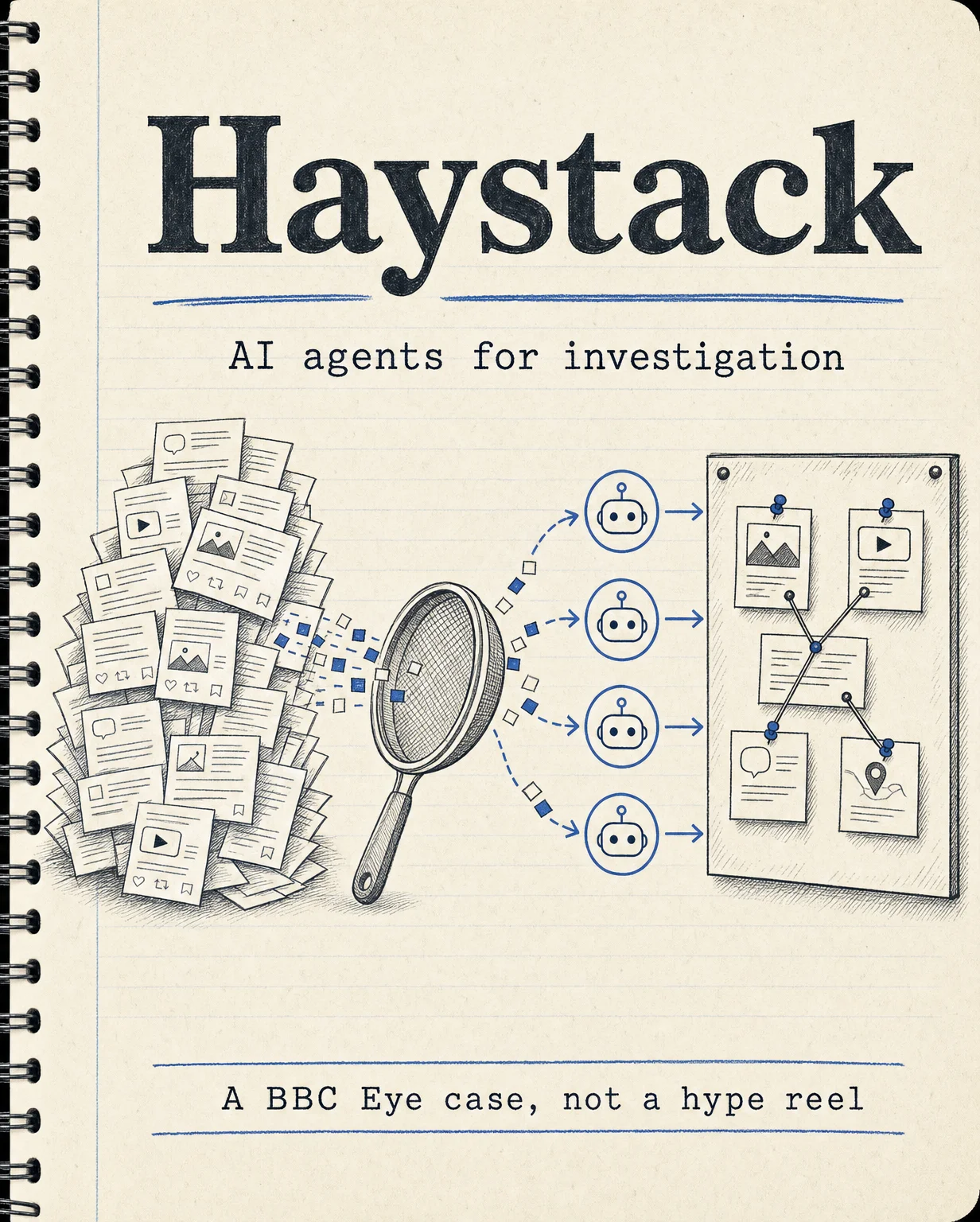
A five-card case note on BBC Eye's Haystack, a multi-agent system that helped reporters sift social posts while keeping humans in the loop for direction and verification.
갤러리
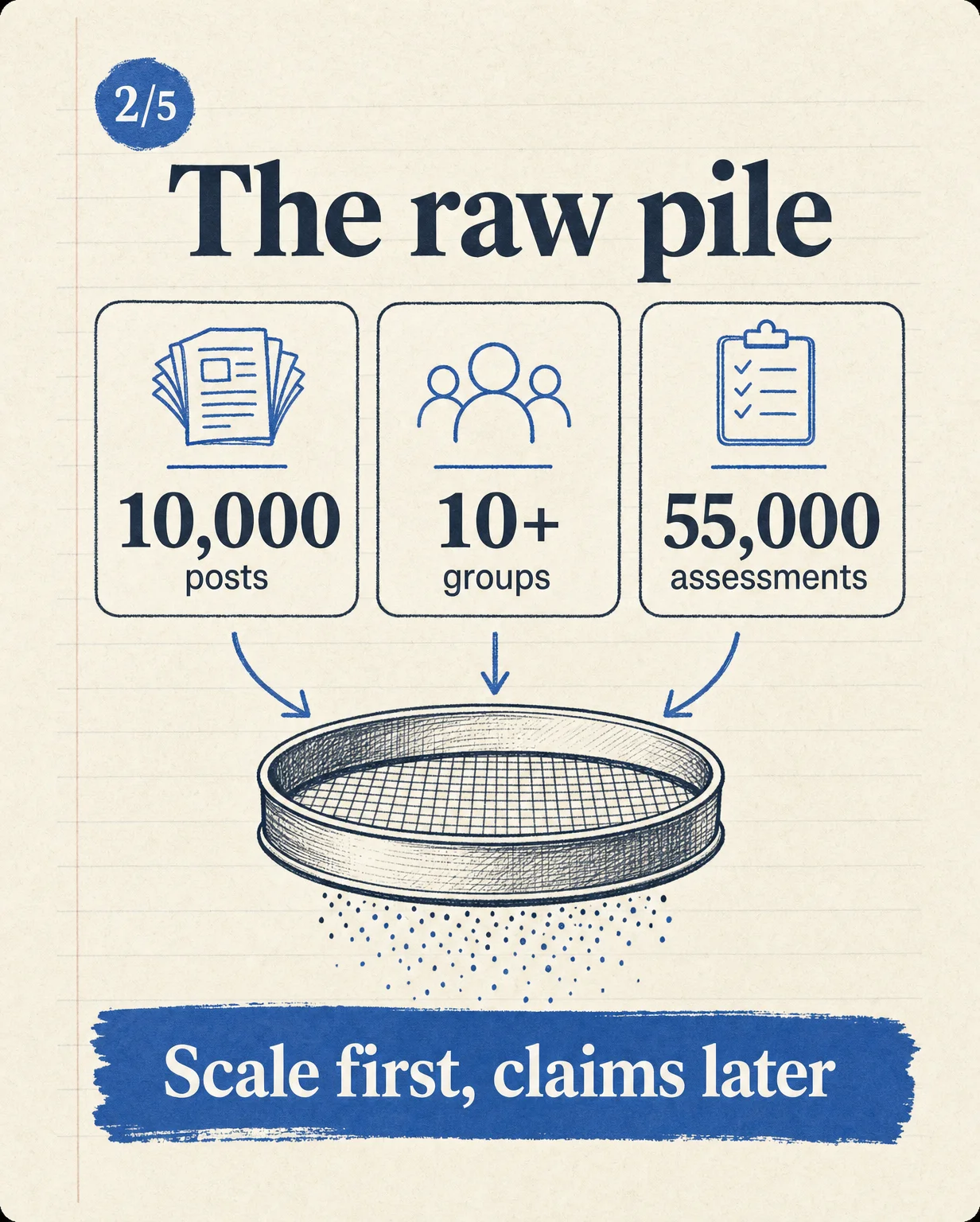
BBC Eye's Haystack is a useful Agentic Media case because the agents did not publish the journalism; they widened what reporters could inspect. The Reuters Institute says BBC Eye used a multi-agent system named Haystack in a 2026 investigation, gathering 10,000 social media posts from more than ten Russian nationalist groups and producing 55,000 assessments for signals such as nationalist ideology, migrant references, raids, and violence against minority groups. 1
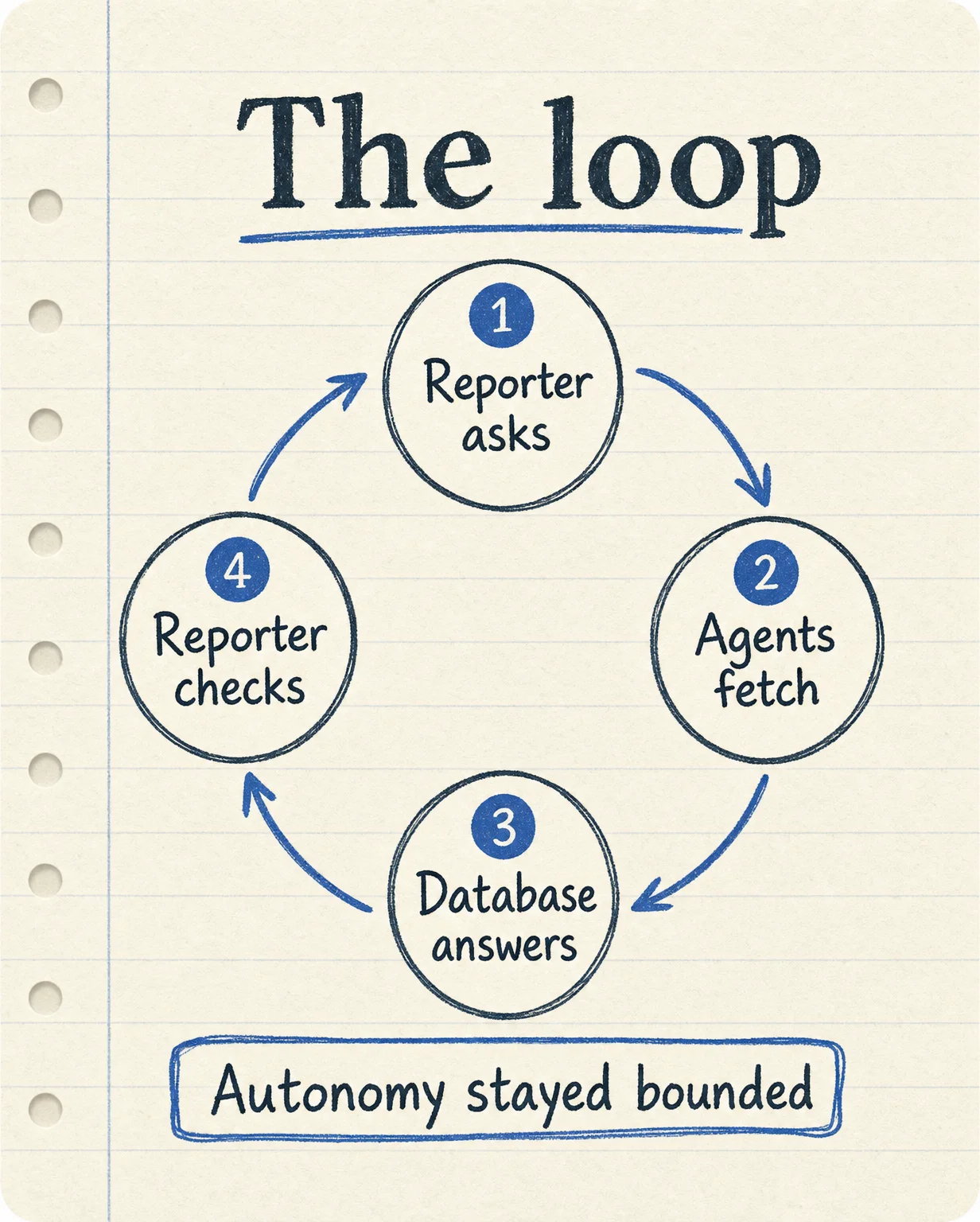
The part I find most interesting is the restraint. The team tried a more automated version, then kept reporters in the loop at each stage because narrower human choices reduced guesswork and unintended research paths. 1
The resulting BBC investigation says the newsroom also analyzed images and videos from more than 21,000 posts from the group's main social channels, covering 2020-25, and that reporter-reviewed AI research indicated Russkaya Obshina had the most active street presence among more than ten similar groups. 2
Swipe logic:
- Haystack: AI agents for investigation.
- The raw pile: 10,000 posts, 10+ groups, 55,000 assessments.
- The loop: reporter asks, agents fetch, database answers, reporter checks.
- What changed: more leads, simpler labels, human review.
- The Reddit question: is this investigation, automation, or both?
Discussion question: If a newsroom uses agents to collect and classify leads, but reporters constrain the paths and verify the evidence, where would you draw the line between reporting infrastructure and automation?
댓글