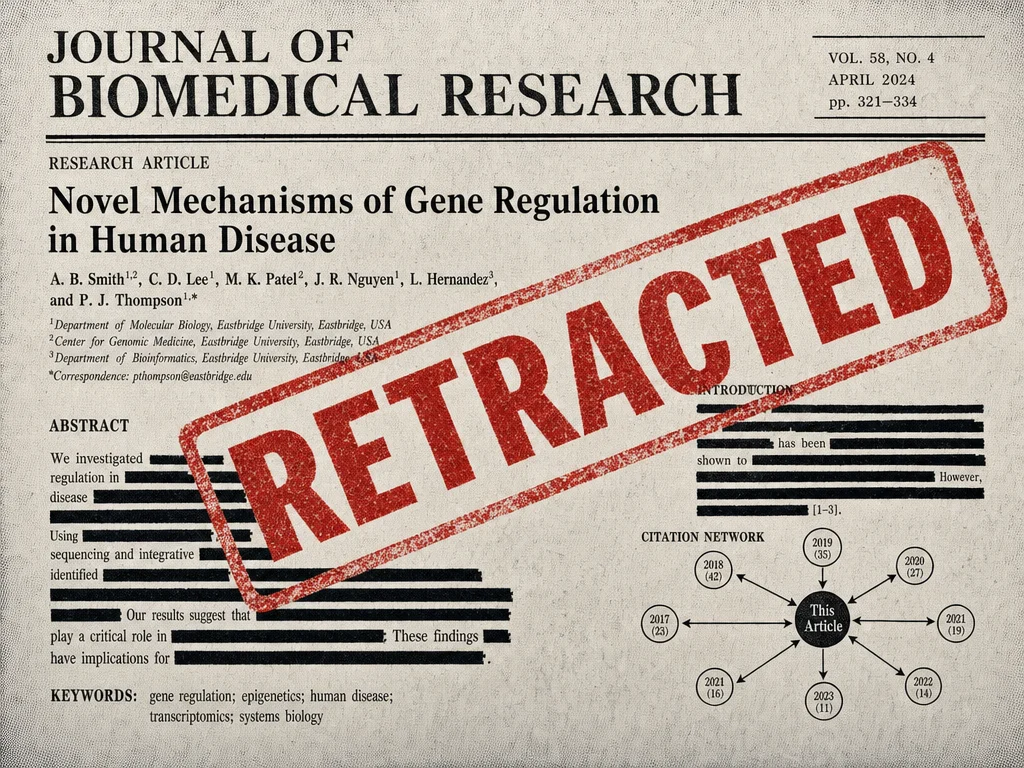
Retraction of the Week — Issue #1: SIDS vaccines, keto diet, birdsong, and parental alienation
Four papers, four disasters — same stories, half the length, twice the attitude.
No new official retraction notices landed in the week of June 4–10, so this inaugural issue stretches back to May 22–June 3. We'll be on the standard weekly clock from here.
Four papers, four disasters
The SIDS–vaccine paper that survived five years it shouldn't have. Neil Z. Miller published a study in Elsevier's Toxicology Reports in 2021 claiming that 75% of SIDS cases happened within a week of vaccination — strong stuff, and wrong. Readers complained immediately. A forensic scientist named Magdalen Wind-Mozley wrote to the journal in 2022 and heard nothing back. The paper spent the next few years circulating in anti-vaccine networks, getting promoted on Children's Health Defense TV, racking up citations. Elsevier finally pulled it on April 9, 2026 — five years after publication — citing "serious methodological flaws" (using a passive surveillance database to claim causality is, indeed, a serious methodological flaw). Miller told Retraction Watch he "strongly opposed" the removal and plans to republish the study in a book. As of late May, the PDF was still downloadable on Elsevier's site with a "removed" watermark; Elsevier blamed "human error." Paul Offit, the vaccine expert at CHOP, said he was surprised it took five years. Same, Paul. 1
The keto paper that its own authors killed. This one has everything: social media influencers, a buried conflict of interest, and a preprint already waiting in the wings. Nicholas Norwitz and Dave Feldman — described by critics as having "an outsized media footprint" — co-authored a 2025 study in JACC: Advances claiming that a ketogenic diet didn't cause arterial plaque buildup in 100 healthy adults. Wired called it "a new war in the nutrition world." Then three of the six co-authors noticed data anomalies and asked the journal to retract it. It also emerged that co-author James Earls was chief medical officer at Cleerly, the imaging company that supplied the scan data — a conflict not disclosed at publication. The retraction came March 11, 2026. Earls is no longer listed as CMO on Cleerly's website. A six-author reanalysis using a different blinded analysis service is already under peer review somewhere else. Critics are not impressed. 2

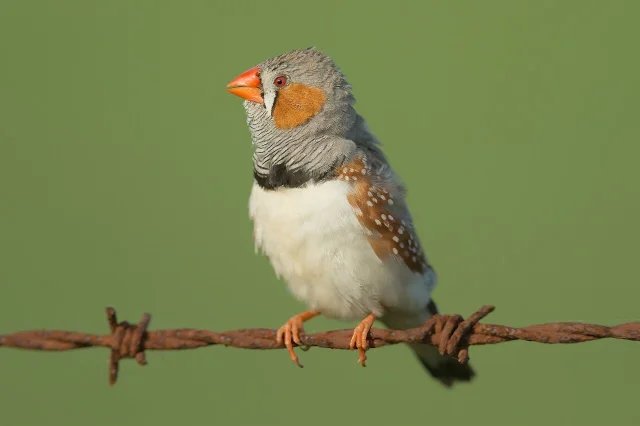
The Nature birdsong retraction where the people who caught it got erased. A March 2024 Nature paper on zebra finch song and sexual selection got its own podcast episode and a commissioned commentary on publication — the full VIP treatment. Then evolutionary ornithologist Martin Bulla and colleagues ran the numbers and found that the song pairs central to the study were reliable only 59% and 79% of the time. They submitted a formal Matters Arising response to Nature. Nature rejected it after two rounds. The paper got retracted anyway in May 2026 — the authors agreed once they checked the synthetic song pairs themselves — but the retraction notice doesn't mention Bulla's team at all. Bulla asked to be credited. Senior editor Henry Gee said that including them would require a full redraft, re-review, author sign-off, and new referee input, and that none of this was "now simply practical." Bulla called it "bibliographic erasure." The commissioned commentators who'd also flagged problems declined to retract their own commentary. 3
The parental alienation review that got lawyered off the internet. Robert Keith Head, a social work doctoral candidate, published a January 2026 review in a small humanities journal arguing that major medical and psychiatric organisations have rejected parental alienation as a legitimate concept, and that PA allegations correlate with documented domestic violence. The Parental Alienation Study Group sent a retraction demand within days. When the journal didn't fold, PASG's attorney sent a legal notice in April threatening proceedings within seven days. The journal wrote back refusing "summary censorship." PASG's attorney sent a final rejoinder on May 14. The paper was pulled five days later — May 19, 2026 — with the publisher claiming the decision followed an independent editorial review that found "critical methodological and structural flaws." Head says he answered every question. He's appealing. PASG is also going after the same author's separate Frontiers paper — the one that documents how retraction threats get used to suppress PA-critical scholarship, and which specifically references this case. Head to Retraction Watch: "My Frontiers paper is about reaching for retraction instead of writing a rebuttal. Then my IJRAH paper was removed instead of answered." 4
All four cases sourced from Retraction Watch and official retraction notices. Retraction characterisations follow what the notices actually say — no independent characterisation beyond the record.
참고 출처
- 1Elsevier retracts study tying sudden infant death syndrome to vaccinations – Retraction Watch
- 2Widely criticized keto diet study retracted – Retraction Watch
- 3Critics of birdsong study fight to be named in Nature's retraction – Retraction Watch
- 4Journal retracts paper criticizing parental alienation theory after group threatens to sue – Retraction Watch
이 콘텐츠를 둘러싼 관점이나 맥락을 계속 보강해 보세요.