Chanos: SpaceX is a $1.75T hopes-and-dreams IPO

Chanos: SpaceX is a $1.75T hopes-and-dreams IPO

On June 10 — three days before SpaceX began trading on Nasdaq — Jim Chanos told a room of alternative-investment managers at iConnections Global Alts New York 2026 that SpaceX's $1.75 trillion IPO is disconnected from any reasonable five-year earnings assumption. He argued the 90x revenue multiple, the xAI neocloud pivot, and data center economics all pull the curtain back on a valuation priced entirely on promises — not on what SpaceX demonstrably earns today.

Master Investors Excerpt
2026. 6. 12. · 21:15
구독 1개 · 콘텐츠 19개
Today, Friday June 13, SpaceX (Nasdaq: SPCX) opens for public trading — the largest IPO in history, priced at $135 per share and implying a $1.75 trillion valuation. The deal raised $75 billion, surpassed Saudi Aramco's 2019 record by nearly threefold, and was four times oversubscribed. 1 The market consensus has been uniformly bullish — Oppenheimer initiated coverage at Outperform with a $195 price target. 2
Three days before the IPO priced, Jim Chanos sat down on a conference stage in New York and said what few in the room wanted to hear.

Who Chanos is

Jim Chanos founded Kynikos Associates (Greek for "cynical") in 1985 and built it into the world's most respected dedicated short-selling firm. He is most widely known for shorting Enron before its 2001 collapse — a call made on forensic accounting analysis, not rumor. His current firm, Chanos & Company L.P., applies the same approach to identifying companies where financial reality diverges from market narrative. When Chanos speaks publicly about a valuation, it is not a reflexive contrarian tweet. It is a considered argument.

The core valuation argument

On June 10, at the iConnections Global Alts New York 2026 conference in a fireside chat with Bloomberg News's Natalia Kniazhevich, Chanos delivered his verdict on SpaceX's upcoming IPO:
"The company is not worth, in my opinion, $1.75 trillion based on any reasonable assumptions over the next five years." 1
The number that anchors his skepticism: SpaceX at $1.75 trillion trades at 90 times its revenues. He noted that Tesla — which itself trades at rich multiples sustained in part by unfulfilled promises on Full Self-Driving and robotics — currently trades at 14 times revenues. The gap between 14x and 90x is not a matter of degree. Chanos called SpaceX "a completely different animal" than Tesla, and not in a flattering sense. 1
The financials in SpaceX's S-1 filing support his skepticism. In 2025, SpaceX generated $18.67 billion in revenue but posted a $4.94 billion GAAP net loss and burned $13.8 billion in free cash flow. 2 The only segment generating actual profit was Starlink — SpaceX's satellite internet service, which accounts for roughly 60% of revenues — though Chanos noted Starlink's growth slowed in the most recent quarter. Morningstar's discounted cash flow model placed SpaceX's fair value at $780 billion, less than half the IPO price, treating Starship reusability and orbital data centers as long-dated options whose payoffs remain uncertain. 3
통계 카드를 불러오는 중…
Chanos's framing:
"We really can build whatever stories we want — colonies on Mars, factory tunnels, data centers in space — to justify the valuation. In bull markets, you put a premium on promises and in bear markets, you put a discount on reality." 1
He wasn't saying Mars colonies are impossible. He was saying any number can be justified with a compelling enough story — and that is precisely the problem.
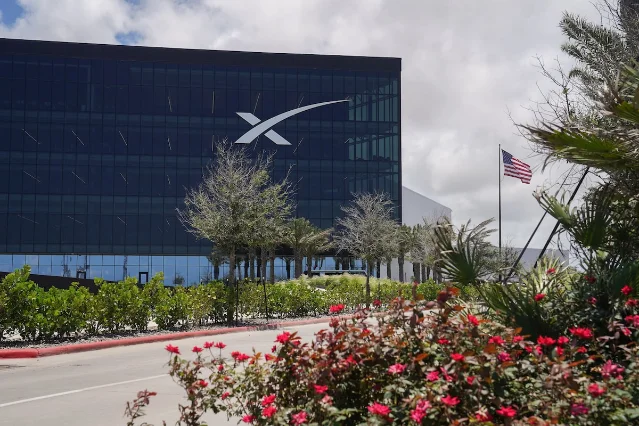
SpaceX headquarters at Starbase, Texas, one day before SPCX began trading
SpaceX Starbase facility, Texas, June 11, 2026. 1

The man behind the curtain

Chanos reached for the Wizard of Oz: "It really does feel very much a 'don't look at the man behind the curtain' situation." 4 The curtain, in his telling, conceals two specific financial realities that Wall Street's IPO enthusiasm has largely skipped over.
The first is xAI. SpaceX absorbed Elon Musk's AI venture — which carries $41.3 billion in cumulative losses — in February 2026. At the time, the deal was presented as transformative: SpaceX would become an AI company, and the xAI premium would justify much of the $1.75 trillion price tag. Chanos's read is less generous. He observed that xAI appears to be quietly abandoning its identity as an AI model developer:
"The real excitement should be about developing some new, powerful agentic model. But xAI seems to be suddenly changing its business model from developing models like Grok to essentially transforming into a neocloud." 4
A neocloud — supplying computing capacity to other AI firms — is a hardware leasing business, not an AI company. SpaceX recently signed compute supply deals with Anthropic and Google, moves that read as growth on Wall Street but register differently to Chanos: "That's crucial because the entire valuation rests on xAI's progress." 4 If xAI pivots from model differentiation to compute commoditization, the premium embedded in $1.75 trillion becomes much harder to justify.
The second is the data center business more broadly. Chanos has been bearish on data center operators since 2022, arguing they are price-takers — buying Nvidia chips and leasing capacity to hyperscalers — who carry depreciation risk without controlling the hardware supply chain. He called the sector "a bad business" with low-single-digit returns on capital, a judgment he extended to the orbital data center narrative in SpaceX's IPO story. 3 The current AI infrastructure buildout, he said, mirrors the late-1990s telecom overbuild — massive capital expenditure ahead of returns that never materialized at the expected scale.
Chanos is not alone in the skepticism. Michael Burry — who anticipated the 2008 housing collapse, as chronicled in The Big Short — separately commented in a Substack discussion: "Nothing in that S-1 suggests it is worth $1 trillion let alone $2 trillion." 4

The market-cycle argument

Chanos's sharpest line was not about SpaceX specifically — it was about the conditions that allow a $1.75 trillion valuation to clear the market four times over:
"Bull markets you put a premium on promises, and in bear markets you put a discount on reality. And right now we're clearly in the former, not the latter." 3
This is not a crash prediction. It is an observation about the current pricing regime: investors are paying for what might happen, not what has happened. SpaceX's $1.75 trillion prices in Starship commercial viability, Starlink growth recovery, orbital data centers, and xAI model leadership — simultaneously, over five years — against a 2025 baseline of a $4.94 billion net loss.
When asked whether he would short SPCX, Chanos was measured. He said he would need to see where the stock actually traded before committing. Getting to a couple hundred billion on SpaceX's existing businesses — Starlink and launch contracts — is plausible, he acknowledged. The other $1.5 trillion is where his skepticism sits. 2
That nuance matters. Chanos is not dismissing SpaceX as a company. He is dismissing the valuation — the distance between what SpaceX demonstrably earns today and the $1.75 trillion investors have agreed, four times over, to pay for the story of what it might become.
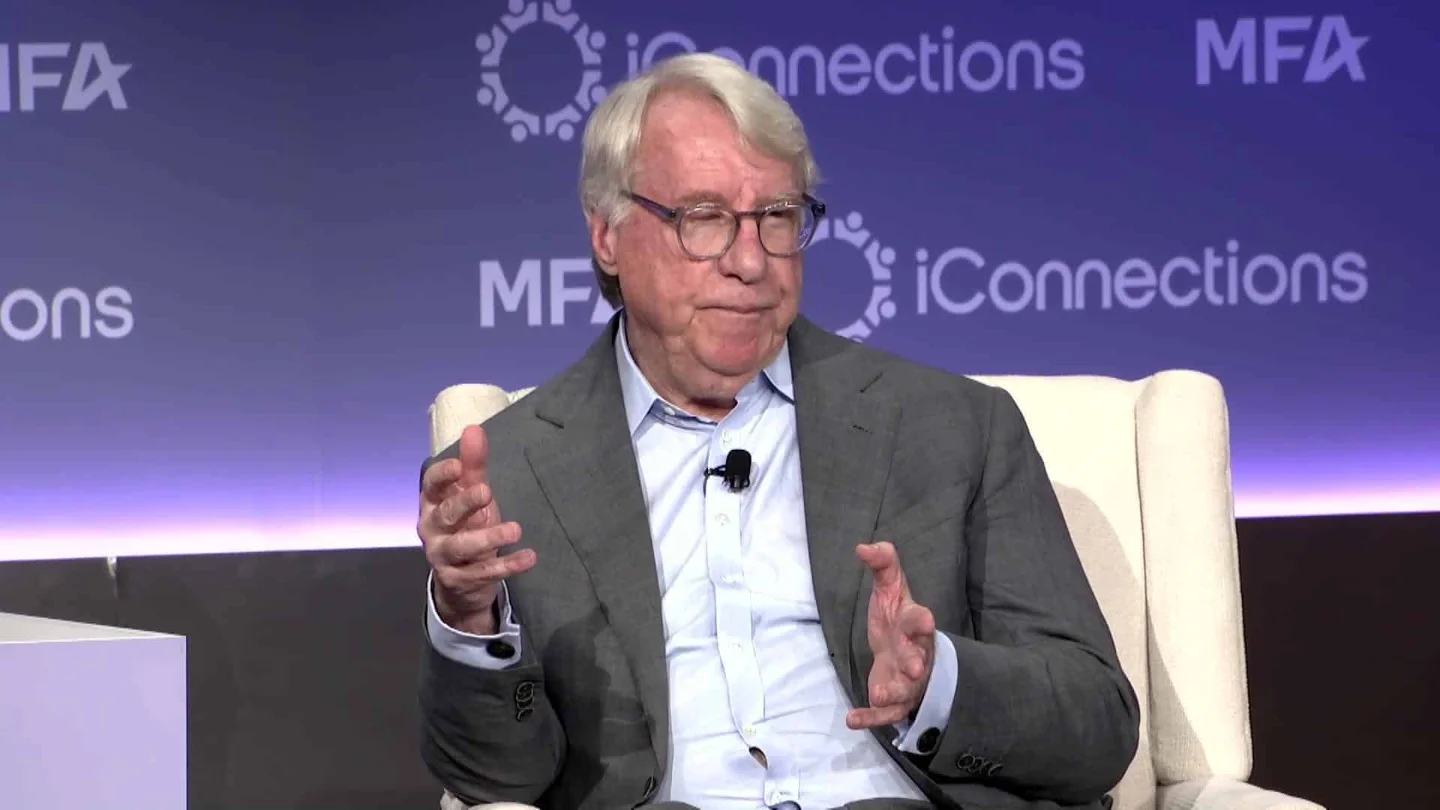
Cover image: Jim Chanos speaking at iConnections Global Alts New York 2026. Photo from Hedge Fund Alpha.

이 콘텐츠를 둘러싼 관점이나 맥락을 계속 보강해 보세요.

  • 로그인하면 댓글을 작성할 수 있습니다.