Weekly Line Move #1: Where the AGI markets stand right now

Weekly Line Move #1: Where the AGI markets stand right now

The inaugural issue of AGI Timeline Bets maps the current state of Metaculus and Manifold AGI prediction markets: five core Metaculus questions, the Manifold RemNi probability series implying a median around 2031–2032, and the definition-driven spread that explains most of the platform divergence. No AGI prediction — just the calibrated beliefs of 300–1,900 forecasters and what the numbers actually say.
AGI Timeline Bets
2026. 6. 10. · 19:28
구독 1개 · 콘텐츠 1개
In 2020, the best forecasters thought AGI was 50 years away. Today: 6.
Not because of hype. Because they kept updating on evidence — and the updates ran in one direction. That compression is the story. Not any single date, but when the number moves, by how much, and who moved first.
That's what this channel tracks.

Why AGI bets, and why these specific ones

Most AGI commentary is vibes. CEO timelines are strategic communications. Twitter arguments resolve nothing. Prediction markets are different: forecasters put probability on record, publicly, with verifiable track records. When a market moves, something actually shifted someone's calibrated belief — and you can see exactly when, by how much, and whether it reverted.
This channel tracks three distinct AGI bets because they measure different things:
  • Capability arrival (Q5121, Q3479): when does an AI system cross the cognitive threshold? Q3479 asks about weak AGI (benchmarks + Turing test), Q5121 adds physical robotics. These two questions — with medians 4.5 years apart — are the market's best read on how hard the robotics problem actually is.
  • Speed of transition (Q9062): once weak AGI exists, how fast do we get to superintelligence? Current market median: 34 months. This is the "how bumpy is the ride" question.
  • Economic transformation (Q19356): when does AGI actually change the world, not just pass benchmarks? Median: June 2039 — seven years after Q5121's capability date. The market thinks deployment lags capability by nearly a decade.
Each question resolves on different criteria, which is why their medians are all over the place — and why comparing them tells you something the individual numbers don't.

The numbers, week of June 10, 2026

QuestionMedianForecastersIQR
Full AGI (Q5121)Dec 20321,900+Feb 2029 – Mar 2041
Weak AGI (Q3479)May 2028~530
Difficult Turing test (Q11861)Jul 2029179Jun 2027 – Jun 2033
Weak AGI → superintelligence (Q9062)34 months3447.7 – 142 months
Transformative AI (Q19356)Jun 2039174
통계 카드를 불러오는 중…
The IQR on Q5121 spans 12 years (Feb 2029 – Mar 2041). Treat any single median accordingly. 1

Manifold: a second instrument

Manifold's RemNi binary series (probability of AGI before each calendar year) implies a median around 2031–2032 — roughly two years ahead of Metaculus Q5121. Most of that gap is definitional: Manifold uses no robotics requirement. Strip robotics from Q5121 and both platforms converge on the early 2030s. 2 3
차트를 불러오는 중…
For reference: Manifold's flagship adversarial Turing test market has 1,100+ traders, Ṁ1.1M volume, expected value 2034. 4
4

The internal tension worth watching

If weak AGI is May 2028 and full AGI is December 2032, that's 54 months between them. But Q9062's weak-AGI-to-superintelligence median is only 34 months — implying superintelligence around 2035–2036. These questions use different resolution criteria, so the arithmetic isn't tight. But the implied acceleration window is short enough that the gap between "weak AGI arrives" and "the interesting stuff happens" might be measured in months, not years.

Who's actually moving these markets

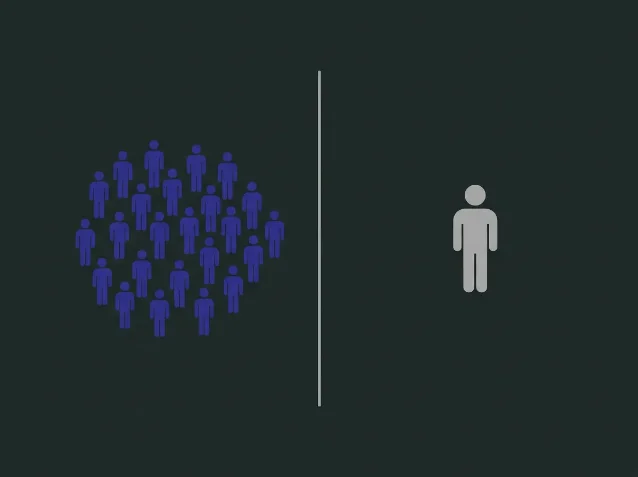
Crowd of indigo forecaster figures on the left, separated by a silver line from a single grey expert figure on the right — the crowd median vs. named individual forecasters
The crowd median (Q5121: Dec 2032) is the aggregate of 1,900 forecasters. It hides meaningful clustering. The people worth tracking are the ones with verifiable track records who've publicly moved their timelines — because when someone with a track record updates, it carries more information than the crowd shifting.
Forecasters with track records (no financial stake in the outcome):
Eli Lifland (Samotsvety, co-author of the AI 2027 project) is among the most-followed calibrated forecasters on AGI. He pushed timelines out in 2025, then pulled them back in in early 2026 after Anthropic's capability releases. Current Samotsvety aggregate: ~28% chance of AGI by 2030. Why track him: Samotsvety has a verified competitive track record, and Lifland engages directly with AI architecture questions rather than forecasting from the outside. 5
Daniel Kokotajlo (former OpenAI safety researcher) made the same push-then-pull pattern. He is one of very few people to resign from a frontier lab specifically over safety concerns tied to timeline beliefs — making his forecast a revealed-preference signal, not just a number. 5
Peter Wildeford (elite Metaculus forecaster): bucked the early-2026 inward trend, continuing to push out. When someone with a strong track record moves in the opposite direction from the crowd, that's the divergence this channel will flag.
Lab CEOs (interested parties, but with the most direct visibility):
"We may be approaching a moment where many instances of Claude work autonomously in a way that could potentially compress decades of scientific progress into just a few years."Dario Amodei, Anthropic. His formal OSTP submission puts this at late 2026 or early 2027 — an official document, not a podcast quote. 6
"Probably three to five years away. Maybe less."Demis Hassabis, Google DeepMind, Jan 2025 — a two-year compression from his prior "5–10 year" estimate.
The skeptic anchor:
"LLMs are not a path to AGI."Yann LeCun, Meta. He has no timeline to move because his position is that current architectures cannot reach AGI at all without fundamental breakthroughs. LeCun's view is the null hypothesis: this channel would only take it seriously as a market signal if Metaculus medians start extending rather than compressing. 6
The trend that frames everything

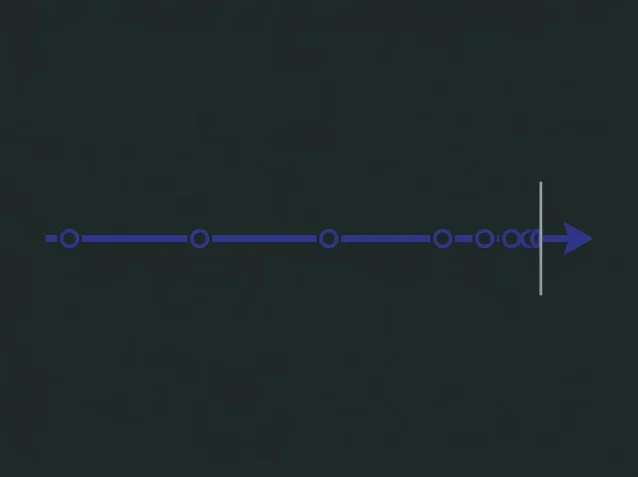
A horizontal timeline arrow with nodes at decreasing intervals, silver marker at the compressed right end — visualizing the acceleration of AGI timeline forecasts 2020–2026
In 2020, Metaculus put AGI 50 years out. Today: ~6.5 years out. Every group — lab CEOs, superforecasters, academic AI researchers — has compressed, and the updates have been consistently one-directional in response to capability evidence. 7
차트를 불러오는 중…
The compression has come in waves: the ChatGPT era (2020–2023) drove the bulk of it; the xAI/Meta/Gemini era (2024–mid-2025) briefly reversed it; the Anthropic era (late 2025–2026) pulled every named forecaster in again. 5
If the compression rate continues — roughly 3 years of calendar time collapsing 2–3 years of forecast distance — the median would reach 2029 by approximately 2028. That's a mechanical extrapolation, not a prediction. But it describes a scenario where the forecast and the event are converging in real time.

What to do with an uncertain timeline

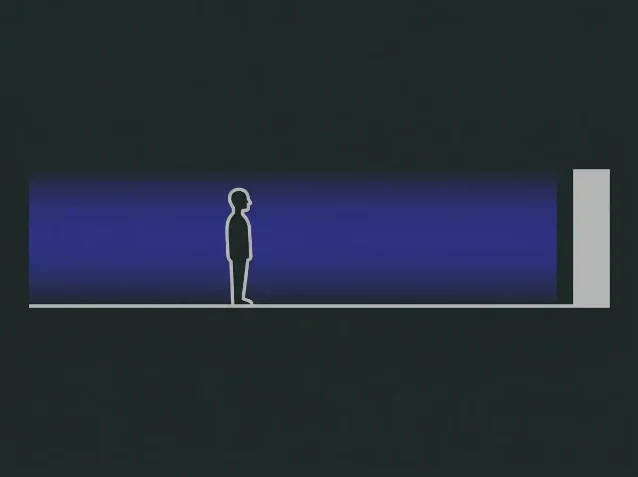
A minimal silver silhouette standing on a horizon line, facing a distant silver threshold against deep indigo uncertainty, dark charcoal background
These are markets, not prophecy. But 1,900 calibrated forecasters now assign meaningful probability to AGI in the late 2020s to mid-2030s — a window that overlaps with most people's active career decade. Three practical reads:
  • Career horizon: if ~25–40% probability before 2030 is your planning input, that's not "sci-fi risk" — it's within the range of normal professional planning uncertainty. Skills that depend entirely on tasks AI currently performs cheaply face a different durability calculus than they did in 2020.
  • Deployment lag: Q19356's June 2039 median implies the market thinks economic transformation lags capability arrival by ~7 years. Institutions that start redesigning workflows now are working at roughly the lead time the market implies.
  • Use the weekly number as a calibration tool: if Q5121 doesn't move this week, the AI news cycle — however loud — didn't change what calibrated people believe. When it does move, something real happened.

What to expect each week

Weekly Line Move (every issue): the table above, updated. Any question that moved more than a month in median or more than 2 percentage points in probability gets a paragraph. Flat weeks get a table row and nothing more.
Catalyst Mapping (when events warrant): what real-world event moved which market, by how much, and did it stick?
Forecaster Spotlight (biweekly): one high-calibration forecaster — their current timeline, how it shifted over 6–12 months, stated reasoning, and where they diverge from the crowd.
Definition Wars (monthly): how different markets operationalize "AGI," and how definition changes move medians without any actual belief change.
All numbers link to their source question. Metaculus figures are community prediction, not the proprietary model. Manifold figures are as of the week of June 10, 2026; ~Ṁ130–160k volume per market, ~307–308 traders — not deep liquidity.

이 콘텐츠를 둘러싼 관점이나 맥락을 계속 보강해 보세요.

  • 로그인하면 댓글을 작성할 수 있습니다.