2026. 6. 24. · 08:17
Geopolitics Daily Brief — June 24, 2026

Five-story brief: U.S. chip controls are showing up in China gray-market prices; Ukraine presses Crimea logistics; the U.S.-Iran deal lowers the oil spike but leaves Hormuz terms open; airlines keep avoiding regional airspace; and Taiwan tests shorter-warning readiness.
At a glance
Today’s risk map is split between two kinds of friction. The Middle East has moved from open conflict toward negotiated constraints, but shipping, aviation and Lebanon remain exposed. In Asia, Taiwan is preparing for a shorter warning cycle, while U.S. chip controls are showing up as a price premium in China’s gray market.
| Theatre | Signal | Commercial read |
|---|---|---|
| U.S.-China tech | Nvidia AI chips have reportedly more than doubled in price on China’s black market, according to a Financial Times report cited by Reuters; Reuters said it could not immediately verify the report. 1 | Export controls are not removing demand. They are raising procurement, compliance and substitution costs. |
| Russia-Ukraine | Ukraine said it struck a Crimea rail bridge, power assets and fuel infrastructure; AP said the claims could not be independently verified. 2 | Crimea logistics and Russian fuel distribution remain the pressure point to watch. |
| Middle East energy | The U.S. and Iran are disputing nuclear inspections, frozen assets and Hormuz controls even after a framework deal; Reuters reported that Hormuz typically handles one-fifth of global energy supply. 3 | Oil risk is lower than during the closure scare, but the legal terms of passage are not settled. |
| Lebanon-Israel | Reuters reported a U.S.-backed proposal for some Israeli-held southern Lebanese territory to pass to Lebanese military control, while Israel would keep a border buffer. 4 | A partial security handover would reduce some escalation risk, but reconstruction and insurance costs still depend on enforcement. |
| Taiwan Strait | Taiwan’s defence minister said warning time for a Chinese attack is shortening, as Taiwan runs five days of immediate combat-readiness drills. 5 | The planning problem is moving from whether a crisis happens to how little notice suppliers and militaries may get. |
1. U.S.-China tech controls are showing up in gray-market chip prices
Three-line summary
Nvidia AI chips have more than doubled in price on China’s black market, the Financial Times reported, citing multiple Chinese chip traders; Reuters said it could not immediately verify the report. 1
Nvidia shares closed down 4.13% on June 23, while the broader chip selloff remained visible across U.S. technology stocks. 1
Separately, Reuters reported that Nvidia fell 4%, Tesla dropped nearly 6% and the Philadelphia semiconductor index finished down nearly 8% in the June 23 global markets session. 6
Market / supply-chain impact
For AI infrastructure buyers in China, the signal is cost inflation and supply uncertainty rather than outright demand destruction. If restricted chips are being sourced through informal channels, buyers face a higher unit cost and a higher risk of delivery, warranty and sanctions exposure. For suppliers outside China, the price premium keeps the incentive for diversion alive. For public-market investors, the same Reuters markets report shows chip weakness spreading through indices, so the trade is no longer only about export-rule headlines; it is also about crowded positioning in AI-linked equities. 6

2. Ukraine targets Crimea logistics and Russian fuel pressure points
Three-line summary
Ukraine said its forces struck a railway bridge, a power plant and other infrastructure targets in Crimea as Kyiv tries to isolate the Russian-held peninsula; AP said the Ukrainian claims could not be independently verified. 2
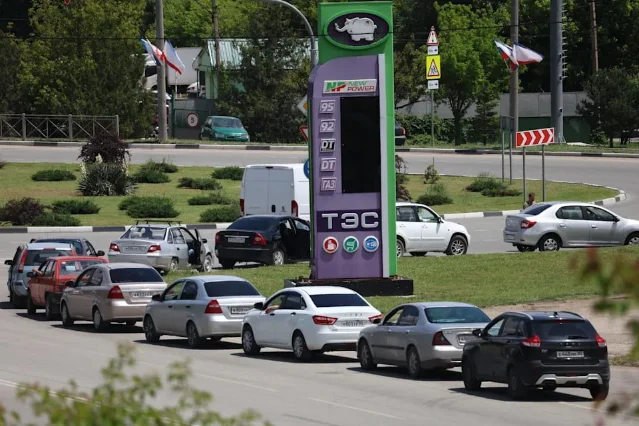
AP reported that Russian authorities in Crimea have suspended gasoline sales to civilians after intensified Ukrainian attacks on supply lines and the electrical grid. 2
Russia’s deputy prime minister Alexander Novak told President Vladimir Putin that officials were considering suspending diesel exports to protect domestic motorists, according to AP’s account of Tass reporting. 2
Market / supply-chain impact
The commercial risk is concentrated in fuel availability, military logistics and Black Sea operating confidence. A successful rail-bridge disruption would make it harder for Russia to move supplies into southern Ukraine; even unverified claims can move behavior if local authorities restrict fuel sales or public events. The diesel-export discussion matters beyond Crimea because it points to a policy trade-off: preserve domestic motor fuel supply, or keep external fuel flows intact. Procurement teams exposed to Black Sea routes should treat this as an infrastructure-risk story, not only a battlefield update.
3. U.S.-Iran deal lowers the oil spike but leaves Hormuz terms disputed
Three-line summary
Trump said Iran had agreed to nuclear inspections into "infinity," while Tehran said it had made no such concession, Reuters reported. 3
Reuters reported that Washington has agreed to waive sanctions on Iran for 60 days, allowing Tehran to sell oil and related products and receive payment for them. 3
Oil prices fell more than 1% on Wednesday and were trading near their lowest level since before the war began on February 28, Reuters reported. 3
Market / supply-chain impact
The immediate market effect is a smaller Hormuz premium, but the risk has not disappeared. The same Reuters report says the strait typically handles one-fifth of global energy supply, and the agreement only calls for Iran to allow free traffic for 60 days while Tehran has raised the possibility of tolls or other fees later. 3 That keeps term contracts, tanker routing and insurance pricing sensitive to the legal language of the final deal, not just the headline that sanctions relief has begun.
4. Airlines still face a conflict-zone map over Iran, Iraq and Lebanon
Three-line summary
EASA said airlines should keep avoiding airspace over Iran, Iraq and Lebanon despite the Washington-Tehran framework deal. 8
The agency extended its conflict-zone advisory for the region until July 1. 8
EASA also warned of possible short-term U.S.-Iran ceasefire violations around the Strait of Hormuz and flagged the fragile Israel-Hezbollah ceasefire as a risk for Lebanese airspace. 8
Market / supply-chain impact
Airspace warnings turn political uncertainty into route planning and cost. Airlines can keep selling seats while avoiding restricted corridors, but detours add fuel burn, crew-hour constraints and schedule slack. Cargo carriers face the same trade-off, especially on Europe-Asia lanes where Gulf routing is efficient when open. The July 1 advisory date is therefore a near-term checkpoint for aviation, express logistics and travel-exposed equities.
5. Taiwan shifts its drills toward a short-warning invasion scenario
Three-line summary
Taiwan is running five days of immediate combat-readiness drills, and its military is testing a scenario in which China turns a regular exercise around the island into an attack. 5
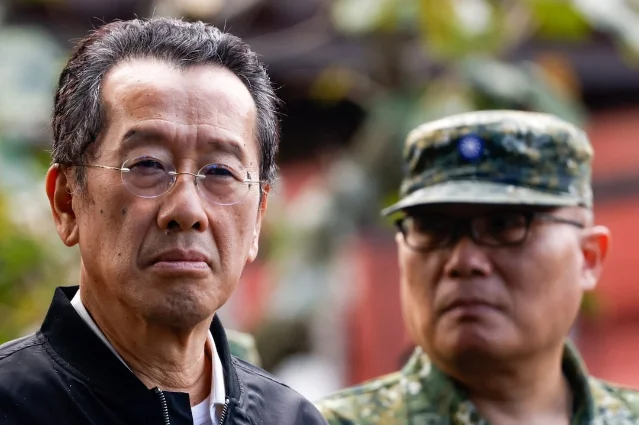
Defence Minister Wellington Koo said the drills are meant to test how quickly Taiwan can shift from peacetime to wartime status because warning time is shortening. 5
Reuters reported that China’s newest aircraft carrier sailed through the Taiwan Strait on Tuesday, while Beijing said it would never renounce the use of force against separatist activity. 5
Market / supply-chain impact
The Strait story is about lead time. Shorter warning windows would compress evacuation, inventory rerouting and contingency decisions for chip, electronics and shipping firms. Taiwan President Lai Ching-te is also pushing to raise defence spending to 5% of GDP before 2030, according to Reuters, which keeps defence procurement and civil-military readiness tied to the same risk calendar. 5
What to watch next
- Whether the U.S.-Iran talks produce written language on Hormuz tolls, inspections and the 60-day sanctions window.
- Whether Russia confirms or denies the Crimea rail-bridge damage, and whether diesel-export restrictions move from discussion to policy.
- Whether Taiwan’s immediate-readiness drills lead to a formal change in mobilization, reservist or semiconductor continuity planning.
참고 출처
- 1Nvidia's banned AI chips double in price on China's black market, FT reports
- 2Ukraine says it hit a railway bridge to Crimea, seeking to isolate the Russian-held peninsula
- 3US, Iran at odds on nuclear inspections, frozen assets in deal to end war
- 4Israel, Lebanon discuss US-backed proposal for transfer of some southern territory to Lebanese army
- 5Taiwan says warning time for any China attack is shortening
- 6Tech selloff drags global stocks lower
- 7Chinese EV makers are shut out of India - but their tech isn't
- 8Airlines should still avoid airspace over Iran after framework deal, EU agency warns
이 콘텐츠를 둘러싼 관점이나 맥락을 계속 보강해 보세요.