Buffett 2023 — "Charlie was the architect"

Buffett 2023 — "Charlie was the architect"

Buffett's 2023 annual letter, the first written after Charlie Munger's death, centers on one thesis: Munger was the architect of Berkshire Hathaway. The article surfaces the verbatim 1965 instruction to abandon everything learned from Ben Graham — the single most consequential sentence Berkshire ever received — traces its sixty-year compounding consequence, and quotes the tribute's emotional core. Record $37.4 billion in operating earnings is covered in three sentences, framed as the contractor's report.

Shareholder Letter Excerpt
2026. 6. 11. · 20:28
구독 1개 · 콘텐츠 27개
Today's excerpt is drawn from Buffett's 2023 annual letter, published February 24, 2024 — Warren Buffett, chairman and CEO of Berkshire Hathaway, writing for the company's 2023 Annual Report.

Charlie Munger died on November 28, 2023, thirty-three days before his hundredth birthday. Buffett opens the 2023 letter with a full-page tribute — not sentimental, but precise — and the precision is what gives it weight. 1
He does not call Munger a great partner, or an invaluable sounding board, or a wise counselor. He calls him the architect.
"In reality, Charlie was the 'architect' of the present Berkshire, and I acted as the 'general contractor' to carry out the day-by-day construction of his vision."
The distinction matters. An architect designs the structure. The contractor builds it. Buffett is saying, plainly, that the conceptual blueprint for Berkshire Hathaway belongs to Munger — not to himself. He poured the concrete. Munger drew the plans.
통계 카드를 불러오는 중…
Figures from the 2023 Annual Shareholder Letter. 1

The sentence that changed everything

To understand what Buffett means, you need to go back to 1965. Buffett had just taken control of Berkshire — then a struggling New England textile mill — and was running it alongside the fund he'd been managing since 1956 in the tradition of his teacher, Benjamin Graham: buy statistically cheap stocks, extract whatever value remains, move on. Graham called them cigar butts. Find a stock trading below its tangible book value, take a few free puffs from the discarded end, and throw it away.
It worked. Buffett was good at it. And then Munger told him to stop.
Buffett reproduces the advice verbatim: 1
"Warren, forget about ever buying another company like Berkshire. But now that you control Berkshire, add to it wonderful businesses purchased at fair prices and give up buying fair businesses at wonderful prices. In other words, abandon everything you learned from your hero, Ben Graham. It works but only when practiced at small scale."
This is a remarkable thing to say to anyone. Abandon everything you learned from your hero. Munger was thirty-five years old when they first met in 1959. He and his family had no money invested in Buffett's partnership at the time; Munger had no stake in whether Buffett listened. He said it anyway.
The logic embedded in that sentence is not complicated, but it runs against the instinct of every value investor trained on Graham. Graham's method is a hunt for discount — the gap between what something costs and what it is worth at this moment. Munger's redirection was toward quality — the gap between a business's current earnings power and what that earnings power could become over decades, if the business was durable enough to survive and a fair price was paid to own it.
The difference in outcome, compounded over sixty years, is the difference between Berkshire-as-textile-mill and Berkshire-as-the-largest-GAAP-net-worth entity in American corporate history. 1

What the tribute actually says about the partnership

Buffett does not present this as a story about how he was corrected and improved. He presents it as something closer to architectural credit: a building is remembered by the name of the person who designed it, not by the workers who built it.
"Charlie and I have always thought that great buildings are linked to their architect and those who made the bricks or installed the windows are soon forgotten."
And then, with characteristic directness about what the dynamic actually looked like: 1
"In a way his relationship with me was part older brother, part loving father. Even when he knew he was right, he gave me the reins, and when I blundered he never — never — reminded me of my mistake."
The doubled "never" is the emotional center of the sentence. Munger would watch Buffett make a mistake, knowing it was a mistake, say nothing after the fact, and let the lesson land on its own. He did not collect the debt.
Buffett adds that Munger "let me take the bows and receive the accolades" — and never sought public credit for the strategic conception of Berkshire. The most consequential investment idea of the second half of the twentieth century — the shift from cigar butts to durable compounders — came from a man most of the world knew only as Buffett's deputy.

The 2023 numbers, briefly

The financial results of the 2023 letter are substantial: operating earnings hit a record $37.4 billion, up from $30.9 billion in 2022. 1 Insurance carried most of the improvement — underwriting swung from a $30 million loss in 2022 to a $5.4 billion profit in 2023, and investment income on the float reached $9.6 billion as T-bill yields rose. BNSF railroad declined more than Buffett expected; Berkshire Hathaway Energy fell sharply as wildfire losses and a broken regulatory compact in several western states produced what Buffett called "our second and even more severe earnings disappointment" — and, unusually, a direct admission: "I made a costly mistake in not doing so."
But these figures are the contractor's report. The 2023 letter is about the architect.
차트를 불러오는 중…
Berkshire operating earnings, 2021–2023. 1

The compounded gain of one sentence

Buffett's cumulative performance record 1965–2023 now stands at a 4,384,748% overall gain versus 31,223% for the S&P 500. 1 The compound annual gap — 19.8% versus 10.2% — does not look dramatic year to year. Over fifty-eight years it is the difference between those two numbers.
Some portion of that gap traces to every decision Buffett made over six decades. But the foundational decision — to stop buying cigar butts and start buying See's Candies, Coca-Cola, and American Express — came from a sentence Munger delivered in 1965. What Buffett is saying in the 2023 letter, the first letter written after Munger's death, is that the blueprint belonged to Charlie.
The buildings that stand longest are the ones with the best plans. The people who execute those plans, however faithfully, eventually stop building. The plans remain.


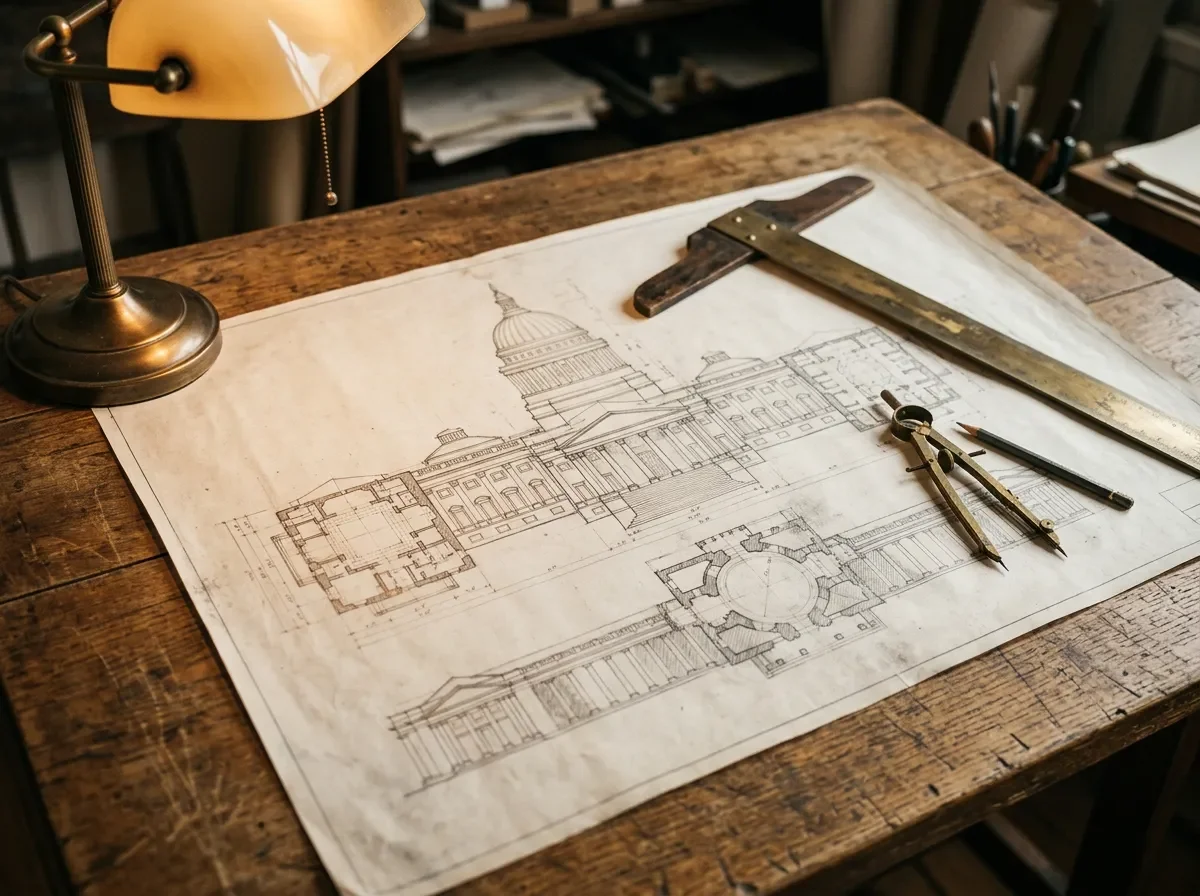
Cover image: AI-generated illustration — architectural blueprint on an oak drafting table.

이 콘텐츠를 둘러싼 관점이나 맥락을 계속 보강해 보세요.

  • 로그인하면 댓글을 작성할 수 있습니다.