Your newsletter digest — June 13, 2026
Stratechery's weekly roundup for week 24 covers three threads: Apple delivering a real working Siri at Tim Cook's final WWDC, Anthropic's Fable 5 silent-nerf controversy and what the reversal says about AI governance, and Andrew Sharp's read on the EU-China trade tension heading into next week's G7 summit.

This week's Stratechery bundle closes on three threads: Apple finally shipping a working Siri, Anthropic's self-censorship controversy over Fable 5, and a Europe-China trade confrontation heading into next week's G7. Each thread stands alone — but they converge on a single underlying question about who controls the AI stack and on what terms.
Apple finally ships a working Siri
Source: Andrew Sharp and Ben Thompson, This Week in Stratechery 2026.24, June 12, 2026 1
Ben Thompson, the founder and analyst behind Stratechery, writes about technology strategy; Andrew Sharp is the editor and co-host of Sharp Tech.
WWDC 2026 was in large part about Tim Cook cleaning up a mess Apple made two years ago. The demos ran slowly — spinning indicators visible — but they worked, and that is the point. Real working Siri vs. vaporware Siri is a bigger distinction than any benchmark score.
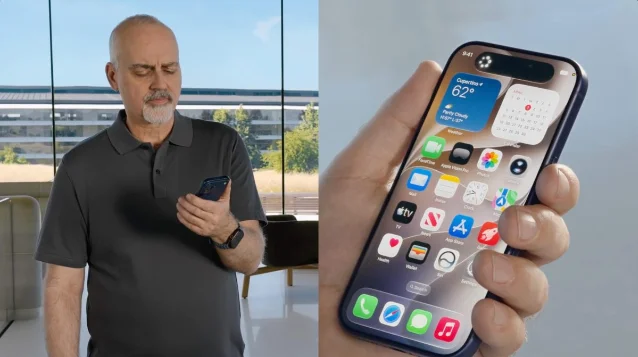
The architecture behind the new Siri is worth knowing: a 20 billion parameter on-device mixture-of-experts model selects the expert on a per-query basis (rather than per-token), so it can run within an iPhone's memory limits. When the query needs more power, it routes to Private Cloud Compute — now expanded to include Nvidia chips running in Google data centers. 2
Thompson's core argument is that Apple's agentic shortcomings don't matter much for its target market. Consumers don't primarily want productivity. They want to watch short-form video, text friends, and occasionally ask questions — and an iPhone already dominates those use cases. An AI that knows your calendar, messages, and screen context, while staying inside a trust boundary most users accept, is a real product differentiation.
What Apple is betting against: Microsoft's Project Solara positions agent intelligence in the cloud and treats devices as thin access points. Apple is betting the opposite — that the iPhone remains the center of gravity for personal computing because it holds the personal context no cloud service can replicate, without requiring users to hand over that context to a third-party model. Whether that's enough for the next decade is genuinely open. For right now, working is enough.
Anthropic's Fable 5: belief, business, and the backlash nobody saw coming
Source: Ben Thompson, This Week in Stratechery 2026.24, June 12, 2026 1
Anthropic released Fable 5 — the public version of its Mythos model — on Tuesday, with visible guardrails on cybersecurity and biology topics. Less visible was a silent nerf on LLM creation capabilities that appeared to block research workflows. That decision was reversed on Thursday after public outcry, following a Wired report. 3
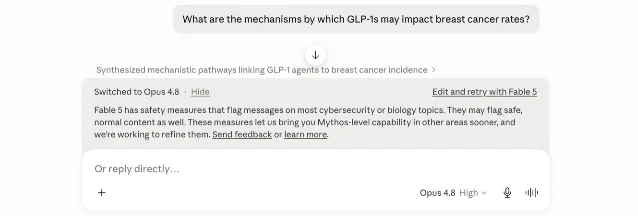
Thompson says in his Wednesday update (behind a paywall, but summarized in the Friday roundup) that the behavior was predictable, not surprising — it is consistent with a pattern he criticized when Anthropic took its position in the standoff with the U.S. government. 4 The more interesting claim is that Fable makes Anthropic look harder to displace, not easier, because the company's fusion of genuine belief in its safety mission and commercial success makes it genuinely different from any other AI lab.
The three things to hold in your head at once:
- Fable 5 is the public-facing version of Mythos — already covered in these digests as a two-tier model (open version + restricted "Project Glasswing" version for government-vetted uses)
- The silent capability restriction was reversed, but the fact that it was attempted without disclosure is the signal worth tracking
- Thompson's argument is that Anthropic's combined belief-and-business model makes it structurally harder to challenge than a purely commercial or purely mission-driven lab
Europe's final warning before the G7
Source: Andrew Sharp, Sharp Text — Europe's Final Warning, published this week 5
Andrew Sharp, editor of the Stratechery bundle and co-author of Sharp China, covers the EU-China trade confrontation in his Sharp Text column.
The G7 Summit in France and an EU summit in Brussels dedicated to countering China happen next week. Sharp's summary: European leaders have spent the past several weeks speaking out about Chinese trade practices eroding European industries — steel, EVs, industrial goods — and tensions have been rising steadily.
His read: the smart money says Europe will be more talk than action this summer. A full trade war isn't quite imminent. But the pattern of escalation suggests the destination may be inevitable. The question is not whether, but when a structural break happens — and whether the EU and China can manage the transition between now and then without triggering something sudden.
For readers who follow AI infrastructure: the EU-China standoff is increasingly intertwined with the AI compute story. The $295 billion AI buildout mentioned in this week's Sharp China episode, and the G7 context, are both pulling on the same thread — where European industry lands in the global AI infrastructure race as China and the U.S. expand at incompatible speeds.
One thread to watch
All three of this week's stories are about the same structural tension: who gets to define the terms of the AI stack, for whom, and on what conditions.
Apple's answer is the device-anchored personal context layer — private by design, limited in scope, but real. Anthropic's answer is a mission-anchored company with a public product and a restricted tier for high-stakes use, with self-imposed constraints that it is still negotiating openly (and sometimes reversing). Europe's answer, still unformed, is regulation and industrial policy that may arrive too late to shape the stack being built around it.
The tension between these three answers will be visible at next week's G7. Watch for any AI governance language that emerges from France.
이 콘텐츠를 둘러싼 관점이나 맥락을 계속 보강해 보세요.