
Four Oncology Drugs and Two Medical Devices Cleared: FDA Approvals, May 10–17, 2026
The FDA cleared four first-in-class or indication-expanding oncology drugs (Beqalzi, Inqovi+venetoclax combo, Tecentriq MRD-guided, Enhertu early-stage) and two novel medical devices during May 10–17, 2026 — with combined peak-sales potential exceeding $8 billion annually.

The FDA issued four oncology drug approvals and cleared two medical devices during the week of May 10–17, 2026. Three of the drug decisions carry "first-in-class" labels that will reshape treatment sequencing in their respective diseases. Below is a full accounting of every approval in the window, with clinical data and commercial context for each.
Summary: all approvals at a glance
| Date | Name | Sponsor | Indication / Use | Pathway | First-in-class signal |
|---|---|---|---|---|---|
| May 13 | Beqalzi (sonrotoclax) | BeOne Medicines (Nasdaq: ONC) | R/R MCL after ≥2 prior lines including BTK inhibitor | Accelerated approval (sNDA) | First BCL-2 inhibitor for MCL; first new BCL-2 inhibitor in U.S. in a decade |
| May 13 | Inqovi + venetoclax | Taiho Oncology (Otsuka Holdings) | Newly diagnosed AML, adults ≥75 or unfit for intensive chemo | sNDA, Orphan Drug | First all-oral HMA + BCL-2 combination for AML |
| May 15 | Tecentriq / Tecentriq Hybreza | Genentech (Roche Group) | Adjuvant MIBC after cystectomy, ctDNA MRD-positive | sBLA, Priority Review | First ctDNA MRD-guided therapy approval in any cancer type |
| May 15 | Enhertu (T-DXd) — neoadjuvant | Daiichi Sankyo / AstraZeneca | HER2+ Stage II/III early breast cancer, prior to surgery | sBLA, Standard Review | First ADC-based neoadjuvant regimen for HER2+ early BC |
| May 15 | Enhertu (T-DXd) — adjuvant | Daiichi Sankyo / AstraZeneca | HER2+ early BC with residual disease after neoadjuvant trastuzumab + taxane | sBLA, Priority Review + BTD | First ADC-based adjuvant to beat T-DM1 head-to-head |
| May 11 | Aurie Reusable Catheter System | Aurie (CathBuddy, Inc.) | Intermittent urinary catheterization, adult male patients | De Novo (Class II) | First reusable intermittent catheter system ever authorized |
| May 12 | Bayesian Health Sepsis Monitor | Bayesian Health | Continuous AI sepsis flagging in hospitalized patients | 510(k) (Class II SaMD) | First continuous AI sepsis monitor cleared by FDA |
Drug approvals: oncology and hematology
All four drug decisions this week target cancers of the blood or solid tumors. Two arrived on May 13 and two on May 15.
Beqalzi (sonrotoclax) — first BCL-2 inhibitor approved for mantle cell lymphoma
Date: May 13, 2026 1
Drug: Beqalzi (sonrotoclax), an oral BCL-2 (B-cell lymphoma 2) inhibitor — specifically a BH3 mimetic that binds BCL-2 protein to restore apoptosis in malignant B cells. Taken as a 320 mg tablet once daily after a 4-week ramp-up to manage tumor lysis syndrome (TLS) risk.
Sponsor: BeOne Medicines USA, Inc. (formerly BeiGene, Ltd., rebranded November 2024; redomiciled to Switzerland January 2025; Nasdaq: ONC). U.S. headquarters in San Carlos, CA; flagship manufacturing and R&D facility at Princeton West Innovation Campus, Hopewell, NJ.
Indication: Adults with relapsed or refractory mantle cell lymphoma (MCL, a rare B-cell non-Hodgkin lymphoma) who have received at least two prior lines of systemic therapy, including a BTK inhibitor (Bruton's tyrosine kinase inhibitor such as ibrutinib, acalabrutinib, or zanubrutinib).
Regulatory context: Accelerated approval based on overall response rate (ORR), with continued approval contingent on a confirmatory trial. Received Priority Review, Breakthrough Therapy Designation, and Orphan Drug Designation. Reviewed under FDA Project Orbis with the European Medicines Agency (EMA) as observer. Novel Drug #14 of 2026.
What makes it first-in-class: Venetoclax (Venclexta, AbbVie/Genentech) — the existing BCL-2 inhibitor approved since 2016 for CLL — was never approved for MCL. Beqalzi is the first BCL-2 inhibitor to reach approval in this indication, and the first new BCL-2 inhibitor approved in the U.S. in a decade. BeOne claims sonrotoclax is 14× more potent than venetoclax and 6× more selective for BCL-2 in preclinical assays, with a shorter half-life that eases TLS monitoring and dose escalation. 2
Pivotal trial: BGB-11417-201 (NCT05471843), a Phase 1/2, single-arm, open-label, multicenter study. Efficacy evaluated in 103 adults with R/R MCL at the recommended Phase 2 dose of 320 mg, all of whom had prior anti-CD20 therapy and a BTK inhibitor. 3
Key efficacy (IRC-assessed, n=103): 1
| Endpoint | Result |
|---|---|
| Overall response rate (ORR) | 52% (95% CI: 42–62%) |
| Complete response (CR) rate | 16% (95% CI: 9.1–24.0%) |
| Median time to response | 1.9 months |
| Median duration of response (DOR) | 15.8 months (95% CI: 7.4–NE) |
| Median PFS | 6.5 months |
| Median follow-up | 11.9 months |
Key safety (n=115 MCL patients): Serious adverse reactions occurred in 37%; pneumonia was the most common serious event (10%). Grade ≥3 neutropenia: 19.1%. Clinical TLS: 1.7%; laboratory TLS: 5.2% (all resolved). Discontinuation due to treatment-emergent adverse events: 13.9%. Deaths during the study: 36.5%, most due to disease progression. Warnings include TLS (can occur as early as 4 hours post-dose), serious infections, neutropenia, and embryo-fetal toxicity. Beqalzi is contraindicated with strong CYP3A inhibitors during initiation and dose ramp-up. 1
Confirmatory trial: CELESTIAL-RRMCL (NCT06742996) is a Phase 3, randomized, double-blind study comparing sonrotoclax + zanubrutinib vs. placebo + zanubrutinib in R/R MCL. Enrollment target: 300. Primary endpoint: PFS by blinded independent review. Started March 2025; estimated primary completion August 2028. 4
"The data supporting the approval of sonrotoclax in the U.S. confirm its role as a foundational therapy for mantle cell lymphoma in the post–BTK inhibitor setting, and demonstrate that it can deliver robust disease control when treatment choices are limited and outcomes are poor."— Michael Wang, MD, Global Principal Investigator, MD Anderson Cancer Center 2
Commercial context: MCL is a rare disease — approximately 3,300 new U.S. cases are diagnosed annually. The addressable patient population for Beqalzi (post-BTK R/R) is a subset of that total. The BTK inhibitor class (ibrutinib, acalabrutinib, zanubrutinib) currently dominates MCL treatment, meaning Beqalzi enters as a sequenced follow-on option rather than a frontline competitor. FiercePharma has noted that MCL is BeOne's near-term stepping stone; the larger commercial prize is CLL, where Phase 1 data for sonrotoclax + zanubrutinib showed 98% undetectable MRD at 96 weeks — a result the company says no competing regimen has matched. 5
ONC stock declined approximately 3.7% in the two trading days following approval, closing at $293.27 on May 15 vs. approximately $304.62 on the prior close. The 12-month consensus analyst price target stands at $387.82, representing about 32% upside from that level, with most covering banks maintaining Overweight or Buy ratings (Barclays $409, Guggenheim $420, Morgan Stanley $395, Leerink $367). Jefferies holds a dissenting Hold rating at $290. 6
Image from: BeOne Medicines press release, BusinessWire
Inqovi + venetoclax — first all-oral regimen for elderly or unfit AML patients
Date: May 13, 2026 7
Drug: Inqovi (decitabine 35 mg + cedazuridine 100 mg, fixed-dose oral tablet) in combination with venetoclax (an oral BCL-2 inhibitor). Decitabine is a hypomethylating agent (HMA) that inhibits DNA methyltransferase, reactivating silenced tumor-suppressor genes. Cedazuridine blocks first-pass degradation of decitabine in the gut, making oral delivery bioequivalent to intravenous. Venetoclax drives apoptosis in AML cells by blocking BCL-2. Together they form an all-oral triplet targeting both epigenetic silencing and apoptotic resistance.
Sponsor: Taiho Oncology, Inc. (Princeton, NJ) — a subsidiary of Taiho Pharmaceutical Co., Ltd. (Tokyo), itself a wholly owned subsidiary of Otsuka Holdings Co., Ltd. (Tokyo Stock Exchange: 4578; U.S. OTC: OTSKY, ~$36.20 as of May 14).
Indication: Adults with newly diagnosed acute myeloid leukemia (AML) who are 75 years or older, or who have comorbidities that preclude intensive induction chemotherapy. This is a supplemental NDA; Orphan Drug Designation applies. Reviewed under FDA Project Orbis with Health Canada.
Why it matters: Since 2020, the standard of care for this population has been intravenous or subcutaneous azacitidine (a different HMA) plus venetoclax, based on the VIALE-A trial. That regimen requires patients to attend an infusion center or hospital for 7 consecutive days each cycle. Inqovi + venetoclax eliminates that requirement entirely — all three agents are taken orally at home.
Pivotal trial: ASTX727-07 (NCT04657081), single-arm, open-label, 101 adults with newly diagnosed AML who were ≥75 or had comorbidities. 7
| Endpoint | Result |
|---|---|
| Complete remission (CR) rate | 41.6% (95% CI: 31.9–51.8%) |
| Median time to CR | 2 months (range: 0.4–15.3) |
| Median duration of CR | Not reached (range: 0.5–16.3 months) |
Safety caveats: Fatal adverse reactions occurred in 8% of patients, including sepsis (5%), dyspnea (2%), and myocardial infarction (1%). Myelosuppression and embryo-fetal toxicity are the principal warnings. The 41.6% CR rate is broadly consistent with the 37% CR rate reported for azacitidine + venetoclax in VIALE-A, but cross-trial comparisons are not definitive given different patient populations and single-arm study design.
"This approval marks an important step forward in expanding how treatment can be delivered for this patient population, offering an all-oral option that can potentially reduce the overall treatment burden associated with receiving treatment in hospitals or infusion centers."— Harold Keer, MD, PhD, Chief Medical Officer, Taiho Oncology 8
Commercial context: Approximately 22,720 new AML cases are diagnosed in the U.S. annually, and more than half of those patients are ineligible for intensive chemotherapy. 7 Inqovi had existing U.S. and Canadian approvals for myelodysplastic syndromes (MDS) and chronic myelomonocytic leukemia (CMML), so this AML indication expands an established commercial line. Taiho Oncology is a subsidiary of a large, diversified Japanese holding company; this single-product approval is unlikely to materially move Otsuka Holdings' equity, and no analyst coverage changes were identified following the approval.
Tecentriq / Tecentriq Hybreza — first ctDNA MRD-guided therapy in any cancer type
Date: May 15, 2026 9
Drug: Tecentriq (atezolizumab, intravenous) and Tecentriq Hybreza (atezolizumab + hyaluronidase-tqjs, subcutaneous). Atezolizumab is a PD-L1 checkpoint inhibitor that reactivates anti-tumor T-cell immunity. The Hybreza co-formulation adds recombinant hyaluronidase to enable subcutaneous administration — a faster and more convenient alternative to the IV infusion.
Sponsor: Genentech, Inc. (South San Francisco, CA), a member of the Roche Group (Roche Holding AG, Basel, Switzerland; SIX: ROG; market cap ~$327.83B, CHF 331.80 on May 16). This is the 11th approved indication for Tecentriq in the U.S.
Indication: Adjuvant treatment of adults with muscle-invasive bladder cancer (MIBC) following radical cystectomy who have circulating tumor DNA molecular residual disease (ctDNA MRD), as determined by an FDA-authorized test.
Companion diagnostic co-approved: Signatera CDx (Natera, Inc.) — a tumor-informed ctDNA assay that identifies patients with MRD after cystectomy. Patients with negative Signatera CDx results continue serial testing at regular intervals until a positive result or completion of the 12-month testing window. 10
Regulatory context: This is the first FDA approval of any therapy selected by ctDNA MRD detection — a precision medicine paradigm that has been anticipated across multiple tumor types for several years.
Pivotal trial: IMvigor011 (NCT04660344), a randomized, double-blind, placebo-controlled study enrolling 250 MIBC patients with ctDNA MRD detected within 12 months of radical cystectomy. Patients were randomized 2:1 to atezolizumab 1680 mg IV every 4 weeks or placebo for up to 12 cycles. 9
| Endpoint | Atezolizumab | Placebo | HR (95% CI) | p-value |
|---|---|---|---|---|
| Median DFS | 9.9 months (7.2–12.7) | 4.8 months (4.1–8.3) | 0.64 (0.47–0.87) | 0.0047 |
| Median OS | 32.8 months (27.7–NE) | 21.1 months (14.7–NE) | 0.59 (0.39–0.90) | 0.0131 |
Clinical significance: The ctDNA-guided design has direct implications for how post-cystectomy surveillance is practiced. MIBC recurs in roughly half of patients who undergo radical cystectomy, but not all patients need immediate adjuvant therapy. Serial Signatera CDx testing allows clinicians to direct treatment toward the patients with molecular evidence of remaining disease while sparing ctDNA-negative patients from unnecessary immunotherapy.
"Combining our cancer immunotherapy Tecentriq with state-of-the-art MRD testing allows more precise identification of patients who are candidates for intervention and those who might safely avoid unnecessary treatment."— Levi Garraway, MD, PhD, Chief Medical Officer, Genentech 11
Commercial context: Over 150,000 people worldwide are diagnosed with MIBC annually; nearly half experience recurrence after cystectomy. 11 Roche's scale means a single indication approval does not materially move the stock; no specific analyst price target changes were tied to this approval. The more significant commercial effect may fall on Natera: the Signatera CDx co-authorization provides a clear, reimbursable clinical use case for ctDNA MRD testing in bladder cancer and strengthens the assay's position across the broader liquid biopsy market.
Enhertu (T-DXd) — two simultaneous indications in HER2-positive early-stage breast cancer
Date: May 15, 2026 12
Drug: Enhertu (fam-trastuzumab deruxtecan-nxki, T-DXd) — an antibody-drug conjugate (ADC) combining trastuzumab (a HER2-targeting antibody) with deruxtecan (a topoisomerase I inhibitor payload) via a cleavable linker. The high drug-to-antibody ratio (~8) and membrane-permeable payload enable a bystander killing effect on neighboring HER2-low tumor cells.
Sponsors: Daiichi Sankyo, Inc. (Tokyo) and AstraZeneca (Cambridge, UK), under a March 2019 global collaboration. Both companies co-develop and co-commercialize Enhertu.
Companion diagnostics co-approved: PATHWAY anti-HER2/neu (4B5) Rabbit Monoclonal Primary Antibody and VENTANA HER2 Dual ISH DNA Probe Cocktail (both Ventana/Roche) to identify HER2-positive (IHC 3+ or ISH+) patients. 12
Both indications were reviewed under FDA Project Orbis with seven international agencies (TGA, ANVISA, Health Canada, Swissmedic, HSA, MHRA, ImoH).
These two approvals bring Enhertu into the curative-intent early-stage setting for the first time. Prior approvals covered HER2+ metastatic breast cancer (first approved December 2019) and HER2-low and HR+/HER2-ultralow metastatic breast cancer, HER2+ gastric cancer, and HER2-mutant non-small cell lung cancer.
Indication 1: Neoadjuvant treatment (new)
Indication: T-DXd followed by taxane + trastuzumab + pertuzumab (THP chemotherapy backbone) for neoadjuvant treatment of adults with HER2-positive (IHC 3+ or ISH+) Stage II or III breast cancer. Regulatory path: sBLA, Standard Review.
Pivotal trial: DESTINY-Breast11 (NCT05113251), randomized, three-arm, open-label, multicenter, enrolling 927 adults with HER2+ high-risk early-stage breast cancer. Arm A: T-DXd (4 cycles) → THP (4 cycles); Arm B (control): ddAC (dose-dense doxorubicin + cyclophosphamide, 4 cycles) → THP (4 cycles). 12
| Endpoint | T-DXd → THP (n=321) | ddAC → THP (n=320) | p-value |
|---|---|---|---|
| Pathological complete response (pCR) | 67.3% (95% CI: 61.9–72.4%) | 56.3% (95% CI: 50.6–61.8%) | 0.003 |
Note: EFS and OS secondary endpoints were not statistically controlled at this analysis stage.
Indication 2: Adjuvant treatment (new)
Indication: T-DXd for adjuvant treatment of adults with HER2-positive breast cancer who have residual invasive disease following neoadjuvant trastuzumab (with or without pertuzumab) and taxane-based treatment. Regulatory path: sBLA, Priority Review + Breakthrough Therapy Designation.
Pivotal trial: DESTINY-Breast05 (NCT04622319), randomized, two-arm, open-label, multicenter, enrolling 1,635 adults with HER2+ breast cancer with residual invasive disease after neoadjuvant therapy. Randomized 1:1 to T-DXd (n=818) or T-DM1 (ado-trastuzumab emtansine, n=817) for a maximum of 14 cycles. 12
| Endpoint | T-DXd | T-DM1 | HR (95% CI) | p-value |
|---|---|---|---|---|
| 3-year IDFS | 92.4% (89.7–94.4%) | 83.7% (80.2–86.7%) | 0.47 (0.34–0.66) | <0.0001 |
| 3-year DFS | 92.3% | 83.5% | 0.47 (0.34–0.66) | <0.0001 |
T-DXd reduced the risk of invasive disease recurrence or death by 53% vs. T-DM1 (trastuzumab emtansine, the prior standard of care in this adjuvant setting), which is a clinically substantial margin in a disease stage where cure is achievable.
Safety concern in the adjuvant setting: Interstitial lung disease (ILD) and pneumonitis are listed in a Boxed Warning. In DESTINY-Breast05, ILD/pneumonitis occurred in 9.6% of T-DXd patients vs. 1.6% on T-DM1, including two Grade 5 (fatal) events. In the curative-intent setting, this toxicity profile requires active management and patient monitoring. Additional warnings include neutropenia and left ventricular dysfunction.
"HER2-positive early disease is considered highly curable, however up to one in four patients still experience disease recurrence, underscoring the need for new options in this setting."— Dave Fredrickson, EVP Oncology Haematology, AstraZeneca 13
Commercial context: Approximately 50,000 new HER2-positive early-stage breast cancer patients are diagnosed in the U.S. annually; roughly 15,000 have residual invasive disease after neoadjuvant therapy (the addressable adjuvant population). 13 These two U.S. approvals triggered a $155 million milestone payment from AstraZeneca to Daiichi Sankyo under the companies' collaboration agreement. 13 Daiichi Sankyo's FY2025 Enhertu global product sales reached ¥698.4 billion (~), up 26.3% year-over-year; the company's FY2026 guidance raises that target to ¥861.3 billion (~$5.74 billion), a further 23.3% increase. 14 NCCN Guidelines have incorporated T-DXd as a Category 1 adjuvant recommendation for HER2+ early breast cancer with residual disease. AZN stock declined approximately 0.9% on May 15 to $181.58; Jefferies maintained a Buy rating with a $243 price target following the approvals. 14
Medical device clearances
Two devices received marketing authorization during the window — one a first-ever category, the other the first AI-based continuous monitoring tool of its kind cleared by the FDA.
Aurie reusable intermittent urinary catheter — first reusable system in the category
Date: May 11, 2026 15
Device: The Aurie Reusable No-Touch Intermittent Catheter System consists of three components: (1) a 100-use no-touch intermittent catheter; (2) a portable automatic washer-disinfector; and (3) pre-packaged supply pods. The disinfector cleans, high-level disinfects, and lubricates the catheter between uses.
Sponsor: Aurie (CathBuddy, Inc.), Syracuse, NY — a private company supported by Lakehouse Ventures.
Regulatory pathway: De Novo classification request DEN250023, establishing a new Class II device classification. The company previously received FDA Safer Technologies Program (STeP) designation. FDA's database did not list a De Novo decision in the May 10–17 window, likely because the recorded decision date differs from the public announcement date. 16
Indication: Drainage of urine from the bladder of adult male patients requiring intermittent catheterization.
Clinical evidence: Microbiology testing demonstrating adequate disinfection and human factors testing demonstrating safe use in the intended patient population.
Why it matters: The intermittent urinary catheter market has exclusively used single-use catheters for decades, generating significant medical waste and recurring cost. Aurie's system — the first reusable authorization in the category — targets patients requiring daily or multiple-daily catheterizations, particularly those with spinal cord injury. Commercial launch is planned for Veterans Health Administration spinal cord injury hospitals in late 2026.
Bayesian Health sepsis flagging device — first continuous AI sepsis monitor cleared by FDA
Date: May 12, 2026 17
Device: A software-as-medical-device (SaMD) that continuously analyzes electronic health record (EHR) data for all hospitalized patients, generating real-time sepsis risk alerts before clinicians suspect sepsis — distinct from existing FDA-cleared sepsis tools that are triggered only after a clinician already suspects the diagnosis (e.g., biomarker-based blood tests, risk scores).
Sponsor: Bayesian Health (New York) — a private clinical AI company founded by Suchi Saria, PhD, professor at Johns Hopkins University, who has led this research program for over a decade. The company holds a prior FDA Breakthrough Device Designation (2023). 17
Regulatory pathway: 510(k) clearance K250680, Class II SaMD. 18
Clinical evidence: A prospective study published in Nature Medicine (2022) covering 764,707 patient encounters across 5 hospitals, including 17,538 sepsis cases. Key results: 82% sensitivity, 5.7-hour lead time vs. traditional detection methods, 89% provider adoption rate, and an 18% reduction in in-hospital sepsis mortality when clinicians acted on alerts within 3 hours. 17
The diagnostic challenge it addresses: Sepsis (life-threatening organ dysfunction caused by infection) affects 2–4% of hospitalized patients, but traditional diagnostic tests run on patients already suspected of having it — a population with 20–40% prevalence. Catching cases before clinical suspicion requires a tool that can differentiate the 2–4% from the background hospital population continuously.
"Catching sepsis before a clinician suspects it is a needle-in-a-haystack problem. Sepsis prevalence in acute care is just 2 to 4 percent, while traditional diagnostic tests run at 20 to 40 percent on patients already suspected of having it."— Neri Cohen, MD, PhD, Head of Clinical Enterprise, Bayesian Health 17
The device is currently deployed at Cleveland Clinic, MemorialCare (California), and the University of Rochester Medical Center. The clearance positions Bayesian Health to apply for a CMS New Technology Add-on Payment (NTAP), with the final NTAP decision expected early August 2026 for an October 2026 effective date.
Approvals near but outside the window
Two additional approvals were reported in trade media during the May 10–17 window but carry formal FDA decision dates before May 10.
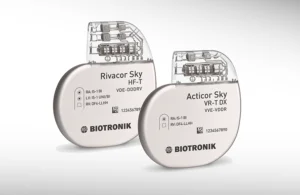
BIOTRONIK Acticor Sky / Rivacor Sky ICD and CRT-D systems (FDA decision: April 23, 2026): BIOTRONIK SE & Co. KG (Berlin, Germany; private) received PMA approval for the Acticor Sky implantable cardioverter-defibrillator (ICD, VR-T DX model) and Rivacor Sky cardiac resynchronization therapy defibrillator (CRT-D, HF-T model). The devices add left bundle branch area pacing (LBBAP) support, an expanded anti-tachycardia pacing suite, DX single-lead atrial sensing technology, and HeartInsight heart failure worsening alerts to BIOTRONIK's existing CRM portfolio. 19
ArteraAI Breast (FDA decision: May 6, 2026): Artera (founded 2023; $90 million in funding from J&J Innovation and angel investors) received 510(k) clearance for ArteraAI Breast — the first digitally pathology-based AI tool cleared by the FDA to stratify hormone receptor-positive, HER2-negative early-stage breast cancer patients by distant metastasis risk. The tool uses digitized H&E slides plus clinical variables to generate same-day risk scores, potentially competing on speed and cost with genomic assays. Artera also received CE mark for both its breast and prostate AI tools in April 2026. 20
Cover image generated for editorial use.
For the Beqalzi entry: cover image from BeOne Medicines press release, BusinessWire
참고 출처
- 1FDA: accelerated approval for sonrotoclax in R/R MCL
- 2BeOne Medicines press release, BusinessWire
- 3ClinicalTrials.gov: NCT05471843
- 4ClinicalTrials.gov: NCT06742996, CELESTIAL-RRMCL
- 5FiercePharma: BeOne's Venclexta challenger nets FDA approval
- 6StockAnalysis.com: BeOne Medicines (ONC) stock overview
- 7FDA: approval of oral decitabine/cedazuridine + venetoclax for newly diagnosed AML
- 8Taiho Oncology press release, BusinessWire
- 9FDA: approval of atezolizumab for adjuvant MIBC in ctDNA MRD-positive patients
- 10Natera Signatera CDx companion diagnostic approval, BusinessWire via Morningstar
- 11Genentech press release via StockTitan
- 12FDA: two indications for fam-trastuzumab deruxtecan-nxki in HER2+ early-stage breast cancer
- 13AstraZeneca US press release: Enhertu approved for two new early-stage breast cancer indications
- 14Daiichi Sankyo FY2025 slides via Investing.com
- 15MedTech Dive press release: Aurie De Novo grant
- 16Urology Times: FDA grants De Novo authorization to Aurie
- 17PRNewswire: Bayesian Health receives first-ever FDA clearance for continuous AI sepsis monitoring
- 18MedTech Dive: Bayesian Health gets FDA nod for AI sepsis detection tool
- 19MassDevice: Biotronik earns FDA approval for Acticor Sky, Rivacor Sky defibrillators
- 20MedTech Dive: Artera gets FDA clearance for AI breast cancer risk prediction tool
이 콘텐츠를 둘러싼 관점이나 맥락을 계속 보강해 보세요.