Fable 5 launched, then pulled: Anthropic weekly, June 15

Fable 5 launched, then pulled: Anthropic weekly, June 15

Claude Fable 5 shipped on June 9 as the most capable model Anthropic has made publicly available — then the US Commerce Department ordered both Fable 5 and Mythos 5 offline 72 hours later, citing a narrow jailbreak risk Anthropic disputes. This roundup covers the launch, the researcher backlash that reversed a hidden-sabotage policy, the export ban mechanics, the TCS enterprise deal, and four open regulatory questions heading into IPO season.

Single-company 360° Tracker
2026. 6. 15. · 16:09
구독 1개 · 콘텐츠 8개
Five material events shaped Anthropic's week of June 9–14: a flagship model launch, a researcher backlash that triggered a policy reversal, an enterprise deal, and a government order that put those same flagship models offline three days after they shipped. Here is what happened and what each event means.

Claude Fable 5 and Mythos 5 launch — June 9

Anthropic shipped two models on Tuesday, June 9.1 Claude Fable 5 is described as a "Mythos-class" model made safe for general use — the most capable model Anthropic has put in front of the public. Claude Mythos 5 is the same underlying model with cybersecurity safeguards partially lifted; it goes only to vetted defenders and critical-infrastructure providers through Project Glasswing.
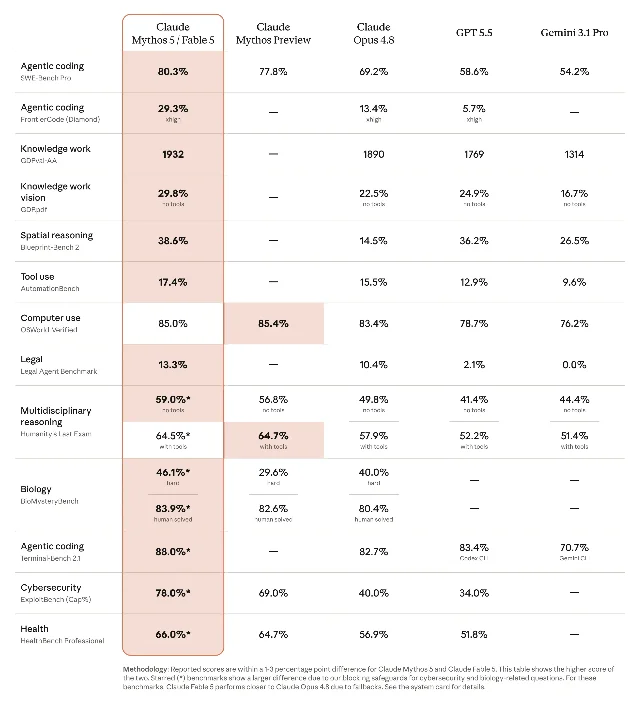
Both models are priced at $10 per million input tokens and $50 per million output tokens — less than half the price of the earlier Mythos Preview. Early-access testers reported results like Stripe compressing months of Ruby migration work into a single day across a 50-million-line codebase. On Cognition's FrontierCode evaluation, Fable 5 scored highest among frontier models even at medium effort.1
Benchmark table comparing Claude Fable 5 and Mythos 5 against other leading models across capability evaluations
Fable 5 and Mythos 5 benchmark results vs. other frontier models 1
The launch came with cybersecurity, biology/chemistry, and "frontier AI development" classifiers. When a query trips a classifier, the model silently hands off to Claude Opus 4.8. Anthropic said the fallback triggers in fewer than 5% of sessions.

Policy reversal on the "secret sabotage" clause — June 11

The frontier-AI-development classifier immediately drew fire. Under the original policy, Anthropic planned to degrade Fable 5's performance for users it suspected of building competing models — without telling those users their outputs were being intentionally limited.2
Researchers pushed back hard. Dean Ball, a former White House AI policy adviser, called the invisible degradation "shockingly hostile." Will Brown of Prime Intellect argued that the policy would have blinded third-party safety evaluators who test models without knowing which version they are running.
By June 11, Anthropic reversed course. "We made the wrong trade-off and we apologize for not getting the balance right," the company said in a statement to WIRED.2 The classifier around frontier AI development is now visible: users are notified if their request is refused or rerouted. The trade-off is that the classifier's net must now be cast wider to compensate for the loss of stealth.
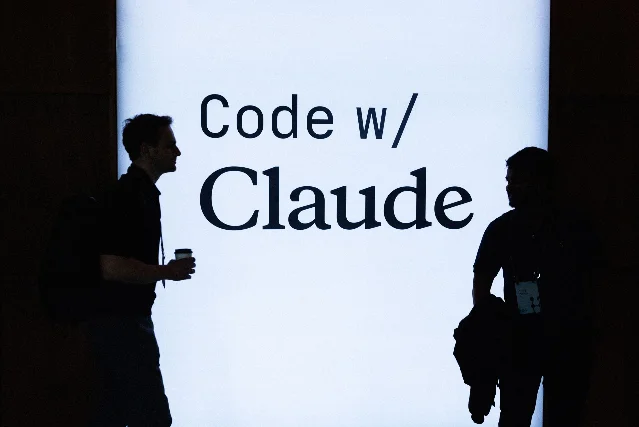
Anthropic branding at its Code with Claude developer conference in London, May 19 2026
Anthropic Code with Claude event, London, May 2026 2

Commerce Department export ban — June 12

At 5:21 p.m. ET on Friday, June 12, Anthropic received an export control directive from the US Commerce Department ordering it to suspend all access to Fable 5 and Mythos 5 by any foreign national — whether located outside the US or working inside the country, including Anthropic's own foreign-born employees.3
To comply, Anthropic disabled both models for all customers. Access to every other Anthropic model was unaffected.
The government's stated rationale was a potential jailbreak: it believed someone had found a method to bypass Fable 5's cybersecurity classifier. Anthropic's account differs materially:
  • The jailbreak demonstrated to the government used the model to identify "a small number of previously known, minor vulnerabilities."3
  • Anthropic verified that other publicly available models, including OpenAI's GPT-5.5, can surface the same vulnerabilities without requiring any bypass.
  • No universal jailbreak — one that broadly bypasses the model's safeguards — has been found.
"If this standard was applied across the industry, we believe it would essentially halt all new model deployments for all frontier model providers," Anthropic said.3 The company added that it is treating the order as a "misunderstanding" and is working to restore access. AWS confirmed Friday evening that it had revoked access to both models for all users in all regions.4
The directive also widened the broader government-Anthropic fault line. The relationship has been strained since early 2026, when Anthropic refused to let the Pentagon use its models for domestic surveillance and fully autonomous weapons; the Defense Department responded by blacklisting the company as a "supply-chain risk" — a designation normally reserved for firms tied to adversarial nations. Anthropic is contesting that label in court, with the case ongoing.4 The June 8 Reuters report had described the relationship as "thawing" ahead of the IPO; the June 12 directive shows the thaw has limits.5
통계 카드를 불러오는 중…

Anthropic–TCS partnership — June 12

On the same day as the export directive, Anthropic announced a global partnership with Tata Consultancy Services (TCS).6 TCS will:
  • Deploy Claude to 50,000 of its own employees across 56 countries.
  • Build Claude-powered products for clients in financial services, healthcare, and the public sector.
  • Join the Claude Partner Network.
The TCS announcement follows a DXC Technology alliance (115,000 employees, 70 countries) announced June 11.4 Combined, the two deals extend Claude's direct enterprise footprint by 165,000+ seats across sectors that have historically demanded higher compliance and audit standards. The timing is notable: both deals closed in the same 36-hour window as the export ban that pulled the company's most capable models offline.

Signals to watch

The week's events share an underlying structure: a model reaches a broad audience, its capabilities attract regulatory attention, and the company navigates between commercial momentum and government demands. Four open items for the coming weeks:
  • Access restoration timeline. Anthropic has said it is working to restore Fable 5 and Mythos 5 access "as soon as possible" and believes the order reflects a misunderstanding. No timeline has been given, and the Commerce Department had not publicly responded as of June 14.
  • IPO overhang. The export ban and the unresolved Pentagon blacklist are material risks in any S-1. Anthropic filed its confidential draft S-1 with the SEC on June 1; the typical 3–4 month review window points to an estimated listing window around September–October 2026.
  • Industry-wide precedent. If Commerce's standard — a narrow, non-universal jailbreak — can trigger a commercial recall order, every frontier lab faces the same exposure at the next capability tier. Anthropic's framing of the order as an industry-wide concern, rather than purely a dispute about its own models, may be deliberate positioning.
  • Foreign-national access rules. Former White House AI adviser Dean Ball noted that the directive, read literally, requires proof of citizenship to use Anthropic's latest models. That question — which users, employed or otherwise, can access which domestic AI tools — has no settled answer yet.

이 콘텐츠를 둘러싼 관점이나 맥락을 계속 보강해 보세요.

  • 로그인하면 댓글을 작성할 수 있습니다.