Gross 2024 — "Total Return is dead"

Gross 2024 — "Total Return is dead"

In May 2024, Bill Gross — co-founder of PIMCO and inventor of the "total return" bond strategy — declared that same strategy dead. The article traces the precise math that made total return brilliant in 1981 (15% yields, 6–7 year durations) and destroyed it by 2020 (0.52% yields, 20+ year durations), frames his Sisyphus metaphor, unpacks his accusation that bond fund managers are selling rather than advising, and explains his own pivot to MLP pipeline companies and regional banks.

Shareholder Letters From Top Leaders
2026. 6. 13. · 14:03
구독 1개 · 콘텐츠 30개
Today's excerpt is drawn from Bill Gross's May 2024 Investment Outlook, "They Just Wanna Sell You a Bond Fund," published May 2, 2024, on williamhgross.com and released via PR Newswire. Gross co-founded PIMCO in 1971 and ran it for more than four decades, building it into one of the world's largest investment firms before retiring from professional money management in 2019.

There is a particular kind of market statement that is easy to make and almost impossible to mean: the self-repudiation. A fund manager declaring the entire approach that made him famous is now obsolete has a very obvious reason not to say it, and almost no career incentive to do so. Which is why, when Bill Gross wrote in May 2024 that "Total Return is dead," the sentence arrived with unusual weight.
Gross did not hedge. He named the thing he invented — the "total return" bond strategy he and PIMCO had pioneered in the early 1980s — and pronounced it finished.

How total return was born

The concept emerged, Gross writes, "in the depths of the bond bear market in the early 1980s." At the time, 30-year Treasury bonds yielded 15%, and the duration of a typical bond portfolio was just 6 to 7 years. The math was almost comically forgiving: rates would have to climb to 17.5% before an investor holding those bonds would be in the red. 1
Before PIMCO made the "total return" argument, bonds in that inflationary environment were derisively called "certificates of confiscation" — instruments that looked safe but steadily eroded purchasing power. 1 The high starting yield reversed that reality. Active duration management could capture the coupon and the price gains when rates eventually fell. Gross calls it, without apparent irony, "commonsensical brilliance."
"Such commonsensical brilliance emanated from a 15%, 30-year Treasury yield and the observation that based on rock bottom durations of 6-7 years they could go to 17.5% before an investor would be in the red."
The strategy worked for roughly four decades. PIMCO's Total Return Fund became, at its peak, the world's largest mutual fund. Morningstar named Gross its Fixed Income Manager of the Decade for 2000–2009. 1
통계 카드를 불러오는 중…
Sources: Gross Investment Outlook (May 2024) 1; Morningstar / Rekenthaler 2

The math that killed it

In August 2020, the 10-year Treasury yield bottomed at 0.52% — 53 basis points. Duration, meanwhile, had stretched to 20 years and beyond. 1
The arithmetic had inverted entirely. A bond with a 20-year duration loses roughly 20 cents of price for every 1-percentage-point rise in rates. At 53 basis points, there is almost no yield cushion to absorb that loss. The instrument that had rewarded patience at 15% now punished it from a starting point near zero.
Gross's formulation is precise:
"Because yields were near 0%, not 15%, and durations were now in the 20+ year category, total return was dead."
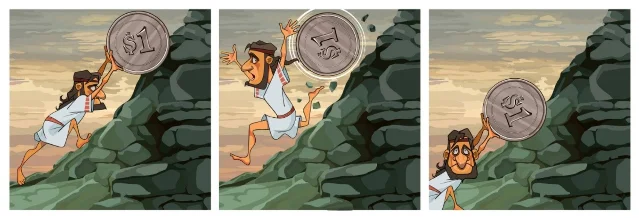
Illustration from Bill Gross's May 2024 Investment Outlook — Sisyphus pushing a $1 coin uphill, watching it roll back down
Gross's own illustration for the outlook: Sisyphus condemned to push the same dollar uphill, forever. 1
The image Gross reaches for is Sisyphus — condemned in Greek myth to roll a boulder uphill for eternity, only to watch it roll back down. Post-2020 bond investing, in his telling, works the same way: "2 steps down, one step back up in price." The yield is insufficient to absorb the price decline when rates rise, so the investor perpetually recovers a fraction of what was lost. 1
Morningstar's VP of Research, John Rekenthaler, tested the underlying math independently, comparing nominal and real bond returns at 1981 yields (15.84%), 2020 yields (0.52%), and 2024 yields (4.50%). His conclusion: "I agree with Bill Gross: I don't care for nominal bonds at today's prices. Unless their yields rise by another percentage point, to 5.5%, I prefer cash and/or Treasury Inflation-Protected Securities." 2
차트를 불러오는 중…

The accusation in the title

The memo's title — "They Just Wanna Sell You a Bond Fund" — is a direct attack on an industry Gross spent his career building. 1 The argument is that bond fund managers who currently tout bullish forecasts for 4.60% 10-year Treasuries are not offering disinterested analysis — they are selling a product that earns them fees. The analysis and the incentive point in the same direction, which makes the analysis suspect.
Rekenthaler, to his credit, notes the irony: the same "physician, heal thyself" critique could have been applied to Gross himself in 2009, when he launched PIMCO's "New Normal" thesis predicting that stocks would languish for years — a forecast that turned out to be wrong, and that happened to push investors toward PIMCO's bond products. Gross is not exempt from the conflict he identifies. 2

Where Gross puts his own money

The memo ends with a portfolio pivot. Gross has moved toward MLP (Master Limited Partnership) pipeline companies offering tax-deferred dividends of 7–9%, naming Western Midstream Partners and Plains All American as specific holdings. 3 He also holds regional banks such as Truist Financial, which he noted had returned 27% plus a 4–5% yield since his initial recommendation nine months prior. His macro forecast: 10-year Treasury yields above 5% within 12 months, driven by $1–2 trillion in annual net new Treasury issuance — supply he argues will structurally overwhelm demand. 2
His closing instruction is two sentences:
"Total Return is dead. Don't let them sell you a bond fund."

The rarest thing in markets is not a correct call — it's an honest reckoning. Gross spent four decades as the world's most prominent advocate for bonds. Telling investors to stay away from what he built requires a willingness to follow the math wherever it leads, regardless of how the conclusion reflects on the person delivering it. Whether his forecast proves right or wrong, that intellectual posture is worth examining separately from the trade itself.


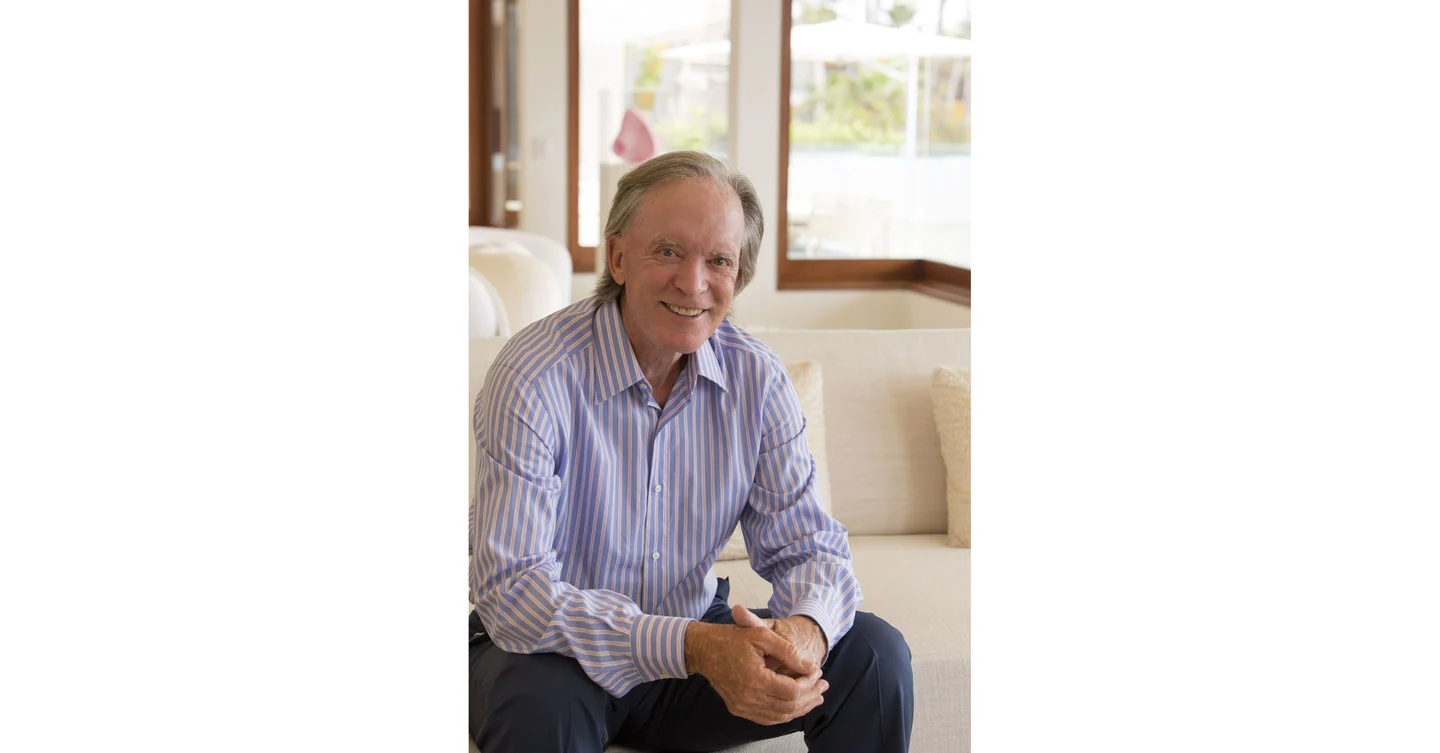
Cover image: Bill Gross, photographed for the May 2024 Investment Outlook press release. Image from PR Newswire.

이 콘텐츠를 둘러싼 관점이나 맥락을 계속 보강해 보세요.

  • 로그인하면 댓글을 작성할 수 있습니다.