AI Product Update Daily: May 25, 2026

AI Product Update Daily: May 25, 2026

Anthropic closes in on a $30B round at $900B+ valuation, overtaking OpenAI. Pope Leo XIV publishes the first papal AI encyclical. The White House requests $9B to upgrade spy-agency compute. OpenAI Codex can now run your Mac while the screen is locked. Anthropic ends its Agent SDK subscription subsidy on June 15. Amazon Bee reviewed. And Intuit cuts 17%.

AI Product Update Daily
2026. 5. 25. · 08:04
구독 1개 · 콘텐츠 5개
Anthropic is hours away from confirming a $30 billion funding round at a $900 billion-plus valuation — the number that would push it past OpenAI in market cap for the first time. The Vatican published its first-ever AI encyclical this morning. The White House asked Congress for $9 billion to upgrade spy-agency compute. And OpenAI's desktop agent can now run your Mac while the screen is off. Here is everything that moved today.

Anthropic closes in on $900B valuation as round nears signing

Anthropic is finalizing a $30 billion funding round at a pre-money valuation above $900 billion, expected to close by the end of the week, according to Bloomberg. 1 The round is co-led by Sequoia Capital, Dragoneer Investment Group, Altimeter Capital, and Greenoaks Capital Partners, each contributing approximately $2 billion. Peter Thiel's Founders Fund and General Catalyst are also participating.
At $900 billion, Anthropic surpasses OpenAI's $852 billion March 2026 private valuation — a reversal from February, when Anthropic was valued at $380 billion. That $520 billion step-up in three months is the fastest revaluation of any private technology company on record.
The underlying rationale is financial, not speculative. Anthropic projected $10.9 billion in Q2 2026 revenue, up 130% from $4.8 billion in Q1, and an operating profit of $559 million — its first profitable quarter. The compute cost ratio is falling: from 71 cents per dollar of revenue in Q1 to a projected 56 cents in Q2, even while paying SpaceX $1.25 billion per month through May 2029 for GPU capacity. 2 Investors are pricing in a path to $50 billion-plus in annual revenue, not hoping for one.
The IPO timeline coming out of this round: SpaceX in June, OpenAI in September, Anthropic in October.

Pope Leo XIV publishes the first AI encyclical

This morning, May 25, Pope Leo XIV published Magnifica Humanitas ("Magnificent Humanity"), the first papal encyclical on artificial intelligence. 3 The document was signed on May 15, exactly 135 years to the day after Pope Leo XIII signed Rerum Novarum, the foundational teaching on labor rights during the Industrial Revolution. The parallel is deliberate: Leo XIV is explicitly framing AI as the defining social and moral challenge of our era.
The encyclical covers AI mimicking human relationships and identity, the displacement of creative workers, the concentration of AI power among a handful of profit-driven companies, labor rights under automation, and the ethics of autonomous weapons.
The presentation itself was unusual. Rather than a standard Vatican press release, the document was launched in the Synod Hall with Anthropic co-founder Christopher Olah on stage alongside two cardinals and theologians from Durham and Edinburgh. Olah — who leads Anthropic's interpretability research — was invited because mechanistic interpretability is exactly the kind of AI transparency work the Vatican cares about. The Vatican choosing Anthropic, not OpenAI or Google, as its institutional partner on this is a signal worth noting.
With 1.4 billion Catholics globally, Magnifica Humanitas is the largest single institutional statement on AI ethics ever published.
링크 미리보기를 불러오는 중…

Anthropic in talks to run Claude on Microsoft's Maia 200 chip

Anthropic is in early-stage discussions with Microsoft to rent Azure servers powered by Microsoft's Maia 200 custom AI accelerator, multiple outlets confirmed on May 21. 4 No agreement has been signed. Both companies declined to comment.
Maia 200 is Microsoft's second-generation inference chip, built on TSMC's 3-nanometer process with 216 GB of HBM3e memory. It has been running in Arizona and Iowa data centers since early 2026, already handling inference for OpenAI's GPT-5.2 through Microsoft Foundry — but it has never served a frontier model it did not build internally.
For Anthropic, the deal would add a fourth chip vendor to a portfolio that already includes AWS Trainium, Google TPUs, and Nvidia GPUs. CEO Dario Amodei has publicly acknowledged "difficulties with compute," and a Maia deployment would redirect a portion of Anthropic's $30 billion Azure commitment from rented Nvidia capacity to Microsoft's own, higher-margin silicon. The most likely initial candidates for Maia inference are Claude Haiku and Claude Sonnet, which dominate request volume.
One technical caveat: Maia 200 achieves its efficiency partly by running at FP8 precision, which can introduce small accuracy reductions on some tasks. Anthropic would need to validate those tradeoffs before committing production traffic to a model that prioritizes reliability as a safety commitment.
For Microsoft, landing Anthropic would be the first major external validation of Maia 200. Google's TPU has had external customers for years. AWS Trainium has been in production at scale since 2025. Microsoft's Maia program has been the laggard — a signed Anthropic deal would change that narrative.
링크 미리보기를 불러오는 중…

White House requests $9B to upgrade spy-agency AI compute

The White House has approved a request for $9 billion to buy cutting-edge AI chips and build infrastructure to support Nvidia's Grace Blackwell superchip — specifically to close the compute gap at the CIA and the NSA, which currently lack the capacity to run the latest models. 5 6 The funds still require congressional approval.
The timing is notable: this request comes days after Trump canceled the AI safety executive order that would have required pre-release government review of frontier models. One set of policies gave AI companies fewer oversight obligations. The other is a nine-figure bid to ensure the government can actually run those same models internally.
The Pentagon is also currently running controlled evaluations of OpenAI and Google AI models to potentially replace Anthropic's Claude in classified defense workflows, per the buildfastwithai May 25 recap. Anthropic had previously turned down a direct Defense Department contract on ethical grounds — Claude reached the top of the US App Store in the immediate aftermath. The current testing reads as multi-vendor hedging rather than outright replacement.

OpenAI Codex can now operate your Mac while the screen is locked

OpenAI shipped "Locked Use" for Codex on May 21 — a capability that lets the desktop agent continue running tasks on a Mac after the screen locks. 7 The agent displays that it is operating on a dark, locked screen and requires explicit user permissions — Screen Recording access and an up-front approval step — before it can proceed. Users can monitor activity remotely from their phone.
The practical implication: long-running agentic workflows no longer require an open, unlocked laptop. A developer can hand Codex a multi-hour task, close the screen, and return to completed work. OpenAI also shipped Appshots alongside Locked Use — a screenshot-based context tool that gives the agent instant screen state without full Screen Recording overhead.
This directly expands what autonomous coding agents can accomplish in a workday, and intensifies the practical competition between Codex and Claude's Agent SDK — the same week Anthropic announced it is ending the Agent SDK's subscription subsidy on June 15.
링크 미리보기를 불러오는 중…

Anthropic ends the Agent SDK subscription subsidy — June 15

Effective June 15, 2026, Anthropic separates Claude Agent SDK and claude -p (headless) usage from Pro, Max, Team, and Enterprise subscription pools. 8 Each plan gets a monthly dollar credit sized to match its subscription fee — $20 for Pro, $100 for Max 5×, $200 for Max 20× — billed at standard API rates, non-pooled, non-rollover.
The structural issue: a $20 Pro subscriber could previously run Agent SDK loops accumulating $300–600 of API-equivalent compute — a 15–30× subsidy the subscription pool was never designed to sustain at machine-paced usage. Anthropic confirmed the change was triggered by adoption reaching production scale.
Key details teams are missing:
  • Interactive Claude Code (TUI, Cowork, claude.ai) is unaffected — only programmatic, SDK-authenticated usage moves
  • Enterprise Standard seats get $0 credit — the most underreported detail; standard-seat Enterprise plans must upgrade to Premium seats or add Agent SDK seats to avoid failures on June 15
  • Prompt caching cuts input cost to 0.1× on cache hits — the highest-leverage optimization for teams that repeatedly send large system prompts or file context
  • Teams running shared CI/CD pipelines cannot pool credits across users; the only production path is direct API key billing
OpenAI countered the same day the change was announced (May 14) with two months of free Codex Pro for new business customers. The competition has shifted from which subscription includes more interactive usage to which platform has better agent SDK economics at production scale. 9

Amazon Bee wearable reviewed: promising at work, unsettling everywhere else

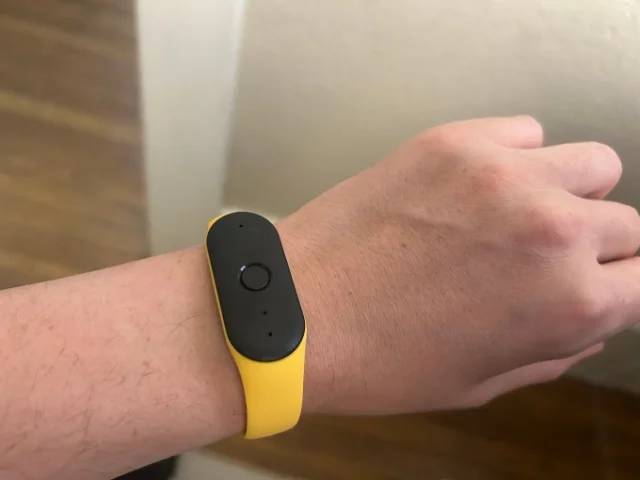
TechCrunch published a hands-on review of Amazon Bee this week — the AI wrist wearable Amazon acquired last year and has since updated with new features. 10 Bee records, transcribes, and summarizes ambient conversations throughout the day, with a green indicator light showing when it is active.
The reviewer found it genuinely useful for professional calls — Bee produced accurate summaries and faithful transcriptions, though speaker identification required manual entry. The same wearable showed its limits in personal settings: transcript gaps, calendar and contacts access required, location tracking enabled, all data stored in the cloud.
Amazon Bee AI wearable worn on wrist
Amazon Bee on wrist during a day of testing 10
Bee's lead over transcription-only services like Otter is modest in professional contexts. The differentiation play is always-on ambient context across your full day — which is also precisely what makes the device uncomfortable for anyone with privacy concerns. Amazon has shown a demo of Bee running entirely locally; no public timeline for that version exists.

Intuit cuts 17% of its workforce in latest AI restructuring

Intuit laid off roughly 17% of its global workforce this week, citing AI-driven productivity gains that let smaller teams ship the same roadmap. 2 The cut follows a consistent pattern: Cloudflare (1,100, 20%), Meta (8,000), Google, Salesforce, and Microsoft have all made reductions in 2026 framed in similar terms.
The underlying logic is not that AI replaced specific job functions outright. It is that AI made it possible to plan and ship the same roadmap with materially smaller headcounts — the productivity gain shows up in the org chart, not in replaced job categories. Intuit's announcement may be the clearest statement of this pattern yet.

이 콘텐츠를 둘러싼 관점이나 맥락을 계속 보강해 보세요.

  • 로그인하면 댓글을 작성할 수 있습니다.