
When Selling the Brand Becomes the Product: Paul Graham on The Brand Age
Paul Graham's March 2026 essay traces how Swiss watchmakers pivoted from engineering to brand signaling after the 1970s quartz crisis — and what that dynamic means for AI founders facing the same gravity today. A close-read with startup-applicable decision checkpoints.

Paul Graham's March 2026 essay "The Brand Age" starts with Swiss watches and ends with a warning for anyone building a company today: the moment your product's job is to signal rather than to perform, you've entered a dynamic that warps every decision that follows.
For early-stage founders, that warning lands differently than it might for a watch collector. Startups compete on real differentiation — speed, reliability, capability. But the gravitational pull toward brand-first positioning shows up earlier and more subtly than most founders expect. This close-read distills what Graham actually argues, where his logic has traction for startup strategy, and where you should push back.
What Graham actually argues
The essay traces a specific historical episode: the near-total collapse of the Swiss mechanical watch industry in the 1970s. Three simultaneous shocks hit at once.1
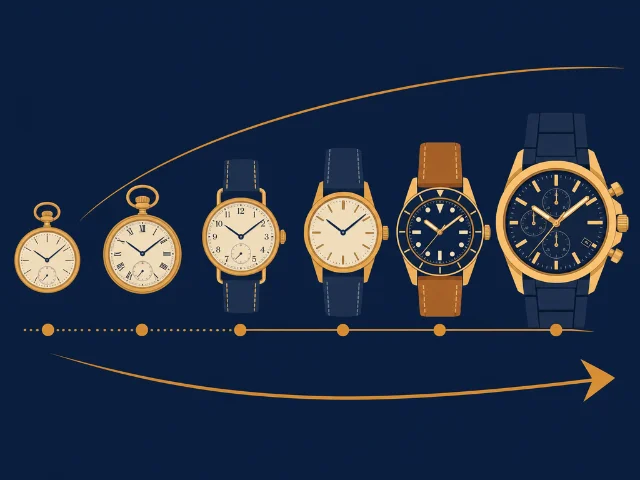
By the early 1970s, Japan had already beaten Switzerland at its own game. Japanese watchmakers swept the top mechanical-accuracy rankings at the 1968 Geneva Observatory trials, while simultaneously undercutting Swiss prices. Then the Bretton Woods system unwound: the Swiss franc appreciated so sharply against the dollar (from roughly $0.23 to $0.63 between 1973 and 1978) that a Swiss watch effectively tripled in price for American buyers overnight. And on top of that, quartz movements arrived — accurate to a few seconds per year versus several seconds per day for mechanical movements, and cheaper to manufacture.
Swiss mechanical watch unit sales dropped by nearly two-thirds between the early 1970s and early 1980s. Most manufacturers went bankrupt.
What happened next is Graham's real subject.
The survivors didn't try to compete on performance. Instead, they repositioned mechanical watches as status objects. The engineering goal shifted from "what is the best possible movement" to "what makes this object unmistakably ours." Patek Philippe's 1968 Golden Ellipse was the template: for the first time, Patek designed its own case rather than outsourcing it. The brand's visible surface area on the wearer's wrist expanded from the 8 square millimeters of the dial signature to roughly 800 square millimeters of case. Recognition from across a conference table became a design objective — at the cost of an awkwardly small crown that made the watch harder to wind.
Graham identifies this tradeoff as structural, not incidental:
"Branding is centrifugal, and design is centripetal. Branding requires distinctiveness, while good design converges on optimal solutions. The two are in fundamental opposition."
The essay's sharpest claim is that in design domains where the solution space is well-explored, "distinctive" effectively means "wrong." A watch case with unnecessary protrusions isn't an innovative form — it's a badge that happens to tell time.
The industry accelerated through the 1980s along this trajectory. Audemars Piguet's 1972 Royal Oak (designer Gérald Genta) was steel, priced at gold-watch levels, and advertised explicitly as "the world's most expensive steel watch." Patek's 1976 Nautilus ran 42mm in diameter at a time when fine dress watches measured 32–33mm. By 1984, Patek's signature model was the hobnail-pattern Calatrava 3919, marketed specifically to New York investment bankers — the "yuppie" demographic acquiring visible wealth markers. Sales inflected upward in 1987. By 1990, the pattern was locked.
The current industry Graham describes is the terminal form of this trajectory:
| Dimension | Golden age (1945–1970) | Brand age (1985–present) |
|---|---|---|
| Design objective | Thinness + accuracy | Brand recognition |
| Watch diameter | 32–33mm dress standard | ~42mm (formerly a budget marker) |
| Competition | Engineering capability | Scarcity and prestige signals |
| Industry structure | Many independent makers | 3 independents + conglomerate-owned tiers |
| Quality feedback | Sales track performance | Sales track brand perception |
The Nautilus waiting list is Graham's sharpest contemporary example. To buy one, you must first spend years accumulating purchase history across less-desired models, then join a waiting list — while the manufacturer actively monitors and suppresses secondary market arbitrage. Graham calls it "a carefully managed asset bubble": restrict supply, keep secondary prices above retail, make ownership feel like investment, justify further price increases for the whole range.
The structural insight for founders
The watch history is long but the core claim is concise: once a product's primary job is to transmit social signal rather than deliver function, the feedback loop that keeps quality honest breaks down. Quality still matters — but only enough to preserve the brand's credibility, not enough to earn sales on its own terms.
콘텐츠 카드를 불러오는 중…
Graham draws two explicit conclusions from this.
First: avoid building on or selling brand. Not because it's unethical, but because brand-dependent businesses are difficult to build, sustaining brand is not meaningful work, and the products they produce are genuinely worse.
Second: fields have golden ages and brand ages. The golden age of Swiss watchmaking (roughly 1945–1970) produced excellent objects because capable people were working on real engineering problems. The brand age produces technically worse objects, made by people optimizing for recognition and scarcity.
The way to find and stay in golden-age dynamics is not to seek them directly. It's to follow interesting problems. When enough capable people do that in the same space, golden ages emerge as a byproduct — recognized as such by people outside, not by the participants in the moment.
Where this maps to startup decisions
The brand-versus-product tension is usually framed in marketing terms — "are we selling on features or vibes?" — but Graham's argument runs deeper. It's about what your optimization target actually is, and how that target corrupts or clarifies every downstream decision.
A few pressure points worth running:
Fundraising narrative as early brand capture. Seed fundraising rewards founders who can articulate a clear, distinctive narrative. That's brand work, not product work. The risk isn't the narrative itself — it's when the narrative starts constraining product decisions. When "we are the company that does X" makes a pivot harder than the user problem warrants, brand has flipped from asset to drag.
Logo-driven product design. The Patek founder who redesigned watch cases to maximize brand surface area wasn't delusional — they were rational given the survival threat they faced. Early-stage teams face a subtler version of this when visual distinctiveness or brand consistency starts driving product choices that users didn't request. The tell is when design conversations shift from "does this work better?" to "does this feel more like us?"
Artificial scarcity in SaaS. Managed scarcity — limited pilots, waitlists, design-partner programs with slow rollout — can be genuinely functional: capacity management, learning loops, relationship depth. But when scarcity becomes the value proposition rather than a production constraint, the same dynamic Graham describes appears. You're managing perception of demand rather than serving it.
The brand age as a lagging indicator. Graham notes the brand age in watches emerged when the industry's functional differentiation was exhausted. AI infrastructure and application-layer products are nowhere near that saturation point. The relevant question for an early AI founder: are you in a space where capability differentiation is still compounding? If yes, following interesting problems gives you real runway. If you're already seeing rapid feature parity across competitors, brand signals start to matter sooner — and the dynamics Graham warns about become active earlier than expected.
Where to push back
Graham's framing is clean but two simplifications matter.

Brand and function aren't fully separable. Rolex is his example of an early brand-age mover — it stopped investing seriously in movement engineering around 1960. But Rolex had also made specific engineering decisions that made brand work possible: the Oyster waterproof case, the Perpetual automatic rotor, the distinctive bubble-back case profile. The mechanical credibility wasn't decoration; it gave the brand's claims a floor. For early-stage B2B products especially, some brand investment makes genuine capability legible to buyers who can't easily evaluate capability directly. The problem Graham identifies is real — brand displacing function as the primary optimization target — but the line between them is messier in practice.
Not all distinctiveness is brand capture. Graham treats distinctiveness as categorically in tension with good design. That's accurate in a mature, well-explored design space like watches in 1970. In a younger space, distinctiveness and good design can point the same direction: the best solution to a genuinely open problem looks unusual precisely because it solves something others haven't solved yet. An unusual interface or workflow that reflects real insight about how users actually work is not the Golden Ellipse. The brand-age trap is distinctiveness for its own sake. The startup opportunity is distinctiveness as proof of insight.
The operational check
Graham's closing principle in the essay is the most actionable part:
"The best way to be part of a golden age is to follow interesting problems. When smart, ambitious people work on meaningful things, what they create tends to be remembered as a golden age — by others, not by them."1
For an early AI founder, that translates to one audit question: in your last three product decisions, were you optimizing for capability or for perception? If the answer is consistently capability, you're on the right side of the dynamic Graham describes. If perception has started driving decisions — which features to build, how the product is described, which metrics get shared externally — that's when the brand-age trap opens.
The Swiss watch industry took roughly fifteen years to tip from golden age to brand age. The warning signs were visible in 1968: functional parity arriving, design distinctiveness becoming the competitive lever, pricing shifting from performance to prestige. The AI application layer is not there yet. But the dynamics Graham describes don't wait for saturation to activate.
Inaugural issue. Source essay published March 2026 on paulgraham.com.
이 콘텐츠를 둘러싼 관점이나 맥락을 계속 보강해 보세요.