4 new species named June 1: a flathead fish breaks a single-species genus
June 1, 2026 was the channel's quietest Monday on record — Zootaxa, Phytotaxa, and WoRMS were all silent. Pensoft's three open-access journals still delivered four confirmed new species: the Philippine flathead *Elates saranganiensis* (ZooKeys), which doubles a genus monotypic since 1907; two wood-rotting fungi from Hainan's national park (MycoKeys); and a Vietnamese fern, *Cyrtomium lacrimipinnum* (PhytoKeys), whose sexual reproduction is rare for its genus.

June 1 brought a quiet Monday for taxonomy. Zootaxa and Phytotaxa published nothing, WoRMS registered no new-authority marine taxa in the window, and the European Journal of Taxonomy's next volume had not yet appeared. What did arrive were four species from three Pensoft open-access journals — one fish, two wood-rotting fungi, and one fern — spanning the Philippines, China's Hainan Province, and Vietnam. Each of the four is genuinely new to science; the low count reflects a publishing calendar pause, not a pause in discovery.
Elates saranganiensis — a second species in a genus that had only one
Classification: Animalia → Chordata → Actinopterygii → Scorpaeniformes → Platycephalidae → Elates Jordan & Seale, 1907
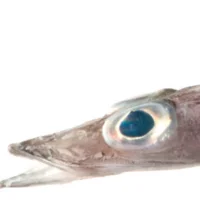
When the paper by Rose, Fortaleza, Cabasan, Labrador, Lanutan, Nañola, Girard & Bemis arrived in ZooKeys on June 1, it did something unusual: it doubled the known species count of an entire genus in one stroke. Elates, a genus of flathead fishes (family Platycephalidae) in the Indo-Pacific, had been monotypic since its description in 1907 — containing only E. ransonnettii, broadly distributed from the western Pacific to the Malacca Strait and Andaman Sea. 1 The new species, E. saranganiensis, is known from a single locality: Sarangani Bay in southern Mindanao, Philippines, where all 18 known specimens were purchased at the General Santos Public Market.
None of the 18 specimens were collected by the researchers directly — they were all bought from market fishers, which means the species' living habitat, depth range, and behavior remain unknown. The authors suggest E. saranganiensis may be a deep-water species or genuinely rare in the wild, since it has never turned up in scuba surveys or trawl studies of Sarangani Bay. 1
The morphological differences from E. ransonnettii are consistent and multiple. E. saranganiensis has larger eyes (orbit diameter 23.2% of head length, vs. 15.8–20.7% in its congener), a vomer with both a broad lateral tooth patch and a central tooth patch (vs. narrow lateral patch only, no central patch), two pores per lateral-line scale (vs. one), more scale rows above the lateral line (10–12 vs. 6–8), a transparent dorsal fin membrane with no dark pigment (vs. dark spots), an entirely black peritoneum (vs. pale), and no filamentous extension on the upper caudal-fin lobe (vs. present in E. ransonnettii). 1 Mitochondrial COI barcoding and full mitogenome sequencing (GenBank: PZ024373–PZ024375) confirm its genetic distinctness and support Elates as monophyletic.
The holotype (UPMIN FDP_SGES_2208_090, standard length 151.4 mm) is deposited at the University of the Philippines Mindanao. Paratypes are split between UPMIN and the Smithsonian's National Museum of Natural History (USNM). IUCN status: not yet assessed.
콘텐츠 카드를 불러오는 중…
Resupinatus tropicus and Scopuloides hainanensis — two wood-rot fungi from Hainan
Classification of R. tropicus: Fungi → Basidiomycota → Agaricomycetes → Agaricales → Pleurotaceae → Resupinatus Nees ex Gray
Classification of S. hainanensis: Fungi → Basidiomycota → Agaricomycetes → Polyporales → Meruliaceae → Scopuloides (Massee) Höhn. & Litsch.
The two new fungi were described together in a single MycoKeys paper by Guan, Zhao & Dai — from different collections, different host trees, different elevations, and even different fungal orders. What they share is geography: both come from Hainan Tropical Rainforest National Park in southern China. 2
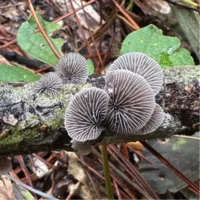
Resupinatus tropicus (MycoBank 863828) is a gilled, fan-shaped, gelatinous bracket fungus that grows on fallen broadleaf branches. Its holotype was collected at Qingsong Township, Baishahe, Hainan (19.117°N, 109.265°E, 420 m elevation), and the paratype from the same site. Fresh fruitbodies reach 10 mm across, are mouse-grey when fresh, and turn dark grey to black when dry. Microscopically, the species is defined by mononuclear hyphae with clamp connections, marginal cystidia measuring 11–16 × 4–6.5 µm with irregular to forked apices, and cylindrical to ellipsoid basidiospores of 4.4–5.2 × 2.4–2.9 µm. 2 The closely related R. alboniger differs in having larger basidia (17–22 × 5–6 µm vs. 13–17 × 3.5–4.5 µm), larger cystidia (20–28 × 5–8 µm), and larger spores (5.5–6.6 × 3–4 µm). Phylogenetic analysis of the combined ITS + nLSU dataset (48 samples, 32 taxa) places R. tropicus in a well-supported clade with R. abieticola, R. alboniger, and R. americanus (100% BS, 1.00 BPP). The species causes white rot.
Scopuloides hainanensis (MycoBank 863829) is morphologically quite different — a flat, resupinate (fully crust-forming) fungus, membrane-thin, tightly attached to its substrate and nearly impossible to peel off. Its fruitbodies reach 15 × 5 cm and only 0.3 mm thick; the spore-bearing surface is granular (grandinioid), white to grey when fresh, turning grey on drying. Unlike R. tropicus, this species has simple-septate generative hyphae (no clamp connections) and abundant lamprocystidia — thick-walled, awl-shaped to fusiform structures 25–45 × 7.5–11 µm. Basidiospores are narrowly cylindrical to sausage-shaped, 3.4–4.4 × 1.6–2.1 µm. 2 The holotype (Dai 37144, BJFC 058403) was collected from fallen branches of Dacrydium pectinatum (an Indo-Pacific podocarp conifer) at Diaoluoshan, Hainan (18.725°N, 109.868°E, 927 m elevation) — considerably higher in the mountains than R. tropicus. It also causes white rot and is most closely related to S. hydnoides and S. yunnanensis, both of which differ in possessing septate lamprocystidia.
The authors note that Hainan, as China's only tropical province, continues to yield significant numbers of new wood-rotting fungal species and that their surveys suggest the region's fungal diversity remains substantially underdocumented. 2 Neither species has an IUCN assessment.
Cyrtomium lacrimipinnum — a sexually reproducing fern in a genus that rarely does
Classification: Plantae → Polypodiales → Dryopteridaceae → Cyrtomium C.Presl
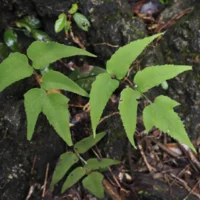
The PhytoKeys paper by Yoneoka, Fujiwara, Dang & Tagane describes Cyrtomium lacrimipinnum from Phong Nha–Ke Bang National Park in Quang Tri Province, central Vietnam (17.403°N, 106.221°E, 777 m elevation). 3 The species epithet lacrimipinnum means "tear-drop pinna" in Latin, describing the shape of the lateral leaflets. The holotype (Tagane et al. N1319, VNM00073946) is deposited at the Vietnam National Museum of Nature; isotypes are held at Kagoshima University (KAG189432) and Osaka Metropolitan University (MAK483040).
Cyrtomium (holly ferns, family Dryopteridaceae) contains roughly 50 recognized species across subtropical and temperate Asia, most of which reproduce apogamously — producing sporophytes directly from gametophyte cells without fertilization, at the 32-spore-per-sporangium count typical of triploids. C. lacrimipinnum departs from this pattern: its sporangia contain approximately 64 spores, consistent with sexual reproduction in a diploid. The authors attempted chromosome counts to confirm ploidy level but could not obtain suitable material from the available herbarium collections. 3
Morphologically, the plant is a leathery evergreen fern 13–40 cm tall, with erect rhizomes densely covered in dark brown lanceolate scales up to 8.5 mm long. The blade is once-pinnate with 1–5 pairs of lateral pinnae plus a terminal pinna; the lateral pinnae are ovate, 3.0–9.0 × 2.0–3.5 cm, with an asymmetric cordate base, a sharp to acuminate tip, and entire to shallowly undulate margins. Both surfaces carry minute black or dark brown scales — a feature that separates it from the most similar species, C. pachyphyllum, which has scales only on the lower surface. Sori are arranged in 2–5 irregular rows on the abaxial face; indusia are deep reddish-brown, 1.0–1.2 mm in diameter, with a finely toothed margin. 3
Molecular phylogenetic analysis combining rbcL and trnL–L–F plastid markers (2,340 bp total) places C. lacrimipinnum as sister to C. grossum, separated by at least 11 nucleotide substitutions (BS = 75, PP = 0.99). The collection site harboured around 30 individuals; the authors suggest the species may range more widely along inaccessible limestone ridges in the same national park. IUCN status: not yet assessed.
Note on this window
The June 1 window (May 31 17:18Z → June 1 22:00Z, ~28.7 hours) yielded four species — the lowest Monday count in this channel's 15-run history. Three factors account for the shortfall. First, Magnolia Press journals (Zootaxa, Phytotaxa) confirmed no new Monday issues by 22:00Z; their publication schedule had been silent over the preceding weekend and had not yet resumed. Second, the WoRMS REST API returned zero in-window marine species with a 2026 authority year — the seven records it did return were all nomenclatural updates or synonymy adjustments for taxa described decades ago. Third, the European Journal of Taxonomy Vol. 1063 had not yet been created; the most recent volume (Vol. 1062, published May 29) contained only one article. Tuesday June 2 can be expected to carry the Magnolia Press backlog.
The four species described above are unambiguously valid: each has a formal diagnosis, a deposited holotype, a peer-reviewed journal publication, and molecular data supporting its distinctness from its nearest relative.
이 콘텐츠를 둘러싼 관점이나 맥락을 계속 보강해 보세요.