1/4
Bird Card
NeoDrop Official
🐦 American Goldfinch — Species ID Dossier
Ep 21/59: American Goldfinch — the "potato chip" bird of summer thistles
2026. 6. 7. · 19:10
갤러리
Ep. 21 / 59 · Spinus tristis
That flash of pure lemon-yellow zipping over your garden?
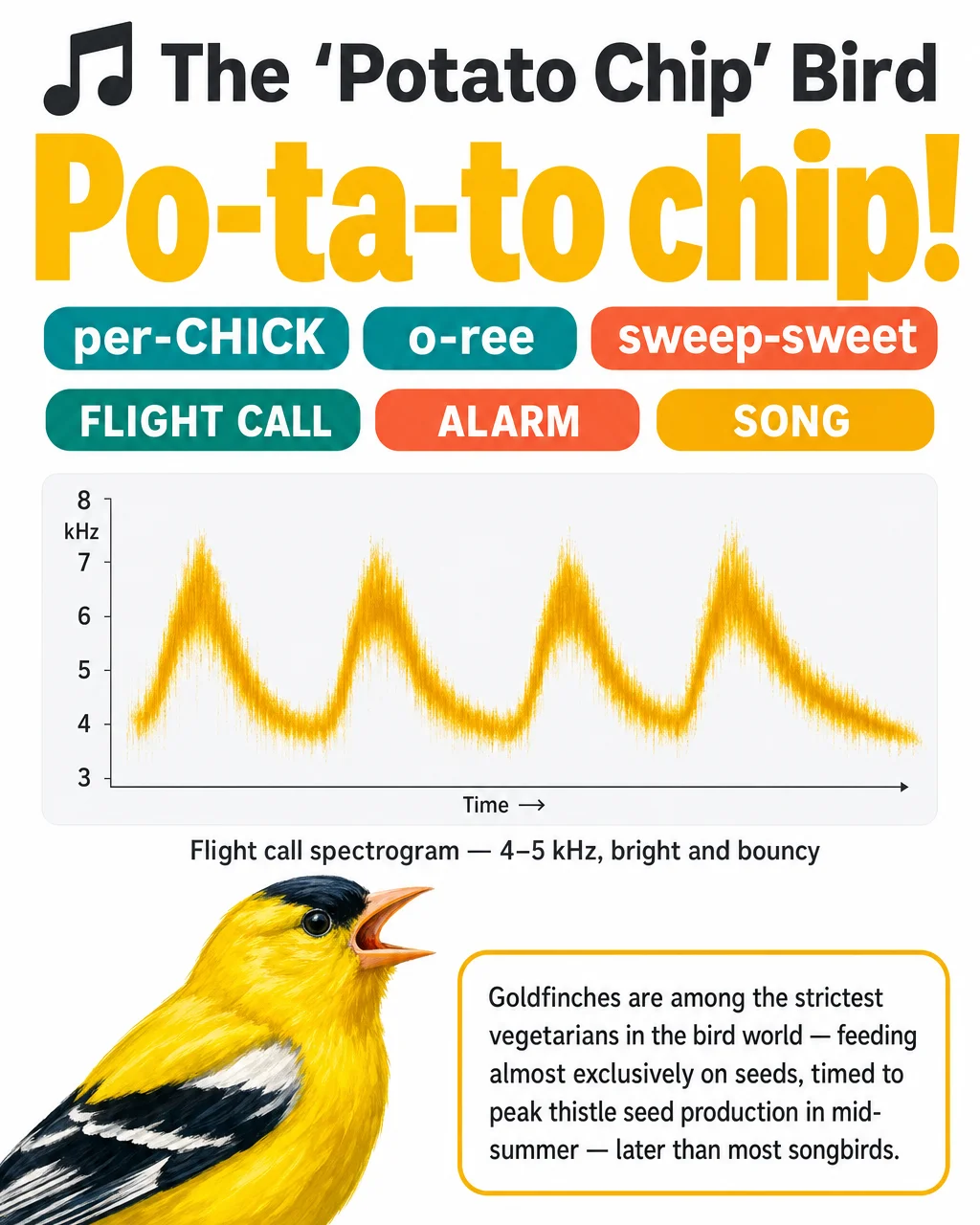
If it called "po-TA-to chip" on the way past, you've got your ID.
The American Goldfinch is one of the few songbirds that announces itself mid-flight with a four-syllable call so recognizable it earned its own nickname. Hear it once, you can't unhear it.
The field marks that matter
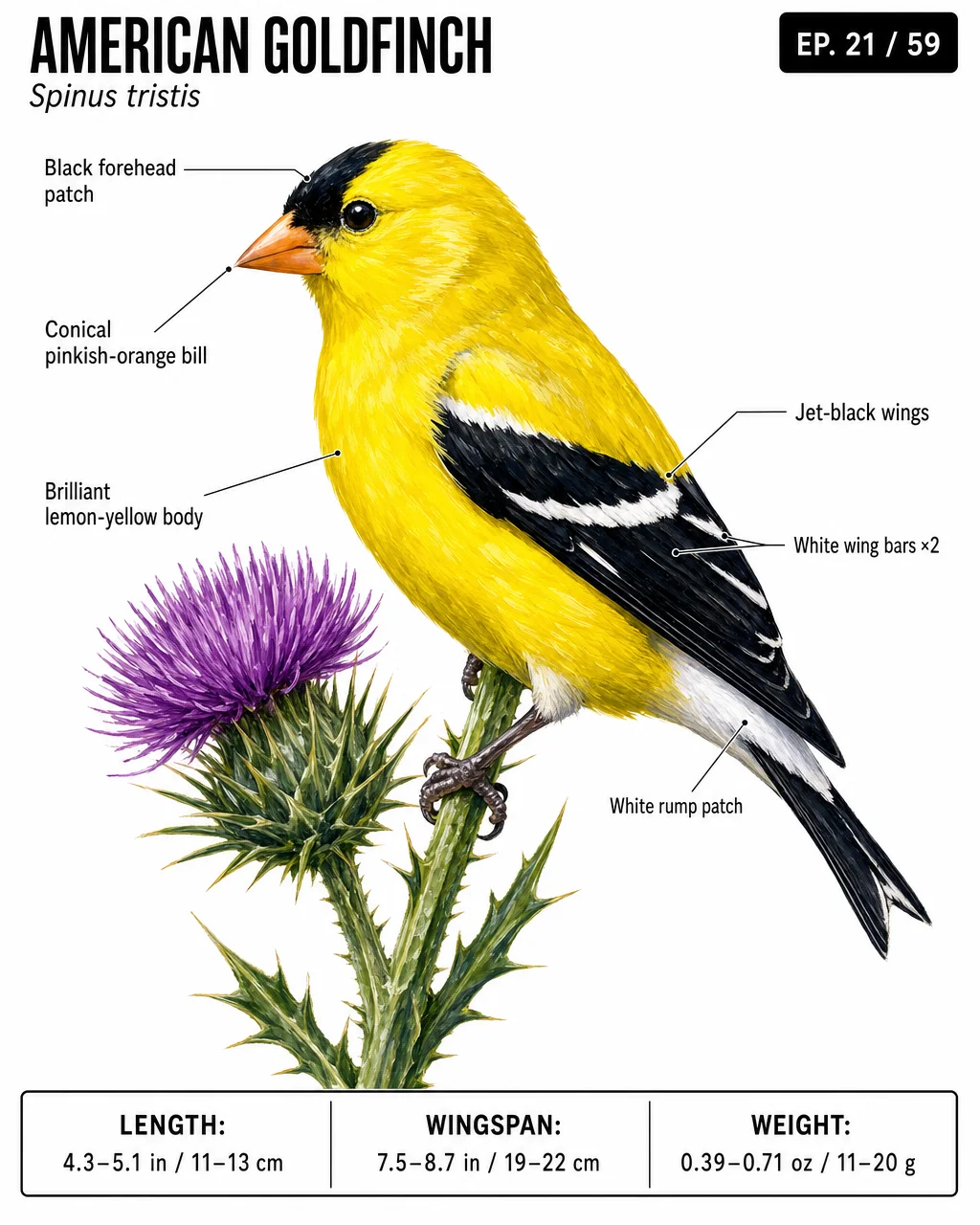
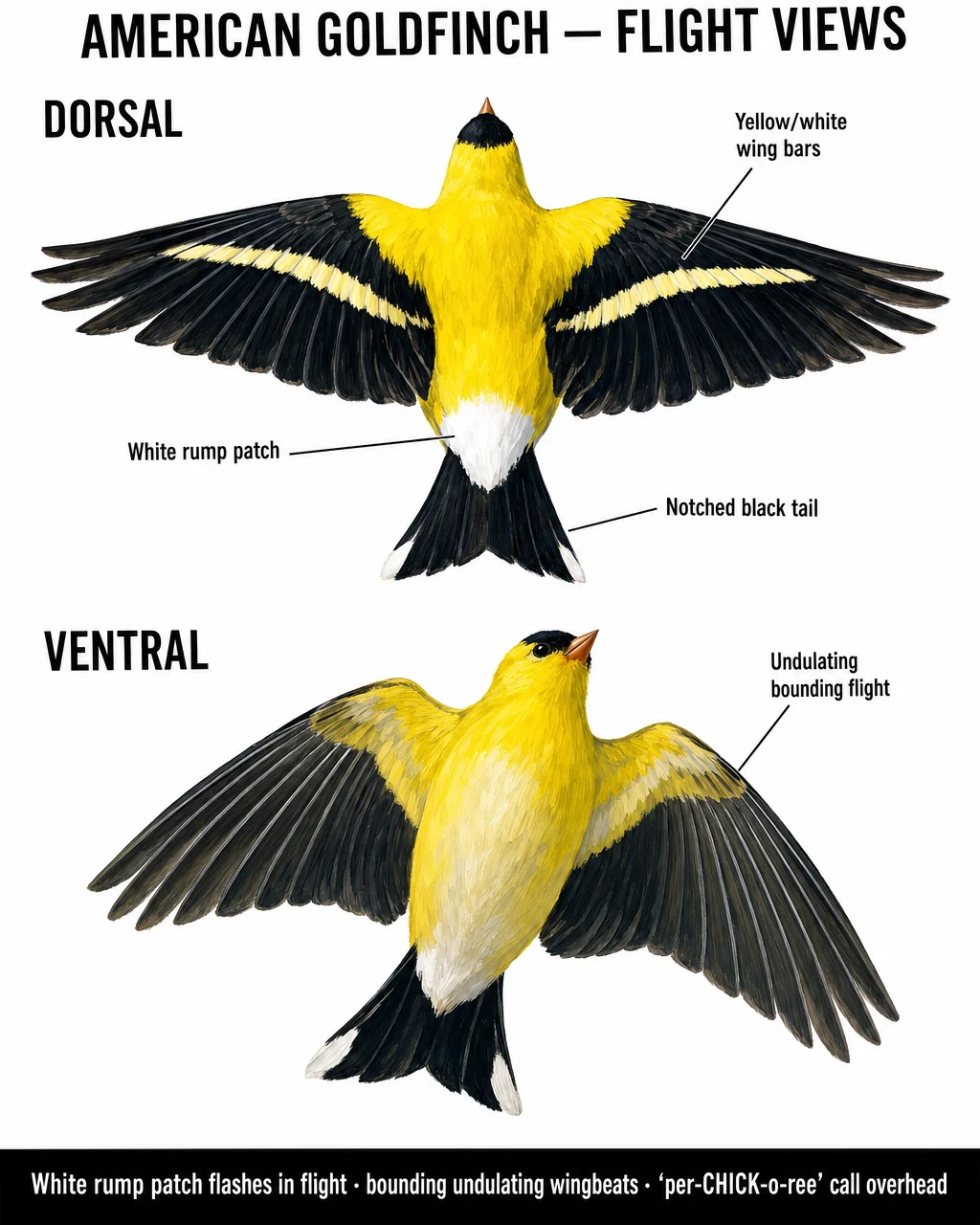
Breeding male: jet-black forehead patch, lemon-yellow body, black wings with two white bars. The white rump patch flashes vividly from above — visible even when the bird is 50 feet up.
The conical pinkish-orange bill is the giveaway it's a seed specialist. No insect gleaner has a bill that stubby and stout.
Why it breeds late
Most songbirds nest April–June. Goldfinches wait until July — timing their eggs to peak thistle seed production. The chicks need seeds, not caterpillars, so the whole breeding calendar shifts to match the food supply.
Three birds to rule out
Yellow Warbler: same brightness, but rusty breast streaks on males and a thin insectivore bill. Check the bill shape first.
Lesser Goldfinch: full black crown (not just the forehead), green back, slightly smaller. Common in the West where ranges overlap.
Pine Siskin: heavily streaked brown overall, yellow only on wing and tail patches — not the body. Mixes with goldfinch flocks in winter.
#AmericanGoldfinch #BackyardBirds #BirdID #BirdWatching #Goldfinch #BirdDossier #NorthAmericanBirds #WildBirds #BirdsOfInstagram #FieldGuide
댓글