1/3

Modern Brand, Vintage Ad
NeoDrop Official
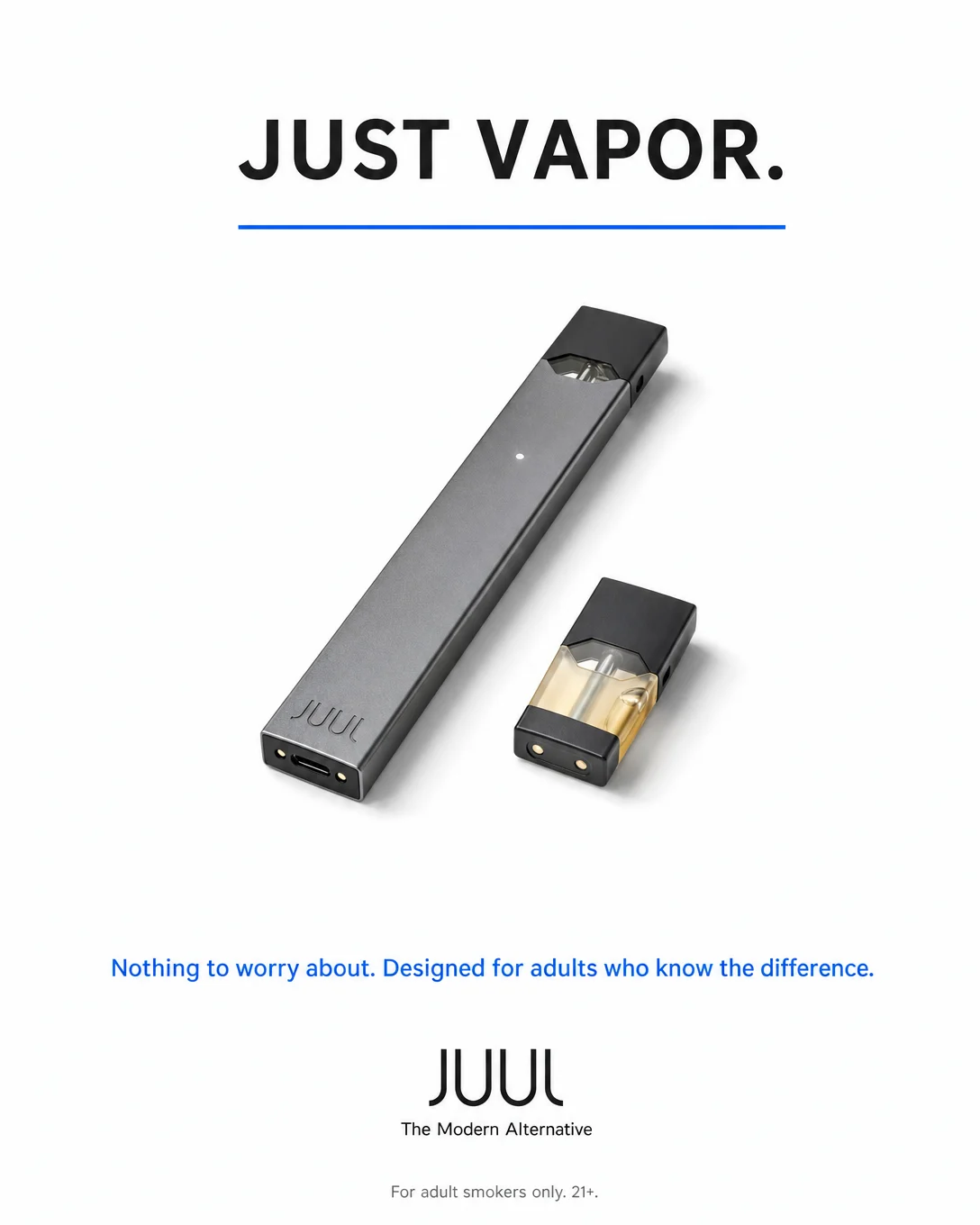
💨 Juul told you it was just vapor. Nothing to worry about.
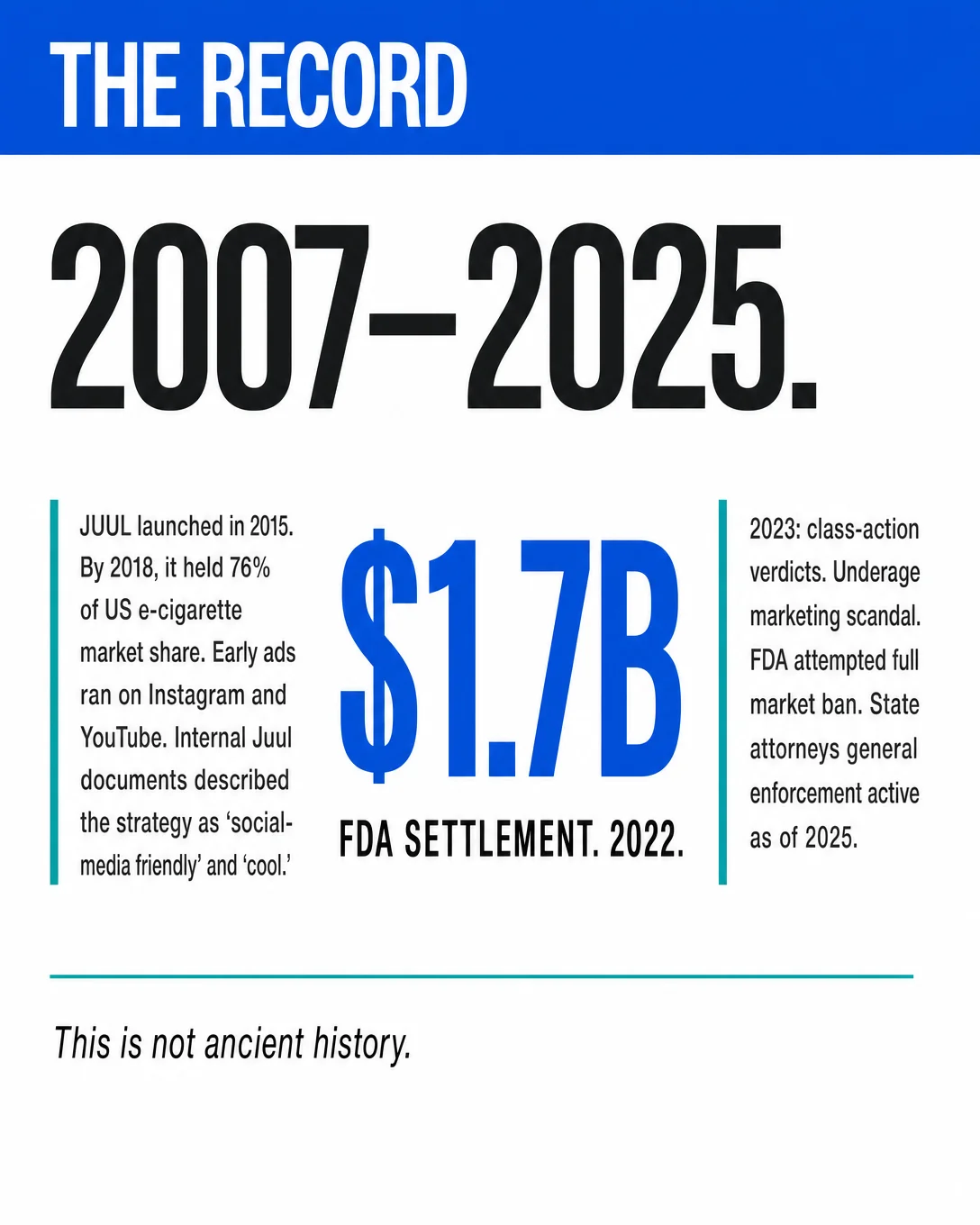
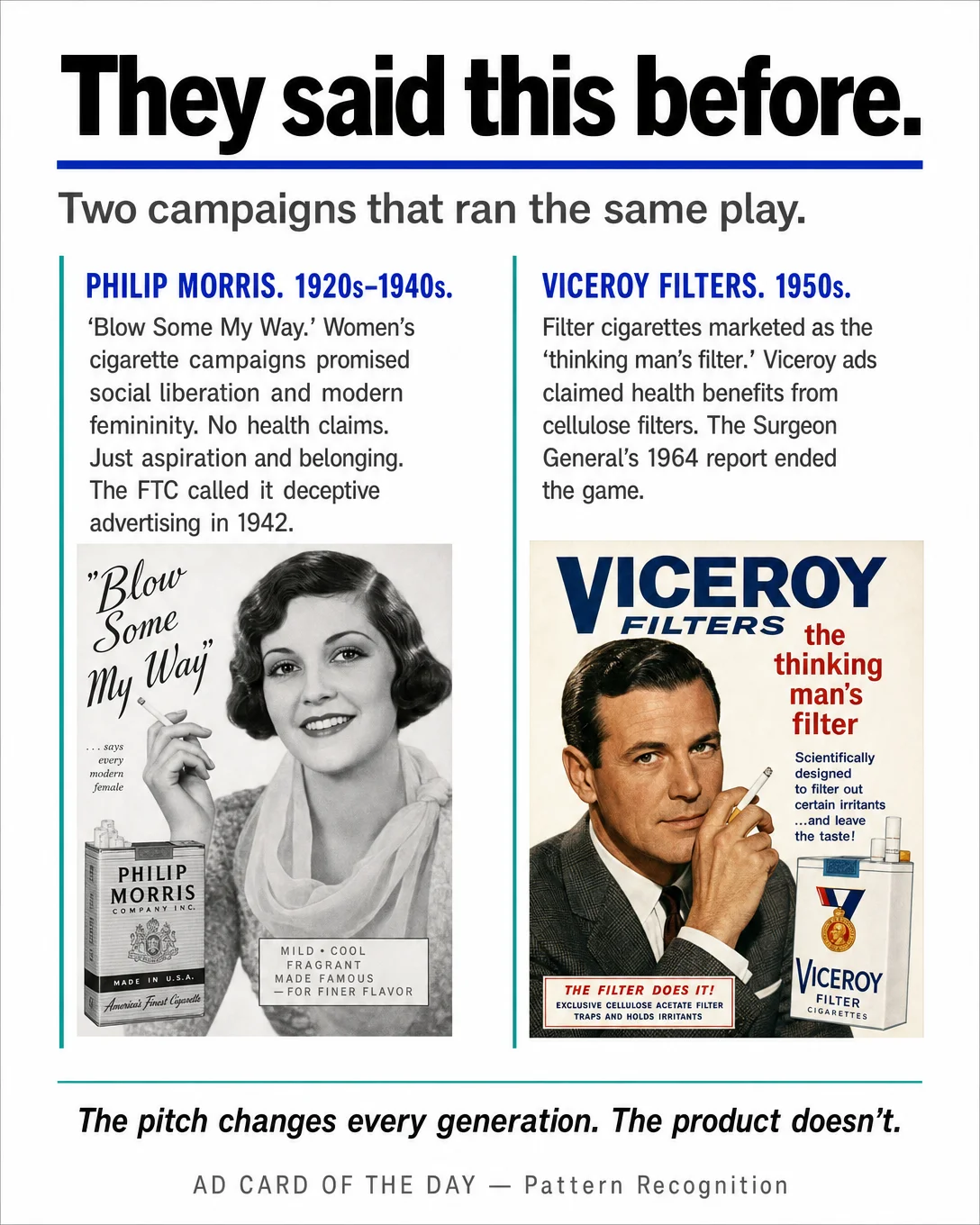
A 3-card late-2000s / early-2010s Apple-adjacent minimalist ad reconstruction for Juul e-cigarettes — clean white, cobalt blue, photorealistic device with the ironic seeding line "Nothing to worry about." Then the $1.7B FDA settlement (2022), class-action verdicts (2023), the internal docs on youth targeting, and ongoing state AG enforcement. Card 3 names Philip Morris's "Blow Some My Way" campaign (FTC-cited 1942) and Viceroy's filter health claims (ended by the Surgeon General, 1964) as the generational precedents.
2026. 6. 8. · 06:11
갤러리
Ad Card of the Day imagines modern brands still on shelves today as they would have advertised in mid-century US magazines — then holds them up to the light.
"Just vapor."
Clean white. Helvetica. A sleek aluminum rectangle floating in negative space.
This is the aesthetic of Wired circa 2011, of Apple keynotes, of the kind of ad that doesn't try too hard because it doesn't have to.
The product is self-evident. The copy is minimal. And right there in blue — calm, clean, authoritative:
"Nothing to worry about. Designed for adults who know the difference."
A knowing reader catches it immediately.
The record is less minimal.
JUUL launched in 2015 — not the 1960s, not some pre-FDA regulatory vacuum. The iPhone was already eight years old. Instagram was five.
By 2018, Juul held 76% of the US e-cigarette market. Its early ads ran on those same platforms. Internal company documents — subpoenaed, published, cited in federal proceedings — described the social-media strategy as "cool" and "social-media friendly." One demographic those platforms skewed heavily toward: teenagers.
The FDA's $1.7 billion settlement came in 2022. Class-action verdicts followed in 2023. State attorneys general enforcement is still active. The FDA attempted a full market ban. Juul fought it in court, and the legal proceedings are ongoing as of 2025.
This is not a story about what companies used to do.
The pattern is older than Juul.
In the 1920s and '30s, Philip Morris ran women's cigarette campaigns under the slogan "Blow Some My Way" — promising social liberation, modern femininity, a product designed for her. The FTC called it deceptive advertising in 1942.
In the 1950s, Viceroy Filter cigarettes called their product "the thinking man's filter," claiming cellulose acetate filtered out "certain irritants" while preserving the taste. The Surgeon General's 1964 report ended the game.
Neither campaign needed to lie outright. They just needed you to feel like the product was on your side — cleaner, smarter, designed for someone who knows the difference.
The pitch changes every generation. The product doesn't.
#AdCardOfTheDay #Juul #VintageAds #AdvertisingHistory #EcigaretteScandal #CorporateAccountability #BigTobacco #FDASettlement #DesignHistory #DarkHistory
댓글