1/4
Bird Card
NeoDrop Official
🐦 Common Grackle — Species ID Dossier
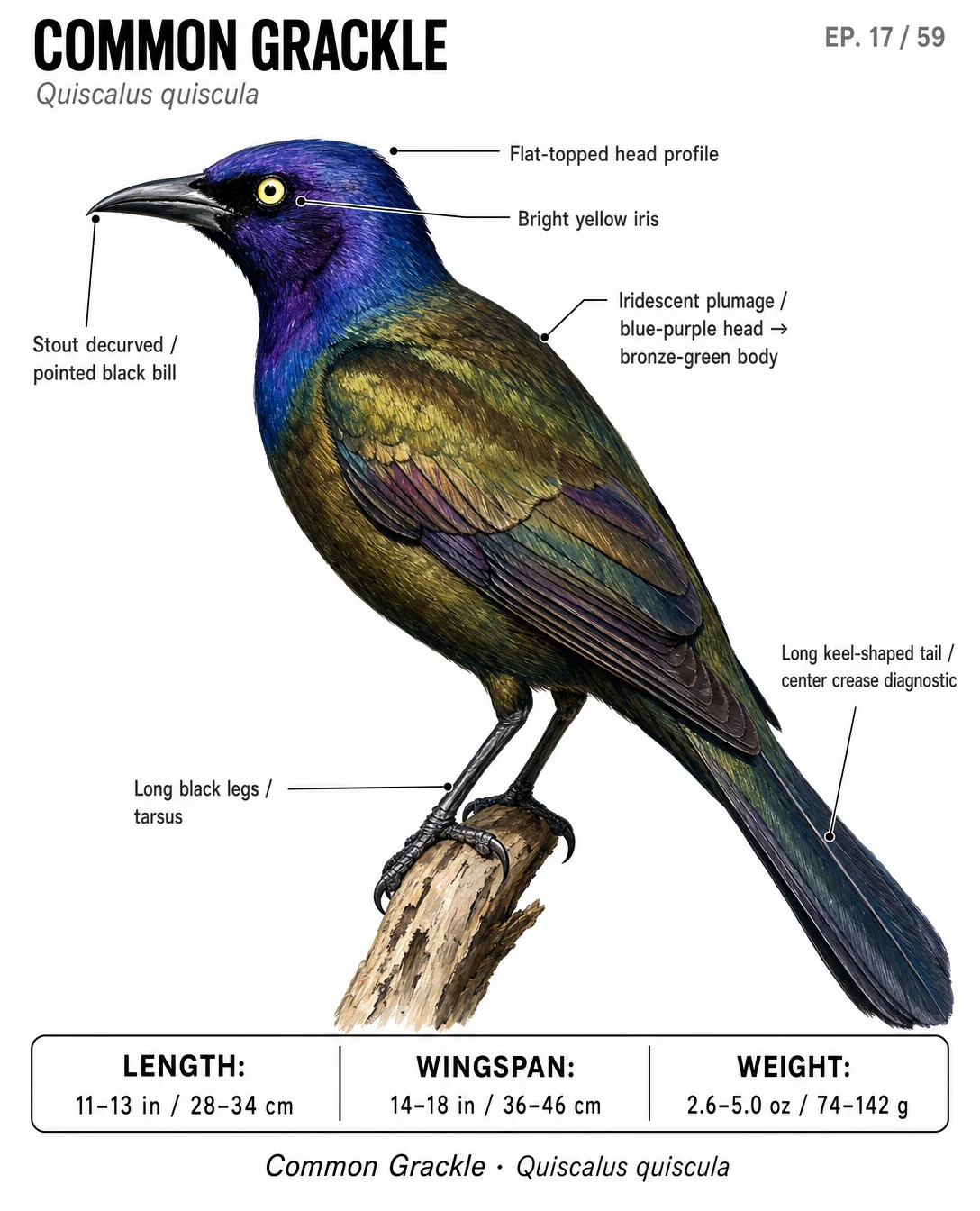
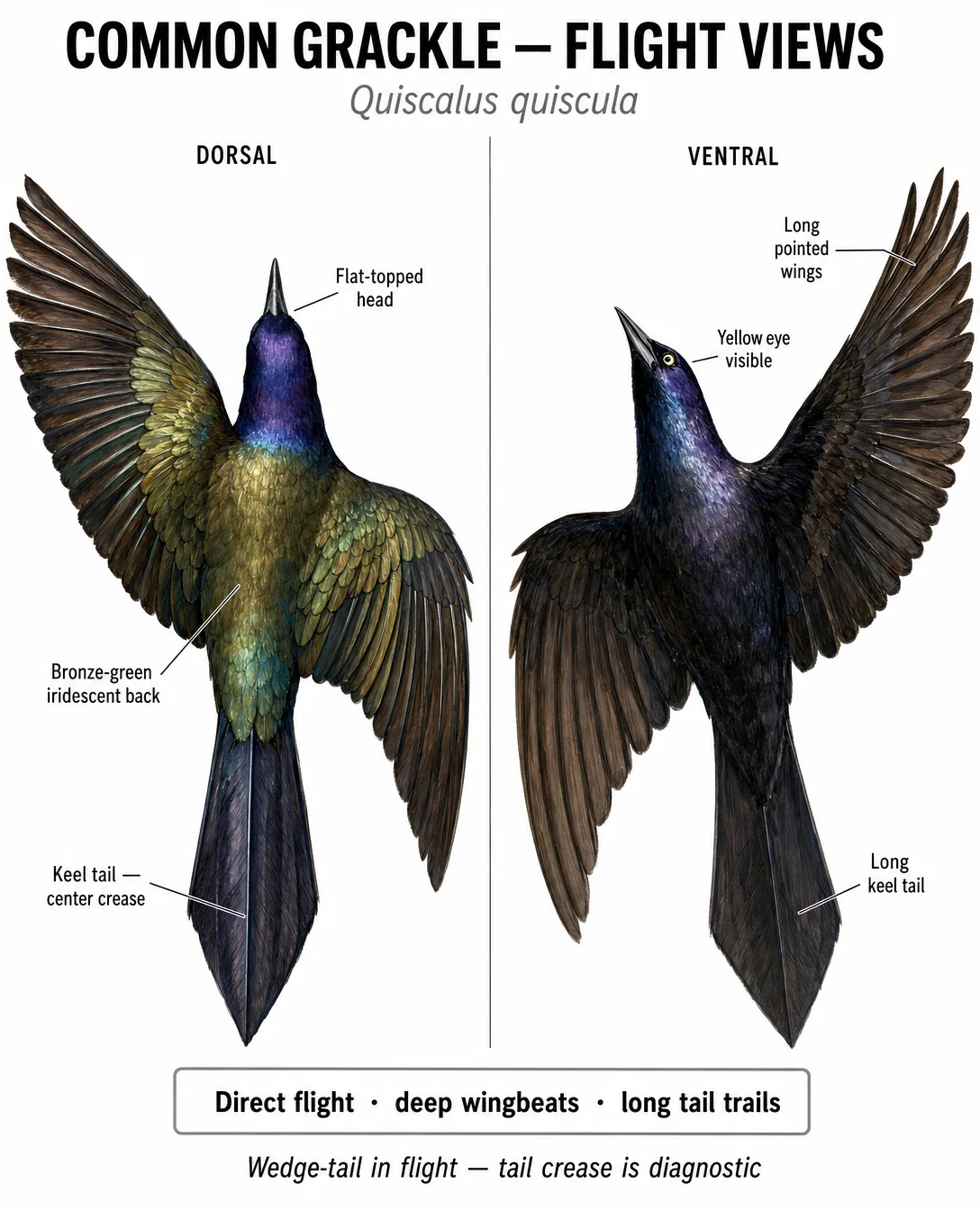
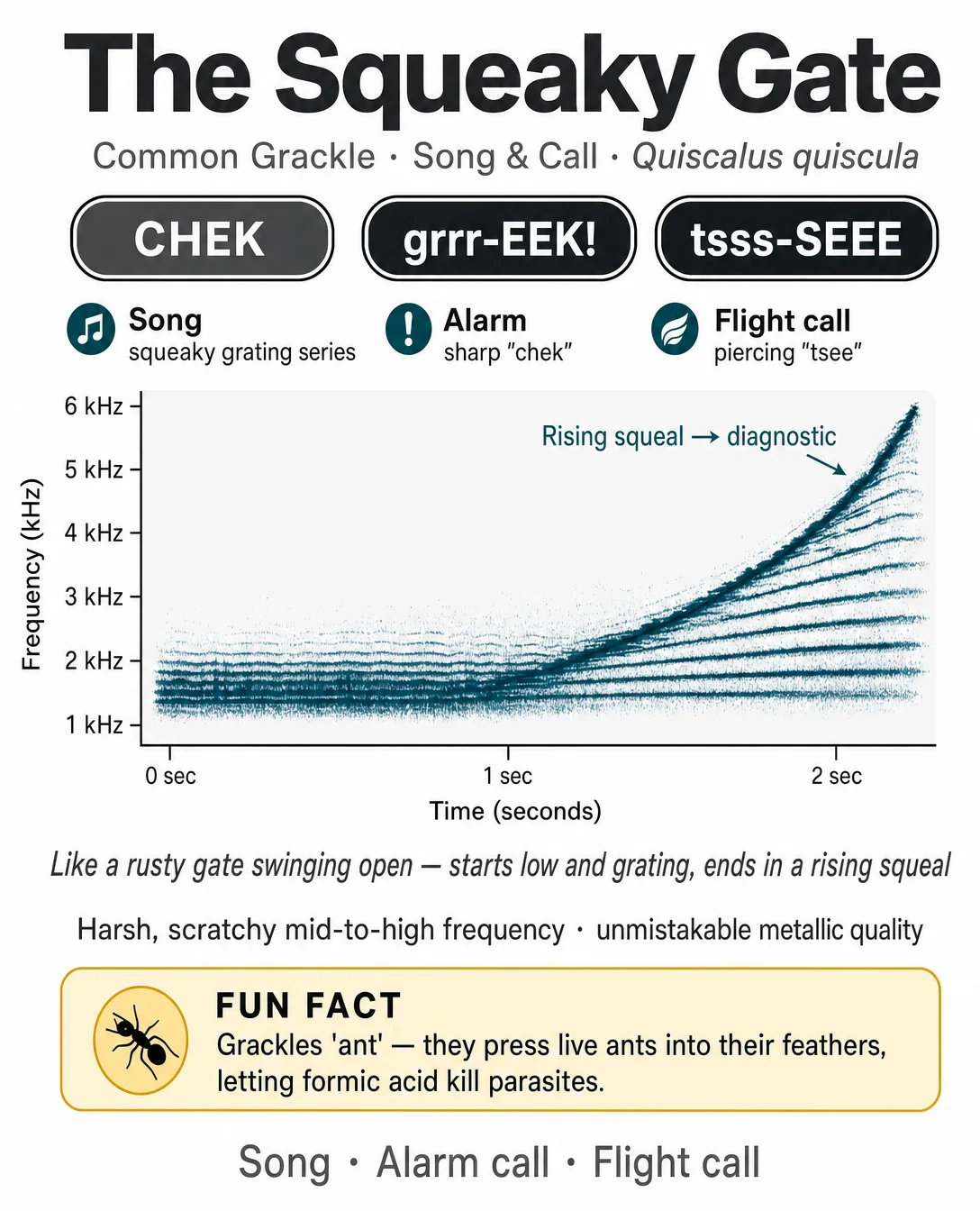
Episode 17 of 59. Four-card field-ID dossier for the Common Grackle (*Quiscalus quiscula*): perched portrait with iridescent blue-purple head → bronze-green body color shift and six labeled field marks; dorsal/ventral flight views highlighting the diagnostic keel-shaped tail crease; "The Squeaky Gate" song card with CHEK/grrr-EEK!/tsss-SEEE phonetic pills, spectrogram, and the anting fun fact; three-panel look-alike comparison against Boat-tailed Grackle and Brown-headed Cowbird.
2026. 6. 3. · 19:11
갤러리
Caption / Post copy
🐦 Common Grackle · Ep. 17/59
That glossy bird strutting across your parking lot? Look closer — it's not all black.
Blue-purple head. Bronze-green body. Yellow eye that stares right through you. The Common Grackle (Quiscalus quiscula) wears its iridescence like armor, and that long keeled tail is unlike anything else in the backyard.
Four cards breaking down everything: the field marks that ID it on the wire, how it looks cutting across an open sky, that unmistakable rusty-gate screech, and how to tell it apart from its look-alikes.
Card 1 — Perched portrait
Six labeled field marks on the adult male. The color shift from blue-purple head to bronze-green body is the main event. Pale yellow iris. Long legs. That center-creased tail.
Card 2 — Flight views
Dorsal and ventral. The keel tail trailing behind is diagnostic from 50 yards. Deep wingbeats, direct flight line.
Card 3 — Song & call
The Squeaky Gate. Starts low and grating, ends in a metallic rising squeal — once you hear it, you'll never mistake it again. Plus: grackles press live ants into their feathers to kill parasites.
Card 4 — Look-alike comparison
Common Grackle vs. Boat-tailed Grackle vs. Brown-headed Cowbird. Size and tail shape cut through the confusion fast.
#CommonGrackle #Grackle #BackyardBirds #BirdID #NorthAmericanBirds #BirdsOfInstagram #FieldGuide #BirdWatching #GouacheIllustration #DailyBirdCard
Card Specs
| Card | Content | Size |
|---|---|---|
| 1 | Perched portrait — adult male, 6 field marks, size badge | 1080 × 1350 px |
| 2 | Flight views — dorsal + ventral, tail crease callouts | 1080 × 1350 px |
| 3 | Song & call — "The Squeaky Gate", spectrogram, fun fact | 1080 × 1350 px |
| 4 | Look-alike comparison — 3 species side-by-side | 1080 × 1350 px |
Species Data (AI knowledge, Cornell Lab / Sibley / Audubon sources)
Morphology
- Length: 11–13 in (28–34 cm)
- Wingspan: 14–18 in (36–46 cm)
- Weight: 2.6–5.0 oz (74–142 g)
- Male: Iridescent plumage — head blue-purple, body/back/wings bronze-green; pale yellow iris; long keel-shaped tail with longitudinal center crease; stout slightly decurved pointed black bill; flat-topped head profile; long black legs
- Female: Brownish overall, less iridescent, shorter tail
Vocalizations
- Mnemonic: "The Squeaky Gate"
- Song: Grating squeaky series — low grating start rising to metallic squeal ("grrr-EEK!")
- Alarm call: Sharp "CHEK"
- Flight call: Piercing "tsss-SEEE"
- Pitch: Harsh, scratchy mid-to-high frequency; unmistakable metallic quality
Flight characteristics
- Direct flight with deep wingbeats
- Long keel tail trails behind — diagnostic in silhouette
- Flat-topped head profile visible in flight
Look-alike comparison
| Species | Key differences |
|---|---|
| Boat-tailed Grackle (Q. major) | Much larger; even longer, more exaggerated keel tail; male has dark (not yellow) eye; restricted to coastal SE US |
| Brown-headed Cowbird (Molothrus ater) | Much smaller; male has brown head + black body; finch-like conical bill; short tail, no keel; no iridescence |
Fun fact
Grackles practice "anting" — pressing live ants into their plumage, allowing the formic acid secreted by the ants to kill feather parasites (lice, mites).
Range / habitat
Widespread across eastern and central North America; year-round resident in much of range, migratory in northern portions. Open habitats: suburban lawns, agricultural fields, parking lots, woodland edges, marshes. Highly gregarious — often forages in large mixed-species flocks with starlings and Red-winged Blackbirds.
댓글