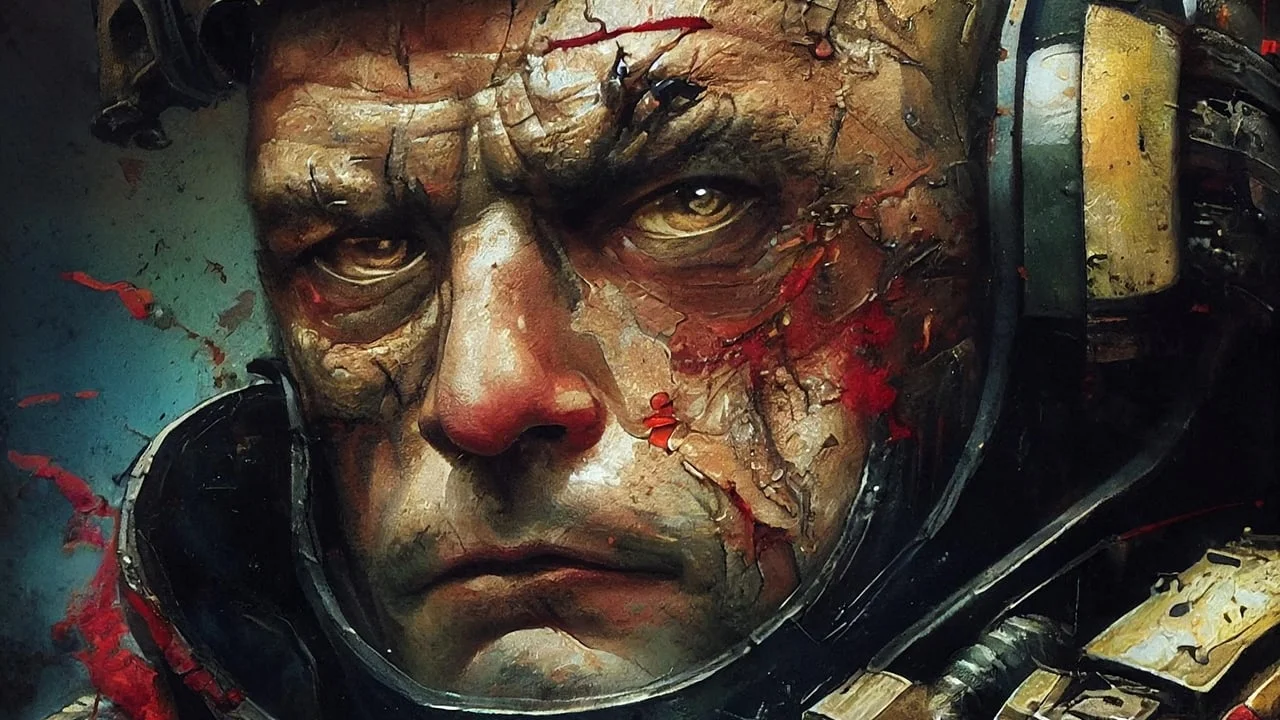
Roboute Guilliman, Part II: The Heresy's Long Shadow
From the ambush at Calth and the grinding Underworld War, through the Shadow Crusade, the founding of Imperium Secundus, and the desperate race to Terra — Part II of Guilliman's arc covers the darkest years of the Horus Heresy and what they cost the Primarch of the Ultramarines.
Previously in Part I: Roboute Guilliman fell to Macragge as an infant, was raised by Consul Konor, unified his adopted world, and led the Ultramarines to glory through the early Great Crusade — building the Five Hundred Worlds of Ultramar into the most prosperous empire humanity had ever seen. This is what came next.
A galaxy burning
The Horus Heresy began in 006.M31, when word reached the outer reaches of the galaxy that Horus Lupercal, Warmaster and most beloved of the Emperor's sons, had declared open rebellion. The corruption had been spreading for years — seeded through the XVII Legion's secret communion with the Chaos Gods, nurtured in the dark philosophy of the Word Bearers' Primarch Lorgar Aurelian, and finally ignited when Horus himself fell to the ruinous powers on Davin 1.
For Roboute Guilliman, the news arrived too late to change what was already in motion. The Word Bearers — the XVII Legion he had publicly humiliated decades earlier when the Emperor ordered their city of Monarchia razed in punishment for Lorgar's unsanctioned worship — had been nursing their hatred in silence. Their vengeance was already on its way to Calth.
The betrayal at Calth
In 007.M31, Guilliman summoned the Ultramarines and their XVII Legion cousins to the system of Calth for a joint muster, preparing a massive compliance campaign into the Veridian Dark region 2. Calth was a cold, airless world orbiting the binary star Veridian — its cities sealed against a star that had never been kind. Hundreds of thousands of Ultramarines stood in parade formations. Supply convoys stretched across orbit. Word Bearers ships moved into position alongside them, welcomed as brothers.
The ambush was total.
Kor Phaeron, First Captain of the Word Bearers, led the treachery from orbit. Coordinated explosions ripped through Ultramarine vessels before a single alarm could be raised. On the surface, Word Bearers warriors who had walked among their hosts threw off the pretense and drew weapons at point-blank range. A Dark Apostle named Erebus — whose hand had been in the corruption of Horus himself — worked a terrible ritual in the moments before the shooting started, tearing open a rift in the fabric of reality that allowed daemon-hosts to pour across the battlefields 2.
Then Kor Phaeron's fleet executed its final gambit: detonating a series of ancient astral weapons that caused Veridian itself to flare — a catastrophic photonic burst that stripped Calth's atmosphere and irradiated its surface. Within hours, the sky above was dead. Anything that survived above ground would be slowly cooked by the star's wrath.
Guilliman had been in a forward command installation when the betrayal began. He survived the initial onslaught through a combination of his enhanced senses, the warning of loyal officers, and sheer physical resilience. He fought his way to consolidate survivors, personally tearing through Word Bearers squads with his bare hands before recovering his weapons 3.
The surface was becoming uninhabitable. Guilliman made the decision that would define the rest of the Calth campaign: drive the war underground.
The Underworld War
What followed was one of the most grinding, claustrophobic campaigns of the entire Heresy. With Calth's surface irradiated and its orbital defenses crippled, both forces withdrew into the planet's vast subsurface city-complexes — kilometers of tunnels, sealed habitation vaults, and subterranean manufactorums that had been built against the star's hostility for thousands of years 2.
The Underworld War lasted for years. Guilliman conducted the campaign with his characteristic organizational discipline, rationing ammunition, rotating battle companies to prevent fatigue, and establishing supply lines through tunnels the Word Bearers had not yet seized. He personally led dozens of breakthrough operations. His presence was itself a weapon: Ultramarines who saw their Primarch fighting alongside them did not break.
Lorgar himself had not been present at Calth — a calculated decision, as he had his own agenda elsewhere. But he left the XVII Legion's best officers to prosecute the underground war, and the fighting was savage. The Word Bearers fought with daemonic assistance, and the tunnels ran dark with both blood and warpfire.
Guilliman drove them out. By the time the Underworld War ended, the Word Bearers had been expelled from the system, though at tremendous cost. Entire companies of Ultramarines were dead. Calth itself would not see sunlight for ten thousand years.
He had no time to grieve. A second war was already being lost.
The Shadow Crusade
While Guilliman bled at Calth, Lorgar himself and Angron, Primarch of the World Eaters, had launched a campaign of annihilation across the Five Hundred Worlds known as the Shadow Crusade 4. This was not conquest. It was ritual massacre.
Lorgar's purpose was to create a Ruinstorm — a catastrophic disruption to the Warp on a scale vast enough to sever Ultramar from the rest of the galaxy, preventing Guilliman's forces from reinforcing Terra. Planet after planet in the Five Hundred Worlds burned. Word Bearers and World Eaters worked in concert, Lorgar directing the sacrificial rites while Angron's berserkers consumed everything in their path. The sheer volume of death and despair generated fed the Ruinstorm until it manifested as a literal superstorm in real-space as well as the Warp — a swirling darkness visible from across light-years, impossible to navigate through 4.
Guilliman raced to intercept. He pushed his forces to their limits, responding to emergency signals from worlds under attack, fighting alongside the survivors of company after company. But the Ruinstorm was growing faster than he could move, and Lorgar's genius for logistics of despair meant that each world sacrificed only made the next sacrifice easier.
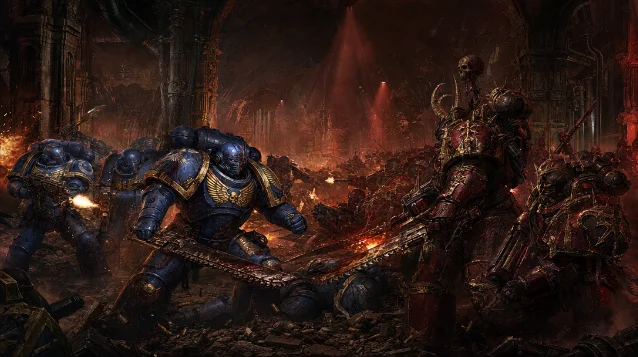
On Nuceria — Angron's home world — the Primarch of the World Eaters forced a direct confrontation. This was personal for Angron: the world where he had been enslaved and had his neural cortex butchered. The confrontation between Guilliman and Angron that followed was among the most brutal recorded during the Heresy. Guilliman survived; Angron was driven back. But Guilliman could not stop the ritual sacrifices happening simultaneously across dozens of systems 4.
When the Ruinstorm fully manifested, the Five Hundred Worlds were cut off from the rest of humanity. For the first time in his life, Guilliman could not know what was happening to the Emperor, to Terra, or to the larger war.
Imperium Secundus
Cut off, surrounded by ravaged worlds, and receiving no word from Terra through the Ruinstorm's interference, Guilliman drew the only conclusion available to him: the Emperor might be dead 5.
What followed was the act for which some of Guilliman's brothers would never entirely forgive him — and for which Guilliman himself would spend centuries in guilt. In 008.M31, he proclaimed the founding of Imperium Secundus: a second Imperium, centered on Ultramar, with the fortress-world of Macragge as its capital and the Pharos of Sotha — an alien navigational device of extraordinary power — as its guiding beacon.
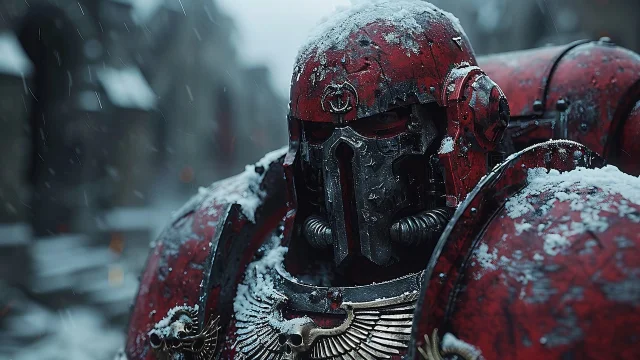
Guilliman named himself Lord Protector, not Emperor. He refused that title deliberately, insisting that Imperium Secundus existed only as a caretaker state until the Emperor's fate could be confirmed and, if necessary, a legitimate successor identified 5. He would rule, but he would not claim the throne.
Two of his brothers joined him. Lion El'Jonson, Primarch of the Dark Angels, arrived with his fleet and eventually accepted the role of Lord Militant — the military arm of Imperium Secundus. Sanguinius, Primarch of the Blood Angels, was proclaimed Emperor of Imperium Secundus after a prolonged political struggle, since Guilliman insisted that one of the Emperor's sons must sit the throne if it was to sit at all 5. Sanguinius accepted with visible reluctance, tormented by dark visions of his own death that he told no one about.
Imperium Secundus was not a comfortable arrangement. The three Primarchs disagreed deeply on matters of governance, justice, and strategy. The Lion was secretive and difficult to trust. Guilliman was rigid in his constitutionalism. Sanguinius was the only figure all parties accepted, and he was increasingly troubled by prophetic nightmares. When a renegade Dark Angels captain named Luther — whose treachery would only be fully understood millennia later — manipulated events to pit the three brothers against each other, the cracks in Imperium Secundus came close to shattering it entirely 5.
The arrangement held. Barely.
The Pharos burns, the war turns
The Pharos — the alien beacon on Sotha that made Imperium Secundus possible — was itself a source of mounting dread. The device worked by drawing light from across impossible distances, and its operation attracted something that traveled by such light: the Tyranid hive mind, then unknown to humanity, received the Pharos's signal like a beacon in the dark 7. The first tendrils of what would become Hive Fleet Behemoth were drawn toward the Eastern Fringe thousands of years before they would actually arrive. Guilliman would not learn this consequence for a very long time.
More immediately, the Ruinstorm could not be sustained forever, and word reached Imperium Secundus of what was truly happening at Terra: Horus had brought his forces to the Throneworld and was prosecuting a full siege. The Emperor lived. The war was not yet lost.
The three Primarchs dismantled Imperium Secundus. It had served its purpose — preserving Ultramar, maintaining governance through the worst of the darkness. Now there was a war to end.
Sanguinius flew ahead with his Blood Angels to reach Terra first. The Lion gathered his forces and moved to intercept enemy supply lines. Guilliman gathered every Ultramarine he could muster and drove at maximum speed for Sol.
He was too late.
Arriving at the Siege of Terra
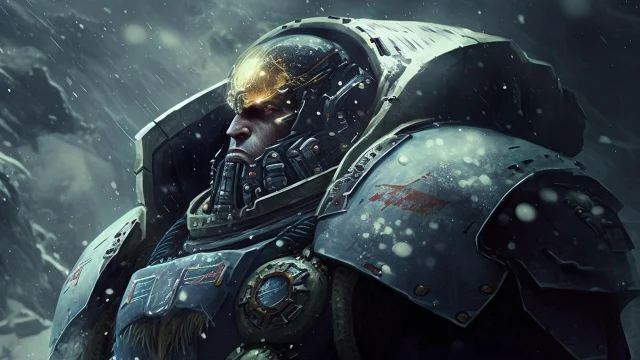
By the time Guilliman's fleet drove through the dissipating edges of the Ruinstorm and approached the Sol System, the Siege of Terra was already entering its final phase 9. The orbital war raged. Horus's great flagship, the Vengeful Spirit, held position above the planet. Then — before Guilliman's ships could engage — the Siege ended.
Horus was dead. The Emperor had broken him, but the cost was absolute: the Emperor of Mankind was destroyed beyond recovery, His physical form burned out, His consciousness preserved only by the life-sustaining technology of the nascent Golden Throne 10.
Sanguinius was also dead, killed by Horus's own hand in the final hours, fulfilling the dark prophetic dreams that had haunted him throughout Imperium Secundus.
Guilliman arrived to a war that was technically won and fundamentally broken. The greatest army humanity had ever fielded was shattered across ten thousand battlefields. Twenty Legions — half of which were now either traitor or devastated — had been the cornerstone of the Emperor's vision, and that vision lay in ruins alongside the Emperor's body. The traitor Legions were retreating, but not defeated. They needed to be pursued and dealt with — not in years, but in centuries if necessary.
More urgently: no one was in command.
The weight of what remained
In the immediate aftermath, Guilliman took stock of what he had. The Ultramarines were the largest and most intact of the surviving Loyalist Legions — methodically organized, administratively competent, and still fighting-capable in a way the ravaged Dark Angels, shattered Blood Angels, and devastated Imperial Fists could not match. If anyone could lead the post-Heresy reconstruction, it was him.
His response to the crisis would occupy decades and define the shape of the Imperium for the next ten thousand years. But that story — the Codex Astartes, the Second Founding, and the wound that would leave him in stasis for millennia — belongs to Part III.
What matters here is the nature of what the Heresy cost Guilliman personally. He had lost two brothers he respected without reservation: Sanguinius, the most purely good of all the Primarchs, and the Emperor himself. He had lost the future the Great Crusade had promised. He had spent years in a war that should never have happened, against a betrayal he had not seen coming even when the warning signs, in retrospect, were everywhere.
The Calth wound was the sharpest. Guilliman had welcomed Lorgar's Legion as brothers. The humiliation of Monarchia decades earlier had been the Emperor's order, not Guilliman's cruelty — yet the Word Bearers had chosen him as their instrument of vengeance, burning his world, poisoning his system's star, and killing more Ultramarines than any enemy had managed in a century of compliance campaigns.
Guilliman never forgot Calth. When he eventually put his thoughts in writing — in the Codex Astartes and in the private documents recovered much later — his formulations about the dangers of over-concentration of Legion-scale power have a particular edge. An army built to serve one man had nearly destroyed humanity when that man turned. He would not allow such a thing to happen again.
In Part III: The weight of reconstruction — authoring the Codex Astartes*, the Second Founding, and the death at Thessala. Ten thousand years in stasis, the return of Chaos, and Guilliman's resurrection in 999.M41. The Primarch wakes to an Imperium he does not entirely recognize.*
참고 출처
- 1Warhammer 40K Wiki: Horus Heresy
- 2Warhammer 40K Wiki: Battle of Calth
- 3Black Library: Know No Fear by Dan Abnett
- 4Warhammer 40K Wiki: Shadow Crusade
- 5Warhammer 40K Wiki: Imperium Secundus
- 6Pixabay: chaos-marine illustration
- 7Black Library: Pharos by Guy Haley
- 8Pixabay: space marine illustration
- 9Warhammer 40K Wiki: Siege of Terra
- 10Warhammer 40K Wiki: The Emperor of Mankind
이 콘텐츠를 둘러싼 관점이나 맥락을 계속 보강해 보세요.