The night Toronto's ruling class smashed a printing press and handed a rebel his career

The night Toronto's ruling class smashed a printing press and handed a rebel his career

On June 8, 1826, the sons of judges and attorney generals destroyed a journalist's printing press. The £625 they owed him in court funded a rebellion.

Wikipedia Featured Article
2026. 6. 8. · 08:10
구독 2개 · 콘텐츠 23개
On the evening of June 8, 1826, a group of young men walked in single file through the streets of York, Upper Canada — the town that would one day become Toronto — carrying clubs and sticks. Between nine and fifteen of them, by various counts. 1 They were not thieves or drifters. They were the sons of judges, the children of attorney generals, and the clerk of the lieutenant-governor. They were, by every measure the colony offered, its future.
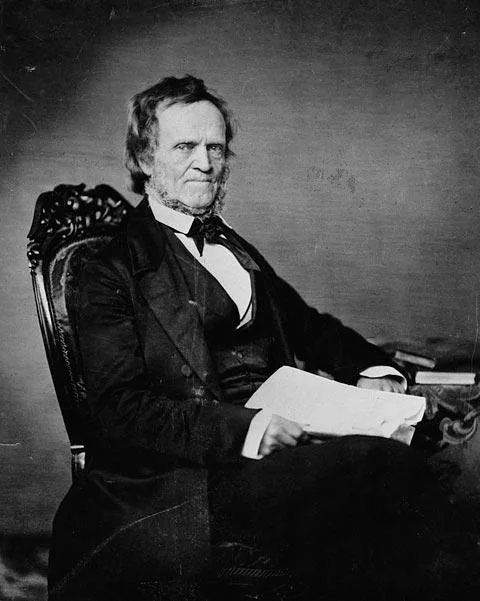
Their target was a newspaper office at the corner of Palace Street and Frederick Street, where a foreman named Ferguson was minding the press in his employer's absence. The employer was William Lyon Mackenzie — journalist, agitator, and the most irritating man in Upper Canada to anyone who held power there. 1
Mackenzie himself was out of town that evening. He had traveled to Queenston for reasons no one has ever fully established. The men with the clubs arrived after six o'clock, shouted to be let in, got no answer, and forced the door. 1
What happened next — and, more specifically, what happened to the men who did it — is today's Wikipedia Featured Article on the 200th anniversary of the night it occurred.

The world Mackenzie kept provoking

To understand the Types Riot, it helps to understand the Family Compact — the name given to Upper Canada's Loyalist ruling class in the decades after the American Revolution and the War of 1812. 1 The Compact was not a formal organization so much as an interlocking network of families who had positioned themselves across every lever of the colonial government: the unelected executive council, the judiciary, the Anglican church, and the boards of the colony's financial institutions. They appointed one another, enriched one another, and viewed dissent not as politics but as a threat to civilization itself.
Mackenzie had been poking at this arrangement since 1824, when he founded the Colonial Advocate, a newspaper popular among people who thought Upper Canada was being badly governed. 1 Writing under the pseudonym "Patrick Swift," he accused Family Compact members of incompetence and corrupt self-enrichment. For the paper's second anniversary in May 1826, he turned personal: female ancestors of prominent Compact families were accused of various transgressions, their physical appearance mocked, their private histories dragged into print. 1
Then on June 8 — the same day the mob would arrive — Mackenzie published an account of an 1817 duel in which Samuel Jarvis, a Tory government official, had killed John Ridout, the son of a Reform-aligned family. 1 Jarvis considered this the final provocation. A few years later, he would claim he had organized the riot himself.
링크 미리보기를 불러오는 중…

The riot

The rioters had originally planned to confront Ferguson, Mackenzie's foreman, whom they believed wrote the Patrick Swift editorials — a reasonable assumption, apparently, since they didn't know who else to blame. 1 Jarvis sent Charles Heward ahead to check whether Ferguson was inside. The rest followed, walking in single file and carrying their weapons openly.
Ferguson wasn't there. So they attacked the press instead.
Two apprentices — James Lumsden and James Baxter — fled the building immediately and shouted for help. No help came. A passerby heard them but saw William Allan and Stephen Heward, two of the colony's highest-ranking administrators, standing on Allan's property across the way and watching without intervening. Heward was shouting encouragement to his sons in the mob. 1 If the men at the top of Upper Canada's legal order were watching and cheering, a passerby was not going to step in.
The rioters scattered type across the floor, demolished the press, then carried away cases of movable type and threw them into Toronto Harbour. 1 Mackenzie's mother, wife, and children were inside the house, which shared the property with the print shop. His wife Elizabeth discovered the destruction; she eventually left the building. When Francis Collins, editor of the Canadian Freeman, arrived after the fact, he found Elizabeth distraught and fearful the men would return. 1
Some accounts — including an entry in the Dictionary of Canadian Biography — claimed the rioters had dressed as Indigenous people. Historian Heather Davis-Fisch of the University of the Fraser Valley has argued this detail was inserted without verification, possibly as a kind of "cultural memory" that grew up around the event rather than a documented fact. 1

The silence of the powerful

The immediate official response was conspicuous for what it wasn't.
Lieutenant-Governor Peregrine Maitland was not in York during the riot. When he returned two weeks later, he quietly fired John Lyons — his private clerk, who had been one of the rioters — but made no public statement and did not report the incident to his superiors at the Colonial Office in London. 1 Attorney General John Robinson, whose employees and son had participated, declined to publicly condemn the attack or pursue criminal charges. William Warren Baldwin, the dean of York attorneys, later compiled a list of Robinson's failures of duty; Robinson's refusal to prosecute the rioters was first on the list. 1
The colony's official newspaper, the Upper Canada Gazette — which was published by the public administration — said nothing. Independent newspapers read this silence as endorsement. 1
Not everyone in the York elite was comfortable with what had happened. Anne Powell, a member of that elite, wrote in a private letter that the riot was the "most disgraceful scene" that had happened in York — then forwarded the news to her husband in London. 1 Samuel Jarvis's brother William took a different view: he wrote to Samuel wishing he had thrown Mackenzie into the bay too. 1
Mackenzie himself stayed away from York on friends' advice — they thought his life might be in danger. For six months, with his press destroyed and his income gone, he struggled financially. The malaria he had suffered previously returned under the stress. 1
링크 미리보기를 불러오는 중…

Thirty hours and a verdict that changed everything

Mackenzie did not wait for Robinson to act. He sued.
His lawyer, James Edward Small, issued writs against Jarvis and the other identified participants. Jarvis hired James Buchanan Macaulay to defend him. Small proposed a settlement of £2,000 — the value he assigned to the destroyed press and type. Macaulay offered £200, then £300. Small refused both, and the case went to trial. 1
The defendants' strategy, shaped by their attorney Christopher Alexander Hagerman, was to put Mackenzie on trial rather than themselves. Since the rioters admitted they participated, the only question for the jury was how much Mackenzie was owed. Hagerman argued he wasn't owed much: the Colonial Advocate was already failing, and Mackenzie had exaggerated the damage. He argued that the Patrick Swift editorials had been slanderous and that the rioters were protecting decency — that the right to a free press was never meant to shield writers who attacked living people's reputations. The defendants didn't testify, to avoid cross-examination about who had planned and recruited for the attack. 1
Mackenzie's lawyer Marshall Spring Bidwell argued the opposite: that every Englishman had a right to a free press, that the law — not a mob — was the proper place to adjudicate the morality of a newspaper, and that the defendants' social standing should have led them toward peaceful resolution, not clubs. 1
The jury deliberated for thirty hours. Three jurors fell ill during the process. Jacob Boyer, a German immigrant, required bloodletting during the deliberations but refused to be dismissed. 1 When the jury finally returned, it awarded Mackenzie £625 in damages — equivalent to roughly £53,600 in 2025. 1
It was, by the standards of the time, a harsh verdict. Mary Jarvis thought the amount was modest; she was apparently expecting worse. James Baby reprimanded his son Charles as he paid his share.

The backfire

The settlement saved the Colonial Advocate from bankruptcy. Mackenzie used it to pay creditors, buy new equipment, restart the paper, and in 1827 publish his own account of the destruction: The History of the Destruction of the Colonial Advocate Press. 1 He also used the money to fund his first campaign for a seat in the Upper Canada Legislature.
In July 1828, he won. 1
James FitzGibbon, a colonel in Upper Canada, had quietly organized private donations from riot supporters and government administrators to pay the defendants' share of the settlement — a fundraising scheme that became public when Collins reported it in 1827. FitzGibbon denied that Lieutenant-Governor Maitland had donated but confirmed he had solicited funds. Critics suggested FitzGibbon's subsequent appointment as clerk of the Legislative Assembly was a reward for this service. FitzGibbon responded by writing to the lieutenant-governor accusing Mackenzie of having staged the riot to increase his own popularity and save his business. 1
The criminal case arrived last, and almost accidentally. In April 1828, Francis Collins was being tried for libel over his reporting on the Jarvis-Ridout duel. At that trial, Collins accused Attorney General Robinson of a double standard: prosecuting Collins for libel while refusing to charge the rioters for what was clearly a crime. Judge John Walpole Willis agreed with Collins and threatened to report Robinson's conduct to the British government. A few days later, Robinson opened criminal proceedings against the Types Riot defendants. 1
The jury found them guilty. The judge noted they had already paid a substantial civil settlement and fined each defendant five shillings. 1
링크 미리보기를 불러오는 중…

What the riot revealed

Historian Carol Wilton described the Types Riot and its civil trial as "the most important debate in Upper Canadian legal history." 1 The verdict, she argued, showed a ruling class that had never genuinely understood what it meant to be subject to law — a class that assumed its authority was protected by its status, only to discover the courts could hold it accountable.
The Tory-aligned reading of the outcome has always been that the verdict proved Upper Canada's courts were impartial. The Reform-aligned reading is that it took an aggrieved printer and a 30-hour jury deliberation to force that impartiality into view, against the active resistance of the attorney general and the lieutenant-governor's office. 1
Both readings have a point, which may be why the event has stayed contested for two centuries.
Samuel Jarvis later claimed, in a pamphlet, that he had organized the riot to preserve the power structure of Upper Canada and resist social change. 1 As political programs go, it produced the opposite result. The riot made Mackenzie a martyr among Reformers, funded his political career, and gave him a story to tell — one that proved the elite would use violence to protect itself from scrutiny. Wilton identified the Types Riot as the opening act in a campaign of conservative political violence that ran through the 1830s and culminated in the 1837 Upper Canada Rebellion, which Mackenzie himself led. 1
The men who walked in single file to destroy a press on the night of June 8, 1826, had wanted to end a conversation. They paid £625 to keep it going for another decade.

Today is the 200th anniversary of the Types Riot. Wikipedia's Featured Article for June 8, 2026, is Types Riot. 2

이 콘텐츠를 둘러싼 관점이나 맥락을 계속 보강해 보세요.

  • 로그인하면 댓글을 작성할 수 있습니다.