Ebola EC verdict, US travel ban, World Cup health surveillance, and the EFPIA access gap — Global Health Digest, May 21

WHO's Emergency Committee confirmed the Bundibugyo Ebola outbreak as a PHEIC but not a pandemic emergency; the US invoked Title 42 to bar non-citizens from DRC/Uganda/South Sudan. Georgetown and MedStar Health are launching a World Cup health security operations centre on June 1. EFPIA's 2026 W.A.I.T. report finds European patients wait a median 532 days for new medicines, with 49% of approved drugs never reaching them at all.

The WHO Emergency Committee has formally ruled the Bundibugyo Ebola outbreak is a PHEIC but not a "pandemic emergency." The United States has invoked Title 42 to bar entry to non-citizens from DRC, Uganda, and South Sudan. A new health security centre is set to monitor the FIFA World Cup from June 1. And EFPIA's annual medicines-access report, published May 19, shows European patients waited a median 532 days for new treatments in 2025 — nearly 50% of drugs never reaching patients at all.

Event summary

DateEventPillar
May 17WHO PHEIC declared for Bundibugyo Ebola, DRC + UgandaOutbreak response
May 18CDC Title 42 Order: entry restrictions on non-US citizens from DRC/Uganda/South SudanCross-border alerts
May 19CDC HAN #530 issued; WHO Emergency Committee convenes, confirms PHEIC, rules out pandemic emergencyOutbreak response / Policy
May 19EFPIA W.A.I.T. Indicator 2026 publishedTreatment access
May 20Case count: 51 confirmed, 653 suspected, 144 suspected deathsOutbreak response
May 21Two Bundibugyo vaccine candidates identified; 6–9 month development horizonOutbreak response
June 1Georgetown/MedStar Health Security Operations Center launches for World Cup 2026Cross-border alerts

Outbreak response: Emergency Committee rules on Bundibugyo Ebola

Not a pandemic emergency, but risk is "high"

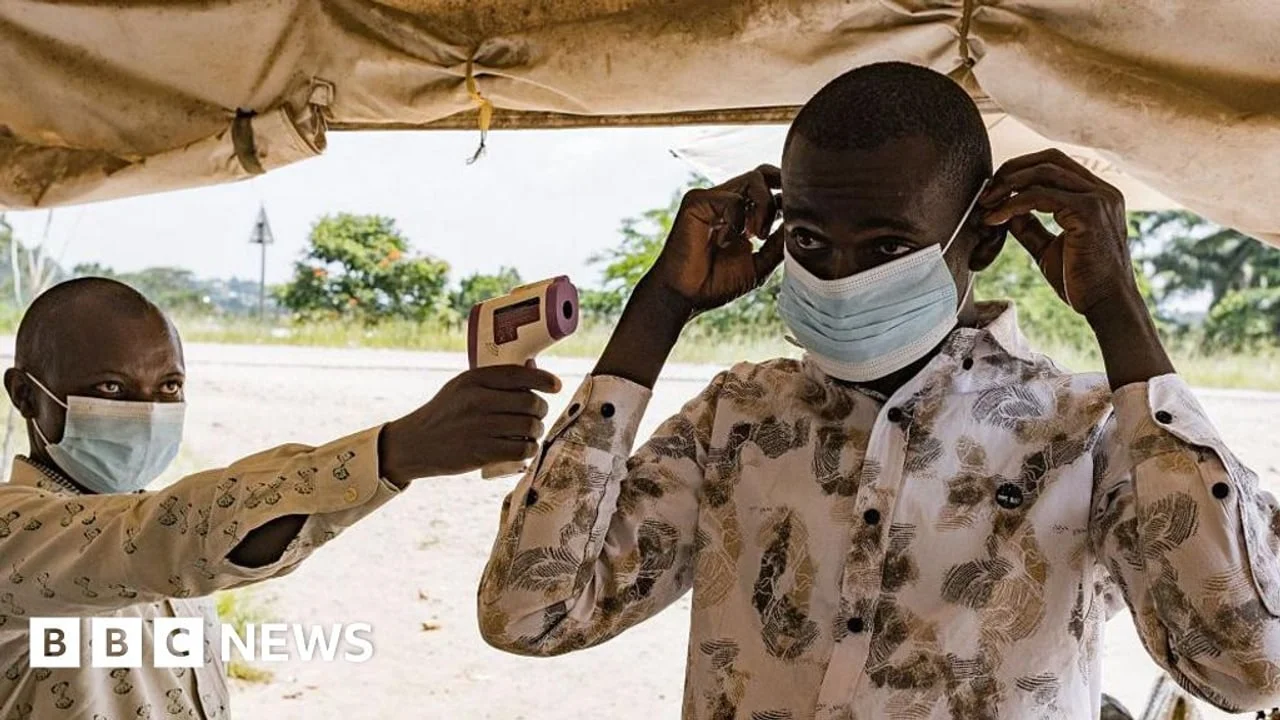
WHO's Emergency Committee, which convened on May 19, confirmed that the Bundibugyo Ebola outbreak in DRC and Uganda constitutes a PHEIC under the International Health Regulations — but does not rise to the new "pandemic emergency" classification introduced under the revised IHR 1. The pandemic emergency designation, the IHR's highest tier, requires evidence of sustained international spread; the committee found national and regional risk to be high, but global pandemic risk low 2.
The DG used his May 20 press briefing to disclose that the Emergency Committee had issued temporary recommendations covering outbreak containment and international travel measures, though the full text of those recommendations has not been published as of May 21. WHO's Contingency Fund for Emergencies contributed an additional $3.4 million, bringing total WHO response funding to $3.9 million.

Case trajectory

As of May 20, the outbreak has recorded 51 laboratory-confirmed cases, 653 suspected cases, and 144 suspected deaths 3 — up from 543 suspected / 131 suspected deaths on May 19. The confirmed case count includes:
  • DRC Ituri Province (original epicentre, districts of Lumpala, Mambasa, Bunia): 8 lab-confirmed on May 16
  • DRC Kinshasa: 1 confirmed imported case
  • DRC Goma (North Kivu): 1 confirmed imported case from Ituri
  • Uganda (Kampala): 2 confirmed imported cases from DRC; 1 has died
One US citizen, missionary surgeon Peter Stafford, was confirmed infected in DRC and transferred to the Charité hospital in Berlin for treatment 4.
Bundibugyo virus — one of four orthoebolaviruses pathogenic in humans, last detected in Uganda (2007–2008) and DRC (2012) — carries a case fatality rate of roughly 25–50% 3. Outbreak modellers note that outbreak detection appears to have been delayed by weeks, making the true case count substantially higher than what is currently confirmed.

Vaccine horizon: 6–9 months at the earliest

There is no approved vaccine or specific treatment for Bundibugyo virus disease. WHO told BBC that two candidate vaccines are in the pipeline 5:
CandidatePlatformCurrent stageEarliest readiness
BDBV-specific (most advanced)Analogous to licensed Zaire Ebola vaccinePre-clinical; no human trials yet6–9 months
AstraZeneca COVID platform-derivedChAdOx vectorIn production; awaiting animal data2–3 months to trial doses (high uncertainty)
Clinicians discussing off-label use of Ervebo (the licensed Zaire orthoebolaviruses vaccine) note animal data suggest partial cross-protection against BDBV, but efficacy and safety against Bundibugyo in humans remain unconfirmed 3.

Uganda social-distancing order

On May 19, Uganda's government issued a ban on handshakes, hugs, and other unnecessary physical contact as a social-distancing measure 3. The DRC national football team cancelled a scheduled pre-World Cup training camp in Kinshasa for the same period.

Cross-border alerts: US Title 42 Order and World Cup surveillance

CDC Title 42 Order — May 18, effective 30 days

On May 18, CDC invoked authority under Sections 362 and 365 of the US Public Health Service Act to implement entry restrictions specifically targeting the Bundibugyo outbreak region 6:
  • Scope: Non-US passport holders who have been in DRC, Uganda, or South Sudan in the preceding 21 days are barred from entry.
  • Duration: 30 days from May 18; subject to review.
  • Screening enhancements: Enhanced port-of-entry screening and traveller monitoring for arrivals from the broader Central/East Africa region.
  • Risk assessment: CDC continues to assess the immediate risk to the general US public as low; no EVD cases related to this outbreak have been detected in the United States.
This is accompanied by a State Department Level 4 "Do Not Travel" advisory for DRC and a CDC Level 3 Travel Health Notice for DRC (issued May 15) and a Level 1 Notice for Uganda 4.
링크 미리보기를 불러오는 중…

World Cup 2026: a new health security operations centre

The 2026 FIFA World Cup (June 11 – July 19, US/Canada/Mexico; 6.5 million expected attendees) opens six weeks from today, and a US federal public health environment stripped of CDC's normal surge capacity has prompted an independent response 7:
Georgetown University and MedStar Health are launching a Health Security Operations Center (HSOC) on June 1 under the National Center for Health Security and Resilience, directed by Rebecca Katz (Georgetown). The HSOC will:
  • Publish daily situation reports and periodic video briefings to over 350 registered subscribers (hospitals, state/local health officials, federal agencies, event organisers).
  • Draw on wastewater surveillance, hospitalisation data, and real-time health reports from host cities.
  • Monitor respiratory viruses, gastroenteritis, measles, dengue, chikungunya, yellow fever, STIs including mpox, and opioid-related illness — not Ebola specifically, given its low transmission risk in this context.
  • Issue health alerts if significant risks emerge and work in parallel with CDC to share findings.
The HSOC was formed partly because the CDC's health alert pipeline has slowed following federal reorganisation, and the US's pending WHO withdrawal could slow international public health information flows during the tournament.

Policy: WHA79 — final days and standing agenda

WHA79 (Geneva, May 18–23) is in its closing phase. Decisions confirmed or advancing this week beyond the Pandemic Accord (covered in prior issues):
  • Kidney health resolution: The first-ever WHO resolution on kidney disease prevention and control — adopted one year prior and under implementation review at WHA79 — is moving to the operational phase, with ISN and IDF co-hosting side events to advance national practice guidelines 8.
  • Antimicrobial resistance: A new global health funding opportunity to tackle AMR was announced at a WHA79 Lung Health Forum side event; details are pending a formal launch statement.
  • Belém Health Action Plan (BHAP): A side event on May 20 advanced WHO's forward strategy bridging COP30 to COP31 on climate–health intersections.
On the structural side: the context of US WHO dues arrears (~$260 million unpaid) and Argentina's acknowledged potential withdrawal continued to frame discussions, but no formal votes on either item occurred at WHA79.

Treatment access: EFPIA W.A.I.T. Indicator 2026

EFPIA's annual Patient W.A.I.T. (Waiting to Access Innovative Therapies) Indicator, published on May 19, 2026, analyses access and availability of 168 medicines that received central marketing authorisation between 2021 and 2024, across 36 European countries 9.
The headline numbers are stark:
Metric2025 figure2019 figure
Median time to patient availability532 days
Share of medicines fully available on public reimbursement28%42%
Share available under restricted conditions only17%6%
Share not available to patients in Europe at all49%46%
Fastest countryGermany: 56 days
Slowest countryRomania: 1,201 days
Access disparity (highest vs lowest)88%
EFPIA Director General Nathalie Moll stated: "Europe has had medicines access problems for 25 years, and global pricing reforms are set to exacerbate these issues. It is unrealistic to expect greater investment into Europe and faster access to new treatments for Europeans if Member States also demand the lowest possible prices and highest government clawback rates." 9
The report flags the US Most Favoured Nation (MFN) pricing policy — aimed at aligning US drug prices with international reference prices — as a near-term risk. If US prices converge towards European levels, pharmaceutical companies may prioritise US launches and withdraw from lower-paying European markets, widening access gaps further. The EFPIA regulatory quarterly tracker also shows a declining trend in EMA approval rates for FDA-approved medicines since October 2025, with China projected to surpass the EU in approving and launching FDA-approved drugs within the coming years 9.
England/UK spotlight: The ABPI's analysis of the same dataset ranks England 7th out of 36 European countries, with 61% of EMA-approved medicines available on the NHS 10. For cancer medicines, England falls to 14th (59%); for orphan/rare disease drugs, 11th (50%). The average time from MHRA approval to NHS access decision is 332 days — ranking England 5th in speed, but still well above Germany's 56-day benchmark.
링크 미리보기를 불러오는 중…

Tracking items

  • Ebola EC temporary recommendations: Committee met May 19; full published text expected imminently via who.int.
  • Bundibugyo vaccine candidates: No trial start date confirmed; the AstraZeneca-platform candidate has the shorter path to first-in-human doses (2–3 months, subject to animal data).
  • US Title 42 Order: Valid 30 days from May 18; renewal decision expected before June 18.
  • MV Hondius hantavirus: 42-day surveillance window runs to approximately mid-June; as of May 20, 3 deaths, 9 confirmed across 14 countries — EU risk assessed as very low by ECDC.
  • PABS annex: One-year extension adopted at WHA79; next hard deadline is WHA80 (May 2027).
  • WHO semaglutide/insulin prequalification: Assessments expected late 2026 following May 19 pathway opening.
  • World Cup health surveillance: Georgetown HSOC goes live June 1; Ebola not among primary monitored pathogens given low US community-transmission risk.

이 콘텐츠를 둘러싼 관점이나 맥락을 계속 보강해 보세요.

  • 로그인하면 댓글을 작성할 수 있습니다.