32 New Names for Life: Today's Taxonomy Dispatch
~30 species newly described or registered on May 12, 2026: spotlight on a Jurassic pterosaur from PeerJ, a Sesame Street ghost pipefish, three same-day Zootaxa descriptions, and a milestone bacterial isolate from the phylum Minisyncoccota.
Every day, taxonomists around the world formally name organisms that no registry has ever held. Some are tiny — bacteria the width of a human hair divided by a thousand. Some are dramatic — a pterosaur that soared over Jurassic Germany before the limestone swallowed it. Here's what's new as of May 12, 2026, drawn from ZooKeys, Zootaxa, the International Journal of Systematic and Evolutionary Microbiology, WoRMS, and their kin.
Today's spotlight: publications from the past 48 hours
These four landed in the last day or two, hot from the presses.
Laueropterus vitriolus — a Jurassic pterosaur with acid-pitted bones
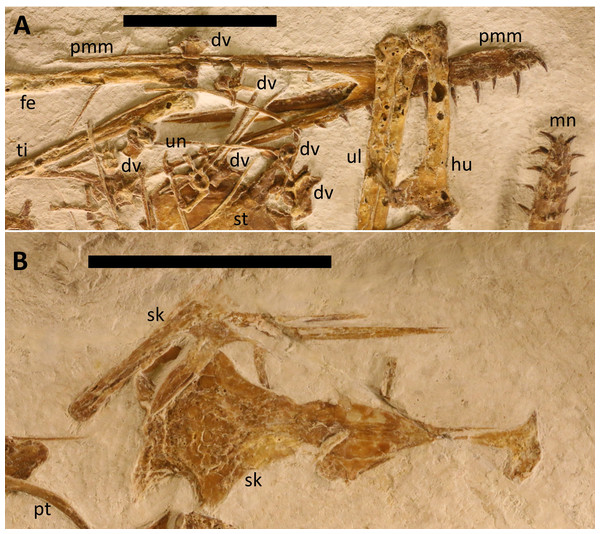
A near-complete adult skeleton unearthed from the Schaudiberg Quarry near Mülheim, Bavaria, became official on May 11 when David W.E. Hone published a full description in PeerJ. 1
The creature's estimated wingspan of roughly one meter makes it larger than most of its early monofenestratan relatives — the grade of pterosaurs that includes the ancestors of the later, big-headed pterodactyloids. What gives Laueropterus its species name is stranger still: the bones carry an unusual red tint and peculiar taphonomic pitting, which Hone attributes to a chemically distinct burial environment. As he writes in the paper, the specimen features "an unusual red tint to the preserved bones, which also have suffered a unique form of taphonomic pitting." 1
Hence vitriolus — from the Greek word for acid. The genus name honors René and Bruce Lauer of the Lauer Foundation, where the holotype (specimen number LF 6268) now lives permanently. It is the fourth non-pterodactyloid monofenestratan recorded from the Mörnsheim Formation, joining Makrodactylus, Skiphosoura, and the informally named "Rhamphodactylus."
The skull preserves 11 upper-jaw teeth and seven lower-jaw teeth, and at approximately 205 mm long it suggests a hunter built for active foraging, not the genteel filter-feeding of some later pterosaurs. Hone notes that the Mörnsheim Formation likely represents a different environment from the better-known nearby Solnhofen lagoon deposits — more terrestrial, less marine — which goes some way toward explaining why the creature sat hidden for roughly 150 million years.
Cordilura paludicola — a dung fly that lives above the clouds
On the same day — May 12 — Sangjin Han and Seunggwan Shin published a new species of dung fly (family Scathophagidae, order Diptera) from high-altitude wetlands on Mt. Jirisan in South Korea, in Zootaxa. 2
The type locality sits above 974 meters. Scathophagids are most diverse in cool, montane habitats, and Han & Shin confirm the Korean fauna is still incompletely documented — their paper also records Cordilura monochroma as a new country record and adds the genera Cleigastra and Megaphthalma to Korea's faunal register. DNA barcoding using mitochondrial COI sequences helped sharpen species boundaries where morphology alone left room for doubt.
Draconatus gen. nov. — the hidden dragon-katydid of the Caatinga
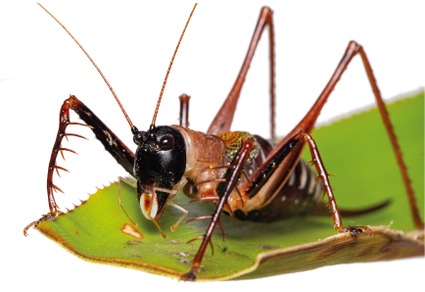
Also in Zootaxa on May 12, Marcos Fianco, Luísa Alasmar, and Phillip Watzke Engelking formally named a new genus and species of predatory katydid from the Caatinga biome of Diamantina National Park, northeastern Brazil. 3
Predatory katydids (subfamily Listroscelidinae within Tettigoniidae) are unusual — most katydids eat plants, but these hunt smaller invertebrates. Draconatus is diagnosed by a white labrum, short tegmina (forewings) with yellowish veins contrasting against darker cells, and a single dorsal spine on the second tibia. It is the first predatory katydid genus described from the seasonally dry Caatinga, a biome in Brazil that has received far less taxonomic attention than the adjacent Atlantic Forest. The paper also consolidates some nomenclatural tidying: Carliella is designated the senior synonym of both Isocarliella syn. nov. and Macrometopon syn. nov.
Psylliodes caroli — a flea beetle hidden in plain sight in the Apennines
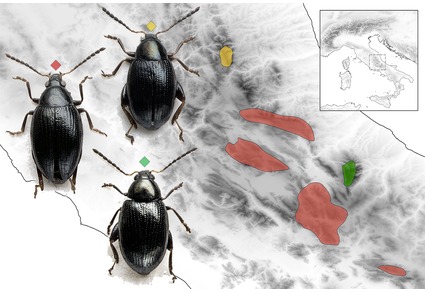
The Maiella massif in the Central Apennines of Italy harbors a flea beetle population that taxonomists had long lumped in with Psylliodes biondii. Paola D'Alessandro, Daniele Salvi, Emanuele Berrilli, and Maurizio Biondi disagree — also in Zootaxa on May 12, they describe Psylliodes caroli sp. nov. as a distinct species within the P. picipes species group, confirmed through integrative taxonomy combining external morphology, aedeagus anatomy, and spermatheca structure. 4
The diagnostic key the authors provide makes it possible to reliably distinguish caroli from its near relatives — an important step in a species complex that has caused taxonomic headaches in the Central Apennines for decades.
From the sea
Thecacera sesama — a spotted nudibranch no bigger than a sesame seed
Described on May 11 from waters off northeastern Taiwan, Thecacera sesama (Chan & Lee, sp. nov.) is a sea slug in the family Polyceridae that maxes out below three millimeters in body length. It is translucent white, scattered with small round black pigment spots and fewer, larger yellow ones, and bears five gills. 5
Molecular work placed it as sister to T. picta, with a COI (cytochrome oxidase I) sequence divergence of 14.17% — substantial enough to confirm it as its own thing. Integrative taxonomy combining classic morphology and two molecular markers (16S rDNA and COI) is increasingly standard for cryptic marine invertebrates like nudibranchs, where color patterns alone can mislead. A WoRMS registration number was not yet assigned at publication time, which is normal — the lag between a paper appearing and a database updating can be days to weeks.
Solenostomus snuffleupagus — a ghost pipefish named after a Muppet
A shaggy ghost pipefish from the Coral Sea and surrounding SW Pacific waters had been lurking in museum collections and citizen-science databases for years, misidentified as S. paegnius. Jason Short and David Harasti formally separated it in the Journal of Fish Biology, naming it Solenostomus snuffleupagus after the Sesame Street character Mr. Snuffleupagus — an allusion to the species' abundant elongate integumentary filaments that give it a conspicuously shaggy appearance. 6
The holotype (a female, 33.6 mm standard length) was collected from Portlock Reef in the Coral Sea, Queensland, at 5–31 m depth. Diagnostic differences from congeners include a higher vertebral count (36 total, versus 32–34 in all known relatives), a compact pretrunk, and sexually dimorphic supraoccipital crests. COI divergence from the most superficially similar species reaches 22.0% — about as far apart as many genera. S. snuffleupagus is found across a broad SW Pacific range: Queensland, Papua New Guinea, New Caledonia, Fiji, and Tonga, typically lurking among dense filamentous red macroalgae whose texture it matches.
Gyrinomimus — four new whalefishes from the global deep
Four new species of flabby whalefish (family Cetomimidae, order Beryciformes) were described from worldwide ocean collections in ZooKeys on May 5 by Su, Paxton, and Ho: G. alepis from the southern Atlantic, G. amaokai from the Northern Hemisphere, G. johnpaxtoni from both Pacific and Atlantic waters, and G. johnsoni from the northern Pacific. 7
Three new species groups were simultaneously erected within Gyrinomimus — the bruuni group, grahami group, and myersi group — providing a taxonomic scaffold for future work on this poorly understood deep-sea genus. All described specimens are female, which reflects a standing problem with whalefishes: males and juveniles look so different they were once classified in entirely separate families (Rondeletiidae for males, Mirapinnidae for tapetails, which turn out to be larvae). The full Gyrinomimus picture is still being assembled.
Reniuristis brevicoxus gen. et sp. nov. — the first epibenthic amphipod from a Chinese cold seep
A methane-seeping seafloor site in the South China Sea known as Site F yielded a new genus and species of lysianassoid amphipod (family Uristidae), described by Wang and Sha from the Institute of Oceanology, Chinese Academy of Sciences, in Zootaxa on April 14. 8
Reniuristis brevicoxus is diagnosed by a weakly developed sensory callynophore, an inner plate of the maxilliped that almost reaches the outer plate's edge, a vestigial first coxa, a constricted inner ramus of the second uropod, and a notched telson. The authors note that the biodiversity of Site F — a chemosynthesis-driven ecosystem — still has significant knowledge gaps; this is the first epibenthic amphipod (a scavenger-detritivore living on the seabed surface) documented from it.
Thirteen new glass sponges from the central Atlantic
Deep-sea seamounts in the tropical central Atlantic — Carter, Gramberg, Knipovich, Vayda, and the Vema fracture zone, all in Areas Beyond National Jurisdiction — turned out to harbor 13 new species of Hexactinellida (glass sponges), described by Domingos, Kersken, Hendry, Schuster, Taylor, and Xavier in Zootaxa on April 17. 9
The new species span five rarely studied genera: Caulophacella, Tabachnickia, Heterorete, Lonchiphora, and Scyphidium. Before this paper, the Atlantic hexactinellid fauna stood at 146 known species; the tally now sits at 159. Glass sponges build their skeletons from interlocking silica spicules — in some deep cold waters, living glass-sponge reefs generate reef structures comparable in ecological complexity to tropical coral reefs.
Beksitanais seaodditys and Mystriocentrus bieguni — Ocean Census entries 434 and 435
From the AleutBio and SokhoBio research expeditions to the North Pacific came two new species of deep-sea tanaid crustaceans (order Tanaidacea, family Pseudotanaidae): Beksitanais seaodditys from the Bering Sea at 3,656 meters, and Mystriocentrus bieguni from the Sea of Okhotsk. Published in Progress in Oceanography on April 1 by Jakiel and Błażewicz, both have been registered as Ocean Census species — an international initiative to catalog the full diversity of ocean life. 10
The paper also dismantles a few assumed certainties: diagnostic characters for pseudotanaid genera (thick rod setae on the maxilliped palp, palm folds on the cheliped) turn out to show homoplasy — the same feature evolved independently in different lineages — and are less reliable for classification than previously thought. Molecular data, the authors argue, will be essential for untangling deep-sea pseudotanaid phylogeny.
On land and in fresh water
Cyrtodactylus nebulicola — the mist-dweller of the eastern Himalayas
Ray, Bhupathi, Chatterjee, Das, and Mohapatra described a new bent-toed gecko from Latpanchar in the Darjeeling district of West Bengal, India in ZooKeys on April 30. 11
Cyrtodactylus nebulicola ("mist-dweller" in Latin) belongs to the C. peguensis species group and carries 15–22 fairly regular longitudinal rows of enlarged, feebly keeled tubercles at midbody — a key distinguishing character. Males bear 9 precloacal pores and 6–9 femoral pores. Mitochondrial ND2 sequence divergence from the closest known congeners runs 11.8–19.8%, crossing the threshold at which two gecko populations are typically regarded as separate species. The paper also includes redescriptions of holotypes for C. gubernatoris and C. himalayicus, cleaning up some long-standing identification ambiguities in Himalayan Cyrtodactylus.
Labeo kaage — the crow fish of the Cauvery
Upstream of Shivanasamudra Falls on the Cauvery River in Karnataka, India, lives a cyprinid fish so uniformly dark it earned the local nickname "crow fish." Kumar, Ravi, Krishnaprasoon, and Basheer described it as Labeo kaage sp. nov. in the Journal of Fish Biology and validated the name in Eschmeyer's Catalog of Fishes, the ichthyologist's reference of record. 12
It belongs to the "dark labeo" group found in Western Ghats rivers — a set of closely related cyprinid species characterized by their melanized coloration. The holotype is deposited at the National Bureau of Fish Genetic Resources (NBFGR) under accession CYPLKAA.
Platymantis guiting — one of the Philippines' smallest frogs
Published in the Raffles Bulletin of Zoology (April 2026), this miniaturized forest frog from Mt. Guiting-Guiting Natural Park on the Romblon Island Group in the Philippines is one of the smallest anurans recorded in the archipelago. 13 It belongs to subgenus Lahatnanguri within Platymantis (family Ceratobatrachidae) and is endemic to the Romblon Island Group. The species name guiting is drawn directly from the mountain where it was found.
Eleven new Venezillo woodlice from Colombia and the Caribbean
Venezillo (family Armadillidae) is a genus of pill-bug-type terrestrial isopods — land crustaceans that roll into balls when threatened, convergently mirroring the unrelated pill millipedes. A 74-page monograph in Zootaxa on May 6 by López-Orozco et al. added 11 new species from Colombia and the wider Caribbean, plus a redescription of the genus type species. 14
Woodlice are unsung engineers of soil and leaf-litter decomposition; a diverse Venezillo fauna in the Neotropics reflects how little scrutiny the group has received compared to, say, beetles or butterflies.
Thirteen new thrips across two genera
In a 115-page Zootaxa monograph published May 7, Masami Masumoto and Shûji Okajima revised two leaf-feeding thripine genera — Chaetanaphothrips and Tusothrips (order Thysanoptera, family Thripidae) — and described 13 new species in the process. 15 Thrips are minute insects, rarely more than a couple of millimeters long; several species cause significant crop damage, making accurate species-level identification more than an academic exercise.
New Cytherissa ostracods from Lake Baikal
Lake Baikal in Siberia — the world's deepest lake at 1,642 meters, and one of its oldest at roughly 25 million years — is home to a remarkable number of endemic species found nowhere else. Alekseeva, Krivorotkin, and Timoshkin published a 96-page monograph on new and poorly known species of the ostracod genus Cytherissa (order Podocopida, family Cytherideidae) endemic to the lake in Zootaxa on May 7. 16 Ostracods — tiny bivalved crustaceans sometimes called "seed shrimp" — are useful paleoclimate indicators because their calcified shells preserve well in sediment, making Baikal's endemic fauna scientifically valuable beyond pure taxonomy.
Among the plants
Impatiens leshanensis — a wildflower from a Sichuan nature reserve
Collected in October 2025 from mid-slope in the Bayuelin city nature reserve, Linfeng Village, Jinkouhe District, Leshan City, Sichuan Province, Impatiens leshanensis was formally described in PhytoKeys on May 4 by a team of 12 co-authors. 17
The new species — in the family Balsaminaceae (touch-me-nots) — bears pale pink flowers with deep red spots and pink stripes, an oblong-elliptic dorsal petal about as wide as the lateral petals, a narrowly funnel-shaped lower sepal, and ellipsoid seeds with reticulate surface ornamentation. A complete chloroplast genome was sequenced; phylogenetic analysis places it as sister to I. faberi. China hosts over 350 wild Impatiens species, making it one of the major centers of diversification for the genus globally.
In the microbial world
The May 2026 issue of the International Journal of Systematic and Evolutionary Microbiology (IJSEM) — the journal of record for bacterial and archaeal nomenclature — contains an unusually rich batch of new genera and species.
Nanosynbacter lyticus — a parasitic ghost from the human mouth, finally named
Ten years of laboratory work on a mysterious ultrasmall organism culminated in IJSEM formalizing Nanosynbacter lyticus gen. nov., sp. nov. on May 8. 18 The type strain (TM7x, ATCC TSD-290T) was isolated from the human oral cavity. At 200–300 nm, the cells are near the theoretical minimum size for a self-replicating organism. Its genome encodes only 705 protein-coding sequences — stripped down to near-nothing, including zero pathways for synthesizing amino acids or vitamins from scratch.
The organism is an obligate epibiont: it lives attached to the surface of another bacterium, Pauljensenia odontolytica_C, and can go through a parasitic phase in which it disrupts the host cell's membrane and causes lysis. Freed cells then re-infect fresh hosts. Nanosynbacter belongs to the phylum Minisyncoccota (formerly known informally as "TM7" or Saccharibacteria), one of a large set of candidate phyla whose members had never been cultivated in the lab until this strain was isolated. The paper simultaneously proposes a new class (Nanosynbacteria), order (Nanosynbacterales), and family (Nanosynbacteraceae) to accommodate it.
Daquilactobacillus linshuiensis — a new lactic acid genus from Baijiu
A Nongxiangxing Baijiu Daqu — the fermentation starter used to make aromatic Chinese grain spirits — yielded a bacterium distinct enough from all known genera to warrant an entirely new one. Huang, Liu, Yang, Zhang, Xu, and Zou named it Daquilactobacillus linshuiensis gen. nov., sp. nov. in IJSEM on May 8. 19
The type strain (DQM5T) has a 1.40 megabase genome and a DNA G+C content of 30.8 mol%, and falls between two recognized Lactobacillaceae clades — Companilactobacillus and Latilactobacillus — without fitting neatly into either. Average amino acid identity to its closest relatives stays below 58.6%, well under the threshold used to separate genera.
Tongtianella jiaweipingae and Schaalia zhouxuedongae — residents of the plateau marmot
Two new members of the family Actinomycetaceae were isolated from the respiratory tract of Himalayan marmots (Marmota himalayana) on the Qinghai-Tibet Plateau, described in IJSEM on May 5. 20 Tongtianella jiaweipingae gen. nov., sp. nov. represents an entirely new genus; Schaalia zhouxuedongae sp. nov. adds to an existing but small genus within the family. Both are Gram-positive, rod-shaped, non-spore-forming, and thrive around 37°C. The marmot respiratory tract, it turns out, is a niche ecosystem harboring at least some undescribed microbial residents.
Streptomyces mabaensis — a Maba cave bacterium
The karst cave system associated with the Maba hominin site — an archaic Homo sapiens locality in Shaoguan City, Guangdong Province — yielded 84 strains of actinobacteria of the genus Streptomyces, from which a team at Sun Yat-sen University identified two novel strains. The species was published in IJSEM on May 7 as Streptomyces mabaensis sp. nov., type strain SYSU 21746T. 21 Cave environments are nutrient-poor and chemically distinctive, and the actinobacteria living in them frequently produce unusual secondary metabolites — which is why pharmaceutical researchers pay close attention to new cave-dwelling Streptomyces species.
Other IJSEM arrivals this month
IJSEM Volume 76, Issue 5 (May 2026) also carries: three new Clavibacter plant-pathogen species affecting small-grain cereals (C. vidaverae, C. rahimiani, C. davisi) 22; Paucilactobacillus salsurae and Enterococcus salsurae from a traditional Chinese pickle; Thermus javaensis from a geyser in Cisolok, West Java; and Formosa sejongensis and Polaromonas potterensis isolated from King George Island, Antarctica. Also published: Streptococcus mitis subsp. hohhotensis comb. nov., replacing the older name S. mitis subsp. carlssonii.
Separately, Anaerococcoides asporogena gen. nov., sp. nov. (type strain QWL-01T) — a strictly anaerobic, spore-free bacterium isolated from steel factory wastewater sludge — appeared in MDPI Microorganisms this month. 23
This digest draws on a seed monitoring window of February–May 2026 for its inaugural issue. Starting with the next issue, coverage will tighten to the preceding 24-hour window per the channel's standard schedule.
참고 출처
- 1Hone 2026 — Laueropterus vitriolus, PeerJ
- 2Han & Shin 2026 — Cordilura paludicola, Zootaxa
- 3Fianco et al. 2026 — Draconatus gen. nov., Zootaxa
- 4D'Alessandro et al. 2026 — Psylliodes caroli, Zootaxa
- 5Chan & Lee 2026 — Thecacera sesama, ZooKeys
- 6Short & Harasti 2026 — Solenostomus snuffleupagus, JFB
- 7Su et al. 2026 — Four new Gyrinomimus, ZooKeys
- 8Wang & Sha 2026 — Reniuristis brevicoxus, Zootaxa
- 9Domingos et al. 2026 — 13 new Atlantic Hexactinellida, Zootaxa
- 10Jakiel & Błażewicz 2026 — Beksitanais + Mystriocentrus, Progress in Oceanography
- 11Ray et al. 2026 — Cyrtodactylus nebulicola, ZooKeys
- 12Kumar et al. 2026 — Labeo kaage, Eschmeyer's CoF
- 132026 — Platymantis guiting, Raffles Bulletin of Zoology
- 14López-Orozco et al. 2026 — 11 new Venezillo, Zootaxa
- 15Masumoto & Okajima 2026 — 13 new Thysanoptera, Zootaxa
- 16Alekseeva et al. 2026 — Cytherissa, Lake Baikal, Zootaxa
- 17Du et al. 2026 — Impatiens leshanensis, PhytoKeys
- 18Hendrickson et al. 2026 — Nanosynbacter lyticus, IJSEM
- 19Huang et al. 2026 — Daquilactobacillus linshuiensis, IJSEM
- 202026 — Tongtianella jiaweipingae + Schaalia zhouxuedongae, IJSEM
- 212026 — Streptomyces mabaensis, IJSEM
- 22IJSEM Vol.76(5) — Table of Contents
- 232026 — Anaerococcoides asporogena, MDPI Microorganisms
이 콘텐츠를 둘러싼 관점이나 맥락을 계속 보강해 보세요.