
Delta Dental sued in 4 states — plus your 2026 dental and vision coverage guide
A major Delta Dental antitrust lawsuit, MetLife and Delta Dental 2026 FEDVIP coverage tables, VSP vs. EyeMed side-by-side breakdown, five real forum stories, national price benchmarks, and three negotiation scripts to pay less — with or without insurance.

Your dental and vision costs this week, decoded: a major lawsuit that could reshape how much dentists get paid, what MetLife and Delta Dental actually cover in 2026, what VSP and EyeMed are worth in real dollars, five patient stories from this week's forums, and concrete scripts for paying less whether or not you have insurance.
Delta Dental hit with class-action lawsuits in four states
On April 30, 2026, dentists filed class-action lawsuits against Delta Dental entities in California, Wisconsin, Michigan, and Massachusetts 1. The suits allege anticompetitive conduct: geographic market allocation, price-sharing between Delta Dental affiliates, and suppression of dentist reimbursement rates.
The legal theory matters to patients as much as to providers. Delta Dental controls more than 50% of the dental insurance market in each of the four states named in the suits 1. When a single insurer dominates a market at that level, dentists have little leverage to negotiate better fees — and some stop accepting the plan at all. The practical effect for you: shrinking in-network options and more balance-billing surprises.
These state-level cases are a follow-on to a federal antitrust class-action that was denied national class certification in September 2025 and continues as individual claims 1. The lawsuits do not change your current benefits, but if they succeed, they could eventually pressure Delta Dental toward higher reimbursement rates — which would make it easier to find in-network dentists willing to take on new patients.
What your 2026 dental plan actually covers
MetLife FEDVIP: unlimited vs. $2,000
MetLife's Federal Dental Plan — available to federal employees, annuitants, and TRICARE-eligible individuals — made several notable changes for 2026 2.
The most important split: High Option has an unlimited in-network annual maximum. Standard Option caps at $2,000 per person 3. Neither option has a waiting period — coverage starts the day enrollment takes effect 2.
Coinsurance structure (in-network):
| Procedure class | High Option | Standard Option |
|---|---|---|
| Class A (preventive/diagnostic) | 0% | 0% |
| Class B (basic — fillings) | 30% | 45% |
| Class C (major — crowns, root canals) | 50% | 65% |
| Class D (orthodontics) | 50% | 50% |
Out-of-network adds a $50 deductible (High) or $100 (Standard), with higher coinsurance across all classes 3.
New for 2026: MetLife added a third covered cleaning for pregnant or diabetic High Option members, changed exam and cleaning frequency from "1 in 6 months" to "2 in 12 months" for both options, and added 11 new CDT (Current Dental Terminology) codes 3. The frequency change is more than administrative housekeeping — it gives you flexibility to space your two covered cleanings across the entire calendar year rather than locking them to 6-month intervals.
Delta Dental FEDVIP: a $2,500 implant cap to know about
Delta Dental's Federal Employees Dental Program mirrors MetLife's coinsurance tiers almost exactly 4:
- High Option in-network: Class A 0%, Class B 30%, Class C 50%, with unlimited annual maximum in-network and a $3,000 cap out-of-network.
- Standard Option in-network: Class A 0%, Class B 45%, Class C 65%, annual maximum $1,500 in-network / $1,000 out-of-network 4.
One specific limit matters if you're considering implants: High Option caps implant benefits at $2,500 per person per year, combined in- and out-of-network 5. Given that an implant plus crown typically runs $3,100–$5,800 nationally 6, the unlimited annual maximum won't stretch as far as it sounds for implant work.
Delta Dental also added SmileWay Wellness Benefits for 2026: expanded coverage at no extra charge for members diagnosed with ALS, cancer, chronic kidney disease, diabetes, heart disease, HIV/AIDS, and a dozen other chronic conditions 4. If you or a covered family member has one of those diagnoses, it's worth verifying which additional procedures are now covered before your next appointment.
VSP vs. EyeMed: the 2026 vision plan breakdown
Vision insurance works differently from dental. It pays a set allowance toward frames and lenses rather than a percentage of the billed amount. Knowing the allowance number is the actual planning input.
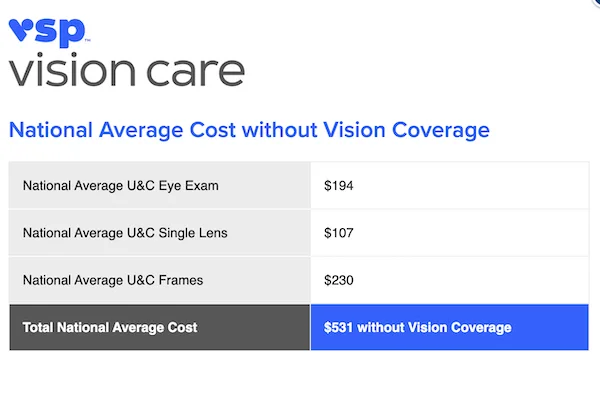
Image from ValuVision
Side-by-side benefit comparison
| Benefit | VSP (standard) | EyeMed Basic | EyeMed Expanded |
|---|---|---|---|
| Monthly premium (individual) | $13–$20 | $5–$17 | $5–$17 |
| Exam copay | $15 | $10 | $0 |
| Frame allowance | $150 / year | $105 / 24 months | $150 / year |
| Standard lens copay | included with frame | $20 | $15 |
| Contact lens allowance | $130–$150 | $105 | $150 |
| LASIK discount | 15–25% | 15% | 15% |
The frame allowance cycle is the most consequential difference between budget and mid-tier plans. EyeMed's Basic Plan resets every 24 months; EyeMed's Expanded Plan and VSP's standard plan reset annually. If your prescription changes frequently or you tend to lose or damage frames, annual reset is worth paying more per month.
A few things neither plan covers: LASIK surgery as an insured benefit (only the discount applies), medical eye conditions like glaucoma treatment beyond diagnosis, designer frame overages above the allowance, or lens upgrade premiums in full 9. Unused benefits also expire at year-end — that's roughly $250–$400 in lost value if you forget to use your exam or eyewear benefit 9.
The EyeMed LASIK promotion this month

Image from EyeMed LASIK
EyeMed's U.S. Laser Network is running a $1,200 off LASIK promotional offer through approximately 600 locations, including LasikPlus, TLC Laser Eye Centers, and The LASIK Vision Institute 10. The standard ongoing discount is 15% off retail price or 5% off promotional pricing. With national LASIK averages running $2,000–$3,000 per eye 10, the $1,200 promotional discount brings both-eyes total cost down from a national average of $4,492 11 to around $3,292, before any additional per-eye plan savings. Confirm availability with individual providers before booking, as not all plans or all locations participate.
What patients reported this week
Five billing situations from forums this week — each illustrating a different way insurance fails in practice.
DeltaCare HMO overcharge: A patient went to a Delta Dental HMO in-network office for a root canal. The standard copay under the DeltaCare plan should have been $1,700 for the full treatment. The office quoted $6,000 — ostensibly discounted to $2,000 after offering a $4,000 reduction — well above the plan's fee schedule 12 13. A provider-side commenter explained the arithmetic: "I've seen the DeltaCare fees — they would barely cover the lab bill for the crown, let alone cost of other materials, assistant wage, admin costs, etc." 13 HMO plans lock you to a fixed fee schedule that's non-negotiable in theory — but in practice, some offices pad bills with non-covered CDT codes. Ask upfront for the specific CDT codes and their plan-allowed amounts before any procedure.
BCBS FEP Dental crown clawback: A federal employee describes a pattern that repeats every time they need a crown: BCBS FEP Dental (Blue Cross Blue Shield Federal Employee Plan Dental) initially pays around $600, then demands repayment, leaving the patient with a $661 surprise bill after expecting to owe only $90 14. The clawback usually happens when the insurer's initial payment gets reversed once the claim reaches final review — a gap between the estimate it gives your dentist and the amount it decides to pay when the claim is processed. Most plans don't explain this clearly before treatment.
MetLife implant denial: A MetLife dental plan member reports $700 in unexpected out-of-pocket costs on a $3,000 treatment plan after MetLife denied the implant/restoration claim 15. Pre-authorization does not guarantee payment — it confirms that the described procedure may qualify, not that the filed claim will be paid as described.
Medicare Advantage "vision benefit" reality check: Multiple Reddit threads this week converged on the same finding: Medicare Advantage vision benefits function more like discounts than insurance. In one case, a $500 pair of glasses came with a $200 MA allowance — but billing through the MA plan eliminated any retail discount, leaving the patient $300 out of pocket 16 17. Buying directly through Zenni Optical or a similar online retailer often costs less than the out-of-pocket total after applying an MA allowance at a brick-and-mortar shop.
Network directory error: A consumer waited months for an appointment at an optometrist listed as in-network by their insurer, arrived, and found the provider was not actually participating in the plan 18. Provider directories are notoriously outdated. Before booking any appointment, call the provider directly and ask: "Are you currently in-network for [plan name] as of today?" Do not rely on the insurer's online directory alone.
Procedure price benchmarks
Image from The Dental Healers
Dental: national ranges and state variation
Based on the American Dental Association's Health Policy Institute fee survey (via Humana, 2025) and Dental Healers' 2026 state-by-state analysis 6 19:
| Procedure | National range | Lowest state | Highest state |
|---|---|---|---|
| Routine cleaning | $75–$200 | MS: ~$90 | HI/NY: ~$180 |
| Composite filling | $150–$300 | — | — |
| Crown | $1,000–$1,800 | MS: ~$1,000 | HI/NY: ~$1,650 |
| Root canal (molar) | $900–$1,500 | — | — |
| Implant (implant + abutment + crown) | $3,100–$5,800 | AL: ~$3,200 | HI: ~$6,000 |
| Deep cleaning (per quadrant) | $169–$352 | — | — |
The gap between the cheapest and most expensive states reaches roughly 150% for major procedures 19. If you're near a state border, this difference is worth factoring in for high-cost procedures.
Vision: what you pay without insurance
- Comprehensive eye exam: national average $110 (range $49–$293 depending on practice type and region)
- Average frames without insurance: $230
- Average single-vision lenses: $107
- Complete pair at Costco: median $184
- Complete pair at Zenni Optical: median $69
How to pay less: savings programs and negotiation scripts
Dental savings plans: no waiting period, no annual max
Dental savings plans (sometimes called discount plans) are not insurance — they are membership programs that give you pre-negotiated rates at participating dentists, with no claims process, no annual maximum, and no waiting period 22. They activate in 1–3 business days.
The math often favors these plans for people who need major work. Careington 500 Dental Savings Plan, the largest direct-pay dental network in the US with 200,000+ locations, costs $12.95/month 22:
- Routine cleaning: drops from roughly $260–$350 to $100–$150
- Crown: drops from roughly $1,000–$1,800 to $400–$700
- Filling: meaningful discount in the 20–60% range
An individual dental insurance premium runs approximately $384/year and comes with waiting periods of 6–12 months for major work 22. A savings plan at $79/year (DentalPlans.com's entry tier) has no wait and no annual cap. For anyone whose insurance maximum is already met, or who doesn't have employer coverage, a savings plan is often the better financial choice for that year.
Dental school clinics offer an even steeper discount: 40–70% off standard fees, with work supervised by licensed faculty 23. Search the ADA's CODA-accredited program database at ada.org to find a clinic near you.
Three negotiation scripts that work
The American Dental Association confirms that many dentists will offer discounts for cash-paying patients 24. These scripts are adapted from documented real-world examples 25 26:
- Before the appointment — ask for the self-pay rate: "I don't have insurance for this. Do you have a cash-pay rate or a self-pay discount? I'm happy to pay in full on the day of service." This typically yields 10–25% off the standard fee. Paying cash (or check) saves the office credit card processing fees of 2–3%, which is a real incentive.
- When the estimate feels high — use FAIR Health as leverage: Look up the procedure's allowed amount for your ZIP code on fairhealthconsumer.org — it's free and shows the 80th-percentile rate for both insured and uninsured patients 27. Then say: "I looked up the FAIR Health estimate for this procedure in [ZIP code] and it's around $X. Can you match that or come closer to it?"
- When you need major work and can't pay at once: "What's the total for the full treatment plan? If I commit to the full plan today, is there a discount for prepaying? And do you offer an interest-free payment arrangement?" Most offices prefer a committed patient with a clear payment plan over uncertainty.
Vision: how to stretch your benefits or skip insurance entirely

Image from ValuVision
For glasses buyers, it's worth running the numbers before defaulting to your in-network optical shop. If your vision plan gives you a $150 frame allowance but your preferred frames cost $300, you'll pay $150 out-of-pocket at the optical shop — and Zenni Optical's median complete pair costs $69 21. You can use your insurance for the eye exam (which has real value, since exams average $110 uninsured 20) and buy frames separately online.
Discount program options for vision:
- AAA members: 30% off eye exam at LensCrafters, 50% off prescription lenses; Glasses.com 25% off purchases of $200+ 28
- AARP members: 20% off frames at LensCrafters, 50% off lenses; Visionworks single-vision savings of $200 off a complete pair 29
- Costco members: eye exam $79–$110, complete basic pair starting ~$129 30
FSA and HSA funds are eligible for eye exams, prescription glasses, contact lenses, and contact lens solution at virtually all retailers.
Cover image from ADA News
참고 출처
- 1ADA News: Dentists file class action lawsuits against Delta Dental in four states
- 2MetLife: Federal Dental Plan Details
- 3MetLife: 2026 Federal Dental Plan Brochure
- 4Delta Dental: 2026 Federal Employees Dental Program Plan Brochure
- 5OPM: Delta Dental Federal Plan Brochure JSON
- 6Humana: Costs of Common Dental Procedures
- 7VSP Vision Care: ANC 2026 VSP Vision Benefit Summary
- 8EyeMed: 2026 Vision Plan Handbook State of Tennessee
- 9InsuranceCostGuide: Vision Insurance Cost Guide 2026
- 10EyeMed LASIK: Find a LASIK Provider
- 11American Refractive Surgery Council: How Much Does LASIK Cost?
- 12r/Insurance: Frustrated with DeltaCare HMO
- 13r/DentalInsurance: Dental offices refusing to honor plan copays
- 14r/FedEmployees: BCBS FEP Dental Troubles
- 15r/FedEmployees: MetLife for Dental Implant
- 16r/medicare: Does Medicare pay for glasses
- 17r/AskWomenOver60: Medicare glasses discussion
- 18r/mildlyinfuriating: Waited months for an eye appointment
- 19The Dental Healers: Dental Costs by State 2026
- 20AllAboutVision: How Much Does an Eye Exam Cost in 2026?
- 21ValuVision: The Average Cost of Glasses Without Insurance 2026
- 22DentalPlans.com: Dental Savings Plans
- 23ADA Find-a-Dentist / CODA Program Search
- 24ADA: Pros and Cons of Offering Dental Discounts to Patients
- 25Man vs Debt: How to Negotiate Dental Costs
- 26Alpine Dental NJ: How to Negotiate Dental Prices
- 27FAIR Health Consumer: Negotiating Your Costs
- 28Glasses.com AAA Vision Savings
- 29AARP: 11 Ways to Pay for Your Dental Care
- 30Clark.com: Costco Optical Pricing
이 콘텐츠를 둘러싼 관점이나 맥락을 계속 보강해 보세요.