How to change your own oil — and keep $40+ in your pocket every time
The most important maintenance job on your car takes 30–60 minutes and costs less than $35 in parts. This guide covers the complete oil change process for beginners: tools needed, step-by-step instructions, common mistakes to avoid, how to dispose of used oil, and the best YouTube tutorials to watch first.

Your car's most important maintenance job is also the easiest one to do yourself. A DIY oil change takes about 30–60 minutes, requires tools that cost less than two professional shop visits, and saves you $15–$65 per service depending on where you'd otherwise go.1 This week: everything a first-timer needs to know.
What this actually costs
A quick-lube shop charges $40–$100 per oil change, depending on oil type and your car. Buying oil and a filter yourself typically runs $25–$35 for most vehicles.2 On a conventional oil change, you save around $15–$25. Switch to full synthetic and skip the dealer — you're often looking at $50–$65 in savings per service.
A set of starter tools — oil drain pan, filter wrench, jack stands — runs roughly $50–$80 total, and you use them for every job going forward. Most drivers recover that upfront cost within the first two or three changes.3
What you need before you start
Read your owner's manual first. It tells you exactly which oil viscosity your engine requires (e.g., 0W-20, 5W-30, 5W-40), how many quarts, and what filter fits. Using the wrong spec is the one mistake that actually matters.1
Tools list:
- Oil drain pan
- Box-end wrench (correct size for your drain plug — usually metric)
- Oil filter wrench or pliers
- Jack and jack stands (or drive-up ramps)
- Funnel
- Nitrile gloves and rags
- New oil filter + correct oil (quantity per your manual)
Most of these live at AutoZone, O'Reilly, or Amazon for under $20 each. The total starter kit is a one-time spend.
Step-by-step overview
Before you begin: If the engine is cold, run it for 5 minutes to warm the oil — warm oil drains faster. If it's already hot, wait 30 minutes before reaching underneath.2
1. Lift and secure the car. Jack up the front, place jack stands under the frame, and lower the car onto the stands. Never work under a car supported only by a floor jack. If your car has enough ground clearance to reach the drain plug, ramps work fine too.
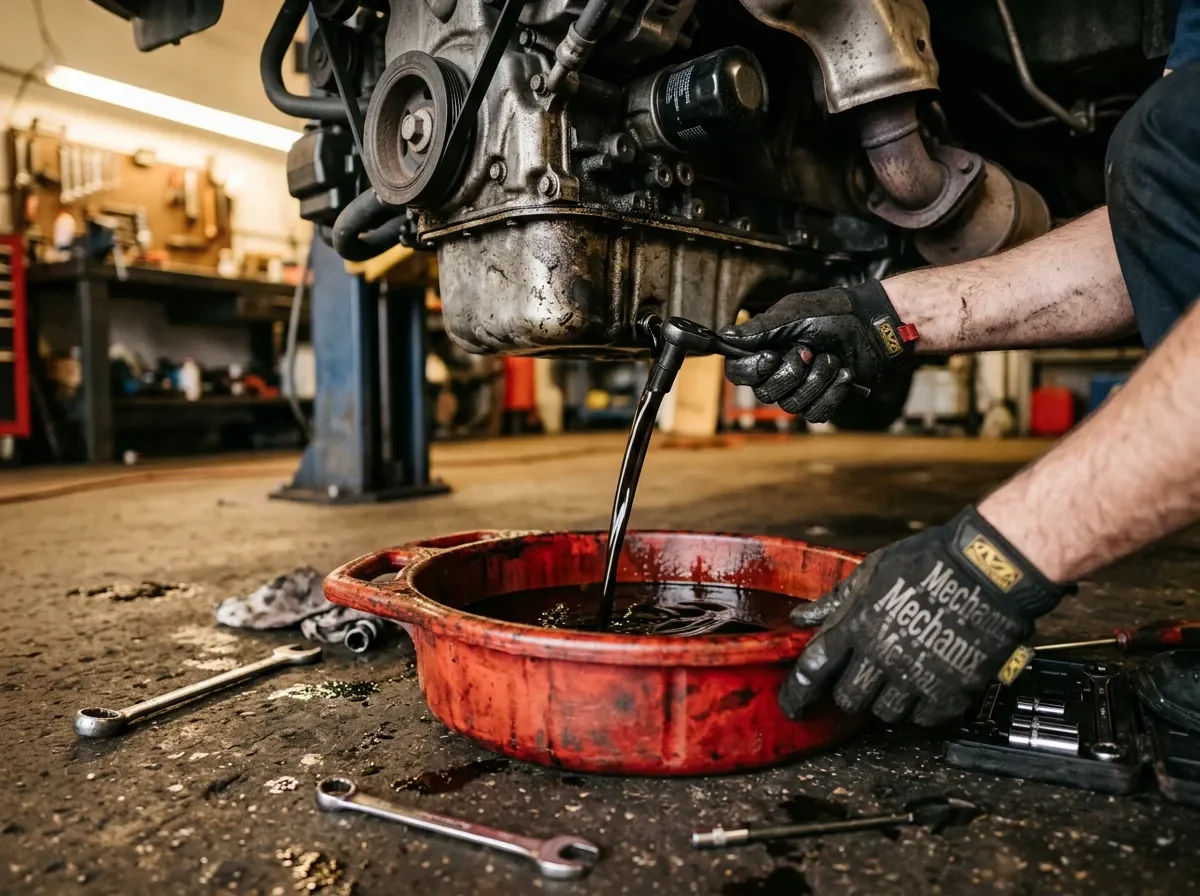
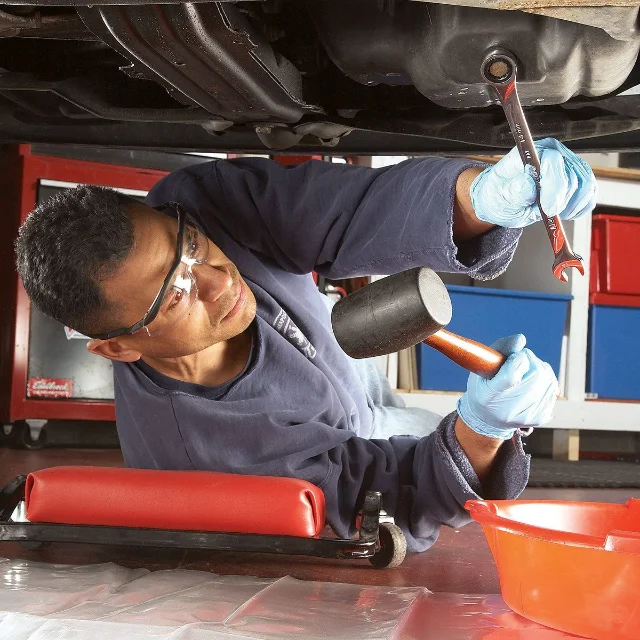
2. Drain the old oil. Slide your drain pan under the oil pan. Use the correct box-end wrench (not an adjustable wrench) to loosen the drain plug counterclockwise, then pull it free quickly — oil comes fast. Let it drain 5 minutes or until it slows to a drip.1
3. Remove the old filter. Locate the oil filter (softball-sized cylinder screwed onto the engine). Loosen it counterclockwise with your filter wrench, let remaining oil drain out, then remove fully. Critical: check that the old rubber gasket (O-ring) came off with the filter. If it stayed behind and you thread on the new filter over it, you'll have a double-gasket seal failure — fresh oil on your garage floor within minutes of startup.1
4. Install the new filter. Dab a thin coat of fresh oil on the new filter's rubber gasket. This helps it seat and seal correctly. Screw on hand-tight, then give it a quarter-turn more. No filter wrench needed for installation.
5. Replace the drain plug. Thread the drain plug back in by hand, then snug it with your box-end wrench. Firm is enough — overtightening strips the threads on the oil pan, which is an expensive fix.2 Many vehicles require a new drain plug washer each time; check your manual.
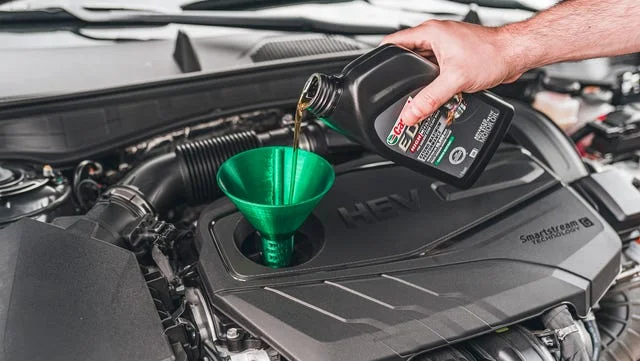
6. Fill with fresh oil. Lower the car. Open the hood, remove the oil cap (look for the oil-can symbol), insert your funnel, and pour in the amount specified in your manual. Recap the bottle before tossing it so you can count how many you added.
7. Check level and inspect for leaks. Start the engine and let it idle for about 10 seconds to circulate oil. The oil pressure warning light should go off within a few seconds. Shut off the engine, wait 2 minutes, then pull the dipstick: wipe clean, reinsert fully, pull again, and confirm the level reads in the correct range. Look under the car for drips around the drain plug and filter.
Where to dispose of the used oil
Don't pour it down the drain or into the trash. Put used oil in a sealed container (the empty oil bottles work) and drop it off at any AutoZone, O'Reilly Auto Parts, or AutoNation location — they accept it for free and recycle it properly.2 You can also search Earth911.com for a recycling center near you.
Best tutorials to watch first
ChrisFix's complete oil change video is the best beginner walkthrough available — 20 minutes, covers every step with clear under-car footage and explains why each step matters:
콘텐츠 카드를 불러오는 중…
Also recommended:
- Car and Driver — 7-step written guide with photos
- Family Handyman — How to Change Your Car's Oil
- Popular Mechanics — How to Change Your Oil and Filter
A few things that trip up beginners
| Mistake | What goes wrong | How to avoid it |
|---|---|---|
| Leaving the old filter gasket on the engine | Double gasket = oil leak on startup | Always confirm the old O-ring came off with the filter |
| Using an adjustable wrench on the drain plug | Rounds off the plug head | Use the correct-size box-end wrench |
| Overtightening the drain plug | Strips threads in the oil pan | Snug — not maximum torque |
| Forgetting to check the oil level after | You may have underfilled | Always dipstick-check before calling it done |
| Buying the wrong oil viscosity | Engine runs outside spec | Check the owner's manual every time |
Next issue: Replacing your brake pads — another job shops charge $150–$300 for that takes about 90 minutes in your driveway.
이 콘텐츠를 둘러싼 관점이나 맥락을 계속 보강해 보세요.