Geopolitics Daily Brief — June 1, 2026
Five stories at 08:00 UTC: US closes Nvidia AI chip loophole targeting Chinese firms via overseas subsidiaries; US-Iran strikes escalate with Kuwait air defences activated and Brent up ~2%; Netanyahu orders Beirut strikes and Rubio tables Lebanon de-escalation plan; Zelensky signals pre-winter ceasefire window as Ukraine turns the battlefield tide; China coast guard patrols east of Taiwan in response to Japan-Philippines maritime border talks.

Five stories at 08:00 UTC. US-China tech controls tighten; the Iran war escalates overnight; Israel strikes Beirut; Ukraine signals ceasefire window; China patrols east of Taiwan.
1. US closes Nvidia chip loophole, targets Chinese firms via overseas subsidiaries
The US Department of Commerce on Sunday issued unexpected guidance requiring export licenses for advanced AI chips — including Nvidia's Blackwell and Rubin processors and AMD's MI350x — sold to any entity headquartered in China, even when that entity's subsidiary is physically located outside China. 1 The loophole opened in May 2025 when the Trump administration declined to enforce the Biden-era AI Diffusion rule; a chip-industry source with direct supply-chain knowledge estimated that hundreds of thousands of advanced chips may have transited through third-country subsidiaries — notably in Malaysia — over the intervening year. The Commerce Department did not respond to media requests, and Nvidia and AMD had not commented by the time of publication.
The Xi–Trump Beijing summit in mid-May had produced a fragile trade truce that partially rolled back tariffs from both sides, but the new chip guidance lands as a direct counter to China's domestic AI build-up. 2 China's 15th Five-Year Plan (2026–2030), formally adopted this spring, elevates technology self-reliance to a core national strategy and targets the semiconductor sector as a lead industry. 3
Market and supply-chain impact. The guidance immediately complicates AI infrastructure build-out for Chinese cloud providers that had been routing orders through Southeast Asian subsidiaries. Nvidia's share price is likely to face scrutiny at Monday's open given the added compliance risk for an estimated hundreds of thousands of units already in transit or recently delivered; the stock had been a core driver of the AI-led equity rally that pushed the S&P 500 to 11 fresh closing records last month. Asian semiconductor stocks outside China — Taiwan, South Korea — were mixed at Monday's open, with MSCI Asia rising 1% overall as AI optimism offset the regulatory drag. 4 Chinese AI firms with global data-centre ambitions face immediate re-routing costs; Malaysia and Singapore data-centre operators that served as conduit nodes face new licence obligations.
2. US–Iran war escalates: strikes exchanged, oil opens up 2%, Kuwait air defences activated
US Central Command said over the weekend that American fighter aircraft struck Iranian air-defence infrastructure, a ground control station, and two one-way attack drones on Iran's Gulf coast after Iran shot down a US MQ-1 drone over international waters. 5 Iran's Revolutionary Guard Corps responded Monday by striking an air base it described as used by US forces. Air defences in Kuwait, where a major US base is located at Ali Al Salem, were intercepting missile and drone attacks as sirens sounded across the country. The exchange follows a near-identical pattern from last Thursday and reflects the rhythm since the early-April ceasefire: sporadic strikes by both sides even as negotiations drag on.
Trump, in a late-night social-media post, did not mention the exchange of hostilities, repeating his claim that Iran "really wants to make a deal" and urging critics to "just sit back and relax." 5 The two sides remain at odds on the core terms: Iranian demands for full sanctions relief and release of frozen oil revenues, the disposition of enriched uranium, and the Lebanon–Hezbollah track. The war, which began February 28, has killed thousands primarily in Iran and Lebanon and has effectively closed the Strait of Hormuz for over three months.
Market and supply-chain impact. Brent crude opened up roughly 2%, trading toward $94/bbl at Monday's Asian open, ending three consecutive sessions of decline. 4 6 Global shipping insurers are maintaining war-risk premiums across Gulf routes. US gasoline prices remain politically sensitive: Trump faces pressure to reopen Hormuz before November congressional elections, and continued strike exchanges without a deal reduces the probability of a supply-side price relief that markets have been partially pricing in. Pakistan, exposed to spot energy pricing, announced plans Monday to establish a strategic oil reserve in direct response to the Hormuz crisis. 7
3. Israel strikes Beirut's Dahiyeh, expands Lebanon ground operation

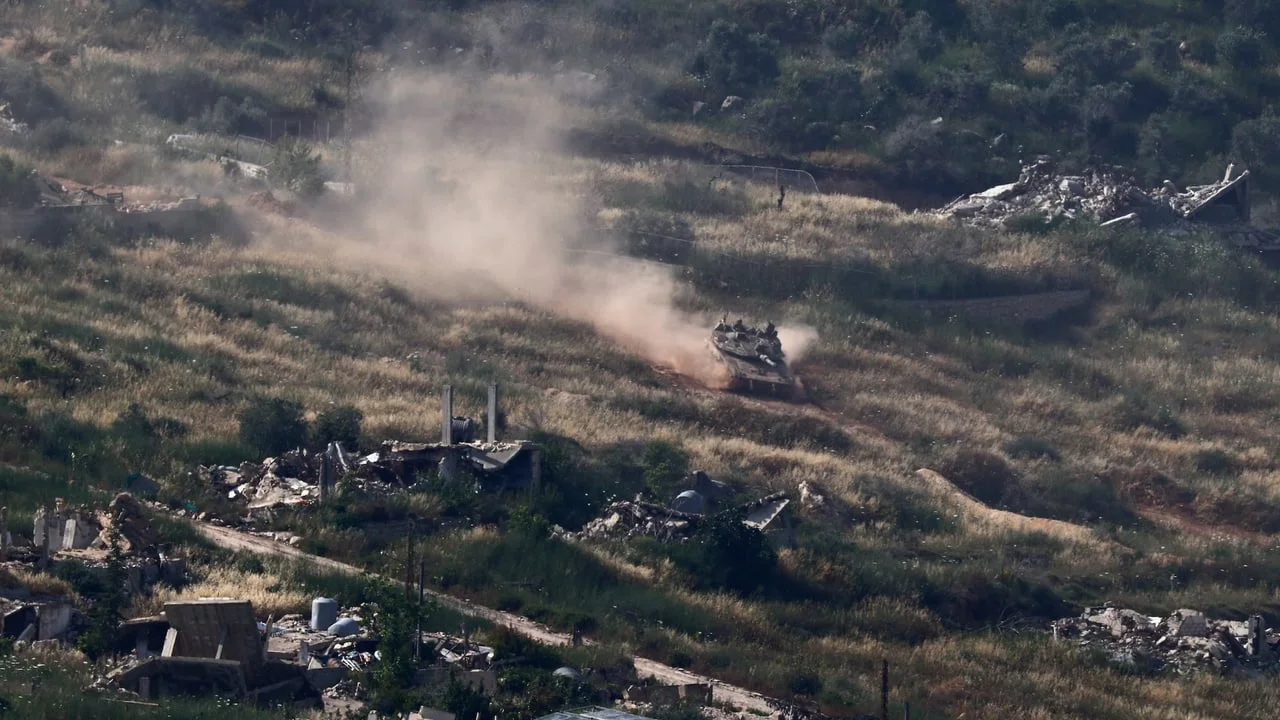
Prime Minister Netanyahu ordered strikes on Dahiyeh, Hezbollah's stronghold in Beirut's southern suburbs, on Monday morning, citing repeated violations of the mid-April ceasefire by Hezbollah drones that have killed several Israeli soldiers in southern Lebanon. 8 Israel has simultaneously expanded its ground incursion northward, capturing the Beaufort Castle hilltop — a symbolically significant Crusader-era fortress — and additional ridgelines in southern Lebanon. The Lebanese government reports more than 3,370 dead since March 2; Israel says 24 soldiers and four civilians have been killed on its side over the same period. More than 1.2 million Lebanese have been displaced.
Separately, Secretary of State Rubio called both Lebanese President Aoun and Netanyahu on Sunday, presenting a phased de-escalation plan: Hezbollah to halt all attacks on Israel; Israel to refrain from further escalation; the two sides to create space for diplomatic negotiations. 9 Lebanese parliament speaker Berri said he would "lay the groundwork" for a ceasefire. Netanyahu ordered the continued ground push within hours of Rubio's call. The New York Times reported Sunday that Israeli soldiers had captured Beaufort Castle after pushing further into southern Lebanon. 10
Market and supply-chain impact. Lebanon's limited industrial base means the direct supply-chain impact is narrow, but the Israel–Lebanon front is a key impediment to a US–Iran nuclear deal. Every Israeli escalation in Lebanon makes it harder for Washington to offer Tehran the ceasefire terms that would reopen Hormuz. Energy traders are pricing in a prolonged stalemate scenario as the base case; 10-year US Treasuries rose 3 basis points Monday to 4.46% as risk appetite shifted modestly. Defence procurement demand remains elevated: AUKUS partners confirmed a deal for Australia to receive Virginia-class submarines from the US in an accelerated timeline. 11
4. Ukraine signals ceasefire window, Russia builds up for fresh offensive
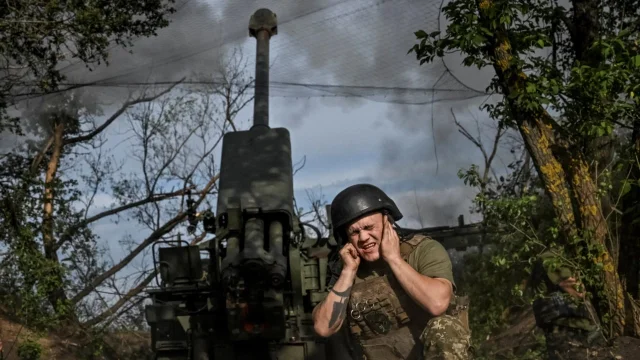
Zelensky, in a Sunday interview, said he wanted to make progress on a peace framework with Russia before the onset of winter, citing Ukraine's improved strategic position as the reason the window now exists. 13 A Foreign Affairs analysis published Monday by the Royal United Services Institute's Jack Watling argues that Russian offensive capacity has measurably degraded: the Kremlin cannot reliably convert plans into battlefield action due to a hollowed-out junior-officer corps, faulty battle-damage reporting, and a growing deficit of technical specialists. Ukrainian net personnel flow into front-line units has turned positive for the first time since early 2025, and drone-integrated combined-arms tactics achieved favourable exchange ratios at Hulyaipole and Kupyansk this spring. 12
Against this backdrop, Zelensky on Saturday warned that Russian intelligence indicates a fresh massive strike is being prepared, following a barrage of approximately 600 drones and 30-plus ballistic missiles in the previous 24-hour cycle. 14 Ukraine's counter-drone campaign struck oil pumping stations, refineries, and fuel depots across multiple Russian regions over the weekend, and Romania has confirmed through technical analysis that the Geran-2 drone that struck the Galati apartment block was of Russian origin. 15 France's navy boarded a Russia-linked, sanctions-busting oil tanker in the Atlantic on Monday. 16
Market and supply-chain impact. The European energy grid remains under structural pressure from the conflict. Ukraine's intensifying strikes on Russian oil infrastructure carry a dual effect: tightening Russian export revenues while also risking spill-over into global crude supply tightness if Black Sea facilities are drawn into the exchange. Defence procurement in Europe is accelerating; Goldman Sachs raised its 12-month STOXX 600 target Monday citing "resilient earnings," partly driven by defence and energy capex. 17 A ceasefire before winter, if achieved, would be the single largest near-term catalyst for European equities and energy markets.
5. China patrols east of Taiwan, activates coast guard in response to Japan–Philippines border talks
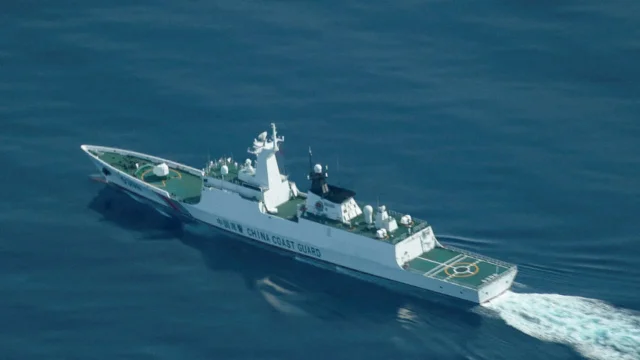
China's Coast Guard deployed a flotilla to waters east of Taiwan on Monday, framing the patrol as a direct response to Japan and the Philippines announcing formal talks on maritime boundary delimitation in that area. 19 China's foreign ministry had already declared last Friday that the Japan–Philippines talks are "completely illegal, null and void," asserting sovereign rights over the waters east of Taiwan by extension of its claim over the island. Taiwan's foreign ministry responded that "China has no right to interfere in Taiwan's territorial sovereignty." Taiwan's coast guard had no immediate comment. Japanese Defence Minister Koizumi hit back at Beijing's "new militarism" accusation, saying "nothing could be further from the truth."
The episode builds on a weekend PLA naval and coast-guard patrol near Scarborough Shoal — disputed between China and the Philippines — carried out the day after joint US–Philippine maritime exercises in the same waters. 18 Meanwhile, KMT opposition leader Cheng Li-wun said Monday she would be "very willing" to meet Trump during her upcoming US visit, a signal of cross-strait political manoeuvring ahead of any potential Trump–Beijing channel. 20
Market and supply-chain impact. Taiwan-strait tension directly affects the global semiconductor supply chain: TSMC's fabs in Hsinchu and Tainan underpin the majority of leading-edge chip production globally. MSCI Taiwan rose with the broader Asian rally Monday, driven by AI chip optimism. 4 The new US export-control guidance on Nvidia chips (Story 1) intersects directly with this theatre: closing the loophole reduces Chinese access to frontier AI compute, but any PLA escalation that disrupts TSMC production would instantly dwarf that effect. Japan's pivot toward a "proactive defence" posture under PM Takaichi — which prompted Beijing's retaliation in this episode — is accelerating defence-industry demand; AUKUS's announcement of unmanned undersea vehicle development with a 2027 delivery date adds another procurement signal in the region. 21
Sources: Reuters, AFP (via ABS-CBN), AP, Foreign Affairs, The New York Times, The Jakarta Post, Nikkei Asia, Kyiv Post, US News & World Report, The Irish Independent, mezha.net. All stories reported as of 08:00 UTC, June 1, 2026.
참고 출처
- 1Reuters via The Jakarta Post
- 2East Asia Forum — Xi–Trump summit analysis
- 3iFast Global Markets — China Semiconductor ETF analysis
- 4Swissinfo/Bloomberg — Markets wrap
- 5Reuters — US says it struck Iranian military sites
- 6ABS-CBN/AFP — Oil opens up
- 7Nikkei Asia — Pakistan strategic oil reserve
- 8Reuters
- 9Mezha — US proposes de-escalation plan
- 10New York Times — Israel captures Beaufort Castle
- 11Reuters — AUKUS submarines deal
- 12Foreign Affairs
- 13Irish Independent — Zelensky peace talks
- 14madhyamam online — Zelensky warns of Russia attack
- 15Kyiv Post — Romania identifies drone
- 16Reuters — France boards Russia-linked tanker
- 17Reuters — Goldman raises STOXX 600 target
- 18US News/Reuters
- 19The Jakarta Post/Agencies — China patrols east of Taiwan
- 20Reuters — Taiwan opposition leader and Trump
- 21Reuters — AUKUS undersea vehicles
이 콘텐츠를 둘러싼 관점이나 맥락을 계속 보강해 보세요.