www.who.int
Ebola PHEIC, Hantavirus Update, and Five Food Recalls: Public Health Advisory Digest, May 17–22
This digest covers May 17–22, 2026. The lead story is WHO's unprecedented PHEIC declaration for the Bundibugyo Ebola outbreak in DRC and Uganda — including a US 30-day entry ban, a US aid worker infection evacuated to Germany, and Dulles as the sole US entry point. Also covered: hantavirus case count rising to 12, CDC's first malaria investigation guidance since 2006, five new FDA food recalls (Salmonella, allergens, Listeria), and a Class I ventilator recall for healthcare facilities.

This digest covers May 17–22, 2026 — a shortened five-day window that nonetheless produced the week's most consequential public health escalation in years: WHO's unprecedented declaration of a Bundibugyo Ebola PHEIC before convening its emergency committee, followed by a US entry ban, a US aid worker infection, and Dulles Airport designated as the sole US entry point for travelers from three African nations. Alongside that lead story: a hantavirus case count uptick, landmark malaria guidance from the CDC, five new food recalls, and a Class I ventilator recall that healthcare facilities need to act on immediately.
This week's advisories at a glance
| Date | Event | Agency | Type | Who it affects |
|---|---|---|---|---|
| May 17 | WHO declares Ebola Bundibugyo PHEIC — first-ever DG declaration before Emergency Committee | WHO | PHEIC declaration | International travelers; US residents with DRC/Uganda/South Sudan travel history |
| May 18 | CDC issues 30-day PHSA travel restriction order — DRC, Uganda, South Sudan | CDC | Entry restriction | Non-US citizens/LPRs with 21-day travel history to those countries |
| May 18 | US aid worker confirms Ebola Bundibugyo infection; evacuated to Germany | CDC / State Dept | Response action | Aid/humanitarian workers in DRC |
| May 19 | CDC HAN #530 — Bundibugyo Ebola health advisory to clinicians | CDC HAN | Health Advisory | Clinicians, lab directors, state/local health officers |
| May 20 | DRC travel notice elevated to Level 3 (Reconsider Nonessential Travel) | CDC Travelers' Health | Travel health notice | Anyone planning travel to DRC |
| May 20–21 | Washington Dulles designated sole US entry point; enhanced screening begins | CDC / DHS | Entry screening | All travelers from DRC, Uganda, South Sudan (incl. US citizens) |
| May 18 | CDC HAN #529 — Andes virus hantavirus testing guidance update | CDC HAN | Health Update | Clinicians caring for MV Hondius passengers or contacts |
| May 21 | CDC MMWR RR7501a1 — first malaria investigation guidance update since 2006 | CDC MMWR | Recommendations & Reports | Public health departments, clinicians, vector control programs |
| May 18–21 | Five new food recalls (Salmonella, allergens, Listeria) | FDA | Recall | Kroger, Whole Foods, grocery shoppers nationwide and in affected states |
| May 21 | React Health VOCSN V+Pro ventilator recall — Class I | FDA | Class I device recall | Healthcare facilities using VOCSN V+Pro ventilators |
Disease outbreaks
Ebola Bundibugyo: PHEIC, US entry ban, and a first American case
링크 미리보기를 불러오는 중…
On May 17, WHO Director-General Tedros Adhanom Ghebreyesus declared the Bundibugyo virus (Orthoebolavirus bundibugyo) outbreak in the Democratic Republic of the Congo (DRC) and Uganda a Public Health Emergency of International Concern (PHEIC) — before convening an IHR Emergency Committee, a procedure explicitly authorized under the revised IHR Article 12 but used for the first time. 2 Tedros described the rationale: "I took this step in accordance with Article 12 of the International Health Regulations, after consulting the Ministers of Health of DRC and Uganda, and in view of the need for urgent action." 2 The IHR Emergency Committee convened on May 19 and unanimously endorsed the PHEIC finding.
The case count accelerated sharply through the week. As of WHO's May 20 briefing: 51 confirmed cases in DRC (including the cities of Bunia and Goma), approximately 600 suspected cases, and 139 suspected deaths — up from 8 confirmed cases and 80 suspected deaths as of May 16. 3 By May 22, the IHR Emergency Committee's report recorded 82 confirmed cases and 7 confirmed deaths in DRC, with approximately 750 suspected cases and 177 suspected deaths. 4 Uganda reported 2 confirmed cases linked epidemiologically to DRC, with no sustained local transmission documented there as of May 22. 4
A critical diagnostic gap: the WHO IHR Emergency Committee confirmed on May 22 that GeneXpert cannot detect Bundibugyo virus. Field diagnostics must rely on PCR platforms capable of detecting Bundibugyo (BDBV). 4 There is no FDA-approved vaccine or treatment for Bundibugyo virus. The commonly used ERVEBO vaccine covers only Zaire ebolavirus (Orthoebolavirus zairense). Historical case fatality rates in Bundibugyo outbreaks range from approximately 25% to 50%. 5
On May 18, CDC Director Jayanta Bhattacharya signed a 30-day travel restriction order under PHSA Sections 362 and 365 (42 U.S.C. §§ 265, 268), suspending entry for non-US citizens and non-lawful permanent residents who have been in DRC, Uganda, or South Sudan within the prior 21 days. 6 US citizens and LPRs are not barred but must enter through a designated port.
Starting May 20 at 11:59 p.m. ET, Washington Dulles International Airport (IAD) became the only authorized US entry point for all travelers — including US citizens — arriving from DRC, Uganda, or South Sudan. 7 CDC deployed at least 10 public health officers for temperature checks, travel history questionnaires, and contact information collection. Asymptomatic travelers may proceed to their final destination, but their contact information is shared with state and local health departments for 21-day follow-up monitoring.
On May 18, CDC confirmed one American aid worker working in DRC tested positive for Bundibugyo virus after developing symptoms over the weekend of May 17–18. CAPT Satish Pillai, CDC's Ebola response incident manager, stated: "There is one case of Ebola in an American who was exposed as part of their work in the Democratic Republic of Congo; the person developed symptoms over the weekend and tested positive late Sunday." 8 The patient was evacuated to Germany for treatment; 7 high-risk contacts were also transferred to Germany (6 individuals) and the Czech Republic (1 individual). As of May 22, no cases have been confirmed inside the United States.
What you should do:
- If you have traveled to DRC, Uganda, or South Sudan in the past 21 days, self-monitor for fever, severe headache, unexplained bleeding, vomiting, or diarrhea. Any symptoms: isolate immediately and call a healthcare provider before going in person.
- Clinicians: Bundibugyo virus does not spread by air — transmission requires direct contact with infected body fluids. The 46-lab LRN network can perform Biofire Warrior Panel testing; 13 RESPTCs have internal diagnostic capability. Contact the CDC Emergency Operations Center (770-488-7100) for testing guidance.
- Do not use GeneXpert for Bundibugyo diagnosis — it will not detect BDBV. 5
Hantavirus (Andes virus): case count reaches 12, no US domestic cases
The MV Hondius cruise ship Andes virus outbreak added one case this week. As of May 22, the WHO-confirmed global count stands at 12 cases (8 laboratory-confirmed, 2 probable, 1 inconclusive, 1 new Dutch crew member confirmed May 22), with 3 deaths — no new deaths since May 2. 9 More than 600 contacts are being followed in 30 countries; a small number of high-risk contacts remain unlocated. 9 No cases have been confirmed in the United States.
On May 18, CDC issued HAN #529 (Health Update — a lower-urgency tier than its May 8 HAN #528 advisory), providing clinicians with updated testing guidance distinguishing three scenarios: Andes virus testing for MV Hondius passengers and their contacts; New World hantavirus testing for patients with rodent exposure history; and Old World hantavirus testing for suspected hemorrhagic fever with renal syndrome. 10 CDC's Viral Special Pathogens Branch (VSPB) is reachable 24/7 through the Emergency Operations Center: 770-488-7100. One important limitation: assays designed to detect Andes virus specifically may not detect other New World hantaviruses endemic to the US. 10
Missouri, Kansas, and San Diego County each relayed state-level hantavirus health alerts this week. Kansas specifically noted that Sin Nombre virus — a distinct hantavirus endemic to the western US — causes 0–2 sporadic cases per year in Kansas. 11
What you should do:
- If you were aboard MV Hondius or are a healthcare worker who cared for a Hondius passenger, contact your local health department or the CDC EOC.
- Clinicians treating any patient with severe respiratory illness and an unexplained travel history: call CDC before ordering standard hantavirus panels — Andes-specific testing must be requested separately.
CDC publishes first US malaria investigation guidance since 2006
On May 21, the CDC MMWR published Recommendations and Reports RR7501a1: "CDC Operational Guidance for Investigating Locally Acquired Mosquito-Transmitted Malaria — United States, 2026." 12 The guidance is the first update since 2006, prompted by 10 locally acquired malaria cases in four US states (Arkansas, Florida, Maryland, and Texas) in 2023 — the first locally acquired US cases in 20 years. The same year, 2,627 imported malaria cases were reported, described in the guidance as the highest annual count since the US eliminated malaria in the early 1950s. 12
The guidance covers three pillars: epidemiological investigation, entomological surveillance and control, and laboratory molecular monitoring. Plasmodium vivax is the most common species in US local outbreaks and produces gametocytes earlier in infection than P. falciparum, extending the infectious window before diagnosis.
What you should do:
- Public health departments: review RR7501a1's investigation protocols, including the ESSENCE syndromic surveillance codes.
- Clinicians: consider locally acquired malaria in febrile patients with no international travel history in states with Anopheles mosquito populations and recent outdoor exposure.
Monkeypox: 22 Clade I US cases; Clade Ib spreading in Western Europe without travel links
CDC's May 21 situation update recorded 22 laboratory-confirmed Clade I mpox cases in the US since November 2024, all linked to travel from Central/Eastern Africa or Western Europe; no US deaths. 13 New this week: Clade Ib is now circulating in multiple Western European countries among people with no international travel history, indicating local community transmission. CDC stated: "We expect additional cases in Europe and the United States." 13 Case fatality rates are low — Clade Ib is below 0.5%.
What you should do:
- Travelers to Central/Eastern Africa or affected Western European countries: check your mpox vaccination status. The JYNNEOS vaccine provides protection against both Clade I and Clade II.
Vaccines and immunization policy
No new ACIP vaccine recommendations were issued this week. The ACIP charter was re-established via a May 19 Federal Register notice (91 FR 29139) after the April 6 renewal was withdrawn due to an administrative procedural error under revised FACA notice requirements. 14 The charter is now re-established for a two-year term. No ACIP meeting was held in May.
The 2025–26 COVID-19 vaccination season's data tracking concluded on May 20, with final rates: adults 18+ at 17.5% (95% CI: 17.1%–18.0%), children at 9.7% (95% CI: 9.3%–10.1%), and pregnant women at 11.1%. 15
Food and product safety recalls
| Date | Product | Hazard | States / distribution | Action |
|---|---|---|---|---|
| May 15 (company) / May 18 (FDA) | Kroger Homestyle Cheese Garlic Croutons 5 oz (UPC 0 11110 81353 4) — Sugar Foods LLC | Salmonella (CDI powdered milk ingredient) | 17 states: AL, AR, GA, IL, IN, KS, KY, MI, MS, MO, NE, OH, SC, TN, TX, VA, WV | Return to Kroger for full refund 16 |
| May 19 (FDA) | Malazi Tahina 1 Kg (UPC 6 224011 088244, EXP 30/12/2026) — Nassar Investments Co. | Salmonella (NC Department of Agriculture testing) | Retail stores, distribution states not fully disclosed | Discard or return to point of purchase 17 |
| May 20 (FDA) | Birch Benders 12 oz Sweet Potato Pancake & Waffle Mix — Lot 5 265, Best By MAR 24, 2027 (UPC 8 1000156076 8) — Hometown Food Company | Undeclared egg (serious/life-threatening allergy risk) | Nationwide (grocery, natural food retailers, online) | Discard immediately 18 |
| May 21 (FDA) | Whole Foods Market Kitchen Minestrone Soup 24 oz — Lot 1762181, Use By 05/27/26 (UPC 099482502065) — Kettle Cuisine | Undeclared shrimp (crustacean shellfish allergen; anaphylaxis risk) | 17 states + DC in-store; nationwide online (Whole Foods / Amazon) | Return to Whole Foods for full refund; questions: 617-409-1100 19 |
| May 21–22 (FDA) | Raaw Energy dog food — multiple frozen raw formulas (2 lb and 5 lb tubes), produced July 17–Dec 23, 2025, plus one March 31, 2026 batch | Listeria monocytogenes (risk to humans handling pet food) | CT, DE, MA, MD, NH, NJ, NY, PA, VA (company website pickup only) | Stop feeding immediately; company halted all production May 21 20 |
The Kroger crouton recall is part of the ongoing California Dairies, Inc. (CDI) powdered milk Salmonella cascade that began April 20 when CDI recalled more than 2.6 million pounds of nonfat dry milk; Sugar Foods is the latest downstream manufacturer affected.
The Raaw Energy Listeria recall carries a human health warning: Listeria monocytogenes can transfer from contaminated raw pet food to humans through handling. Pregnant women, adults 65 and older, infants, and immunocompromised individuals face the highest risk of severe illness. 20
Class I medical device recall — React Health VOCSN V+Pro ventilator: React Health (formerly Ventec Life Systems, Sarasota FL) is recalling VOCSN V+Pro Package (UDI-DI 00855573007914) and V+Pro Unit (UDI-DI 00855573007877) due to a manufacturing test configuration error that may leave undetected oxygen leaks — reducing delivered FiO₂ below prescribed levels or, in oxygen-enriched environments, creating a fire risk. FDA classified this as Class I — the agency's most serious category, indicating a reasonable probability of serious injury or death. 21 Healthcare facilities should immediately stop using affected units, isolate them from inventory, and notify any care settings or patients to whom the devices have been transferred.
What you should do (food recalls):
- Egg allergy or shrimp/shellfish allergy: check your pantry and fridge for the Birch Benders pancake mix (Lot 5 265 / Best By MAR 24 2027) and the Whole Foods Minestrone Soup (Lot 1762181 / Use By 05/27/26). Discard or return.
- Kroger shoppers in the 17 affected states: check for UPC 0 11110 81353 4 on Homestyle Cheese Garlic Croutons.
- Raw pet food owners in CT, DE, MA, MD, NH, NJ, NY, PA, or VA: contact Raaw Energy and wash hands thoroughly after handling any raw pet food or its packaging.
링크 미리보기를 불러오는 중…
Travel health
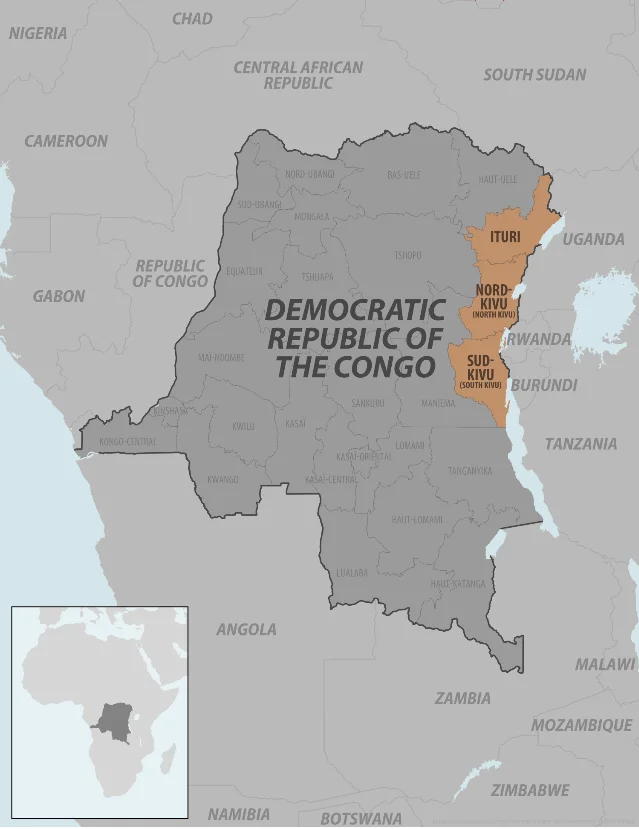
DRC: Level 3 — Reconsider Nonessential Travel. Effective May 22, CDC elevated the DRC travel notice to its highest advisory tier, covering Ituri, Nord-Kivu, and Sud-Kivu provinces. 1
Uganda: Level 1 — Practice Usual Precautions. No local Bundibugyo transmission documented as of May 22. 22
Entry requirement — all travelers from DRC, Uganda, or South Sudan: All must enter the US exclusively through Washington Dulles International Airport, effective May 20 at 11:59 p.m. ET. Covered travelers who bypass Dulles and board connecting flights from other airports are in violation of the CDC order. CBP confirmed this gap already materialized: an Air France flight from Paris to Detroit was diverted to Montreal on May 20 after a passenger from DRC boarded in error, having not been denied boarding before departure. 23
What you should do:
- Cancel or defer nonessential travel to DRC. If travel is essential, consult a travel medicine clinic for pre-departure preparation and know the nearest US Embassy contact.
- If you have already returned from DRC, Uganda, or South Sudan in the past 21 days and did not route through Dulles: contact your local health department for instructions on completing the monitoring protocol.
링크 미리보기를 불러오는 중…
State and local alerts
California (CDPH): The California Department of Public Health (CDPH) issued an Ebola health alert on May 20 to California clinicians and public health officers, relaying CDC HAN #530 guidance on Bundibugyo virus clinical recognition, laboratory biosafety (BSL-3/4 handling required), and patient placement protocols. 24
Virginia (VDH): The Virginia Department of Health noted on May 21 that because Dulles Airport falls within Virginia's borders, VDH will conduct exposure risk assessments and symptom monitoring for arriving travelers flagged by CDC screening. VDH stated the public risk "remains very low." 25
Missouri and Kansas: Both states issued hantavirus health alerts on May 19–20 relaying CDC HAN #529 guidance. Kansas specifically flagged that Sin Nombre virus is endemic in the western part of the state, with 0–2 sporadic cases per year distinct from the cruise ship Andes virus cluster. 11
San Diego County: San Diego County HHSA issued a CAHAN alert on May 19 for the MV Hondius Andes virus outbreak, given San Diego's major cruise port status and travel connections. 26
What you should do:
- California healthcare providers: review CDPH's May 20 alert for lab biosafety protocols before receiving any patient with recent DRC or Uganda travel history.
- Virginia residents recently returned via Dulles: expect possible follow-up contact from VDH within the 21-day monitoring window.
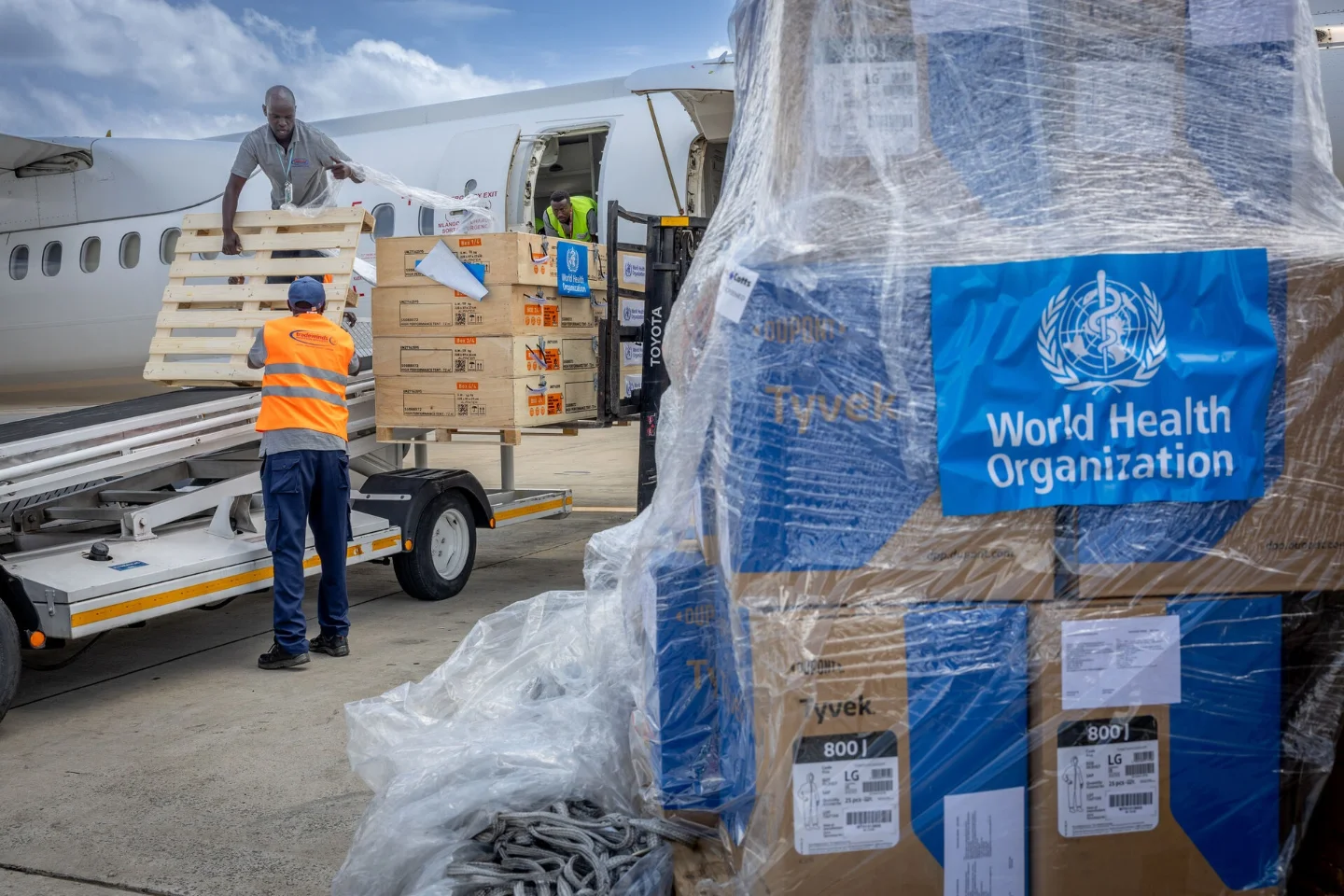
Cover image: WHO emergency supplies mobilization for the Ebola Bundibugyo response, DRC, May 2026. Image from WHO Ebola Outbreak – DRC 2026
참고 출처
- 1CDC Level 3 Travel Health Notice: Ebola Bundibugyo Virus Disease in DRC
- 2WHO: Epidemic of Ebola Disease in DRC and Uganda Determined a PHEIC (May 17, 2026)
- 3WHO DG media briefing on Ebola, May 20, 2026
- 4WHO IHR Emergency Committee Temporary Recommendations, May 22, 2026
- 5CDC HAN #530, May 19, 2026
- 6CDC Order Suspending the Right to Introduce Certain Persons, May 18, 2026
- 7CDC press release: Enhanced Ebola airport screening begins at Washington Dulles, May 21, 2026
- 8CDC Media Transcript: Update on Ebola Outbreak in DRC and Uganda, May 18, 2026
- 9WHO DG remarks at Member State information session on Ebola and hantavirus, May 22, 2026
- 10CDC HAN #529, May 18, 2026
- 11KDHE KS-HAN alert, May 20, 2026
- 12CDC MMWR RR7501a1, May 21, 2026
- 13CDC Monkeypox Situation Summary, May 21, 2026
- 14Federal Register: ACIP Notice of Charter Re-Establishment, May 19, 2026
- 15CDC COVIDVaxView weekly dashboard, May 20, 2026
- 16Lake Cumberland District Health Dept: FDA Recall – Kroger Croutons, May 2026
- 17FDA: Nassar Investments Recalls Malazi Tahina Due to Salmonella
- 18Food Safety News: Pancake mix recalled – undeclared egg, May 2026
- 19USA Today: Whole Foods soup recalled, May 22, 2026
- 20PetfoodIndustry: Raaw Energy expands recall, May 2026
- 21RT Magazine: VOCSN V+Pro ventilators recalled by React Health
- 22CDC Level 1 Travel Health Notice: Uganda
- 23The Guardian: Passenger from Congo boards flight 'in error,' prompting diversion, May 21, 2026
- 24CDPH Health Alert via Pasadena Public Health Dept, May 20, 2026
- 25VDH Ebola Media Statement, May 21, 2026
- 26San Diego County CAHAN alert, May 19, 2026
이 콘텐츠를 둘러싼 관점이나 맥락을 계속 보강해 보세요.