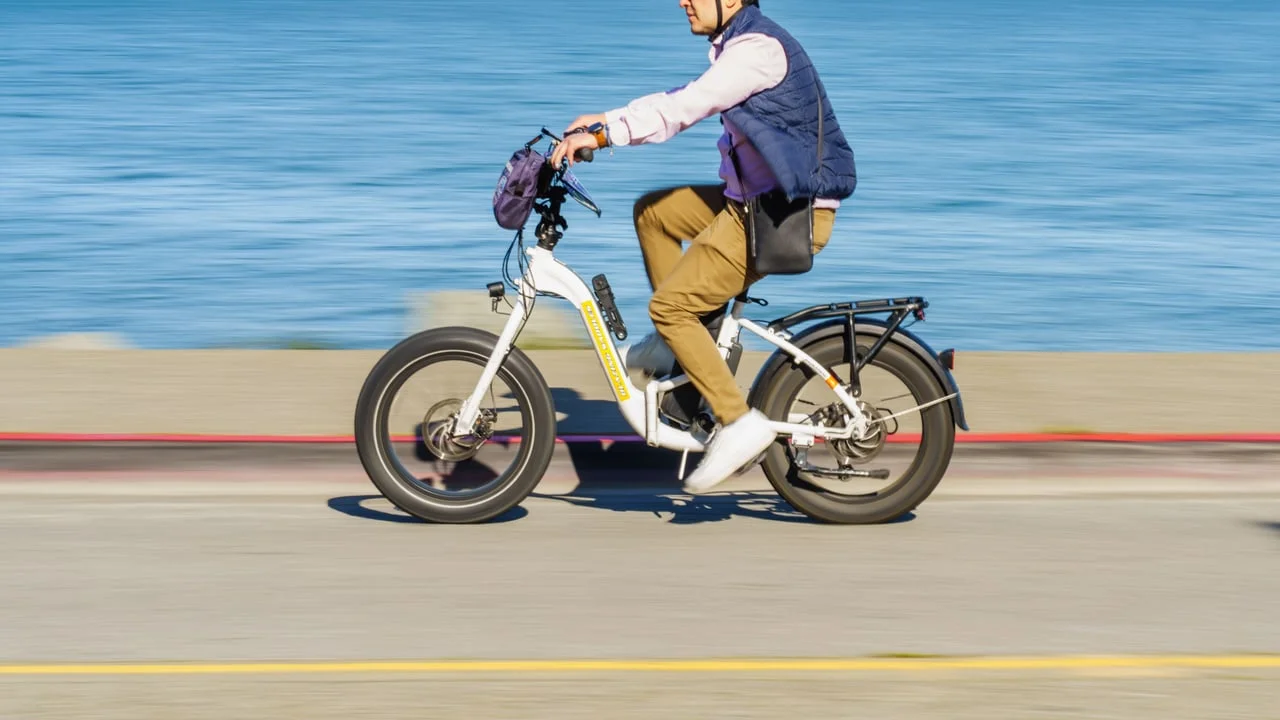
Day 2: How does the motor know when to help?
Two eBikes can look identical but feel completely different to ride — the reason is usually the pedal-assist sensor. Learn how cadence sensors and torque sensors work, how they affect ride feel and battery life, and which type the Trek Verve+ 2 Gen 3 uses.

Yesterday you learned that an eBike has three core components: motor, battery, and controller. Today we zoom in on the piece that tells the controller when and how much to engage the motor — the pedal-assist sensor. It's a small part that has a surprisingly large effect on how the bike feels under you.
Today's concept: two sensors, two very different rides
There are two main types of pedal-assist sensors in use today: cadence sensors and torque sensors. They answer the same question — "Is the rider pedaling?" — in completely different ways.
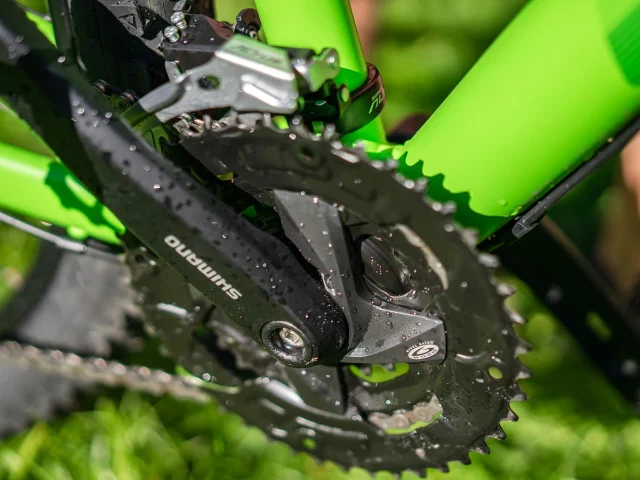
A cadence sensor detects whether your pedals are turning, and how fast. It uses a ring of small magnets mounted on the crank or bottom bracket; each time a magnet passes a pickup, the system registers a pulse. Once it sees the pedals rotating, it sends a fixed level of power to the motor based on whichever assist level you've selected. Pedal faster and the power may increase slightly, but the key thing is this: the sensor only cares about rotation, not about how hard you're pushing.
A torque sensor measures the actual force you apply to the pedals. It's built into the bottom bracket or the crank and works a bit like a spring scale — it bends microscopically under load, and that deflection tells the controller exactly how much effort you're putting in. Push softly, get gentle help. Stand up and push hard on a climb, the motor amplifies that effort immediately.1
Why it matters
The practical difference shows up the moment you ride.
On a cadence sensor bike, there's a small but noticeable lag between when you start pedaling and when the motor kicks in — typically half a pedal stroke or so while the magnets register rotation. Once the assist arrives, it holds steady regardless of whether you're cruising flat ground or starting from a stop on a hill. For casual rides on flat terrain, that consistent push is actually pleasant. The rider doesn't need to think much; the motor does its thing.
On a torque sensor bike, the assist is instant and proportional. Because the sensor reads your force in real time, the motor responds before you even complete your first pedal stroke. Ride at an easy pace and the assist stays light. Hit a hill and push harder and the motor mirrors you, scaling up in sync. Most riders describe it as feeling like their legs got stronger, rather than feeling like an engine switched on.3
There's also a battery efficiency angle. A torque sensor only draws power in proportion to your input — if you're spinning easily on a flat road, the motor stays quiet. A cadence sensor holds a fixed output at your chosen assist level as long as you pedal, even if you don't need that much help. Over a long ride, torque sensors tend to deliver more miles per charge for the same riding style.1
One real example: Trek Verve+ 2 Gen 3
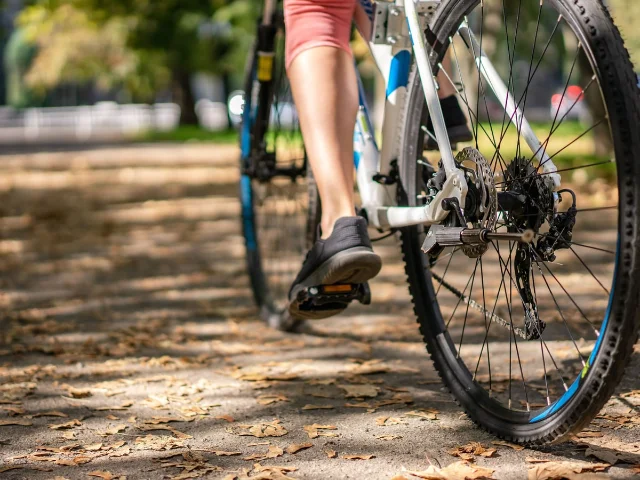
The Trek Verve+ 2 Gen 3 is a commuter-oriented eBike that uses a torque sensor paired with a 250W motor producing up to 75 Nm of torque and a 400 Wh battery rated for up to 50 miles of range. It's priced around $3,519, placing it in the mid-range tier where torque sensors become standard equipment.5
What 75 Nm actually means in practice: when you stand on the pedals and push on a 5% grade, the motor amplifies your force rather than switching to a fixed power level. You feel yourself working, but without exhaustion. Riders who try the Verve+ after cadence sensor bikes often say the transition is the moment eBiking finally "clicked" for them.
That said, cadence sensor bikes have real advantages. They're mechanically simpler, easier to maintain, and significantly cheaper — most eBikes under $1,500 use cadence sensors.3 For someone who wants light exercise help on a flat bike path, a cadence sensor does the job well. The lag and the fixed-power feel only become drawbacks on hilly terrain or when precise speed control matters.
Quick comparison
| Cadence sensor | Torque sensor | |
|---|---|---|
| What it measures | Pedal rotation speed (RPM) | Pedaling force (Nm) |
| Motor response | Fixed power at selected assist level | Proportional to your effort |
| Engagement delay | Small lag (half a pedal stroke) | Near-instant |
| Ride feel | Steady, "on/off" quality | Natural, amplified-legs feel |
| Battery efficiency | Lower | Higher |
| Typical price range | Under $1,500 | $2,000 and up |
| Best for | Flat commutes, casual riders | Hills, varied terrain, natural feel |
One small exercise
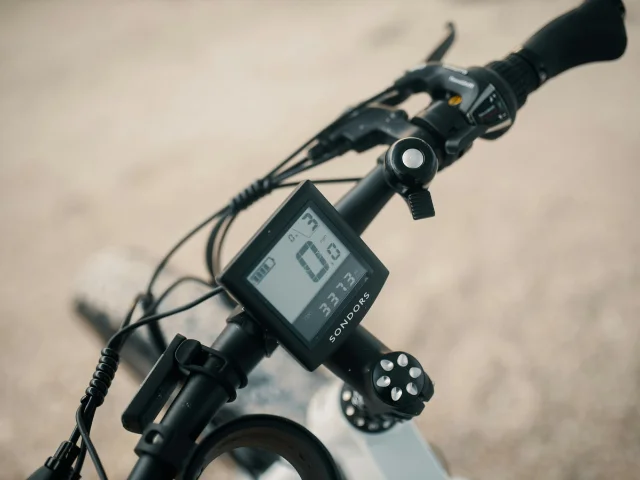
Before your next ride (or the next time you look at eBikes), check the product spec sheet for one word: sensor type. It'll say either "cadence" or "torque." If you can, try both back-to-back at a shop — start from a stop, then ride up a small incline. The difference in feel is hard to explain in words but immediately obvious in the saddle.
Tomorrow: Day 3 — How the controller connects everything (and what those assist levels actually do).
참고 출처
- 1Torque Sensor vs Cadence Sensor on Ebikes: Which Is Best? — Aventon
- 2Bicycle crankset — Pexels / Atlantic Ambience
- 3Cadence or Torque Sensor Ebike: What's the Difference? — Rider Guide
- 4Cyclist pedaling — Pexels / Atlantic Ambience
- 5Trek Verve+ 2 Lowstep Gen 3 — Trek Bikes
- 6eBike handlebar display — Pexels / Josh Sorenson
이 콘텐츠를 둘러싼 관점이나 맥락을 계속 보강해 보세요.