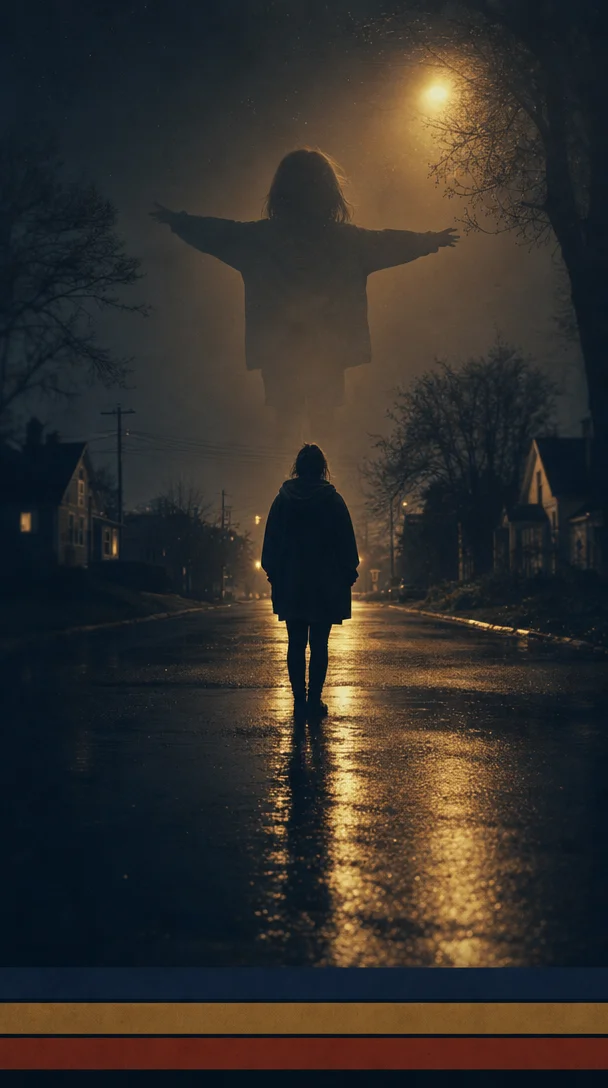
She Fought for Seven Years: A Complete Retrospective on Rue Bennett
From the 2019 pilot to the 2026 series finale, a full account of Rue Bennett's journey through three seasons of Euphoria — her relapses, her relationships, her faith, and her death — alongside a tribute to Angus Cloud (1998–2023), the actor who played Fezco and whose own life ended the same way the show's did.

2026. 6. 5. · 18:54
구독 1개 · 콘텐츠 1개
Rue Bennett didn't start Euphoria as a hero. She started it as a girl who came home from rehab with no intention of staying clean — and the camera, in those first minutes, let us know exactly what that meant. Her voiceover in the pilot, delivered with a teenager's weary deadpan, described her own birth as an event marked by a country at war and a planet overheating. By the time Euphoria's series finale aired on May 31, 2026, that opening frame had curdled into something else entirely: a eulogy.1
This is the full account of seven years across three seasons — what Rue wanted, what she lost, and what the show refused to give her.
Season 1 (2019): The first high, the first promise
The pilot, which premiered on June 16, 2019, establishes the essential Rue: 17 years old, fresh out of rehab after a near-fatal overdose, and already planning her next score.2 Her dealer, Fezco — played by Angus Cloud — treats her with a protective gentleness at odds with what he sells her. Her mother Leslie moves through grief in slow motion. Her younger sister Gia watches.
Then Jules arrives.
Jules Vaughn (Hunter Schafer) bikes into the neighborhood and, in Rue's words, the world goes dark and nothing else matters. For a girl who has spent years dissolving herself in chemicals, Jules functions as an alternate high — someone who makes Rue feel present rather than sedated. The relationship is mutual and real, and also, almost immediately, unstable. Jules doesn't know she's been cast as someone's lifeline.
The first season spirals through eight episodes of glitter, sex, and dread — a high school that functions as a pressure cooker where everyone is performing a version of themselves they haven't quite locked in yet. Rue manages to stay clean for stretches, breaks clean for others, and oscillates between the terrifying possibility that sobriety might be possible and the familiar comfort of the alternative.
The season ends with a scene that becomes one of the show's most replayed images: Rue, alone on the platform, watching Jules ride away on a train toward a life she couldn't follow. Then she goes to Fez's house. She uses. The camera doesn't look away. Creator Sam Levinson later admitted he'd originally planned for Fez to die in that final episode, a plan he abandoned — a decision that would carry its own grief three years later.1
The specials (2020–2021): Silence and distance
Two bridge episodes aired during the COVID-19 production pause — "Trouble Don't Last Always" (December 2020) and "Fuck Anyone Who's Not a Sea Blob" (January 2021). Neither is action-heavy; both are architectural. The first is almost entirely a diner scene between Rue and Ali Muhammad (Colman Domingo), a recovering addict who doesn't coddle her. Ali talks. Rue listens badly. He makes her think anyway.
The second episode belongs to Jules, who processes the same months Rue spent using. Taken together, the specials function as x-rays: they reveal the interior structures that the full seasons build around.
Season 2 (2022): The longest fall
Euphoria's second season premiered on January 9, 2022, and it is, in retrospect, the most unrelenting stretch of television the show produced. Rue is back with Jules; the relationship is a closed system of need and resentment. She is also, almost immediately, using again — harder, more recklessly, in ways that endanger not just herself but the people around her.
The season's pivotal hour is Episode 5, "Stand Still Like the Hummingbird," which is constructed as a single extended catastrophe: an intervention that goes wrong, a chase through the neighborhood, a mother who has nothing left to say that will land. Zendaya spent the year of its airing winning her second Emmy for this season, but the performance defies the vocabulary of awards. It's less a performance than an accumulation — she plays Rue's desperation as the exhaustion of someone who has already thought through every possible exit and rejected them all.3
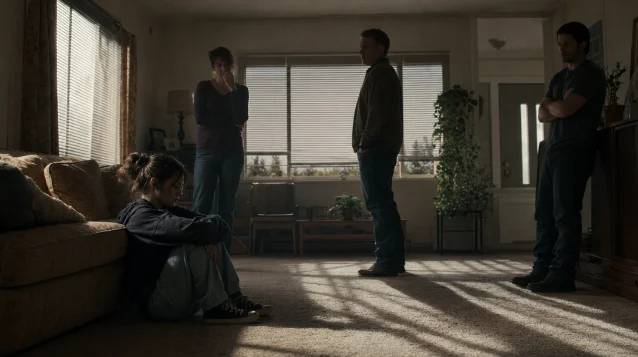
The church scene in Episode 8 — where Rue, having reached the bottom of the bottom, sits in a pew and something shifts — provides the season's only real exhale. It doesn't announce itself as a turning point. It's quieter than that: a girl in a church, not converted, not cured, but briefly present. The season ends with her in a recovery meeting, which the show treats not as triumph but as a question mark.
Season 3 (2026): Faith, fentanyl, and the end
Euphoria's third and final season premiered on HBO on April 12, 2026, after delays caused by the 2023 WGA strike, Angus Cloud's death in July 2023, and the cascading production complications of a show that had always operated close to the edge.1
The season opens five years after high school. Rue, now in her early 20s, is a drug mule operating deep inside Laurie's cartel operation, working off a debt she can't quantify. The whole friend group has fractured into adult shapes they didn't choose: Cassie married Nate, Maddy manages talent, Lexi works in television. Jules is in art school, painting canvases full of penises and sleeping with a plastic surgeon who pays her rent.
Season 3's structural shift is significant: where the first two seasons were essentially high school dramas about identity, this one is a crime plot. Rue gets recruited by strip-club mogul Alamo Brown (Adewale Akinnuoye-Agbaje) to cover up a dancer's overdose death — involving the same fentanyl-laced pills that appear throughout the season. She begins trafficking firearms. She becomes a DEA informant to avoid prison. She attempts to steal money from a cartel safe.
What holds the season together is the question Levinson embedded in every episode: whether Rue's spiritual awakening — she survives a car crash that sets a tree on fire, which she takes as divine providence — is real recovery or just another form of intoxication. Ali, the show's moral compass since Season 1, doesn't believe it. "Despite Ali's warnings, she returns to Laurie," Episode 7's summary reads, with the blunt resignation of someone describing a pattern they've watched too many times.1
The finale: "In God We Trust"
The eighth episode, titled "In God We Trust," aired May 31, 2026, alongside HBO's confirmation that it was the series finale. Rue dies before the midpoint.4
Alamo, having learned that Rue was the DEA informant who had been feeding information about his operation, gives her money and a bottle of Percocet laced with fentanyl. He knows she'll take them. She does. She is found the next morning, dead, in Ali's home.
The method is deliberate and ugly: the man who gave Rue a job and, for a stretch, something resembling purpose, killed her with the same substance that has been killing people around her all season — the same substance that killed the real Angus Cloud in July 2023.5
Before she dies, Rue has a dream. She sees a news report claiming Fez has escaped prison. She goes to find him. In the field outside the gas station where he once sold her drugs, they stand together, looking toward the horizon.

The footage had never been used before. It was shot before Angus Cloud died — archival material that Levinson held back, waiting for exactly this moment.5
"Angus didn't make it in real life"
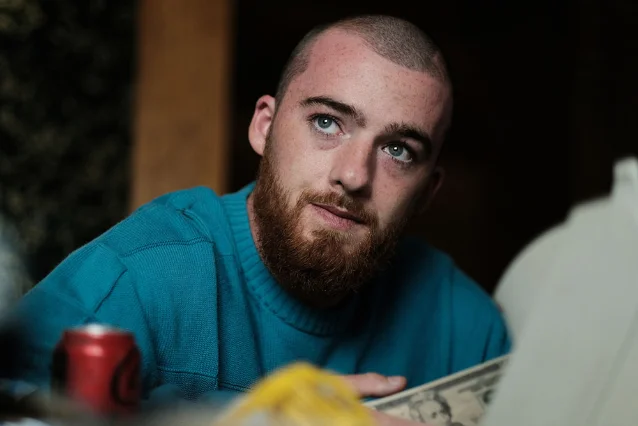
Conor Angus Cloud Hickey was born on July 10, 1998, in Oakland, California. He had no professional acting experience when he was cast as Fezco in 2018. He died on July 31, 2023, from acute intoxication following an accidental overdose. Fentanyl was among the substances found in his system.6
He was 25. Season 2 had aired eleven months earlier.
At the Season 3 premiere in April 2026, Sam Levinson spoke about Cloud with the precision of someone who had been carrying the words for a long time: "Angus was the backbone of that season. I used to even talk to him about it because I wanted him to stay clean. So I would invite him over and I'd tell him what the plans were for the character... You know, season 1 he was supposed to die at the end and I couldn't do it."1
At the finale screening, he said: "Moments like these are rare. This season we lost Angus. Many of you loved him the way I did. He deserved more time, a longer, fuller life. But he was taken, like far too many people in this country, by fentanyl."5
Because Cloud died before Season 3 filmed, Fez exists in the season as a voice on the phone, a presence kept deliberately off-screen. Levinson explained this at the post-premiere segment: "Angus didn't make it in real life, so at least in the made-up world of Euphoria, he's still alive." In the finale, Fez's appearance in Rue's final dream — never-before-seen footage from a different time, a different Angus — becomes the show's actual ending: two people who kept each other as safe as they could, in a field, before the dream dissolves.5
What the show was about
Levinson, speaking to The New York Times after the finale, said: "In terms of the story that we set out to tell, which is a story about addiction and its consequences, this feels like the end to me."1
That's one reading. Another: Euphoria was a story about the specific cruelty of a disease that destroys people who have every reason to want to live. Rue wanted Jules. She wanted her father back. She wanted to feel like herself without chemical assistance. She wanted Fez's uncomplicated warmth. None of those wants were unreasonable, and the show never made them seem otherwise — which is what separated it from the after-school-special framing its premise could easily have slid into.
The series finale drew 25 million worldwide viewers by HBO's count.4 Some fans found the ending too bleak — they had watched for seven years hoping for something different. That disappointment is also real information. It means they cared. It means the show made Rue's life feel like it mattered enough that losing it hurt.
The final image isn't the death. It's Ali, three months later, visiting the Christian family Rue met in Texas during her lowest stretch. He tells them she's in a better place. During his prayer, Rue appears at the end of the table, and they share a smile. "May God bless us all," she says in voiceover, and the show ends.
It's a grace note that doesn't earn forgiveness, doesn't ask for it, and doesn't need to. It just lets her exist for one more moment, in a world where she deserved better than the one she got.
Angus Cloud July 10, 1998 — July 31, 2023 "He deserved more time, a longer, fuller life." — Sam Levinson
참고 출처
- 1Euphoria Season 3 — Wikipedia
- 2Euphoria Season 1 — Wikipedia
- 3Euphoria star Zendaya breaks down Rue's intervention scene — Entertainment Weekly
- 4Euphoria: Rue Dies, Season 3 Finale Explained — The Hollywood Reporter
- 5Euphoria Season 3 Finale Pays Tribute to Angus Cloud — The Hollywood Reporter
- 6Angus Cloud — Wikipedia
이 콘텐츠를 둘러싼 관점이나 맥락을 계속 보강해 보세요.