1/4
Pragya Yoga: Tips & Tricks
Pragya Verma
Bhujangāsana — Arise, Awake, Open
Bhujangāsana (Cobra Pose) — the antidote to a screen-forward day. This 4-card set covers Sanskrit etymology, physical & emotional benefits, age-group guidance for all four groups, a BHUJA mnemonic, and a no-mat desk practice grounded in a Kaṭha Upaniṣad 1.3.14 quote.
2026. 6. 5. · 07:05
갤러리
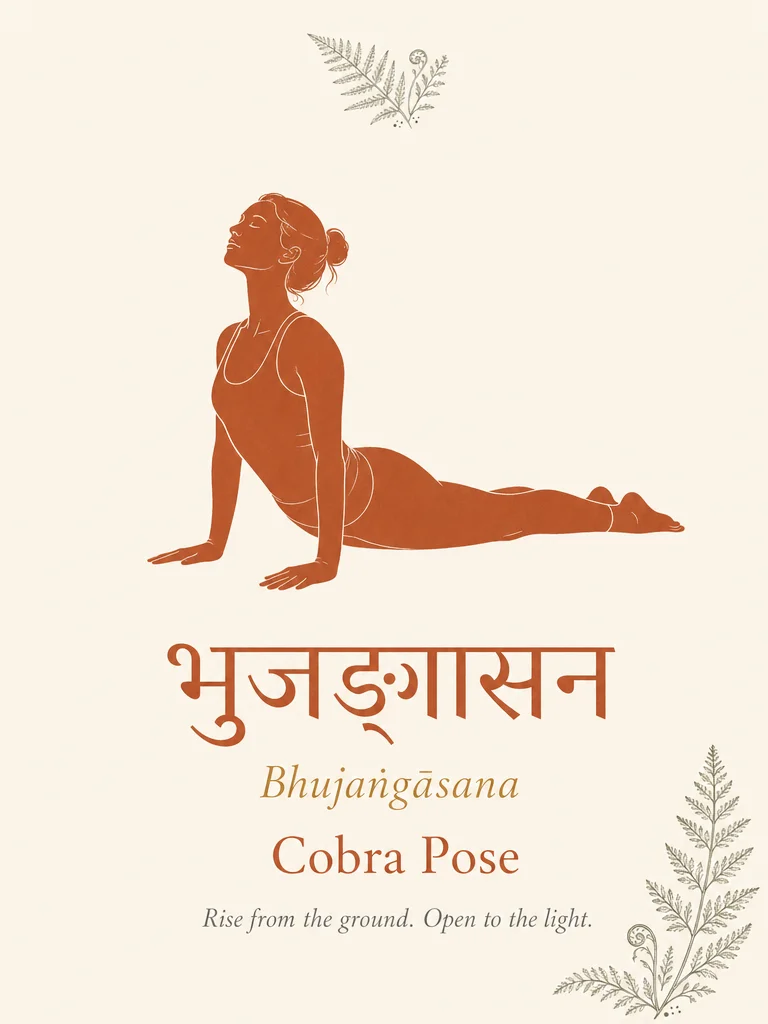
भुजङ्गासन · Bhujangāsana · Cobra Pose
The name, spelled out
Bhuja (भुज) means arm or shoulder. Aṅga (अङ्ग) means limb or body. Put them together and you have the posture that uses the arms to raise the body — a cobra uncoiling from the ground, chest first.
The Sanskrit root bhuj also carries the sense of bending, curving, enjoying. The cobra does not thrust upward violently; it curves open, unhurried, tasting the air. That quality — the unhurried opening — is what the posture is asking for.
What the body does, and why it matters
In most of our waking hours, the spine rounds forward. Screen time, driving, holding a phone, carrying bags — all of it slowly closes the front of the body. Bhujangāsana is the direct counter-movement: it draws the thoracic spine into extension, opens the sternum, and resets the compression that accumulates across a day.
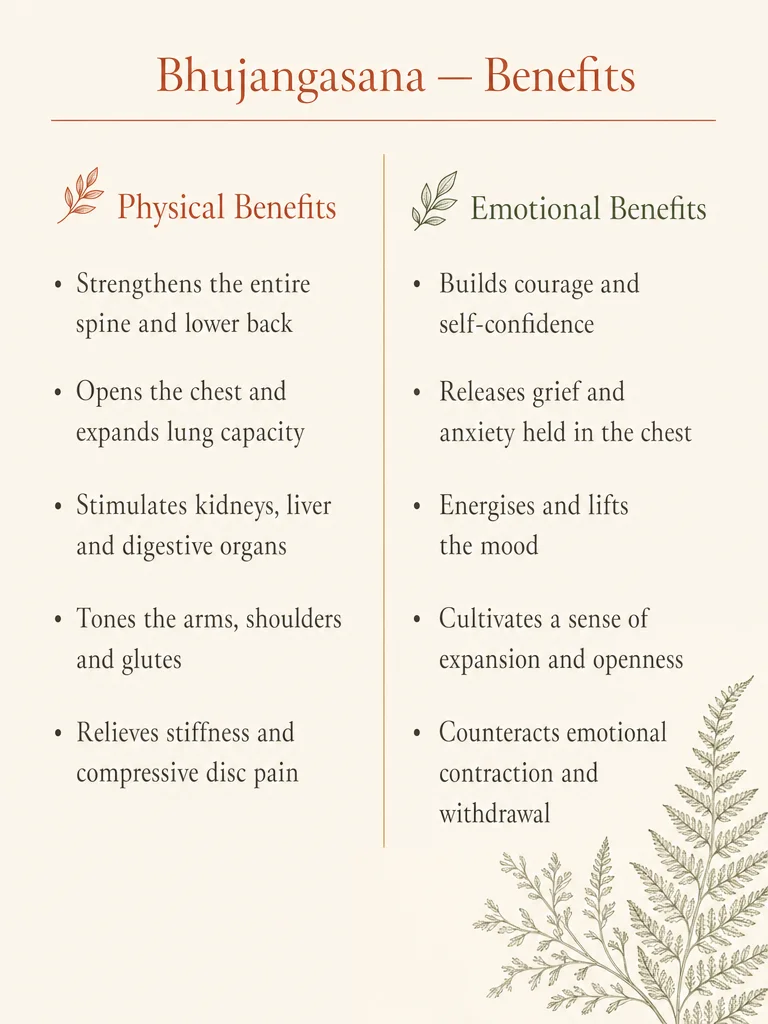
Physical benefits:
- Strengthens the entire spine, particularly the erector muscles along the lumbar and thoracic vertebrae
- Opens the chest and expands lung capacity — the anterior ribcage has room to lift
- Stimulates the kidneys, liver, adrenal glands, and digestive organs through gentle abdominal compression
- Tones the arms, shoulders, and glutes when engaged correctly
- Relieves chronic stiffness from disc compression and prolonged sitting
Emotional and mental benefits:
- The chest is where the body stores defensive posture — rounded shoulders, sunken sternum. Opening it physically signals safety to the nervous system
- Bhujangāsana builds courage: the pose literally makes the body occupy more space, which affects mood through the same feedback loop that makes people slump when discouraged
- It counteracts the physical shape of anxiety and withdrawal, and replaces it with a posture of readiness and openness
- Consistent practice tends to lift baseline energy — not the artificial spike of caffeine, but the steadier quality of a body that can breathe fully
How each age group approaches it
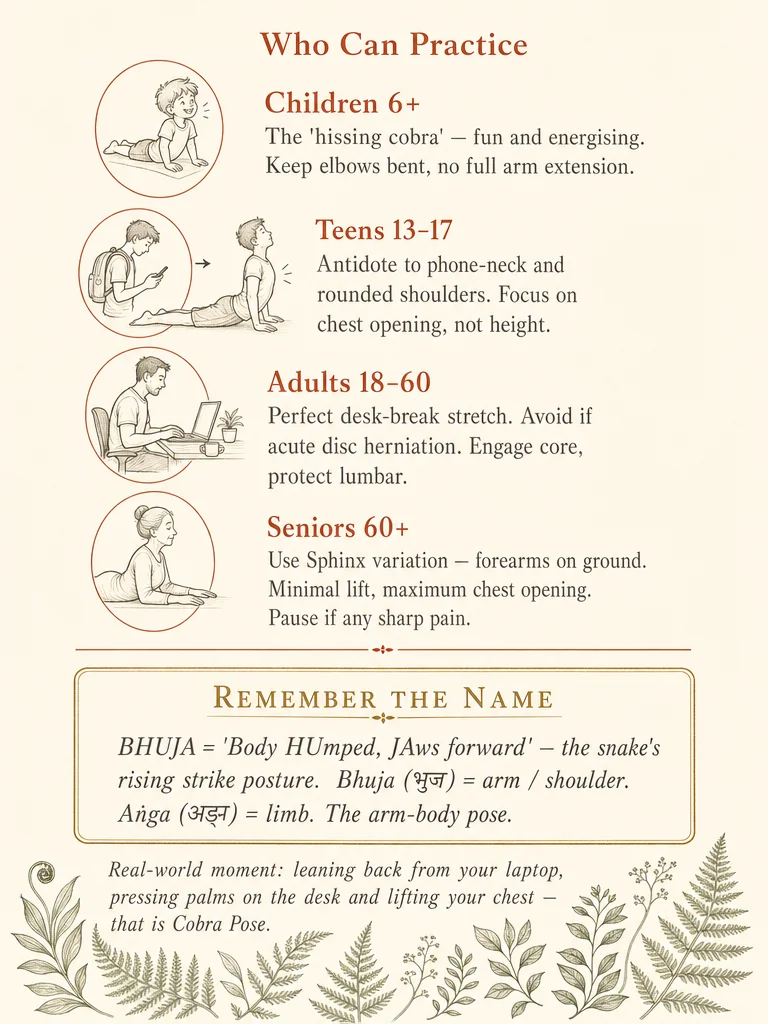
Children 6+ — teach it as "the hissing cobra." Let them play with the sound. Keep elbows bent; full arm extension is unnecessary and can strain young wrists. The playful version is still full-strength Bhujangāsana.
Teens 13–17 — this posture is especially valuable for adolescents whose posture has already begun rounding from hours of phone and laptop use. Frame it as the antidote to phone-neck: the goal is chest opening, not height. A three-inch lift with a genuinely open sternum beats a six-inch lift with a crunched neck.
Adults 18–60 — the classic desk-break stretch. Caution: avoid if there is acute disc herniation in the lumbar region. Engaging the core before lifting protects the lower back. The pose should feel like traction, not compression.
Seniors 60+ — use the Sphinx variation: forearms flat on the ground, elbows directly under the shoulders. The lift is minimal; the chest opening is still complete. Pause immediately at any sharp sensation in the neck or lower back.
The mnemonic
BHUJA = "Body HUmped, JAws forward" — the snake's rising strike posture.
Or etymologically: Bhuja (भुज) = arm/shoulder + Aṅga (अङ्ग) = limb/body. The arm-body pose. The posture where the arms create the body's new shape.
The real-world moment: Every time you lean back from a keyboard, press your palms into the desk, roll your shoulders back, and lift your chest — that is Bhujangāsana. The mat is optional. The movement is already in your repertoire.
The Sanskrit source for today
उत्तिष्ठत जाग्रत प्राप्य वरान् निबोधतUttiṣṭhata jāgrata prāpya varān nibodhata"Arise. Awake. Approach the wise and learn." — Kaṭha Upaniṣad 1.3.14
The verse is a call from a teacher to a student who has fallen asleep in the middle of the journey. It is also, in this posture, the instruction from the ground to the spine: rise from where you are, open forward, and pay attention. Bhujangāsana makes the verse physical.
Today's take-home practice
Next time you close a browser tab, finish a video call, or reach for your phone — pause first. Press both palms flat on whatever surface is in front of you. Roll your shoulders back and down. Lift your sternum toward the ceiling. Hold for three slow breaths.
No mat. No studio. No particular clothes.
That is Cobra Pose. You have already been doing it, without the name.
Sanskrit quote source: Kaṭha Upaniṣad, one of the principal Upanishads of the Krishna Yajurveda, traditionally attributed to the dialogue between the boy Naciketas and Yama, the god of death. Verse 1.3.14 is among its most quoted exhortations.
댓글