Geopolitics Daily Brief — May 28, 2026 (morning update)
Five breaking stories from 08:00 UTC: IRGC strikes a US airbase as the Hormuz ceasefire frays and Brent crude jumps nearly 4%; Israel declares southern Lebanon a combat zone and advances across the Zahrani; Russia's SVR accuses NATO of preparing large-scale eastern conflict as Ukraine's parliament votes on a €90 billion EU loan; three tankers drone-struck in the Black Sea off Turkey; and China sends a PLA university delegation rather than its defence minister to the Shangri-La Dialogue.

Geopolitics Daily Brief — May 28, 2026 (08:00 UTC update)
Morning update: five stories from the past five hours, as the US-Iran ceasefire frays and two maritime chokepoints come under pressure simultaneously.
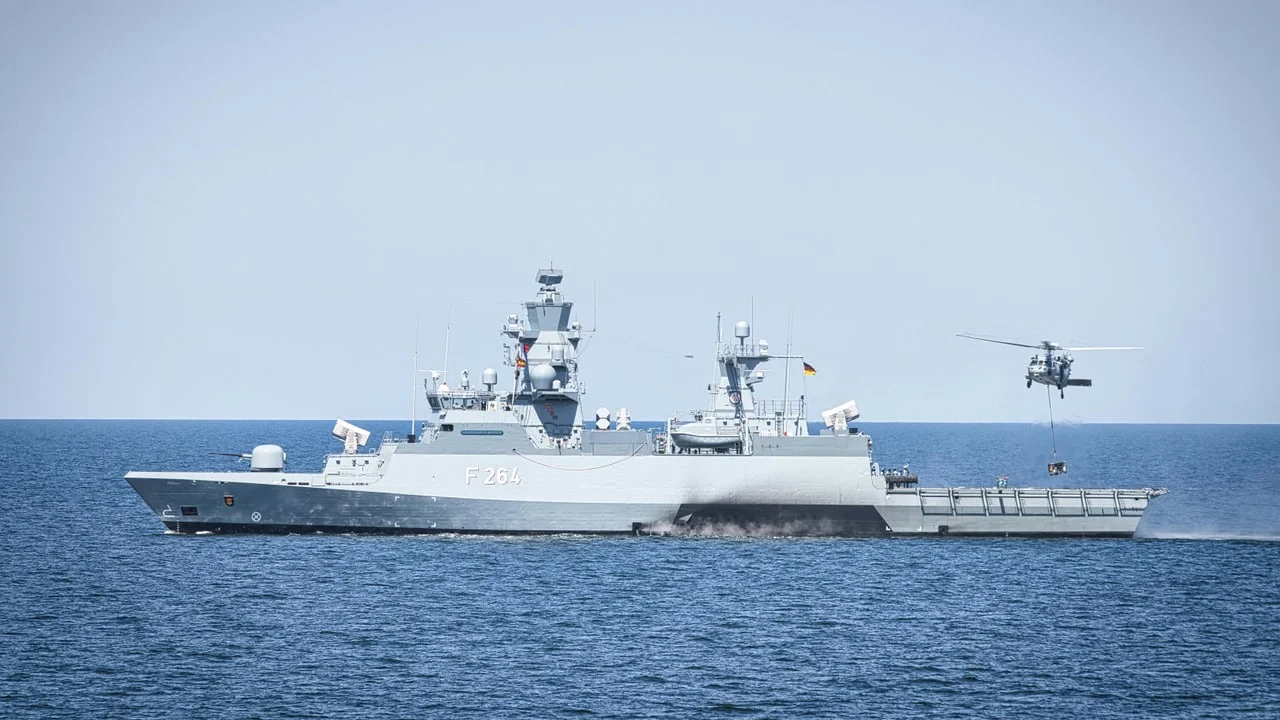
1. IRGC strikes US airbase after second American attack near Bandar Abbas
Summary. US Central Command carried out a second strike on Iran within 72 hours, targeting a military site near Bandar Abbas — the strategic port at the strait's narrowest point — and shooting down four Iranian attack drones it said posed a threat around the Strait of Hormuz. 1 Iran's Revolutionary Guards responded at 04:50 local time, saying they targeted a US airbase (location undisclosed), and warned that any further "aggression" would draw a "more decisive response." 2 Kuwait's military said it was intercepting "hostile missile and drone threats" without identifying the source. Trump dismissed a reported Hormuz deal as fabricated and said he would resume strikes to "finish the job" if talks produced no agreement satisfying Washington. 3
Market and supply-chain impact. Brent crude jumped 3.75% to $97.83 a barrel; US-traded crude rose 4% to $92.22. 4 Three tankers — including LNG carriers — had already disabled transponders and left the strait earlier this week. The strait carries roughly a fifth of global oil and LNG flows; Brent had briefly hit $120 after February's opening strikes before falling on ceasefire optimism. The latest escalation resets that de-escalation trade: energy-intensive industries and Asian importers dependent on Gulf crude face renewed freight-cost pressure, and tanker operators are reassessing route viability. US Treasury sanctions on Iran's "Persian Gulf Strait Authority" add a compliance layer: vessels paying fees to the Authority now risk secondary sanctions.
2. Israel declares southern Lebanon a "combat zone" as ground forces cross the Zahrani
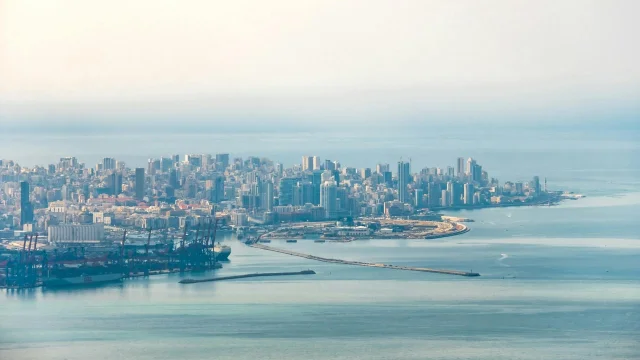
Summary. Israel's military ordered the evacuation of all residents south of the Zahrani River — covering roughly 14% of Lebanese territory and approximately 300 towns — and declared the zone a combat area. 5 Artillery entered Lebanese territory from northern Israel, and strikes were reported around Tyre, Lebanon's fourth-largest city; Israeli strikes killed at least 8 people there. 3 The IDF cited repeated Hezbollah violations of the temporary ceasefire in force since April 17, which has twice been extended. Hezbollah says it exchanged direct fire with Israeli troops in Zawtar al-Sharqiyeh, north of Israel's declared buffer zone. Residents of Tyre who had previously vowed to stay began evacuating.
Market and supply-chain impact. Lebanon's port of Tyre serves as a secondary unloading point for regional goods and agricultural exports. A sustained ground incursion risks disrupting those flows, though Beirut's main port infrastructure is not yet in the immediate conflict zone. The more material risk is Hezbollah's broader missile and drone capability: a sustained escalation could reprice risk premiums across Eastern Mediterranean shipping and prompt underwriters to expand war-risk exclusion zones. Israeli defence procurement demand — particularly for air-defence interceptors and precision munitions — will rise further, benefiting US and domestic contractors. Washington talks referenced in the AP headline were not specified; the timing of the strikes immediately before any such talks adds diplomatic weight.
3. Russia's SVR accuses NATO of preparing for "large-scale conflict in the east"
Summary. Sergei Naryshkin, director of Russia's SVR foreign intelligence service, accused NATO on Thursday of making "practical preparations" for a large-scale military confrontation in Eastern Europe, according to state news agency RIA. 6 He separately accused the EU of rapidly militarising and transforming into an anti-Russia alliance. The statement follows Ukraine's parliament beginning the ratification process for a €90 billion ($104 billion) EU loan — submitted by Zelensky after Hungary's new government lifted its veto — that would fund military and budget needs through 2026. 7 Under the deal, €8.35 billion disbursed in 2026 is contingent on IMF-linked tax reforms; an IMF review team arrived in Kyiv on May 27.
Market and supply-chain impact. The loan ratification, if passed, directly reduces Ukraine's sovereign default risk and supports the hryvnia, reducing volatility for European companies with Ukrainian exposure. For European defence procurement, Naryshkin's statement — whatever its rhetorical intent — reinforces parliamentary momentum in Germany, France, and Poland to sustain elevated defence spending. European steel and industrial manufacturers supplying NATO re-armament remain on an extended demand cycle. The broader geopolitical signal: Moscow views the EU's financial consolidation of Ukraine as a casus belli framing, which raises the probability of continued Russian missile and drone escalation through summer.
4. Three tankers drone-struck in the Black Sea off Turkey's northern coast
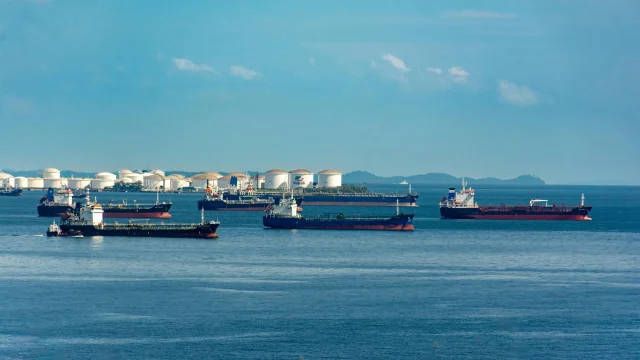
Summary. Shipping agency Tribeca reported Thursday that three vessels were hit by drones in the Black Sea, approximately 50 miles (80 km) north of Turkey's Turkeli region. 8 The vessels — tanker James II (Palau flag, unladen) and tankers Altura and Velora (both Sierra Leone flag, engaged in ship-to-ship transfer) — all had crew accounted for. Neither Russia nor Ukraine claimed responsibility. Both sides have targeted each other's shipping in the Black Sea since Russia's full-scale invasion.
Market and supply-chain impact. The Black Sea corridor carries Ukrainian grain, sunflower oil, and metals exports, along with Russian and Azerbaijani crude and refined products to Turkey and beyond. Three simultaneous strikes on unladen vessels transiting an area near Turkish territorial waters raises the risk calculus for commercial shippers operating the corridor. War-risk insurance premiums for Black Sea tonnage — already elevated since 2022 — will likely widen further. Grain traders sourcing Ukrainian supply will be watching whether the attacks near Turkish waters prompt Ankara to restrict or patrol access more tightly. The lack of attribution keeps diplomatic options open for both sides but complicates shipping companies' force-majeure analysis.
5. China sends PLA university delegation — not defence minister — to Shangri-La Dialogue
Summary. China's defence ministry announced Thursday that a PLA National Defence University delegation led by Meng Xiangqing will represent China at the Shangri-La Dialogue in Singapore (May 29–31). 9 This marks the second consecutive year that Defence Minister Dong Jun has skipped Asia's premier security forum. In 2025, Dong's absence followed his predecessor's mysterious disappearance; in 2026 it comes amid ongoing US-China military communication protocols remaining in flux after the Taiwan Strait tensions of early 2026. A senior academic-level delegation signals measured engagement rather than high-level military diplomacy.
Market and supply-chain impact. Beijing's choice of delegation level communicates strategic restraint at a moment when US Indo-Pacific Command is consolidating relationships with regional partners at the forum. For Taiwan Strait risk pricing, the absence of Dong Jun reduces the probability of a high-profile US-China ministerial exchange that might signal de-escalation. Semiconductor supply-chain planners tracking US-China military posture should note that the Shangri-La forum is a key venue for informal signalling; a lower-profile Chinese presence limits the bandwidth for confidence-building exchanges. TSMC and major chipmakers' operational continuity plans for Taiwan remain on an unchanged risk baseline heading into summer.
Sources: Reuters, BBC, AP. All stories reported within five hours of this brief's publication timestamp.
참고 출처
- 1Reuters — Iran's IRGC say they targeted US airbase after strike near Bandar Abbas
- 2BBC — US strikes Iran military site as Tehran says it has targeted American base
- 3AP — US military conducts another strike against Iran
- 4BBC — Oil prices jump after US launches new attacks on Iran
- 5BBC — Israel begins strikes on southern Lebanon after evacuation orders
- 6Reuters — Russia's foreign spy chief accuses NATO of preparing for 'large-scale conflict in the east'
- 7Reuters — Ukraine's parliament to vote on ratification of EU loan
- 8Reuters — Three tankers reportedly attacked by drones in Black Sea, shipping agency says
- 9Reuters — Chinese defence university delegation to attend Shangri-La Dialogue
이 콘텐츠를 둘러싼 관점이나 맥락을 계속 보강해 보세요.