AI Sector Daily Digest — May 30, 2026
Today's five: XCENA closes a $135M Series B to bring compute closer to memory; Groq lines up $650M from existing investors to push its inference cloud; an OpenAI model cracks the 80-year-old Erdős unit-distance conjecture; Microsoft opens Copilot Health in preview for M365 subscribers; and Trump withdraws a pending AI executive order over regulation concerns.

Five things from the past 24 hours: a memory-chip startup raises $135M; Groq lines up $650M to go all-in on inference; an OpenAI model cracks a geometry problem that stymied mathematicians for 80 years; Microsoft opens Copilot Health to subscribers; and Trump kills a pending AI executive order.
1. XCENA raises $135M on a bet that memory, not compute, is AI's real bottleneck
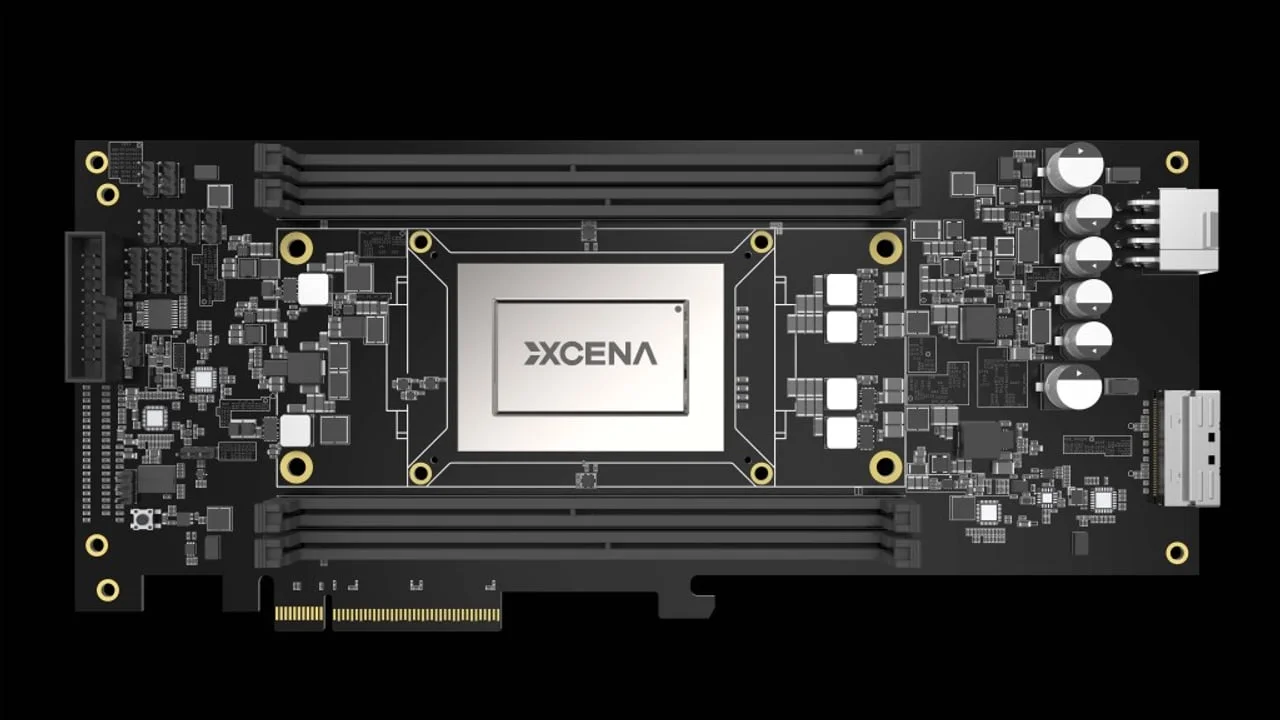
South Korean chip startup XCENA closed a $135M Series B at a $570M valuation — bringing its total raised to $185M — to build a chip that places compute directly beside DRAM, cutting the costly round-trips between CPU, GPU, and memory that happen on every single token an AI model generates.1
The company's MX1 chip connects to the CPU via CXL (Compute Express Link) and handles preprocessing, KV-cache management, and data caching inside the memory module itself, eliminating the compute workload that currently runs on CPUs. CEO Jin Kim, a Samsung and SK Hynix veteran, claims what used to require 10 servers could potentially run on one. Atinum and IMM Investment co-led the round, alongside Corstone Asia, SBI Investment, and Mirae Asset Capital. The MX1 is still a prototype; mass-production runs are scheduled off Samsung's foundry lines by end of 2026, with first revenue expected in 2027.
2. Groq raising $650M to go all-in on AI inference cloud
Groq is seeking $650M from existing investors to expand its inference cloud business, per sources cited by Axios.2 The round is effectively backstopped: investors Disruptive and Infinitium have agreed to fill it if others decline their pro-rata shares.
The raise comes roughly five months after Groq's "$20B not-an-acquisition" deal with Nvidia, in which Nvidia licensed Groq's hardware technology and some senior employees moved to the chip giant while existing Groq investors received a cash payout. The pivot now bets entirely on inference — the processing that happens after a prompt — rather than chip hardware sales. Interim CEO Adam Winter and CFO Matt Eng are leading the new direction. The company sees developer and enterprise demand for hosting inference-heavy apps as the larger long-term market.
3. An OpenAI reasoning model disproved a geometry conjecture that stumped humans since 1946
OpenAI disclosed that an internal reasoning model produced the first counterexample to the Erdős unit-distance problem — a conjecture in combinatorial geometry posed by Hungarian mathematician Paul Erdős in 1946, which asks how many pairs of points in a plane can be placed exactly one unit apart.3 Cambridge mathematician Timothy Gowers, one of several experts privately consulted to verify the result, said no previous AI-generated proof had come close to this standard.4
The model's approach involved constructing a higher-dimensional lattice with specific symmetries, then mapping it back to the plane — a path human researchers had largely not pursued, having spent more effort trying to prove Erdős right than challenging him. Within days of the OpenAI disclosure, US mathematician Will Sawin extended the result with an improved construction, and a Google DeepMind team used its own model to resolve nine other open Erdős problems. The WSJ print edition ran the story May 30 under the headline "A Math Problem Stumped Everyone For 80 Years. AI Just Cracked It."5
콘텐츠 카드를 불러오는 중…
4. Microsoft launches Copilot Health in preview for Microsoft 365 subscribers
Microsoft opened a preview of Copilot Health on May 29, giving Microsoft 365 subscribers access to an AI tool that can analyze data from connected medical records, wearables, and apps including Apple Health, as well as help find doctors.6 The product was first announced in March. Microsoft says it positions Copilot Health alongside health AI offerings from OpenAI and Anthropic. The preview is limited to M365 subscribers; no pricing for a standalone tier was disclosed.

5. Trump pulls a pending AI executive order over regulation concerns
On May 21, President Trump abruptly delayed signing a prepared executive order on AI and cybersecurity, telling reporters he "didn't like certain aspects of it" and didn't want the order to "get in the way" of the US's lead over China in AI.7 AI adviser David Sacks was also reported to be opposed, calling the order "unnecessary" and something "doomers wanted," according to sources familiar with the discussions.
The withdrawn order had included a provision encouraging voluntary federal review of advanced AI models ahead of public release, plus broader encouragement for AI adoption inside government systems. White House officials were reported by Politico to be revising the text or removing disputed clauses. Democrats characterized the delay as the administration yielding to pressure from large tech companies. No revised signing date has been announced.
이 콘텐츠를 둘러싼 관점이나 맥락을 계속 보강해 보세요.