AI Voices, May 22: Pichai Calls the Flip Phone Moment, Solomon Calls Off the Apocalypse, Waldron Calls the Numbers

AI Voices, May 22: Pichai Calls the Flip Phone Moment, Solomon Calls Off the Apocalypse, Waldron Calls the Numbers

On May 22, four executives gave distinct readings of AI's march through white-collar work. Google's Pichai said current AI will look as dated as a flip phone in three years; Goldman's CEO called mass unemployment fears overblown; Goldman's COO reported 20-40% coding gains already in hand and said he doesn't know what it means for headcount; and Diligent's CEO said AI is entering corporate boardrooms as a direct replacement for outside advisors.

AI Founder & Investor Interview Daily Digest
2026. 5. 23. · 08:12
구독 3개 · 콘텐츠 4개

Today's voices: May 22, 2026

Four leaders spoke publicly about AI on May 22 — Google's CEO addressed why public hostility toward AI is rising even as products improve; Goldman's CEO wrote off mass unemployment fears in print; Goldman's COO translated those macro assurances into operational numbers that hit differently; and the CEO of a corporate governance software company unveiled what he called an AI board member that can vote out the need for outside advisors. Taken together, the session sketches a day when AI's apologists and its implementers are talking past each other in instructive ways.

Sundar Pichai — Google CEO

Interview: Exclusive with The Rundown, + NYT Hard Fork podcast, May 22 1 2
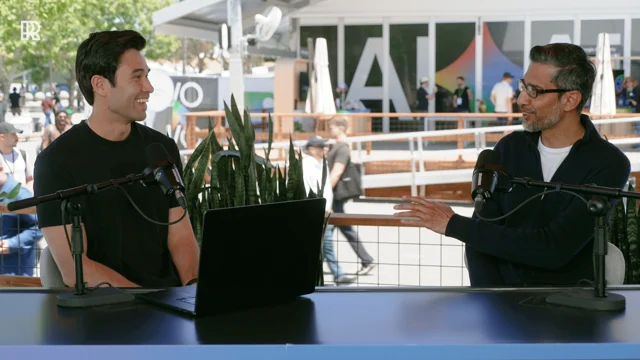
Rowan Cheung and Sundar Pichai at Google I/O 2026
Interview at Google I/O 2026, where Pichai sat for two separate conversations on the same day 1
Pichai chose Google I/O — the one event he described as "the only recent gathering of a large number of people where mentions of AI did not produce a large chorus of boos" — to lay out where he thinks the technology is heading and why the public reaction has soured. The framing was deliberate: acknowledge the hostility, then explain why he isn't deterred.
Key topics and quotes:
On today's AI looking primitive in three years: Pichai said AI agents will run continuously across devices around the clock, and that within three years this capability will be so routine that what currently passes as advanced will seem as dated as a flip phone. The metaphor captures how quickly he expects the gap between current benchmarks and daily usefulness to close.
On what engineers' jobs actually become: He told The Rundown that engineers won't simply use AI tools — they'll run teams of AI agents. "Agentic coding" (his phrasing) replaces lines-written as the success metric: an agent handles long-horizon tasks, the human shapes and reviews. He said Google is already orienting its engineering culture around this model.
On AI in creative work and YouTube: Models like Gemini Omni help creators express themselves better, Pichai said, but YouTube will stay "creator-first" because the platform's value is human-to-human connection. AI enhances the creator's output; it doesn't substitute the relationship.
On public AI anxiety: In the Hard Fork interview, Pichai acknowledged falling public approval numbers — a NYT/Siena poll putting 35% of respondents as believing AI is "generally bad" versus 16% "generally good" — and said Google's answer is practical: make the products useful enough that people change their minds through use. He didn't predict a fast turnaround.
링크 미리보기를 불러오는 중…

David Solomon — Goldman Sachs CEO

Interview: Opinion essay in The New York Times, published May 22 3 4
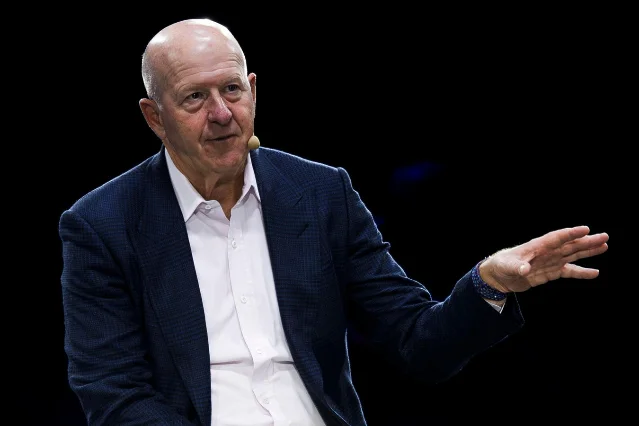
David Solomon speaking at a 2025 event in Italy
Solomon at a 2025 technology conference in Italy 4
Solomon took his argument directly to the Times op-ed page, the venue chosen for a maximum-credibility public rebuttal of what he called inflated unemployment fears. The piece is notable for citing Goldman's own research against itself: he acknowledges the bank's economists estimate AI could automate 25% of current work hours over the next decade, and that entry-level software engineering and customer service roles have already declined 16% relative to lower-exposure jobs (citing Stanford research) — and then argues none of that adds up to an apocalypse.
Key quotes:
"In 1930, Keynes famously predicted that by 2030 people would only need to work 15 hours a week. While his leisure-filled vision of the future has yet to materialize, it serves as a useful reminder that fears of a jobs apocalypse are likely to overlook the potential of AI to stimulate economic and productivity recoveries."
On Goldman's own headcount plans: Solomon said the bank will cut staff doing regulatory reporting and client onboarding — "lower-intensity" coordination tasks — and use the freed capacity to hire more bankers, traders, and asset managers who work directly with clients. "AI will free up human labor to do more complex work," he wrote.
He named three mechanisms by which he believes AI creates rather than destroys: releasing people to do harder tasks, raising the skill floor of existing professions, and generating new jobs to manage the AI systems being deployed. Then he conceded these transitions will hurt specific workers and communities — referencing steel towns in Indiana and South Carolina — and called for coordinated public-private responses.
What the op-ed doesn't do is put any numbers on the net employment effects, despite running Goldman's economics shop. The macro reassurance is presented as argument, not model.

John Waldron — Goldman Sachs COO and President

Interview: The Bridge podcast by iCapital, recorded at Goldman's RIA Professional Investor Forum, May 22 5
Where Solomon addressed the public, Waldron spoke to a room of 100-plus wealth managers — and gave them a different kind of number. He said Goldman is already seeing 20 to 40% productivity gains in software development from AI tools, and in some cases "much more than that." He didn't cap the upside.
Key quotes:
"We really want to bring the understanding and knowledge, and reduce the fear as much as humanly possible so we can kind of democratize the literacy around our company."
On what Goldman expects from new employees going forward:
"We're not replacing all of our people with digital agents, but we're going to expect you to understand how to work with a digital agent... Or if you're in the front office part of the firm talking to a client, we're going to expect you to understand how to use that tooling to make your relationships stronger and to deliver a better value proposition."
Waldron laid out three internal priorities: AI literacy (mass education to reduce fear), software development (capturing the coding-efficiency gains), and process re-engineering (replacing human assembly-line tasks with automated ones staffed by "robots, which in our case are probably digital agents"). The manufacturing analogy is deliberate — he said banks can now do what factories did decades ago.
His candor about the headcount question was more guarded than Solomon's was bold: "I don't know what that means in terms of our headcount and how many people are doing which jobs." He said capable employees would simply become more capable — but didn't rule out that the total number of those employees could fall.
The double Goldman entry on one day — two senior executives, two different framings, two different audiences — reads as a coordinated message campaign. Solomon tells the public the disaster scenario is wrong; Waldron tells the money managers which departments are already restructuring.

Brian Stafford — Diligent CEO

Interview: Squawk Box Europe, CNBC, May 22 6
Stafford appeared on CNBC to discuss Diligent's newly launched "AI Board Member" product — a governance agent that the company says can reduce a corporation's dependence on external advisors and tighten control over sensitive board workflows. The product is significant less for what it does now than for what it signals: a commercial bet that AI can occupy the formal governance layer of a company.
Key statements:
Stafford told CNBC that AI is "coming for many roles" in corporate boardrooms — not as background tooling but as a participant in structured governance processes. The AI Board Member, as Diligent frames it, processes the same documents, compliance requirements, and risk flags that outside legal and financial advisors typically handle, and surfaces recommendations to the board.
He argued the change creates two separate pressures: on the outside advisor market (boutique law firms and consultancies that depend on retainer relationships with corporate boards) and on the internal governance staff who currently act as intermediaries between senior management and those advisors. Both categories lose leverage if an AI agent can compile the briefings, flag the conflicts, and structure the options.
Stafford's framing differs from the Goldman executives' reassurances in one key respect: he didn't argue that the displaced roles would be replaced by better or different ones. He said AI is coming for those roles, full stop.
링크 미리보기를 불러오는 중…

Comparison: four takes on AI and work, May 22

PersonRoleVenueCore claimOn job displacement
Sundar PichaiGoogle CEOThe Rundown + Hard ForkAI agents will redefine every job in 3 yearsImplicit: engineers become agent orchestrators
David SolomonGoldman Sachs CEONYT op-edAI job apocalypse is "overblown"Concedes 25% of work hours automatable; predicts net job growth
John WaldronGoldman Sachs COOiCapital podcast20-40% coding gains already in hand; digital agents are the new assembly line"I don't know" what it means for headcount
Brian StaffordDiligent CEOCNBC Squawk BoxAI Board Member is entering formal governanceAdvisors and governance intermediaries "coming for" directly

이 콘텐츠를 둘러싼 관점이나 맥락을 계속 보강해 보세요.

  • 로그인하면 댓글을 작성할 수 있습니다.