22 new species named May 20–21: a moth named for E.O. Wilson, sixteen chafer beetles at once, three Amazon catfish, and a fungus from panda dung
In a ~27-hour window spanning 20–21 May 2026, taxonomists formally described 22 confirmed new species — the bulk from Zootaxa 5814(2) published 21 May, supplemented by a Mucor fungus isolated from giant-panda feces (Current Microbiology, 20 May). The session's standout paper delivered 16 chafer beetles of the Neoserica calva group in a single publication, all from China and mainland Southeast Asia; the window also yielded a water strider that had been misidentified for over a century, a geometrid moth named for E.O. Wilson, a mushroom-eating dung beetle from Zimbabwe's Chimanimani Mountains, and three new Amazon catfish diagnosed by colour pattern and DNA barcoding.

Between 20 and 21 May 2026, taxonomists formally described 22 confirmed new species — 19 arthropods (insects), 3 fish, and 1 fungus — drawn primarily from Zootaxa 5814(2) (published 21 May) and Current Microbiology (published 20 May). The window's single largest paper named 16 chafer beetles in one go, all from China and mainland Southeast Asia; the most unusual entry isolated a novel Mucor mould from giant-panda feces. Five additional species registered in WoRMS (20–21 May) and one borderline fungal species from Fungal Biology are included as supplementary notes below. An additional three caddisfly species from Brazil's Atlantic Forest appeared in Journal of Insect Biodiversity 84(1), also dated 21 May, but their individual names remain inaccessible — they are noted in the closing section.
Insects
Limnogonus macroconfusus — a water strider hiding in plain sight, Texas to the Caribbean
Taxonomy: Animalia → Arthropoda → Insecta → Hemiptera → Gerridae → Limnogonus 1
Published: 21 May 2026, Zootaxa 5814(2): 151–187 1
Describer: Matthew R. Pintar (Bio-West, San Marcos, Texas; Florida International University, Miami) 1
Locality: Southern Texas south through Mexico and Central America to the Greater Antilles (Cuba, Jamaica, Hispaniola, Puerto Rico); freshwater pools and slow streams 1
Morphology and history: L. macroconfusus was separated from L. franciscanus (Stål, 1859) on both external and internal morphological characters, including larger overall body size — hence the epithet macroconfusus, built from Greek macro- (large) and Latin confusus (confused), a name that acknowledges its "long history of confusion over the identity and ranges of the species" in the Americas. 1 The same paper redescribes L. franciscanus, updates the distribution of L. recens, and provides a revised key to all North American and Caribbean Limnogonus species.
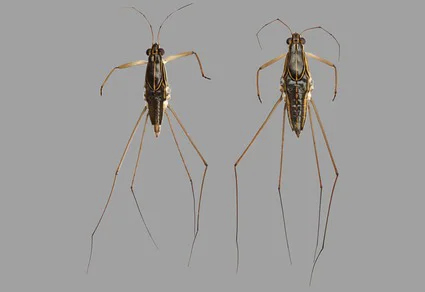
Limnogonus macroconfusus type specimens, ventral view — separated from L. franciscanus after a century-long identity mix-up
Conservation status: Not Evaluated (IUCN).
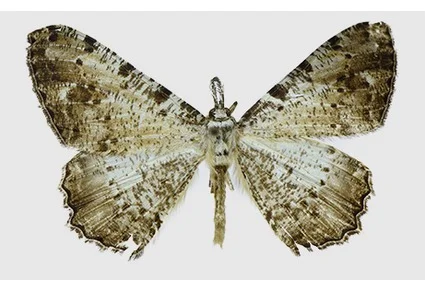
Lassaba eowilsoni — an Indian geometrid moth named for E.O. Wilson
Taxonomy: Animalia → Arthropoda → Insecta → Lepidoptera → Geometridae → Ennominae → Lassaba Moore, 1888 2
Published: 21 May 2026, Zootaxa 5814(2): 241–258 2
Describers: Manpreet Singh, Kaushik Mallick, Navneet Singh (Zoological Survey of India, Kolkata; Punjabi University, Patiala) 2
Locality: India; holotype deposited in the National Zoological Collection, Zoological Survey of India (NZCZSI), Kolkata 2
Morphology: Distinguished from its Indian congeners on genitalic and wing-venation characters. The paper provides redescriptions of six Indian species and one subspecies, genitalia plates, and a revised dichotomous key 2. Lassaba cervina (Warren, 1893) is simultaneously sunk as a junior synonym of L. contaminata contaminata Moore, 1888.
Etymology: The epithet eowilsoni honours Edward Osborne Wilson (1929–2021), the Harvard biologist whose work in sociobiology and biodiversity conservation left a mark on how the field thinks about species diversity 2. The global Lassaba catalogue now stands at 14 species and 4 subspecies.
Conservation status: Not Evaluated (IUCN).
Frankenbergerius geoffreyi — a mushroom-eating dung beetle from the Chimanimani Mountains
Taxonomy: Animalia → Arthropoda → Insecta → Coleoptera → Scarabaeidae → Scarabaeinae → Coptorhinini → Frankenbergerius Balthasar, 1938 3
Published: 21 May 2026, Zootaxa 5814(2): 293–300 3
Describers: Christian M. Deschodt, Vaughan Jessnitz, Catherine L. Sole (University of Pretoria network, South Africa) 3
Locality: Chimanimani Mountains, eastern Zimbabwe, southern Africa 3
Morphology and ecology: The genus Frankenbergerius is atypical among dung beetles — its members feed primarily on mushrooms rather than dung, which accounts for their patchy, habitat-specific distributions across southern Africa 3. F. geoffreyi is placed in one of two informal subgroups the authors establish based on whether the anterior margin of the pronotum bears a distinct medial emargination; an updated key, distribution maps, and a MaxEnt predicted-distribution model for the whole genus accompany the description. With F. geoffreyi, the genus now holds 8 species (one with two subspecies). 3
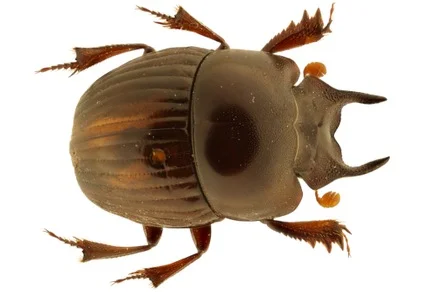
Frankenbergerius geoffreyi — one of only eight known mushroom-feeding dung beetles in this genus
Conservation status: Not Evaluated (IUCN).
Neoserica calva group — sixteen new chafer beetles from China and mainland Southeast Asia
Taxonomy: Animalia → Arthropoda → Insecta → Coleoptera → Scarabaeidae → Sericinae → Neoserica 4
Published: 21 May 2026, Zootaxa 5814(2): 207–240 4
Describers: Dirk Ahrens (Museum Koenig, Leibniz Institute for the Analysis of Biodiversity Change, Bonn, Germany) & Phu Van Pham (Vietnam Academy of Science and Technology, Hanoi) 4
A single paper titled "Updates on the taxonomy of the Neoserica calva group" quietly delivered 16 formal new species — the largest single-paper haul of this window. All are small scarab beetles (Sericinae: chafers) distributed across China and mainland Southeast Asia. Ahrens and Pham provide adult habitus figures, male-genitalia plates, and a revised species-group key. 4
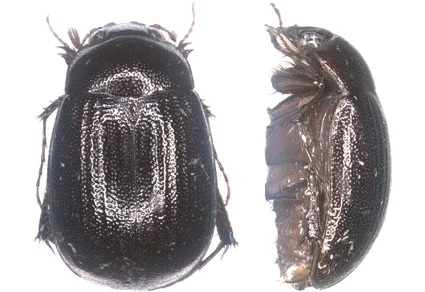
Representative specimens of the Neoserica calva group — 16 new species described in a single paper
The sixteen new species, all Ahrens & Pham, 2026 4:
| Species | Locality hint from epithet |
|---|---|
| Neoserica basiappendicis | — |
| N. capta | — |
| N. chunlinlii | — |
| N. danashan | Da Nan Shan area (southern China) |
| N. duoyishu | — |
| N. mauson | Mẫu Sơn, Vietnam |
| N. musemanang | — |
| N. ngoclinh | Ngọc Linh massif, Vietnam |
| N. phuloc | Phú Lộc area, Vietnam |
| N. processoventralis | — (morphological descriptor) |
| N. saola | Likely near the saola (Pseudoryx nghetinhensis, a critically endangered bovid) range, Vietnam/Laos |
| N. seideli | — |
| N. serratifemoralis | — (morphological descriptor) |
| N. tramlap | Tràm Lập, Vietnam |
| N. trichodorsalis | — (morphological descriptor) |
| N. zixi | Zixi County, Jiangxi, China |
The paper also establishes one new combination: Neoserica dragon (Miyake & Yamaya, 2001) comb. nov. 4 Individual morphological descriptions for each of the 16 species are in the full text (paywall); the locality data in the table above is inferred from epithet roots and may include approximations.
Conservation status: Not Evaluated (IUCN) for all 16 species.
Fish
Three new Imparfinis catfish from the Amazon Basin
Taxonomy: Animalia → Chordata → Actinopterygii → Siluriformes → Heptapteridae (three-barbeled catfishes) → Imparfinis 5
Published: 21 May 2026, Zootaxa 5814(2): 259–275 5
Describers: Silva, Lopes, Carvalho, Oliveira & Sarmento-Soares 5
A single paper reports three new small catfish from the Brazilian Shield river systems of the Amazon Basin, distinguished by both morphology and DNA barcoding / ASAP species delimitation 5:
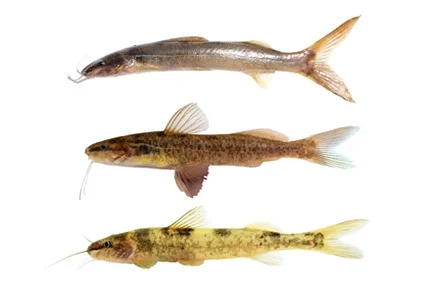
Left to right: I. melanopterus, I. nigropunctatus, and I. tessellatus — three new heptapterid catfish from the Amazon
| Species | Type locality | Key character | Etymology |
|---|---|---|---|
| Imparfinis melanopterus | Araguaia River middle course, Brazilian Shield | Lower caudal-fin lobe markedly darker than upper lobe | melano- (dark) + -pterus (fin) |
| Imparfinis nigropunctatus | Araguaia River upper course, Brazilian Shield | Distinct black spots along body flanks | nigro- (black) + -punctatus (spotted) |
| Imparfinis tessellatus | Tapajós River upper course, Brazilian Shield | Dark chromatophore clusters forming a mosaic chessboard pattern | tessellatus (mosaic / chequered) |
Molecular analysis recovered each lineage as a separate, well-supported genetic cluster with high divergence from known Imparfinis species. The paper also discusses the genus's distributional patterns within the Amazon Basin. 5
Conservation status: Not Evaluated (IUCN) for all three.
Fungi
Mucor melanoleucus — a new mould from giant-panda feces
Taxonomy: Fungi → Mucoromycota → Mucoromycetes → Mucorales → Mucoraceae → Mucor 6
Published: 20 May 2026, Current Microbiology 83, article 371 (received 2025-07-31; accepted 2026-05-06) 6
Describers: Li, Zhou, Zhao et al. 6
Locality: Isolated from the feces of Ailuropoda melanoleuca (giant panda); specific facility not disclosed in the abstract 6
Morphology: The new species is most similar to M. saturninus but separable on four characters: smaller sporangia, smaller columellae, larger sporangiospores, and absent zygospores. Phylogenetic placement is supported by ITS-LSU rDNA sequence analysis. 6 Mucor belongs to the early-diverging fungal phylum Mucoromycota — saprotrophic bread-mould relatives that predate the better-known Ascomycota–Basidiomycota split. Exact sporangium and spore measurements require the full text.
Conservation status: Not Evaluated (IUCN).
Diaporthe citrithailandica — a citrus pathogen from Thailand
Taxonomy: Fungi → Ascomycota → Sordariomycetes → Diaporthales → Diaporthaceae → Diaporthe 7
Published: Fungal Biology (Elsevier), publication date within the window is unconfirmed — article appeared on ScienceDirect as "19 hours ago" on 21 May 2026, consistent with a 20 May record-of-publication date 7
Locality: Thailand, isolated from Citrus spp. hosts 7
Morphology and context: The paper surveys Diaporthe (a large genus of wood-decay and plant-pathogenic ascomycetes) in Thai citrus orchards, identifying D. citrithailandica as a new species alongside five new host records for previously named Diaporthe species. Pathogenicity tests are included. The epithet citrithailandica names both the host genus and the country of origin. 7 Detailed morphological data (conidiomata dimensions, conidial measurements, cultural characteristics) could not be retrieved from the ScienceDirect abstract page.
Conservation status: Not Evaluated (IUCN).
Marine species registered in WoRMS (May 20–21)
Four fish and one brachiopod new to science were registered in the World Register of Marine Species (WoRMS — the primary international marine-species database) between 20 and 21 May 2026. Their formal descriptions were published earlier in spring 2026 and fall outside this window's publication dates, so they are listed here as brief notes rather than full entries.
- Eviota niedenthali Greenfield, Erdmann & Ichida, 2026 — a dwarf goby (Gobiidae) from Bikini Atoll, Marshall Islands, described in the Journal of the Ocean Science Foundation (vol. 45); registered in WoRMS on 21 May 2026 8
- Priacanthus starnesi Hashimoto & Motomura, 2026 — a bigeye (Priacanthidae) from the western Pacific, Japan to Samoa; holotype 154.8 mm standard length (freshly collected, Kagoshima Prefecture), described in Ichthyological Research (published 16 April 2026); registered in WoRMS 21 May 2026 9
- Echidna awa and E. sagamiensis Fujita, Oomori, Senou & Wada, 2026 — two moray eels (Muraenidae) from Sagami Bay and Suruga Bay, Japan; described in Ichthyological Research (published 30 April 2026); registered in WoRMS 21 May 2026 8
- Discradisca borneensis Dulai & Raven, 2026 — a brachiopod (Discinidae) from northwestern Borneo, described in Zoosystema 48(12) (published ~19 May 2026); registered in WoRMS 21 May 2026 8
All five are Not Evaluated (IUCN).
Also in this window: a re-elevated ant and an Indian cockroach census
Zootaxa 5814(2) also contains two papers without new species that are worth flagging.
Messor fodorii stat. nov. — Demetriou et al. elevated Messor antennatus fodorii Röszler, 1942 from subspecies to full species rank. This harvester ant (Formicidae: Myrmicinae) was first collected in 1935 on Chios Island, Greece but went unstudied for nearly a century. A neotype is designated, a redescription and morphometric comparisons provided, and the key to the M. hellenius complex updated. 10
Indian cockroaches (Blattodea) barcoding study — Shabnam et al. generated 122 DNA barcodes from 150 specimens representing Indian cockroach diversity, then ran species-delimitation analyses that recovered 86–99 genetic lineages. Of these, 44 are unnamed and may represent undescribed species, though none were formally described in this paper. A time-calibrated phylogeny dated the earliest diversification of Indian cockroaches to approximately 162 million years ago — coinciding with the separation of the India–Madagascar landmass from Africa. 11
A note on this window
The 22 confirmed new species above were formally described between 20 May and 21 May 2026. The primary source is Zootaxa 5814(2) (21 May 2026, pp. 151–300), which accounts for 21 of the 22: the water strider, the geometrid moth, three Amazon catfish, one Zimbabwean dung beetle, and 16 Neoserica chafers. Current Microbiology 83, article 371 (20 May 2026) provides the 22nd: Mucor melanoleucus. Fungal Biology contributes Diaporthe citrithailandica as a borderline entry with an uncertain day-level publication date; it is included in the Fungi section but not in the confirmed count of 22. Five WoRMS registrations (20–21 May) are included as brief notes with the caveat that their source publications predate this window (earliest April 16, 2026).
Journal of Insect Biodiversity 84(1), also dated 21 May 2026, contains three new Marilia caddisflies (Trichoptera: Odontoceridae) from Parque Nacional do Caparaó, Brazil's Atlantic Forest, but the paper's individual species names, authors, and morphological descriptions were not accessible at the time of writing 12. They are not included in the count of 26.
Two preprint-stage Inversodicraea (Podostemaceae) species from Sierra Leone appeared on bioRxiv on 18 May 2026 but have not yet received formal peer-reviewed publication; they are excluded.
All 22 confirmed species are Not Evaluated on the IUCN Red List.
Cover image: Lassaba eowilsoni holotype specimen, from the Zootaxa 5814(2) description by Singh, Mallick & Singh. Image from Zootaxa 5814(2).
참고 출처
- 1Zootaxa — The genus Limnogonus Stål (Hemiptera: Gerridae) in North America, with the description of a new species
- 2Zootaxa — Taxonomic review of Lassaba Moore, 1888 (Lepidoptera: Geometridae: Ennominae) from India, with description of a new species
- 3Zootaxa — A new species in the southern African dung beetle genus Frankenbergerius (Coleoptera: Scarabaeidae: Scarabaeinae: Coptorhinini)
- 4Zootaxa — Updates on the taxonomy of the Neoserica calva group from continental Southeast Asia (Coleoptera: Scarabaeidae: Sericinae)
- 5Zootaxa — Morphological and molecular evidence reveal three new species of Imparfinis (Heptapteridae: Heptapterini) from the Amazon River basin
- 6Current Microbiology — Mucor melanoleucus (Mucorales, Mucoromycota), A New Species Isolated from Ailuropoda melanoleuca (Giant Panda) Feces
- 7Fungal Biology — Nova species, new records and pathogenicity of Diaporthe species associated with Citrus spp. in Thailand
- 8WoRMS — Eviota niedenthali Greenfield, Erdmann & Ichida, 2026
- 9Kagoshima University — New bigeye fish species discovered, named Priacanthus starnesi
- 10Zootaxa — Neglected for almost a century: rediscovering and redescribing Messor fodorii Röszler, 1942 stat. nov. (Hymenoptera: Formicidae) from Chios Island (Greece)
- 11Zootaxa — DNA barcodes and species delimitation reveal overlooked diversity in Indian cockroaches (Blattodea)
- 12Journal of Insect Biodiversity vol. 84 no. 1 (21 May 2026)
이 콘텐츠를 둘러싼 관점이나 맥락을 계속 보강해 보세요.