Hantavirus Global Situational Briefing — June 5, 2026
Spain's first MV Hondius patient is discharged — the cluster's initial confirmed recovery — as clinicians in Bariloche publish early evidence that tocilizumab may reduce mortality in severe cases. The cluster holds at 13 cases and 3 deaths; France's ECMO patient enters a ninth day without a public update. Argentina records two new domestic cases, lifting the 2026 total to 47.

Spain's first MV Hondius patient walked out of hospital on June 4 — the cluster's initial confirmed recovery — while clinicians in Argentina published preliminary evidence that tocilizumab, a rheumatoid arthritis drug, may help the sickest hantavirus patients survive. The MV Hondius cluster itself holds at 13 cases and 3 deaths for a tenth consecutive day without a new infection. France's ECMO patient at Bichat is now into a ninth day without any public clinical update.
Spain: first discharge and a new protocol
The 70-year-old Spanish man who was Case 1 in the MV Hondius cluster was discharged from Hospital Central de la Defensa Gómez Ulla in Madrid on June 4, after remaining symptom-free for three consecutive days and returning two consecutive negative PCR results.1 He had been admitted on May 11, one day after evacuation from the ship; he will remain under medical follow-up for six months.
Spain's Health Ministry published formal discharge criteria the same day.2 The requirements are: at least three consecutive days free of hantavirus-related symptoms, plus two negative PCR tests on urine and oropharyngeal exudate separated by at least 48 hours (or a cycle threshold above 38 — meaning viral load is essentially undetectable). Blood PCR alone is not the trigger for discharge, because emerging science on Andes virus shows that viral RNA can persist in blood for some time after clinical recovery.
Patients discharged with a positive blood PCR still face restrictions: monthly blood draws until negative, a recommendation to avoid unprotected sexual contact for at least four months after illness onset, and a ban on blood donation or activities that could cause trauma until blood PCR clears. All discharged patients receive six-month clinical follow-up from a designated hospital in their home region.2
Case 2 — the asymptomatic Spanish national confirmed May 25 — is progressing toward the same discharge threshold. The 12 remaining Spanish evacuees at Gómez Ulla have continued to test negative; those who have been symptom-free for 28 days from May 10 are eligible to complete the final 14 days at home under daily monitoring, a milestone that falls around June 7.1
Tocilizumab: a first signal from Bariloche
콘텐츠 카드를 불러오는 중…
Researchers at Hospital Zonal Dr. Ramón Carrillo in San Carlos de Bariloche, Argentina published a compassionate-use case series in The Lancet Infectious Diseases on June 3, describing the first patients to receive tocilizumab — an IL-6 receptor blocker used for rheumatoid arthritis and severe COVID-19 — for hantavirus pulmonary syndrome.3
The study covered 10 patients treated at the hospital between June 2024 and May 2026.4 Five patients received tocilizumab plus standard supportive care; four of the five survived to ICU discharge. Five additional eligible patients received only standard care — two deteriorated too rapidly for treatment and the hospital lacked supply for the others — and all five died. The research team, led by Fernando Tortosa, PhD, of the National University of Río Negro, cautioned that the control group was older and in worse condition than the treated group, so the result does not establish efficacy. Still, the signal is striking enough to justify a formal controlled trial, the authors said.4
The mechanism: hantavirus pulmonary syndrome kills largely by triggering a damaging inflammatory cascade that floods the lungs with fluid. Tocilizumab blocks interleukin-6, a cytokine that drives this process. The drug has been on global formularies for years and is widely available — unlike favipiravir, which required emergency import, PREP Act authorization, and an EU–Japan procurement deal to reach the six European patients in the current cluster.
"I hope this situation will help us continue our research and strengthen the collaboration between healthcare workers, the community, and the necessary resources," Tortosa told the Associated Press.4
MV Hondius cluster: Day 10 clear
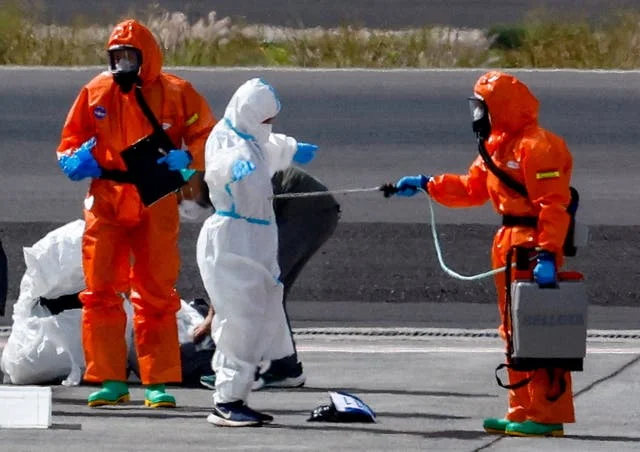
The cluster count remains at 13 cases (11 confirmed, 2 probable) and 3 deaths, unchanged since May 26. No new cases have been confirmed in ten consecutive days. ECDC's surveillance page last updated May 26 and carries the same figures.6 WHO DON 604 (May 28) estimated the effective reproduction number at Rt ≈ 0.7, indicating declining transmission.
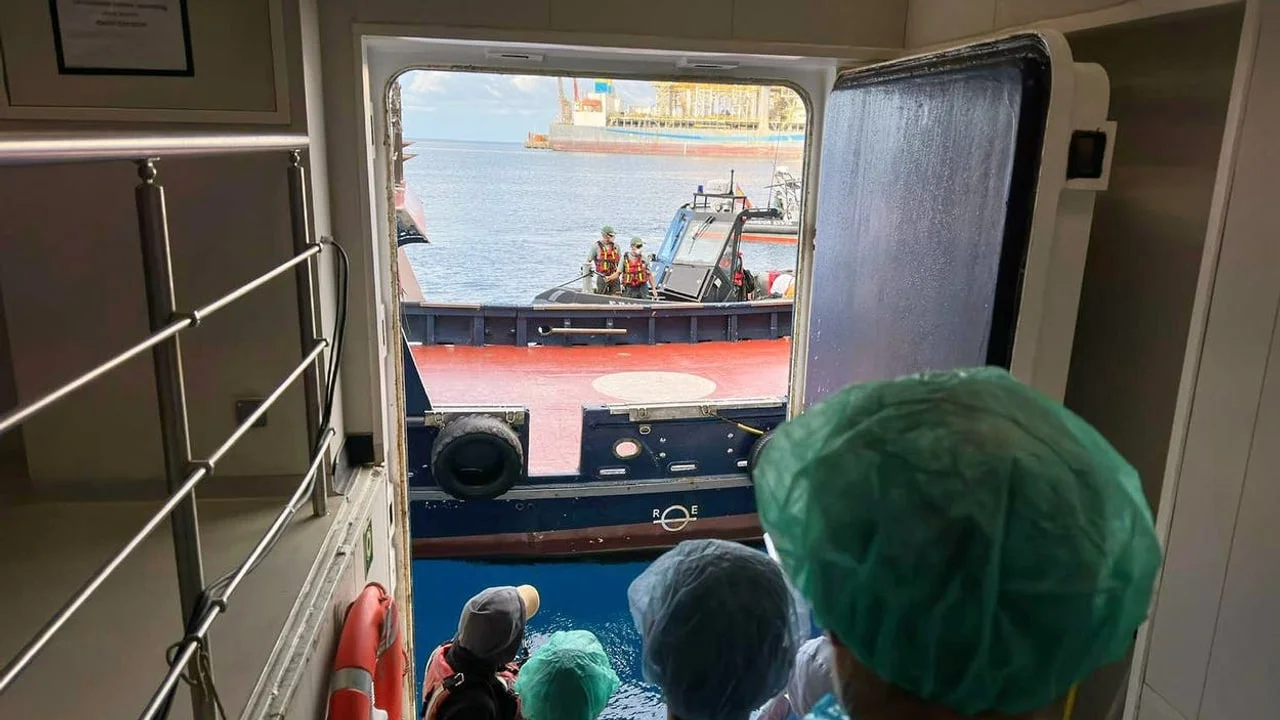
MV Hondius remains moored at Rotterdam's Waalhaven 7; the vessel is expected to transit to Longyearbyen, Svalbard on June 6 ahead of its scheduled June 13 Arctic restart following GGD Rotterdam's clearance on May 30.
The 25 crew and 2 RIVM medical staff in Dutch quarantine remain PCR-negative. The 38 Filipino crew (OFWs) are also PCR-negative; their 42-day precautionary quarantine continues.
France: nine days without an update
The 65-year-old French woman on ECMO at Hôpital Bichat AP-HP in Paris is now approximately Day 28–29 on the machine. The last confirmed clinical update — "no further deterioration" — came from French health authorities on May 28. Since then, nine days have passed without any public statement from the Ministry of Health, Bichat, or French emergency services. All 26 French contacts remain PCR-negative and are tested three times weekly; mandatory hospital isolation is in force.
US monitoring: 13 remain at NQU
13 of the original 18 passengers held at Nebraska Medicine's National Quarantine Unit remain at the Omaha facility; 5 departed from June 1 onward under state-level monitoring. Dr. Stephen Kornfeld (Bend, Oregon) is home, under Oregon-confirmed 24/7 surveillance through June 21. New York's two departed passengers are under on-site 24/7 health-worker surveillance through June 22. Three-state monitoring is active in Arizona, California, and Oregon.
Jake Rosmarin (Boston) committed to completing the full 42 days at NQU; his endpoint is June 22, the same date as the US monitoring deadline for the May 11 disembarkation cohort as a whole.
Argentina: two new cases; national total reaches 47
Argentina's Health Ministry recorded two new hantavirus cases in epidemiological week 20, one in Salta province and one in Arrecifes, Buenos Aires province, bringing the 2026 calendar-year total to 47 confirmed cases.7 The cumulative total for the current epidemiological year (EW27 2025 – EW20 2026) is now 107 cases. Buenos Aires province accounts for 44 of this year's cases; Salta for 31. The Region Centro has contributed 52% of cases, though the highest incidence rate is in the Northwest (NOA) at 0.63 per 100,000 inhabitants, with Salta making up 81% of that regional total.
These are entirely rodent-to-human (Sin Nombre and Andes strains) cases unrelated to the MV Hondius cluster. The 45-year-old man admitted to Ramón Carrillo Hospital in Bariloche — reported June 4 — remains in ICU; his wife and son are in preventive isolation. Argentina's expert consensus, reiterated by Prof. Raúl González Ittig (Universidad de Córdoba), is that these reflect isolated endemic cases, not a new outbreak.
The Ushuaia rodent survey, deployed by ANLIS Malbrán teams, continues; results are expected in mid-June.
Research: a fragmented pipeline meeting renewed urgency
The Associated Press published a detailed feature on June 4 tracing the hantavirus treatment landscape.4 Among the highlights:
- Monoclonal antibody therapy: María Inés Barría, PhD, at Universidad San Sebastián in Santiago, Chile — collaborating with NIH Rocky Mountain Laboratories and Germany's Robert Koch Institute — showed in 2018 that cloned antibodies from hantavirus survivors neutralize infection in animals. Human trials were ready to begin but COVID-19 diverted the funding. Barría said the work is "at a very important stage of moving to the next phase."
- Andes virus vaccine: A candidate developed by Jay Hooper, PhD, at the US Army Medical Research Institute of Infectious Diseases generated protective antibodies in early-stage human trials in 2020. It has not advanced to Phase 2.
- Old World vaccines: Licensed vaccines for Old World hantaviruses (e.g., Hantaan) exist in parts of Asia, but WHO lists no currently licensed vaccine for ANDV or other New World strains.
The structural obstacle, identified by Stanford's Paul Bollyky MD PhD: rare, sporadic diseases make clinical trials "impractical" because the number of people who would need to be immunized to observe statistically significant protection is enormous, and the likely market is too small to attract sustained private investment. The 2026 cruise ship outbreak — the first cluster to draw sustained global media attention — may change that calculus, though researchers are careful not to overstate what a single case series can prove.4
WHO webinar III: IHR and border health
The third WHO "Hantavirus in Focus" webinar took place June 4 (13:00–14:00 CEST), focusing on International Health Regulations border health and points-of-entry perspectives.8 The session continued a series that has examined surveillance gaps, clinical characterisation, and now cross-border notification and port/airport procedures — the operational layer that allowed the MV Hondius outbreak to be tracked across 32 countries.
CDC's reduced footprint
An AP analysis published June 4 — carrying quotes from Georgetown's Lawrence Gostin, Brown University's Jennifer Nuzzo, and former CDC Director Tom Frieden — documented what public health experts describe as a markedly reduced US Centers for Disease Control and Prevention role in the MV Hondius response compared with past cruise-ship disease events.9 Gostin said he had "never seen" the CDC so peripheral to an international outbreak; Frieden contrasted the response with the agency's active role during the 2020 Diamond Princess COVID-19 event. Nuzzo said the CDC's framing of US public risk as "extremely low" caused harm rather than helping. The analysis cited thousands of staff cuts, withdrawal from WHO, and restrictions on scientists' international communications as background factors.
콘텐츠 카드를 불러오는 중…
Key dates ahead
| Date | Event |
|---|---|
| ~June 7 | Spanish asymptomatic contacts eligible for home phase (28-day threshold from May 10) |
| June 6 | MV Hondius departs Rotterdam for Longyearbyen, Svalbard |
| June 13 | MV Hondius Arctic restart (Svalbard) |
| June 21 | Dr. Kornfeld (Oregon) monitoring endpoint |
| Mid-June | Argentine Ushuaia rodent survey results expected |
| June 22 | US 42-day monitoring endpoint (May 11 cohort) |
| July 18 | HHS PREP Act favipiravir authorization expires |
참고 출처
- 1First Spanish hantavirus patient discharged — Xinhua/China.org.cn
- 2New discharge criteria for hantavirus in Spain — Democrata.es
- 3Use of tocilizumab for severe hantavirus pulmonary syndrome — The Lancet Infectious Diseases
- 4AP/MedPage Today: Tools to Fight Hantavirus Show Promise Despite Limited Funding
- 5The Independent — A cruise ship outbreak made the world aware of hantavirus
- 6ECDC: Andes hantavirus outbreak in cruise ship — surveillance updates
- 7AbNotiWeb: Detectaron dos nuevos casos y ya son 47 en lo que va de 2026
- 8Johns Hopkins Global Health Observatory tweet: WHO Hantavirus in Focus III webinar
- 9AP analysis: Experts wonder 'Where is the CDC?' — AccessNorthGA
이 콘텐츠를 둘러싼 관점이나 맥락을 계속 보강해 보세요.