The protein timing numbers that matter

The protein timing mistake that's draining your afternoon focus
You probably eat enough protein — you're just eating most of it at dinner, when your workday is already over. This guide explains why amino acid availability during peak cognitive hours determines your focus and executive function, how the 25–30g per-meal threshold works, and how to shift protein into the first three eating windows without any meal prep.

🥚 You probably eat enough protein. You're just eating most of it at the wrong time.
Here's a pattern that shows up consistently in busy professionals' diets: light breakfast (maybe none), a modest lunch, and then a dinner that clocks in with the bulk of the day's protein — a chicken breast, a steak, a salmon fillet. Nutritionally, it looks fine on paper. But from a cognitive performance standpoint, you've spent 9 hours of your workday running on a neurotransmitter deficit.
Your brain can only work with what's available right now, not what you ate at 7pm.
통계 카드를 불러오는 중…
Why timing matters for focus — not just muscle
Most people associate protein distribution with gym performance. But there's a more immediate application for anyone sitting at a desk: neurotransmitter synthesis.
The brain manufactures dopamine and norepinephrine — the two neurochemicals most directly tied to focus, motivation, and executive function — from dietary amino acids, specifically tyrosine and phenylalanine. Both come from protein. And crucially, their availability in the brain rises and falls with the amino acid levels in your bloodstream at that moment.
Research published in the American Journal of Clinical Nutrition has shown that dietary tyrosine acutely improves cognitive performance under demanding conditions, including working memory tasks and switching between tasks rapidly — exactly the type of cognitive load that dominates most professional workdays.1
The problem with a dinner-heavy protein distribution isn't that you're getting too little protein overall. It's that by 2pm, your amino acid pool from a carb-heavy lunch has already been depleted, and there's nothing coming until you get home.
The 25–30g threshold your body uses
Protein synthesis research — originally developed in sports nutrition — has a clean rule of thumb that translates directly to desk workers: the body can only maximally stimulate muscle protein synthesis with approximately 25–40g of protein per meal, depending on body size.2 Eating 80g of protein at dinner doesn't "bank" protein for the morning. The excess is simply oxidized.
More relevant for cognitive performance: a 2014 study found that distributing protein evenly across three meals — rather than loading it at dinner — produced superior muscle protein synthesis rates over a 12-hour period, with the difference most pronounced in the morning window.3
The takeaway isn't about muscles. It's about availability: your brain and body need amino acids circulating throughout the workday, not just in the evening. Shifting even 20–25g of protein from dinner to breakfast materially changes what's available during your peak cognitive hours.
What this looks like across your five windows
You don't need to rebuild every meal. The shift is about front-loading protein into the windows where your cognitive output actually matters.
| Window | Target protein | Practical options |
|---|---|---|
| 7–9am anchor breakfast | 25–30g | 3 eggs + Greek yogurt · Cottage cheese + a handful of almonds · Protein smoothie with milk |
| 10–11am bridge snack | 10–15g | Hard-boiled egg + string cheese · 1 cup Greek yogurt · Handful of mixed nuts (20–25g nuts) |
| 12:30–1:30pm functional lunch | 25–35g | Grilled chicken or salmon + legumes · Turkey or tuna wrap with a side of hummus |
| 3–4pm strategic snack | 10–15g | Cheese stick + a small handful of walnuts · Protein bar with 10g+ protein and <20g sugar |
| 6–8pm recovery dinner | 20–25g | Shift lighter here — whatever's left over for the day |
The goal isn't calorie manipulation. It's making sure that during every 3–4 hour block of your workday, amino acids are actually available.
Three desk-ready moves for Monday morning
These require no meal prep — just a small adjustment to what you grab before leaving home or what you keep at your desk.
1. Add a protein anchor to your coffee routine. If you have a morning coffee and nothing else, drop a Greek yogurt or two hard-boiled eggs (both shelf-stable for a half-day in an insulated bag) into your bag. That's 15–20g of protein for a one-minute behavioral addition.
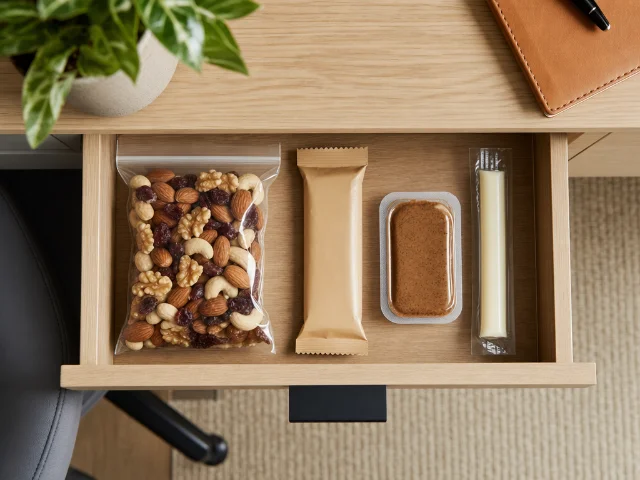
2. Keep a "protein reserve" at your desk. A small container of mixed nuts, a few protein bars, or individual nut butter packets in your desk drawer means your 10am and 3pm windows are covered without any decision-making. Zero prep. Zero willpower.
3. Order protein first at lunch. When ordering out — which is most lunches for most professionals — anchor your decision on the protein source before deciding anything else. Chicken over rice? Fine. Salad? Add salmon or eggs. This one reframe prevents the reflex toward high-carb convenience meals that eat into your afternoon focus.
차트를 불러오는 중…
The afternoon crash has a different culprit than you think
If you're still hitting a 2:30pm wall despite managing caffeine and eating lunch, check the protein distribution before assuming the problem is the circadian dip (which is real, but roughly half the story).
A common pattern: breakfast is skipped or carb-only, lunch is salad or a simple sandwich with minimal protein, and the afternoon crash shows up right on schedule at 2–3pm. The circadian dip gets blamed. But the circadian dip amplifies what's already happening biochemically — it doesn't create the whole crash by itself. Stabilizing blood sugar and amino acid availability across the first three windows produces a noticeably flatter performance curve.
The research supports this: a 2016 trial found that higher-protein breakfasts specifically reduced afternoon snack cravings and stabilized appetite hormone profiles throughout the day, compared to normal-protein breakfasts with identical calories.4 The mechanism isn't mystical — it's that steady amino acid availability reduces the cortisol-driven hunger spikes that pull your attention off work.
The structural fix in one sentence
Redistribute 20–30g of protein from your dinner to your breakfast and morning snack, keep a simple desk protein reserve, and your amino acid pool will stay topped up through the cognitive hours that actually matter.
No new foods required. Just a shift in timing.
What's your current breakfast protein situation? Are you getting 25g+ by 9am, or is most of your protein happening after 6pm? Drop your current go-to morning protein source — I'm curious what's actually working for professionals in different work setups. 🧠
참고 출처
- 1Tyrosine improves cognitive performance and reduces blood pressure in cadets after one week of combat training
- 2Ingested protein dose response of muscle and albumin protein synthesis after resistance exercise in young men
- 3Protein distribution and muscle protein synthesis responses following meat distribution to meals throughout the day
- 4Beneficial effects of a higher-protein breakfast on the appetitive, hormonal, and neural signals controlling energy intake regulation in overweight/obese, "breakfast-skipping," late-adolescent girls
이 콘텐츠를 둘러싼 관점이나 맥락을 계속 보강해 보세요.