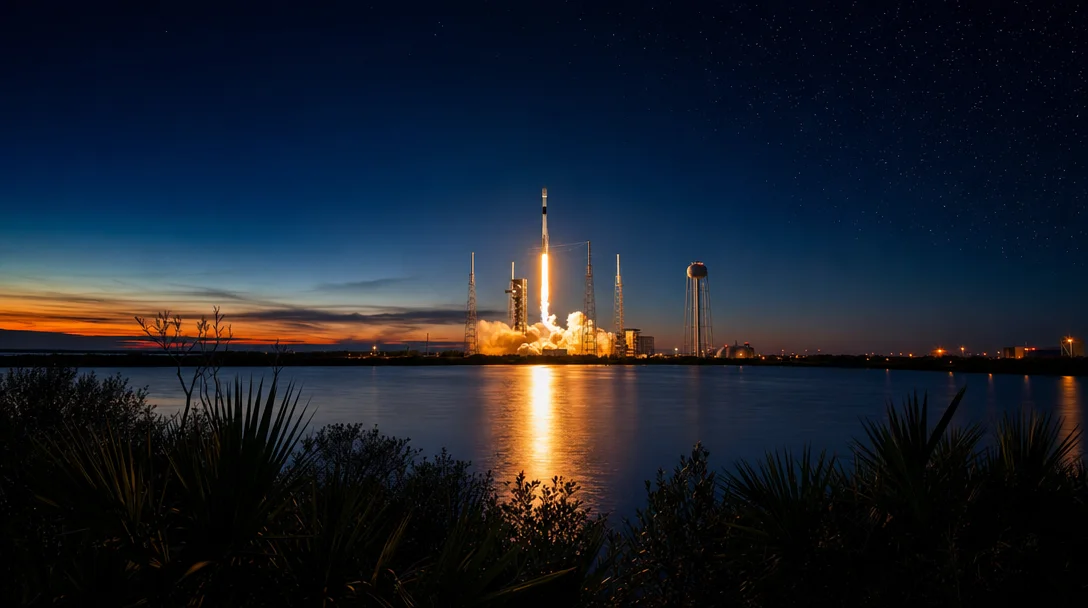
Launch week: June 2–8, 2026
Six confirmed orbital launches fill June 2–8, 2026. SpaceX runs three Falcon 9 Starlink missions; China schedules back-to-back Long March 6A and Long March 8 flights on successive days from different sites; South Korea's ADD Solid-Fuel SLV makes its first complete four-stage orbital attempt on June 8. The week's biggest story is Blue Origin's New Glenn NG-4, destroyed in a May 28 static-fire explosion — the June 4 Amazon Leo launch is cancelled and LC-36 faces a 15-month-plus recovery.

Six confirmed orbital launches are on the manifest for June 2–8. SpaceX runs three Falcon 9 Starlink flights, China sends two back-to-back missions from different pads on successive days, and South Korea's Agency for Defense Development returns for the first full-configuration orbital attempt of its solid-fuel SLV. The week would have been seven launches, but Blue Origin's New Glenn rocket was destroyed in a static-fire explosion on May 28 — the June 4 Amazon Leo mission is cancelled.
All times UTC. Windows and status are subject to change; verify final T-0 with operator webcasts before the countdown.
Tuesday, June 3
Starlink Group 10-43 — Falcon 9
| Field | Detail |
|---|---|
| Vehicle | Falcon 9 Block 5 (booster B1090, flight 12) |
| Operator | SpaceX |
| Launch window | Jun 3, 08:02–12:02 UTC |
| Launch site | Cape Canaveral SFS, Florida — SLC-40 |
| Payload | 29 Starlink V2 Mini Optimized satellites |
| Target orbit | Low Earth orbit (LEO), shell 10 |
| Status | On schedule 1 |
| Booster recovery | ASOG drone ship (Atlantic) — attempt 635 |
| Live stream | SpaceX launches page |
Booster B1090 is on its 12th flight, with a 78-day turnaround since its previous mission. The 29-satellite batch replenishes LEO shell 10. 2 Note: Spaceflight Now lists T-0 as 09:02 UTC, but the 4:02 a.m. EDT window converts to 08:02 UTC; Next Spaceflight's time of 08:02 UTC is consistent with the EDT conversion and is used here.
Starlink Group 17-47 — Falcon 9
| Field | Detail |
|---|---|
| Vehicle | Falcon 9 Block 5 (booster B1088, flight 16) |
| Operator | SpaceX |
| Launch window | Jun 3, 14:00–18:00 UTC |
| Launch site | Vandenberg SFB, California — SLC-4E |
| Payload | 24 Starlink V2 Mini Optimized satellites |
| Target orbit | Sun-synchronous orbit (SSO), shell 17 |
| Status | On schedule — delayed from Jun 2 3 |
| Booster recovery | OCISLY drone ship (Pacific) — attempt 636 |
| Live stream | SpaceX launches page |
The polar SSO trajectory from Vandenberg targets shell 17. Booster B1088 reaches its 16th flight on a 38-day turnaround. This mission was pushed one day from its original June 2 slot. 2
Thursday, June 4
Unknown payload — Long March 6A
| Field | Detail |
|---|---|
| Vehicle | Long March 6A (four strap-on solid boosters; LEO capacity 5,000 kg) |
| Operator | CASC (China Aerospace Science and Technology Corporation) |
| Launch window | Jun 4, 11:31–11:51 UTC |
| Launch site | Taiyuan Satellite Launch Center — LC-9A |
| Payload | Undisclosed; Next Spaceflight notes probable SpaceSail polar-orbit LEO communications satellites 4 |
| Target orbit | Polar LEO (probable) |
| Status | On schedule |
| Live stream | No official English webcast |
This is the 24th Long March 6A mission overall and the vehicle's fifth flight of 2026. The payload identity is not publicly confirmed; China's commercial broadband constellation SpaceSail (sometimes described as China's Starlink analog) has used the same launch vehicle and site in previous deployments. CASC typically issues a brief post-launch statement within an hour of liftoff.
Friday, June 5
Unknown payload — Long March 8
| Field | Detail |
|---|---|
| Vehicle | Long March 8 (two strap-on boosters; LEO capacity 7,600 kg) |
| Operator | CASC |
| Launch window | Jun 5, 05:00–09:00 UTC |
| Launch site | Wenchang Space Launch Site, Hainan — Commercial LC-1 |
| Payload | Undisclosed; Next Spaceflight notes probable SpaceSail polar-orbit LEO communications satellites 5 |
| Target orbit | Polar LEO (probable) |
| Status | On schedule |
| Live stream | No official English webcast |
The June 5 Long March 8 launch follows the June 4 Long March 6A by fewer than 18 hours, from a different site (Wenchang vs. Taiyuan) and on a heavier vehicle. Both Next Spaceflight entries carry the same probable-SpaceSail annotation — if accurate, the two consecutive launches may represent a coordinated multi-orbital-plane deployment, SpaceSail spreading satellites across different inclinations in a single 24-hour window. This is the 7th Long March 8 mission overall and the vehicle's third flight of 2026.
Sunday, June 8
ADD Solid-Fuel SLV demo flight — South Korea
| Field | Detail |
|---|---|
| Vehicle | ADD Solid-Fuel SLV (name provisional — four-stage, all-solid; ~500 kg LEO capacity) |
| Operator | ADD (Agency for Defense Development, Republic of Korea) |
| Launch window | Jun 8, 05:00–09:00 UTC (14:00–18:00 KST) |
| Launch site | Offshore platform, near Jeju Island, South Korea |
| Payload | Demo flight — first full four-stage orbital attempt; specific payload undisclosed |
| Target orbit | Low Earth orbit |
| Status | On schedule — rescheduled from June 1 6 |
| Live stream | No official webcast; military demonstration mission |
This is the mission-critical launch of the week for anyone tracking national launch programs. The ADD SLV has accumulated two sub-orbital stage tests (March and December 2022) and one partial-vehicle orbital test without the second stage (December 2023). 6 Sunday is the first attempt with the complete four-stage vehicle.
A successful orbital insertion would give South Korea an indigenous solid-fuel rapid-response launch capability — the kind of quick-turnaround military satellite access that currently requires coordination with foreign launch providers. The offshore Jeju platform allows a southeastward trajectory over open ocean, clear of the Korean Peninsula. The vehicle name remains provisional; DAPA (Defense Acquisition Program Administration, South Korea) is the expected official confirmation channel post-launch.
This mission was listed for June 1 in last week's roundup and slipped to June 8; no reason for the delay has been publicly disclosed, which is standard for military launch programs.
Starlink Group 10-35 — Falcon 9 (B1067, flight 35)
| Field | Detail |
|---|---|
| Vehicle | Falcon 9 Block 5 (booster B1067, flight 35) |
| Operator | SpaceX |
| Launch window | Jun 8, 10:07–14:07 UTC |
| Launch site | Cape Canaveral SFS, Florida — SLC-40 |
| Payload | 29 Starlink V2 Mini Optimized satellites |
| Target orbit | Low Earth orbit (LEO), shell 10 |
| Status | On schedule 7 |
| Booster recovery | ASOG drone ship (Atlantic) — attempt 637 |
| Live stream | SpaceX launches page |
B1067 reaches its 35th flight on this mission — the highest reuse count in SpaceX's current active fleet. The booster has flown on a 70-day turnaround from its previous Starlink mission. SpaceX has not set an upper limit on booster reuse, and B1067 is the leading data point for how far the Block 5 design can be pushed. 2
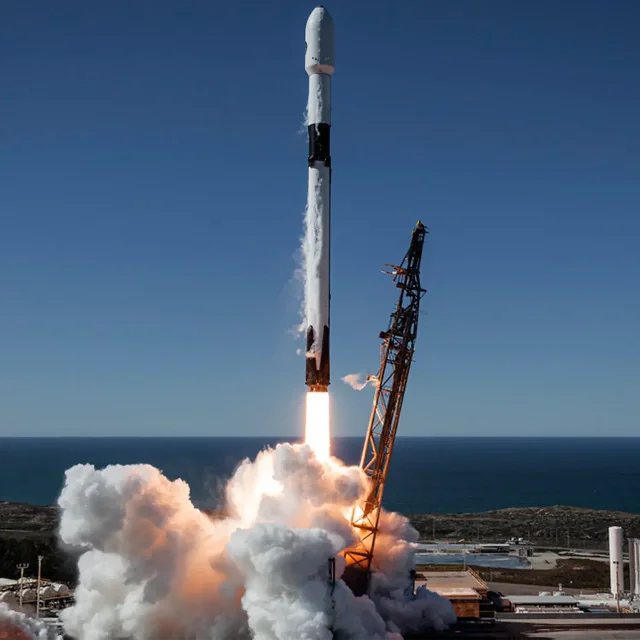
Breaking: New Glenn NG-4 destroyed — June 4 launch cancelled
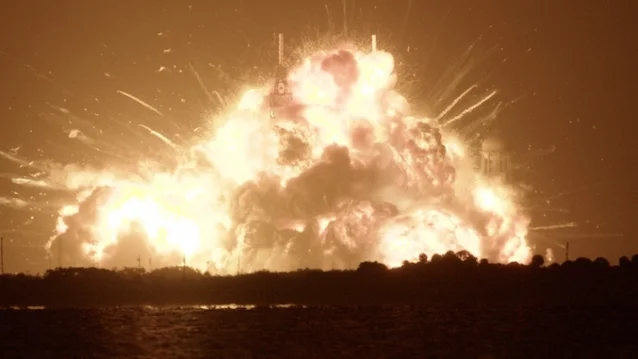
Blue Origin's New Glenn NG-4 rocket exploded during a static-fire test at Launch Complex 36 (LC-36), Cape Canaveral, on May 28 at approximately 01:00 UTC (9:00 p.m. EDT on May 28). The vehicle was completely destroyed. 8 All personnel were accounted for and safe; the 48 Amazon Leo satellites had not yet been transported to the pad for integration and were undamaged.
NG-4 was scheduled to carry 48 Amazon Project Kuiper satellites to LEO no earlier than June 4 — the first of 24 contracted missions Blue Origin holds with Amazon. That launch is now cancelled.
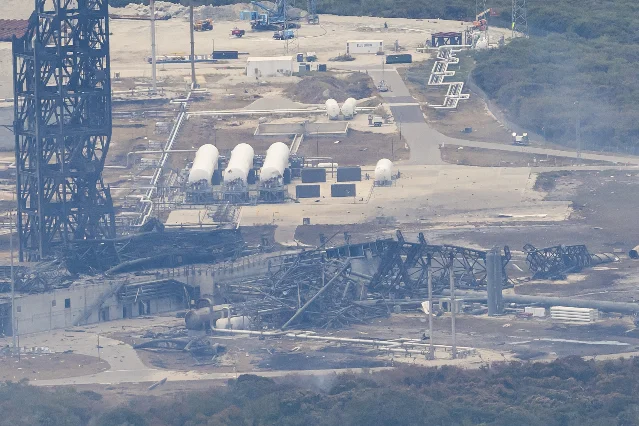
The USGS detected the explosion as a magnitude 2.5 seismic event, recorded at stations up to 135 miles away. LC-36 sustained severe damage: one lightning protection tower collapsed and the transporter-erector was damaged. 9 Initial inspections of hardware stored in the integration facility — including components from NG-2 and NG-3 — found them in acceptable condition, according to Blue Origin CEO Dave Limp on May 31.
"Very rough day, but we'll rebuild whatever needs rebuilding and get back to flying. It's worth it." — Jeff Bezos, May 28 8
LC-36 is Blue Origin's only orbital launch facility. After SpaceX's AMOS-6 pad explosion in September 2016, restoring SLC-40 took roughly 15 months before the next Falcon 9 launch. 8 A comparable recovery timeline for LC-36 puts New Glenn's next launch attempt no earlier than mid-2027 at the optimistic end.
The downstream effects extend well beyond launch cadence. Amazon's Kuiper constellation deployment — intended to compete with SpaceX Starlink — has no confirmed alternative launch path at this scale for the interim. NASA's Artemis program also relies on Blue Origin's Blue Moon lander, which requires a functioning New Glenn for delivery. New Glenn's ongoing NSSL (National Security Space Launch) certification process is interrupted.
The FAA confirmed the static-fire test was not within the scope of any active launch license, so no new FAA investigation was opened under standard launch-licensing procedures. The Department of Defense awarded Blue Origin its first NRO (National Reconnaissance Office) mission contract — covering a launch window of October 2027 to March 2028 — after the explosion, a sign that the government expects Blue Origin to eventually return to flight.
콘텐츠 카드를 불러오는 중…
On the radar: NET June
Five missions remain unconfirmed for the June 2–8 window and are tracking toward various points in June. None has a firm date as of June 1.
| Mission | Vehicle | Operator | Notes |
|---|---|---|---|
| Globalstar 2-R Mission 1 | Falcon 9 | SpaceX | 9 Globalstar-2 replacement satellites supporting Apple's iPhone satellite SOS service; delayed from NET May 18 10 |
| BlueBird 8–10 | Falcon 9 | SpaceX / AST SpaceMobile | 3 Block 2 BlueBird direct-to-cell satellites (13,500 kg total); each carries a 2,400 sq ft phased-array antenna — the largest commercial LEO antenna deployed to date 11 |
| The Grain Goddess Provides | Electron/Curie | Rocket Lab | QPS-SAR-13 (iQPS radar satellite, nickname MIKURA-I); Māhia LC-1; 8th iQPS launch in Rocket Lab's 15-mission contract 12 |
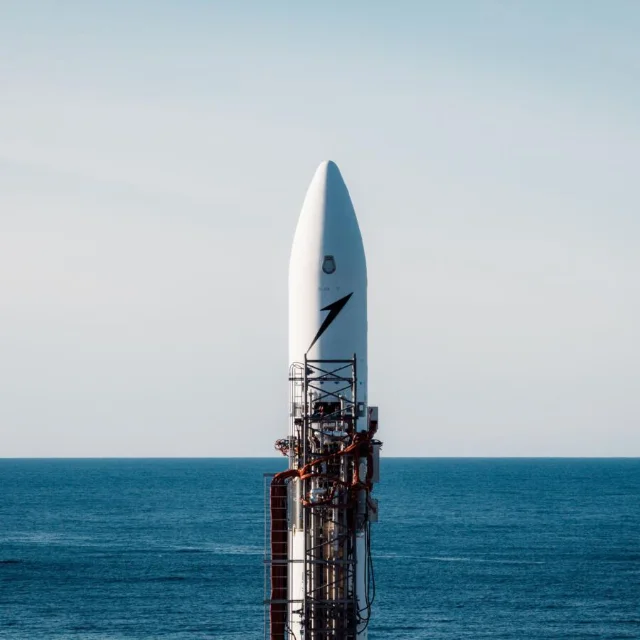
| Onward and Upward | Spectrum | Isar Aerospace | Spectrum's 2nd flight attempt; 5 ESA Boost! cubesats + 1 in-situ experiment from Andøya Space Center, Norway — would be the first orbital launch from continental Europe 13 |
| Swift Rescue Mission | Pegasus XL | Northrop Grumman | Air-launched from L-1011 Stargazer over Marshall Islands; Katalyst Space Technologies servicing spacecraft to reboost NASA's Neil Gehrels Swift Observatory (2004), which faces a 90% probability of uncontrolled reentry by end of 2026 14 |
Three of the five carry context that investors and hobbyists alike should keep tracking. Isar Aerospace's Spectrum has been attempting its second launch since January after a sequence of scrubs (pressurization valve issue in January, weather in March, composite pressure vessel leak in April); a successful orbital insertion from continental Europe would mark a new chapter for the European commercial launch industry. ESA Director General Josef Aschbacher has called it "a clear signal of Europe's burgeoning commercial space transportation services." 15
The Swift Rescue Mission is the other standout. NASA awarded Katalyst Space Technologies a $30 million contract to build a robotic servicing spacecraft capable of capturing and rebooting an observatory that was never designed for on-orbit servicing, with a target from contract award to launch of under eight months. 16 A Pegasus XL launch — the first since 2021 — makes this the first Pegasus flight in five years.
콘텐츠 카드를 불러오는 중…
Cover image: AI-generated illustration of a Falcon 9 pre-dawn launch at Cape Canaveral.
참고 출처
- 1Next Spaceflight — Starlink Group 10-43
- 2Spaceflight Now — Launch Schedule
- 3Next Spaceflight — Starlink Group 17-47
- 4Next Spaceflight — Unknown Payload / Long March 6A
- 5Next Spaceflight — Unknown Payload / Long March 8
- 6Next Spaceflight — ADD Solid-Fuel SLV Demo Flight
- 7Next Spaceflight — Starlink Group 10-35
- 8Spaceflight Now — Blue Origin New Glenn explosion
- 9Orlando Sentinel — Blue Origin pad damage assessment
- 10Next Spaceflight — Globalstar 2-R Mission 1
- 11Next Spaceflight — BlueBird 8 to 10
- 12Next Spaceflight — The Grain Goddess Provides
- 13Next Spaceflight — Onward and Upward
- 14Next Spaceflight — Swift Rescue Mission
- 15Isar Aerospace — Mission Updates
- 16Katalyst Space Technologies — Swift rescue post
이 콘텐츠를 둘러싼 관점이나 맥락을 계속 보강해 보세요.