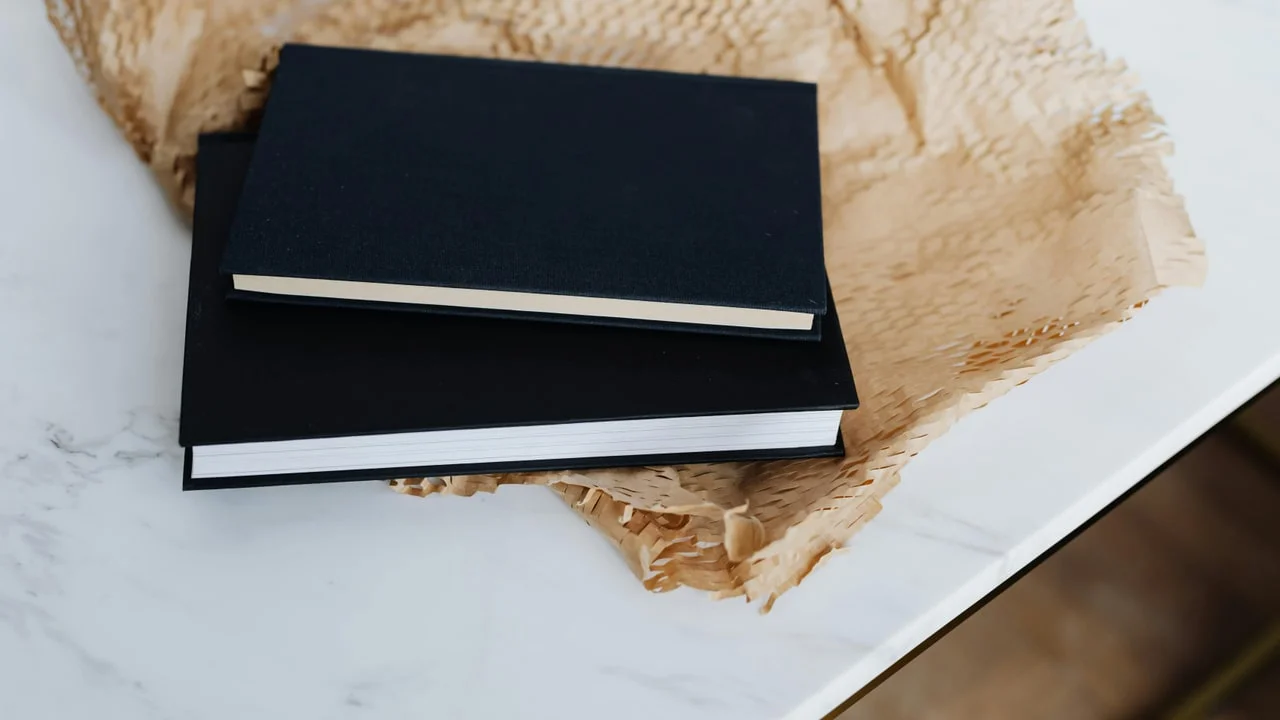
Moleskine: The Notebook That Sold a Story It Couldn't Prove
In 1997, a Milanese consultant named Maria Sebregondi revived a long-extinct style of French oilskin notebook — and attached to it a myth that Hemingway, Picasso, and Van Gogh had used something just like it. The claim was admitted to be exaggeration by the company's own marketing director in 2004. The notebooks kept selling. From a 5,000-unit run in Milan bookshops to a €490 million IPO, a Belgian auto group acquisition, and €122 million in annual revenue, this is the full story of how Moleskine turned borrowed heritage into a global brand.

In 1987, the travel writer Bruce Chatwin published The Songlines, a book about walking Australia's ancient Aboriginal song paths. Somewhere in the text, he described the small black oilskin notebooks he used to carry — carnets moleskines, he called them, bought in batches from a Paris stationer near the Rue de Rivoli. He had once asked the shop to order him a hundred. By the time he went back, the family business that made them had closed. The last workshop in Tours was gone.
Eight years later, a Milanese consultant named Maria Sebregondi read that passage and had an idea. 1
The idea was simple: bring those notebooks back. Or something that looked like them.
What Sebregondi actually built, though, was not a notebook company. It was a myth delivery system — one of the most successful pieces of brand fiction in modern consumer history. The myth had a flaw in it from day one, and enough people have noticed the flaw that it's been publicly argued over since 2004. The company has never fully denied the problem. It just kept selling.
The notebook that never was
Carnets moleskines — small, hard-covered, oilskin-bound notebooks — were sold by small Parisian bookbinders through much of the 19th and 20th centuries. Artists and writers bought them. It's plausible that Picasso owned one, that Hemingway used something like them, that Van Gogh sketched in something similar. Chatwin certainly used them. But "plausible" and "used our notebooks" are two different things.
When Sebregondi approached Modo & Modo, the small Milanese design and publishing firm she consulted for, she pitched the notebooks as a revival of what those artists had used. Modo & Modo ran with that idea further than she may have intended. Each notebook that shipped from 1997 onward carried a small paper insert describing "the legendary notebook used by European artists and thinkers for the past two centuries — from Van Gogh to Picasso, from Ernest Hemingway to Bruce Chatwin." 2
The problem: Van Gogh died in 1890. Picasso used whatever notebooks happened to be available. Hemingway's notepads of record were Cahiers notebooks, not oilskin-bound moleskines. And "Moleskine" as a brand did not exist until Modo & Modo registered the trademark in 1996 and began production the following year.
When the New York Times questioned Modo & Modo's marketing director Francesco Franceschi about this in 2004, he acknowledged it directly: "This is exaggeration. This is marketing. It's not science, it is not absolute fact." 2
That admission was public. It was published in the Times. The company survived it without visible damage.
Modo & Modo, 1994–2006
Sebregondi's formal involvement began in 1994, when Modo & Modo hired her as a consultant to create products for what the company imagined as a new generation of post-Cold-War travelers — people who wanted to move through the world and record it. The company was already publishing books on travel and culture. T-shirts with literary slogans were on the table. Sebregondi went further. 3
After reading The Songlines in 1995, she brought the notebook idea to Modo & Modo. The name was registered as a trademark in 1996. Production started in 1997 with an initial run of 5,000 units. 1

The first decision that turned a notebook into a phenomenon was where to sell it. Not a stationer. A bookshop. In Milan, the notebooks went onto shelves beside literature and travel writing — placed in the same conceptual space as the books that had supposedly inspired them. The implication was clear: this object belongs with the people who think and write. Buying one said something about you before you wrote a word inside it. 3
The product itself was tightly designed: black cardboard cover with a sewn spine, rounded corners, ivory paper, ribbon bookmark, elastic closure, expandable back pocket. Every feature that Chatwin had described in passing became a specification. The first batch sold out.
By 1998, Modo & Modo was producing 30,000 notebooks a year and distributing across Europe. By 2000, annual sales had reached €20 million. In 2004, distribution reached Japan, opening Asian markets. 4
The company had a small staff. Demand was running ahead of capacity.
The private equity years, 2006–2013
In 2006, Syntegra Capital, a European private equity firm, bought Modo & Modo. The deal reorganized the company into Moleskine Srl and put growth capital behind the brand for the first time. 4
Sebregondi, who had remained a consultant, joined as an executive. She became vice-president of brand equity and communications — effectively the keeper of the myth she had helped create.
What Syntegra brought was scale. The catalog expanded from a single notebook to dozens of formats, then to pens, pencil cases, sticky notes, planners, diaries, and eventually bags. The Spring 2014 catalog ran over 200 pages. 1 Distribution moved into Staples, Barnes & Noble, and major office-supply chains — a shift that made the notebooks ubiquitous in a way indie bookshops never could.
Syntegra also brought an investor, Index Ventures, aboard. By the time the company looked toward exit, it was distributing in 92 countries and stocked in 22,000 stores.
The most striking decision of this period was the partnership with Evernote in 2012: a co-branded notebook whose pages had dot markers that a smartphone camera could scan, automatically uploading handwritten notes into the Evernote app. 4 The framing was "analog-digital continuum" — a phrase that Sebregondi would repeat in interviews for years, without it ever becoming entirely clear what it meant in practice. But it signaled something real: the notebook company understood it was selling not paper but a proposition about how creative people wanted to see themselves.

The IPO that called itself luxury, 2013
In April 2013, Moleskine listed on the Milan bourse — the Borsa Italiana's STAR segment for mid-size companies — at €2.30 per share, valuing the company at €490 million (roughly $628 million). It was Italy's first IPO in over a year. 5
The framing Moleskine chose for investors was deliberate and slightly odd: it described itself not as a stationery company but as a luxury goods brand. The IPO prospectus included a diagram placing Moleskine on a cultural rather than commercial axis, closer to identity expression than functional use. CEO Arrigo Berni put it plainly to Bloomberg: "We don't just sell notebooks. We also sell a story." 1
Luxury analysts were not convinced. Mario Ortelli of Sanford C. Bernstein told the New Yorker: "Frankly, I would not classify Moleskine as a luxury-goods stock. The brand is the physical product, the notebook." The concern was that Moleskine's margins, while high (it costs very little to make a notebook), came from brand power in stationery — a category with limits on how far identity could stretch. 1
Paper products made up 93% of Moleskine's revenue at the time of the IPO. 5 The stock wobbled from its first day. Over the next three years, it would fall to about half the IPO price.
The company kept expanding anyway. By July 2012, before the IPO, it was already in 22,000 stores across 95 countries. Limited-edition collaborations with Lego, Star Wars, Harry Potter, and the Marvel franchise added collectible demand without requiring the core product to change. 3 Corporate customization became a significant revenue line — companies paid to have their logos embossed on Moleskine covers, borrowing the notebook's cultural associations for their own branding.
Acquisition and delisting, 2016–2017
In September 2016, D'Ieteren, a Belgian holding company founded in 1805 and best known for distributing Volkswagen cars in Belgium, announced it would acquire a 41% stake in Moleskine from Syntegra and Index Ventures. The price: €2.40 per share, valuing 100% of the company at €506 million. 6

D'Ieteren then launched a mandatory tender offer for the remaining shares and crossed the 95% threshold that entitled it to a squeeze-out. By early 2017, Moleskine was fully acquired and delisted from the Borsa Italiana. 4
The logic of a Belgian automotive distribution group buying an Italian luxury notebook company was not immediately obvious. D'Ieteren framed itself as a long-term capital allocator building a portfolio of distinctive businesses — it also holds stakes in a vehicle-glass repair network (Belron) and a real estate arm. Moleskine was the brand acquisition.
Under D'Ieteren, the physical expansion continued. Moleskine opened cafés in Milan, Beijing, Geneva, and Hamburg — places where the notebook could be an ambient detail rather than the thing being sold. 3 The Smart Writing Set, launched in 2016, digitized handwritten notes in real time via a Livescribe pen and a connected notebook. The Timepage app organized calendar and weather data under the Moleskine name.
Where it stands
According to Wikipedia's sourced figures, Moleskine's revenue reached €122.3 million in 2024 — roughly where it sat in the mid-2010s. 4 D'Ieteren's 2024 full-year results reported that Moleskine's adjusted profit before tax was -€3 million, with sales down 6.1% year-over-year, attributed to "cautious discretionary spending" among consumers. 7 The company has 420 employees and continues to manufacture notebooks in China, Vietnam, Turkey, and Ecuador.
D'Ieteren said it expects Moleskine to return to mid-single-digit sales growth in 2025. 7
The basic product has not changed since 1997. The black notebook with the elastic and the ribbon bookmark and the expandable back pocket is still the best-seller. The insert describing "the legendary notebook of European artists and thinkers" is still in the back pocket — though the wording was quietly revised in 2013 to describe Moleskine as "a symbol of contemporary nomadism, closely connected with the digital world," which is a very different claim.
What the myth actually was
There's a simpler read of how Moleskine worked that doesn't require calling anyone a liar. Sebregondi's original instinct was genuine: she remembered buying similar notebooks in Paris in the early 1980s. She wanted to make something good again. 1 The design — rounded corners, sewn spine, elastic band — derived directly from Chatwin's description of what he had used.
What Modo & Modo added to that was a wrapper: the suggestion that Van Gogh and Hemingway had held something like this object in their hands. The company never technically said they had used Moleskine notebooks specifically. It made the association and let buyers complete the circuit themselves.
The marketing head admitted in 2004 that it was exaggeration. The notebooks kept selling. The fact that people wanted to believe the connection — that buying a $20 black notebook linked them to a lineage of artists and writers — tells you something about what the object was actually selling.
The notebook was never the product. The story of who you were, sitting at your desk with it open, was the product. And that story, unlike the oilskin manufacturers of Tours, has never closed.
참고 출처
- 1The Virtual Moleskine — The New Yorker
- 2Does a Moleskine notebook tell the truth? — The New York Times
- 3Moleskine history: building a legendary brand — Noted in Style
- 4Moleskine — Wikipedia
- 5Moleskine comes in handy again, pulling off Italy's first IPO in a year — Quartz
- 6D'Ieteren to Acquire €506 Million Stake in Moleskine — Cleary Gottlieb
- 7D'Ieteren Group Full-Year 2024 Results
이 콘텐츠를 둘러싼 관점이나 맥락을 계속 보강해 보세요.