A 7-day food swap cut BPA by 60%: what the PERTH trial tells you to do today
The PERTH Trial (Nature Medicine, 2026) found a 7-day low-plastic diet cut urinary BPA by 60% and phthalates by up to 54%. One concrete action: swap canned goods for fresh, frozen, or glass-jarred alternatives and replace plastic food containers with glass or ceramic.

리서치 브리프
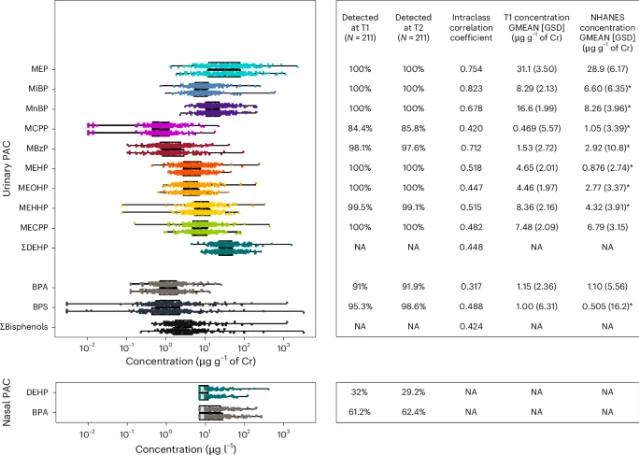
On any given day, every single participant in a recent 211-person Australian cohort excreted at least six different plastic-associated chemicals (PACs) in detectable amounts. 1 This was not a selected high-risk group. These were healthy adults going about their normal lives.
That baseline is what makes the PERTH trial worth a close read — and what makes its intervention arm so actionable.
What the study did
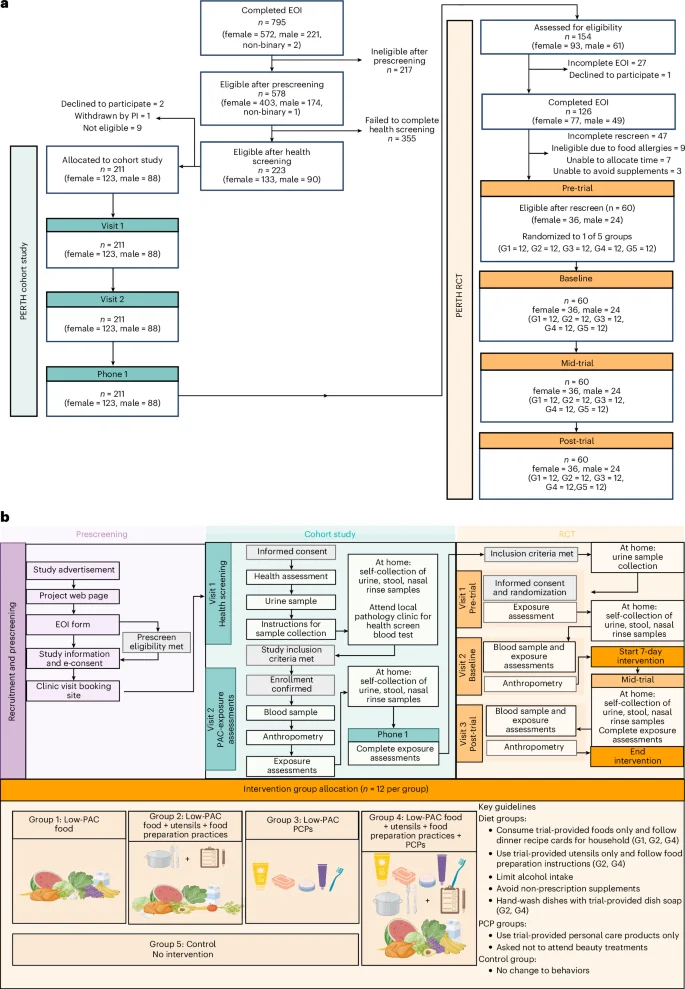
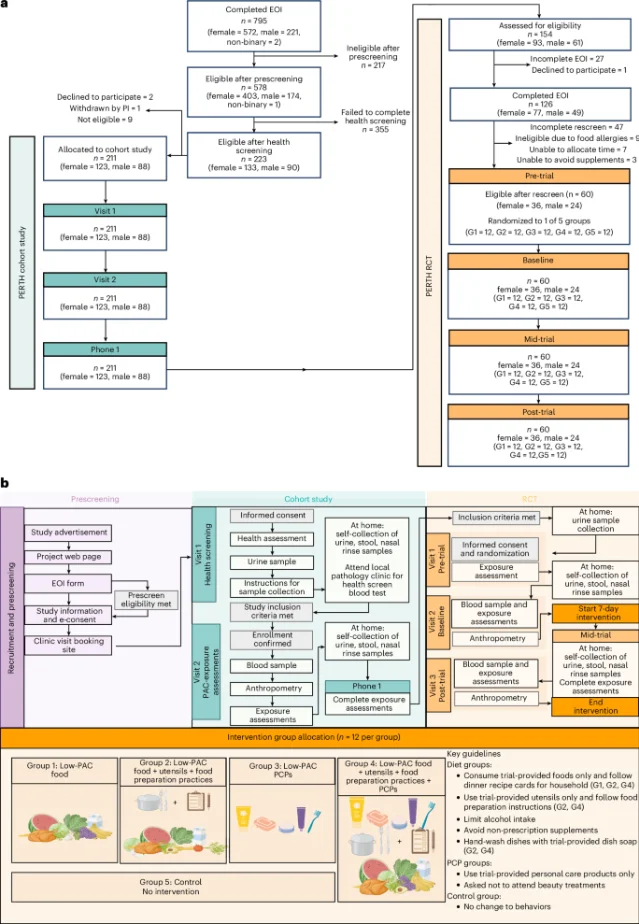
The Plastic Exposure Reduction Transforms Health (PERTH) Trial, published April 21, 2026 in Nature Medicine (impact factor ~82.9), was led by Amelia J. Harray and colleagues in Australia. 1 The design had two layers: a 211-person observational cohort that established baseline PAC exposure, and a nested 7-day randomized controlled trial (trial registration: ACTRN12622001252707) in 60 of those participants.
The 60 RCT participants were split into five groups:
- Group 1: low-plastic food only
- Group 2: low-plastic food + low-plastic kitchenware
- Group 3: low-plastic personal-care products only (no food changes)
- Group 4: low-plastic food + kitchenware + personal-care products (full intervention)
- Group 5: control (no changes)
Critically, the food-based groups did not eat less. Daily energy intake stayed the same; participants simply swapped what they ate and what they cooked or stored food in. 1
Phthalates (including MnBP and MBzP) and bisphenols (including BPA) were measured in urine before and after the 7-day window.
What changed in 7 days
Group 2 — low-plastic food plus low-plastic kitchenware — produced the clearest reductions: 1
| Chemical | Reduction vs. control | 95% CI | P-value |
|---|---|---|---|
| BPA (bisphenol A) | −59.7% | −82.5, −6.88 | 0.033 |
| MnBP (mono-n-butyl phthalate) | −37.5% | −55.6, −12.0 | 0.007 |
| MBzP (monobenzyl phthalate) | −53.5% | −72.7, −20.7 | 0.005 |
When the three food-intervention groups (Groups 1, 2, and 4) were pooled, the combined picture held: MnBP fell 37.9%, MBzP fell 44.5%, BPA fell 51.6%, and total bisphenols fell 47.3%. 1
The dose-response finding for canned food is particularly direct: each additional canned item consumed per day was associated with a 14.3% increase in urinary BPA (95% CI: 1.26, 29.1; P=0.032). 1 That is a linear, per-unit relationship — not a threshold effect.
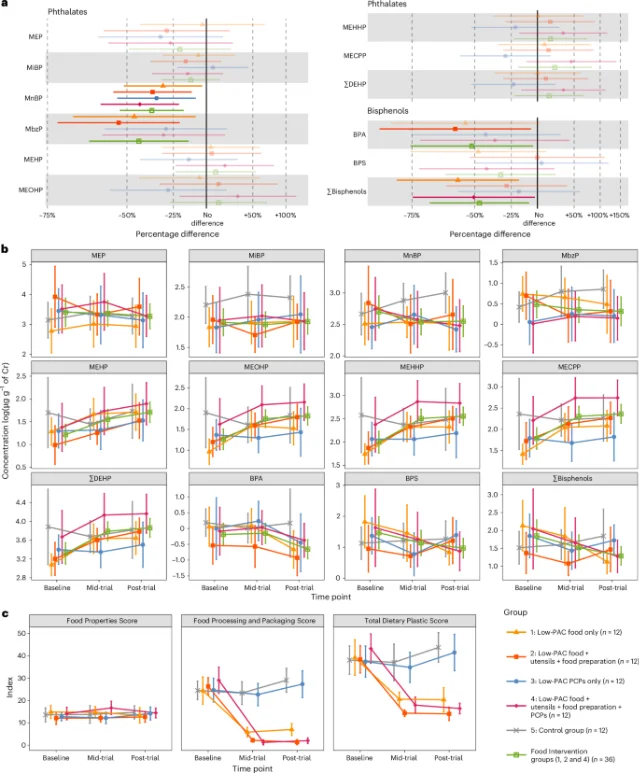
One more signal worth noting: Group 3 — the group that only swapped personal-care products without changing food — showed no significant reduction in any PAC. 1 Diet is the lever, not the shower gel.
The dietary decision
The trial's structure maps cleanly onto a set of swaps that any patient or client can start today. The interventions that worked shared a common logic: reducing the surface area between food and plastic, at both the sourcing and preparation stages.
What the food-swap arm actually changed:
- Canned goods replaced with fresh, frozen, or glass-jarred equivalents
- Plastic food containers swapped for glass or ceramic storage
- Avoidance of reheating food in plastic containers (microwave exposure accelerates leaching)
- Reduced reliance on packaged processed food in general
For dietitians, the populations where this conversation pays the highest dividend are clients with high canned-food reliance — including people managing tight food budgets, those on long-term shelf-stable diets, and anyone with heavy use of canned tomatoes, beans, or fish (all high-BPA categories given their acidic or fatty content).
The speed of effect also matters clinically. Because phthalates and bisphenols are short-lived in the body — measured in hours to days — dietary changes translate into measurable biomarker shifts within a week. This is not a "you'll see results in three months" recommendation. A client who shifts away from canned goods and plastic food contact this week will have lower urinary PACs next week. 1
What the trial does not establish
This was a pilot RCT with a 60-person intervention arm and a 7-day window. The effect sizes are large, but confidence intervals on BPA are wide (−82.5 to −6.88), which reflects the small sample. 1 Larger, longer trials are needed before the magnitude of reduction can be stated with precision.
The trial measured urinary PAC levels — a validated proxy for exposure — but did not measure downstream health endpoints. Whether reducing PACs by 50–60% over a week translates into reduced disease risk is biologically plausible given what is known about phthalates and bisphenols as endocrine-disrupting chemicals, but this study does not directly test that link.
One counterintuitive finding in the cohort phase adds complexity: higher urinary DEHP metabolites were associated with better cardiometabolic markers (lower hsCRP, lower Lp(a)) in the observational data. 1 The authors do not interpret this as evidence that DEHP is beneficial — confounding by diet quality or socioeconomic factors is a plausible explanation — but it is a signal that the picture is not fully resolved.
The bottom line, then, is fairly clean: switching away from canned goods and plastic food contact reliably reduces the body's phthalate and bisphenol load within days. The downstream health consequence of that reduction is the open question. For a patient already interested in reducing chemical exposure through diet, the intervention carries essentially no downside — it does not change caloric intake, does not require supplements, and produces a measurable result fast.
Cover image: Figure 1 from the PERTH Trial, published in Nature Medicine.
이 콘텐츠를 둘러싼 관점이나 맥락을 계속 보강해 보세요.