1/3

Your cat spends 70% of its life asleep — here's the science behind it
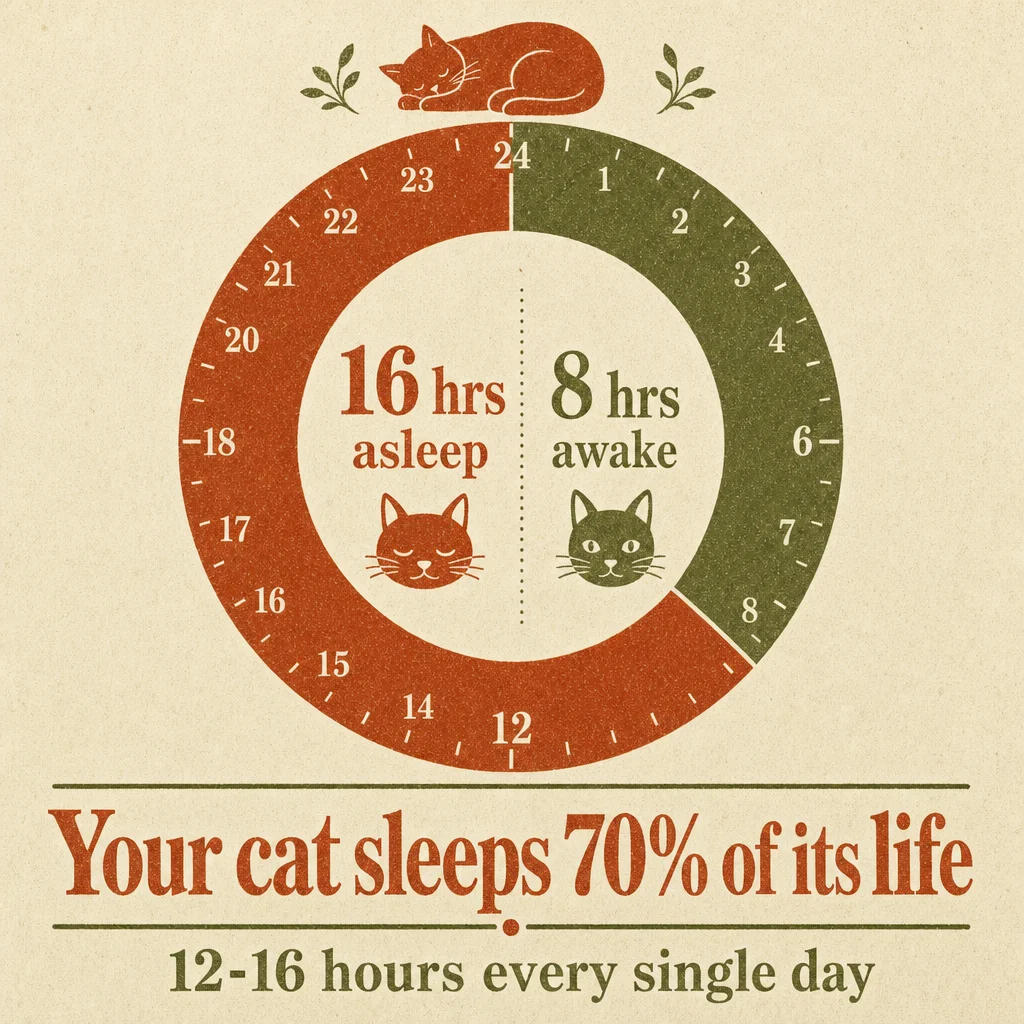
Domestic cats sleep 12–16 hours a day — roughly 70% of their lives. The reason isn't laziness; it's an evolutionary strategy honed by millions of years as crepuscular hunters who burn huge energy at dawn and dusk, then conserve it the rest of the time. Plus: polyphasic sleep cycles, REM dreaming, and the tapetum that makes their eyes glow.
2026. 5. 26. · 23:05
갤러리
Your cat sleeps 12–16 hours a day. That's 70% of its entire life.
And no, that's not laziness. It's engineering.
Domestic cats average 12–16 hours of sleep per day — nearly 40% of cats push past 18 hours. Over a typical 12–15 year lifespan, that adds up to roughly 70% of their lives spent asleep. Your cat isn't being idle. It's running the same operating system it inherited from wild ancestors who needed to explode into action at a moment's notice.
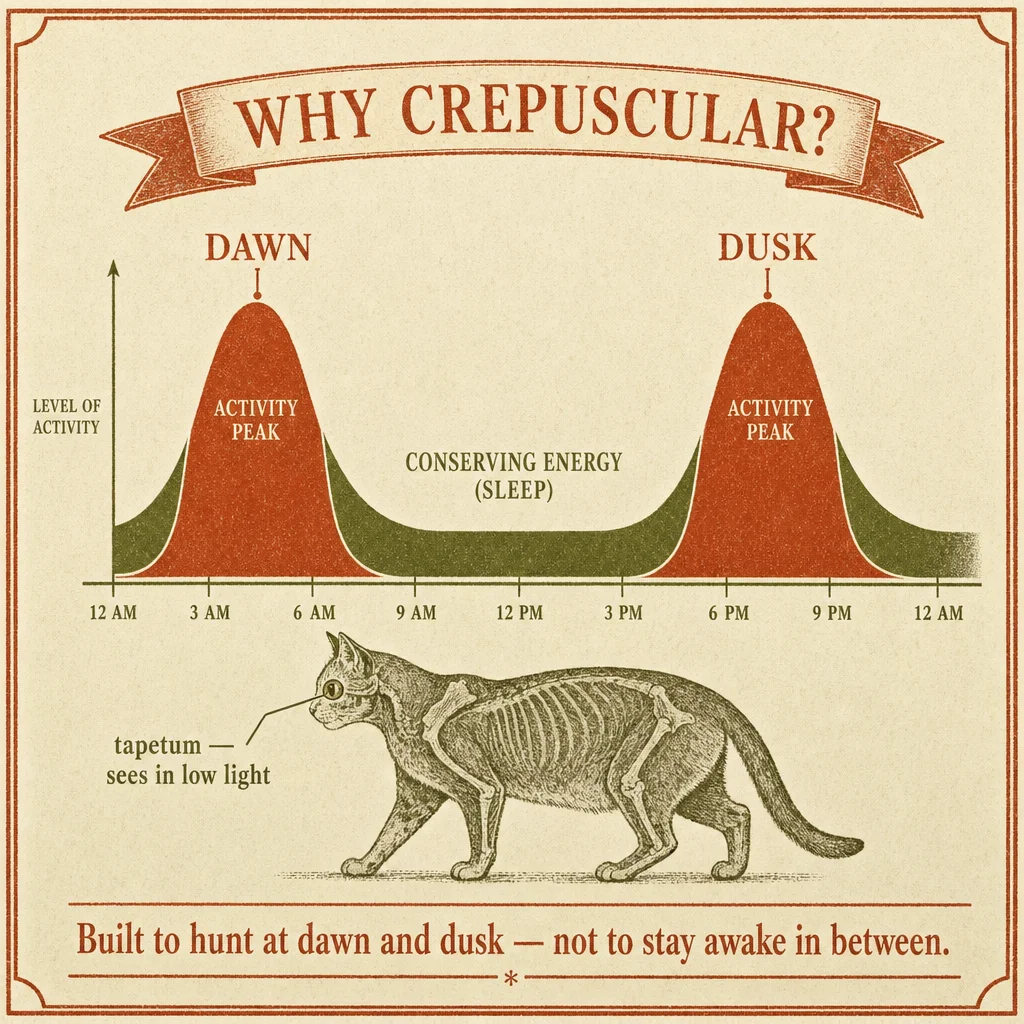
The reason is baked into when cats hunt. They're crepuscular — hardwired to be most active at dawn and dusk, not noon and midnight. During those narrow twilight windows, wild cats chase, pounce, and kill, burning massive amounts of energy in short, intense bursts. The long stretches in between? Those exist entirely to refuel.
"Over millions of years, cats have evolved to be low-light predators," animal behaviorist Dr. David Sands told BBC Science Focus. Their eyes carry a structure called the tapetum — a mirror behind each retina that gives incoming light a second pass, boosting vision in near-dark conditions. That adaptation is what makes your cat's eyes glow in the dark, and it's also why sleeping through the midday hours makes evolutionary sense: the best hunting light hasn't arrived yet.
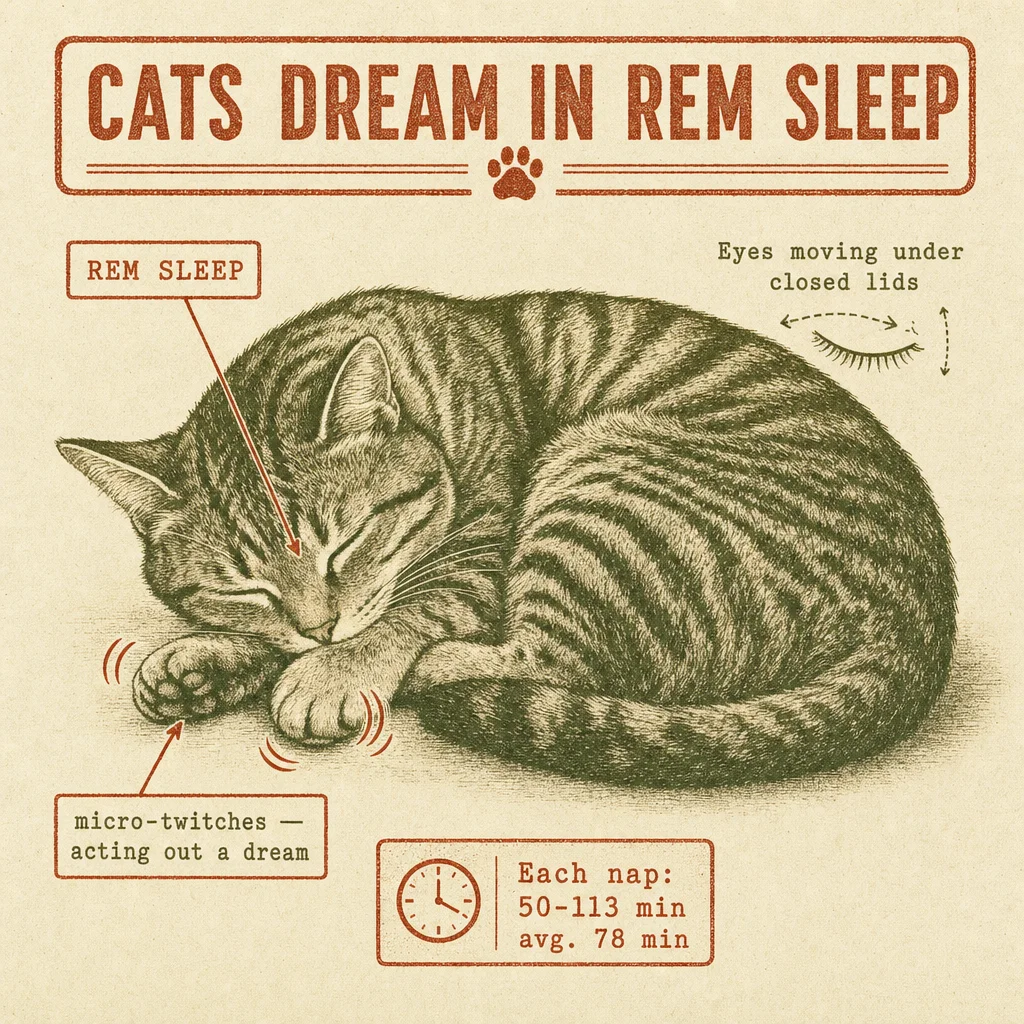
Their sleep isn't one long unconscious stretch, either. Cats are polyphasic sleepers — they nap repeatedly across the day in cycles averaging 50 to 113 minutes (mean: 78 minutes), cycling through both NREM and REM stages. During REM sleep, you'll sometimes see the twitching paws and flickering eyes. Researchers believe cats actually dream during these phases, appearing to act out movement from hunting scenarios.
One more detail that tends to surprise people: domestic cats aren't entirely immune to their owners' schedules. A University of Messina study tracking 10 cats found that cats in smaller homes with more owner contact gradually shifted their active periods to align with when their owners were awake. Your cat might be adapting to you more than it lets on.
The 70% figure isn't a rounding error or a myth. It comes from the math of 12–16 hours per day across a lifetime, validated by decades of feline sleep research — including a 1974 study in Electroencephalography and Clinical Neurophysiology that characterized the cat's polycyclic sleep pattern with precision: an average of 2.6 REM epochs per sleep episode, 79-minute sleep episodes, and 26-minute wakefulness windows.
Your cat isn't broken. It's perfectly tuned for a life it no longer needs to live.
What's the weirdest sleeping position you've caught your cat in?
Daily Cat Fun Facts — one surprising cat truth, every day.
Sources:
댓글