
Geopolitics Daily Brief — June 7, 2026
Five stories at 08:00 UTC on day 100 of the Iran war: Iran fires ballistic missiles at Kuwait and Bahrain after CENTCOM downs drones near Hormuz; Ukraine strikes St. Petersburg twice (Kronstadt base, oil depots) as Zelensky meets Starmer/Macron/Merz to sign a peacekeeping declaration; Israel kills Lebanese army soldiers and Hamas opens Gaza phase-2 talks in Cairo; Taiwan detects over 100 Chinese ships and PLA goes on 'high alert' after Dutch frigate transit; US forced-labor tariffs on China and 59 other partners target a July 24 deadline.

Five stories at 08:00 UTC, Sunday. Today marks 100 days since the US-Israel war on Iran began.
1. Iran fires on Kuwait and Bahrain; US shoots down drones over Hormuz
The Strait of Hormuz saw another round of tit-for-tat fire on Saturday. US Central Command (CENTCOM) shot down four Iranian one-way attack drones it said were threatening international maritime traffic, then struck Iranian radar sites on the strait. Iran's IRGC responded within hours, firing seven ballistic missiles and additional drones toward Kuwait and Bahrain. Both Gulf states activated air defenses; Bahrain and Kuwait condemned the attacks and reported interceptions.1 CENTCOM said US forces "remain postured and ready to continue defending against Iranian aggression," while Tehran said the US "lacks the will for stability."2 Sunday marks the 100th day of the conflict; Pakistan's interior minister arrived in Tehran carrying mediation proposals from Islamabad.2 Trump claimed Iran retains only "21–22%" of its pre-war missile stockpile.
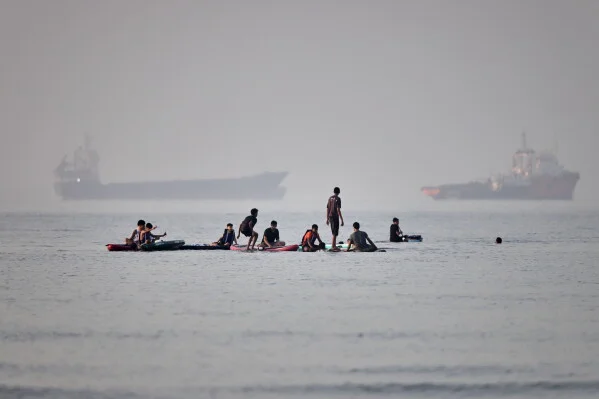
Market/supply-chain impact. Brent crude is trading roughly 36% above its pre-war level, with WTI up nearly 50%, as the Hormuz blockade keeps tight supply constraints in place.3 PVM Oil Associates analyst Tamas Varga warned that if inventory drawdown continues through June, stocks will reach critical operational levels and "a break back over $100 will be imminent." US crude exports are providing partial relief, alongside Strategic Petroleum Reserve releases and sanction waivers on Iranian and Russian oil.3 Each new exchange of fire risks narrowing the diplomatic window before inventory stress forces the market's hand.
2. Ukraine strikes St. Petersburg twice as Zelensky meets allied leaders in London
Ukraine hit Russia's second city twice inside the week-long St. Petersburg International Economic Forum. On Saturday morning, drones struck the Kronstadt Naval Base, the Petergofskaya Oil Depot, the Neste Oil Terminal in Lomonosov, and a Russian 1060th Material-Technical Support Center arsenal — Leningrad Oblast authorities confirmed fires.4 Russia claimed 376 drones shot down across 13 hours, but geolocated footage confirmed strikes on the Kronstadt Naval Yard and the 15th Arsenal.4 St. Petersburg Governor Alexander Beglov asked residents to stay indoors — reportedly the first such order since February 2022.4
On the battlefield, ISW assessed that Russian forces lost control of roughly 280 sq km in May while seizing only ~40 sq km — the rate of Russian advance has been declining since April.4
콘텐츠 카드를 불러오는 중…
Russian forces made tactical gains near Slovyansk (Lypivka) and Pokrovsk (western Rodynske), but Ukrainian forces advanced in the Kostyantynivka area.4 Diplomatically, Putin on June 5 rejected Zelensky's face-to-face offer. Today, Zelensky meets UK Prime Minister Starmer, French President Macron, and German Chancellor Merz in London to sign a declaration on deploying a post-ceasefire peacekeeping force — the allies are also due to discuss boosting weapons support.5
Market/supply-chain impact. Ukrainian drone strikes have pushed fuel shortages across Russia into a summer crisis: occupied Crimea imposed 20-litre petrol rationing on June 6, and shortages now span 15+ Russian oblasts including Moscow and Leningrad.4 Continued disruption to Russian oil depots will reduce the supply available to global markets at the margin. European defence stocks remain firm as the E3 peacekeeping declaration signals longer-term European rearmament commitments.
3. Lebanon: Israel kills Lebanese army soldiers; Gaza ceasefire phase-2 talks open in Cairo
Israel struck a Lebanese army vehicle in southern Lebanon, killing several soldiers including at least one officer. UNIFIL condemned the strike as a violation of Lebanon's sovereignty and UN Resolution 1701, and the Lebanese army confirmed multiple fatalities.2 The Israeli army acknowledged it lost an officer and a soldier in the same operation. Hezbollah continues to reject the US-brokered ceasefire framework, which has kept Lebanon fighting active despite successive talks; the Israeli military has pushed north of the Litani River.
In Gaza, Hamas convened meetings in Cairo with mediators and Palestinian factions to work toward completing phase-1 implementation — specifically reopening crossings and allowing humanitarian aid — and beginning negotiations on phase-2, including proposals for international force deployment and disarmament.2 An Israeli strike on a displaced-persons tent in Gaza City killed at least six people, per medical sources.2 A New York Times report, citing US officials, noted a "growing espionage threat" from Israel as Washington conducts Iran nuclear talks.2
Market/supply-chain impact. The Hormuz-Lebanon-Gaza nexus continues to feed energy and shipping risk premia. US April CPI printed at 3.8% — a near three-year high — driven by the knock-on from Gulf energy disruption.3 Germany and India have already introduced energy price interventions. US 30-year Treasury yields remain near post-financial-crisis highs as markets price sticky inflation and delayed Fed rate cuts.3
4. Taiwan Strait: over 100 Chinese vessels detected; PLA on "high alert" after Dutch frigate transit
Taiwan's coast guard reported more than 100 Chinese ships — a mix of PLAN vessels, coast guard cutters, and survey ships — had entered waters around the island, marking the largest recorded Chinese maritime presence since February 2025. Taiwan deployed coast guard vessels in response.6
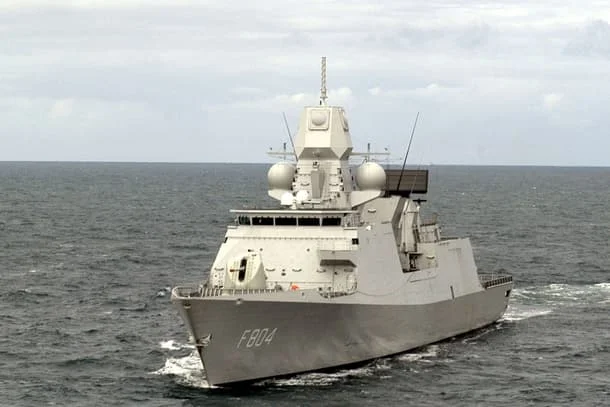
China's Eastern Theatre Command said it placed forces on "high alert" after tracking Dutch frigate HNLMS De Ruyter (F804) through the Taiwan Strait on June 5 as part of the Netherlands' five-month Operation Pacific Archer deployment.7 Taiwan also reported the first observed instance of a Chinese coast guard vessel and survey ship operating in coordination near the Taiwan-administered Pratas Islands.6 Separately, ISW's latest China data noted 217 ADIZ sorties logged for May and 39 Pratas coast guard incursions since February 2025.
Market/supply-chain impact. Taiwan's semiconductor sector — home to TSMC, which produces ~90% of the world's most advanced chips — sits squarely in any potential escalation calculus. The CNBC Iran-war analysis specifically noted that South Korea and Taiwan are receiving growth upgrades driven by AI chip demand, but simultaneously face the highest geopolitical risk premium in years.3 Continued PLA pressure boosts the case for supply-chain diversification in advanced packaging and logic, which benefits emerging fab sites in Japan, the US, and Europe.
5. US-China trade: USTR forced-labor tariffs near July 24; China and EU push back
The US Trade Representative's proposed 10–12.5% tariffs on roughly 60 trading partners — including China and the EU — under a forced-labor probe are moving toward a July 24 effective date, following the expiry of a temporary 10% tariff imposed after a Supreme Court ruling.8 USTR scheduled hearings for July 7. China's Ministry of Commerce accused Washington of "abusing export controls" to destabilize global semiconductor supply chains, while both Beijing and Brussels formally rejected the forced-labor allegations.9 A parallel bilateral tariff-reduction track between the US and China — covering an estimated $30bn in goods — remains on the table ahead of the deadline.
Market/supply-chain impact. If the July 24 date holds, a second wave of tariff escalation lands on importers of Chinese electronics, apparel, and materials at a moment when inflation is already running above target in the US and UK. Semiconductor equipment and advanced components are exposed on multiple flanks: tariff cost on inputs, tightened export-control enforcement, and China's accelerating push to build domestic alternatives following US chip restrictions.8 Procurement teams with China-heavy bills of materials have roughly 47 days to adjust sourcing or hedge FX exposure before the tariff window closes.
Sources: AP, Anadolu Agency, CNBC, ISW, The Independent, Swarajya, China Briefing, The Star
참고 출처
- 1AP — Iran missiles and drones intercepted over Bahrain and Kuwait
- 2Anadolu Agency — Morning Briefing June 7 2026
- 3CNBC — 100 days of the Iran war: impact on markets and the economy
- 4ISW — Russian Offensive Campaign Assessment, June 6 2026
- 5The Independent — Ukraine-Russia war live: Zelensky to meet Starmer
- 6AP — Taiwan reports first coordinated Chinese ship operation near Pratas
- 7Swarajya — China says military on high alert after tracking Dutch frigate
- 8China Briefing — US-China Relations in the Trump 2.0 Era
- 9The Star — China, EU slam proposed US tariffs
이 콘텐츠를 둘러싼 관점이나 맥락을 계속 보강해 보세요.