1/4

Daily Yoga & Mudra Guide
Pragya Verma
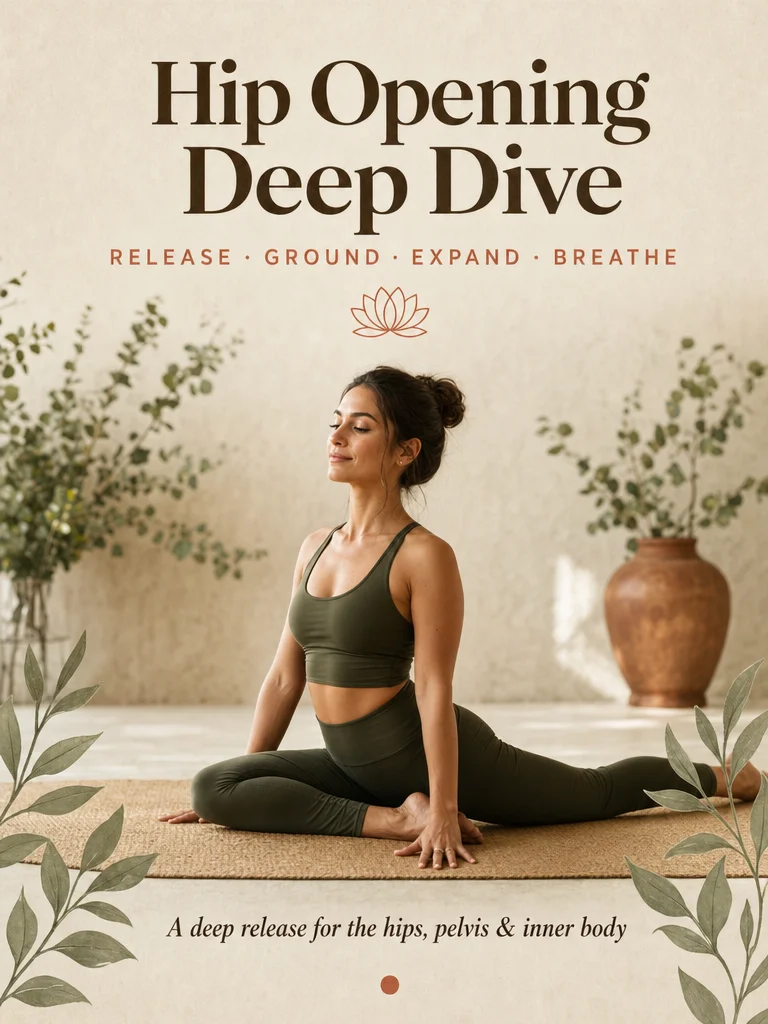
Hip Opening Deep Dive: 4 Poses + Apana Mudra
Release, ground and expand with this hip-focused deep dive — Low Lunge, Pigeon Pose, Butterfly, and Garland Pose, paired with Apana Mudra. Each pose includes anatomy muscle highlights, suitability notes, and Beginner/Moderate/Advanced guidance with props, breath work and duration cues.
2026. 6. 8. · 18:25
갤러리
Theme: Release · Ground · Expand · Breathe
The hips are often called the body's emotional storage room — they hold unprocessed tension, old grief, fear, and held-back energy. This deep-dive sequence uses four carefully chosen poses to work through every plane of hip mobility: hip flexion, external rotation, adduction, and deep squat. Paired with Apana Mudra, which channels downward-moving energy for release and grounding, this is a practice you can return to daily or whenever you feel stuck, tight, or disconnected from your lower body.
The Sequence
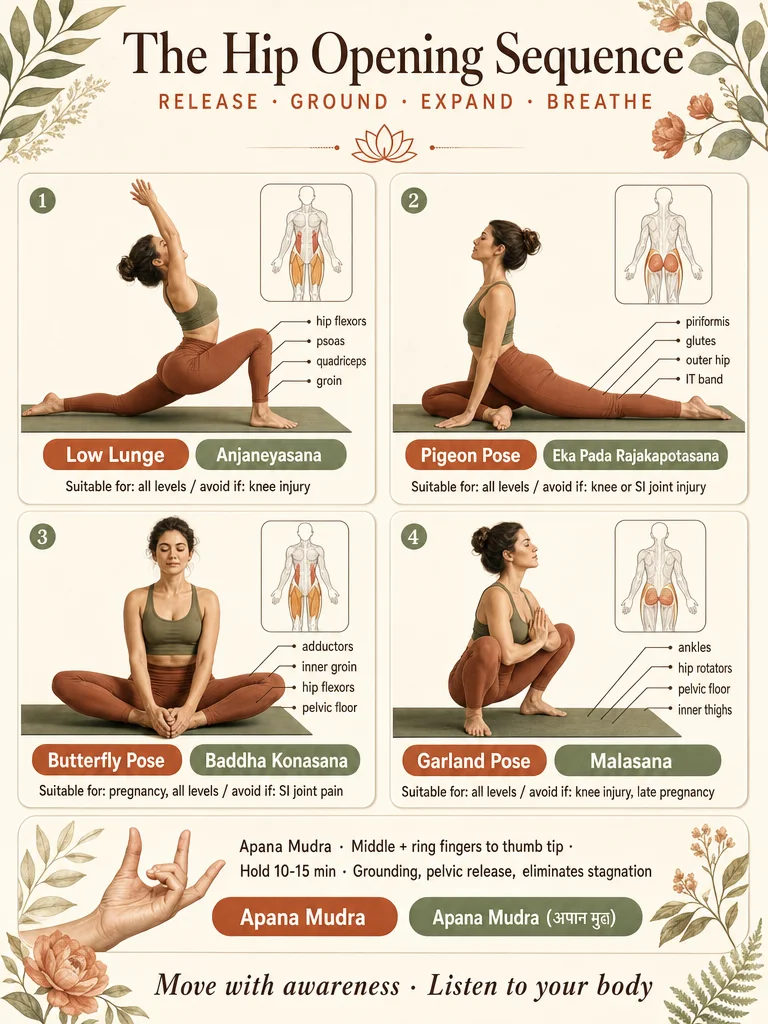
1. Anjaneyasana — Low Lunge
Body parts activated: Hip flexors, psoas major, quadriceps, groin, glutes, core stabilisers
Alignment cues:
- Step right foot forward between the hands; lower the left knee to the mat
- Stack the right knee directly over the ankle
- Sink the hips forward and down; feel the left hip flexor stretch open
- Raise the arms overhead, palms facing each other or interlaced
- Draw the tailbone down, lengthen through the crown
Benefits:
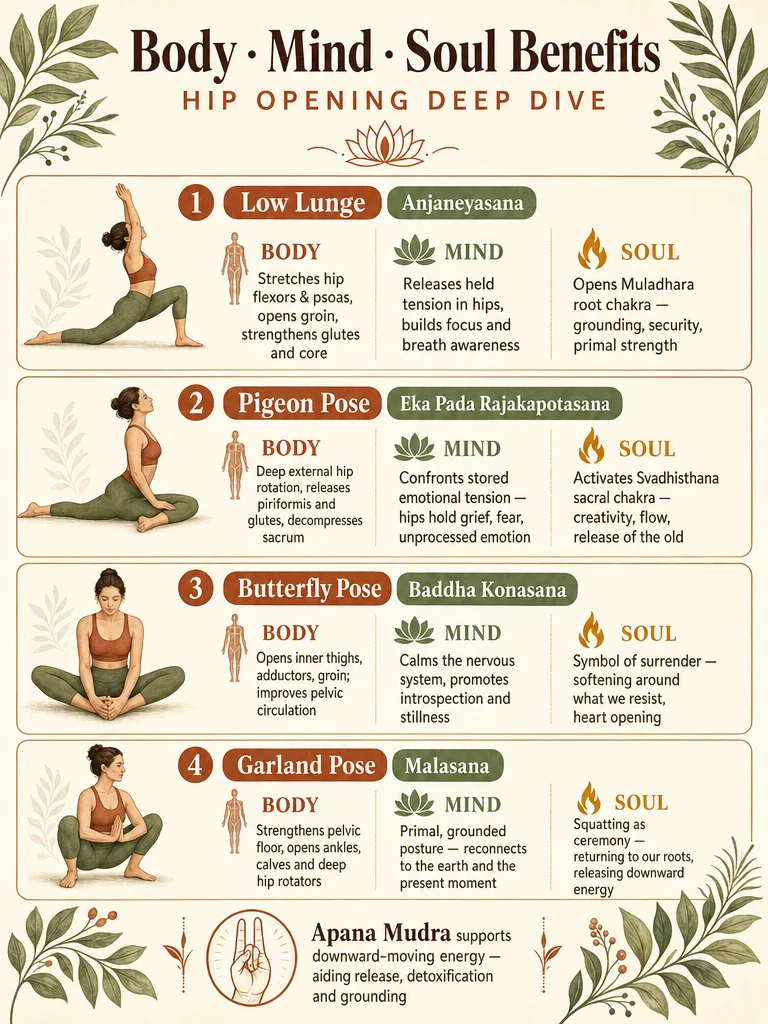
- Body: Stretches the hip flexors and psoas, counters the effects of prolonged sitting, strengthens glutes and core
- Mind: Builds focused breath awareness; releasing the psoas (the "muscle of the soul") calms a hyperactive nervous system
- Soul: Opens Muladhara (Root Chakra) — grounding, security, primal strength and safety
Contraindications: Avoid or modify with a knee injury (pad the back knee). Suitable for pregnancy with modifications (wider stance, shorter hold).
| Level | Instructions |
|---|---|
| Beginner | Back knee on mat with a folded blanket underneath; hands on front thigh; hold 5 breaths each side |
| Moderate | No props, arms raised overhead, add a side stretch; 8 breaths each side |
| Advanced | Add a quad stretch (reach back for the foot), or explore Lizard Pose variation; bind hands behind the back |
2. Eka Pada Rajakapotasana — Pigeon Pose
Body parts activated: Piriformis, external hip rotators, glutes, IT band, sacroiliac joint, hip flexors (back leg)
Alignment cues:
- From Downward Dog, bring the right shin forward toward the mat (or stack it parallel to the mat for deeper external rotation)
- Extend the left leg straight behind; keep the left hip square and pressing toward the mat
- Place both hands on the floor; stay upright to open the chest, or fold forward onto forearms or a bolster
- Breathe deeply into the outer right hip
Benefits:
- Body: Deep external hip rotation; releases the piriformis, glutes and IT band; decompresses the sacrum
- Mind: Confronts stored emotional tension — the hips hold fear, grief and unprocessed emotion; this pose creates space to let it move
- Soul: Activates Svadhisthana (Sacral Chakra) — creativity, fluidity, and the capacity to release what no longer serves
Contraindications: Avoid with acute knee pain or SI joint dysfunction. Use a bolster or block under the front hip if needed.
| Level | Instructions |
|---|---|
| Beginner | Bolster or folded blanket under the front hip; fold forward on support; 3 minutes each side |
| Moderate | No props; fold all the way forward, forehead to mat or a block; 5 minutes each side |
| Advanced | King Pigeon prep — reach back for the back foot with one or both hands; 8 minutes each side |
3. Baddha Konasana — Butterfly Pose
Body parts activated: Inner thigh adductors, groin, hip flexors, pelvic floor, lumbar spine
Alignment cues:
- Sit tall, bring the soles of the feet together and let the knees drop outward toward the floor
- Hold the feet or ankles; gently root the sitting bones down
- Maintain a long spine; avoid rounding the lower back
- For a forward fold: hinge at the hips with a flat back, letting gravity draw the knees lower
Benefits:
- Body: Opens the inner thighs and adductors; improves pelvic circulation; particularly beneficial during menstruation and pregnancy
- Mind: Calms the nervous system; the inward-facing knee position promotes introspection and stillness
- Soul: Symbol of surrender — softening around resistance; the butterfly shape evokes openness and transformation
Contraindications: Avoid if there is SI joint pain or groin injury. Supports pregnancy (safe for most stages).
| Level | Instructions |
|---|---|
| Beginner | Yoga blocks under each knee; gentle pressure from elbows on inner thighs; 2 minutes |
| Moderate | No blocks; forward fold with flat back; hold feet, 3 minutes |
| Advanced | Chin moves toward the floor in full forward fold; mula bandha (pelvic floor lift) engaged throughout |
4. Malasana — Garland Pose (Yogi Squat)
Body parts activated: Deep hip rotators, pelvic floor, inner thighs, ankles, calves, Achilles tendon
Alignment cues:
- Stand with feet slightly wider than hip-width; toes pointing outward at 45°
- Lower into a deep squat, keeping the heels on the floor if possible
- Bring hands into Anjali Mudra (prayer) at the chest; press elbows gently against inner knees to encourage hip opening
- Keep the spine long and chest lifted
Benefits:
- Body: Strengthens the pelvic floor; opens the ankles and calves; activates deep hip rotators rarely reached by other poses
- Mind: Primal, grounded posture — reconnects to the earth, the present moment, and the body's natural range
- Soul: Squatting as ceremony — a return to our roots, channelling Apana (downward-moving energy) toward the earth
Contraindications: Use a rolled blanket under the heels if they don't reach the floor. Avoid in late pregnancy; those with knee injuries should squat only to a comfortable depth.
| Level | Instructions |
|---|---|
| Beginner | Heels on folded blanket; hands on floor for balance; 8 breaths |
| Moderate | Heels fully on floor; add a twist to each side; 10 breaths |
| Advanced | Crow Pose prep from here — fingertips on floor, shift weight forward; or add deep spinal twist |
Today's Mudra: Apana Mudra
Finger placement: Touch the tips of the middle finger and ring finger to the tip of the thumb; extend the index finger and little finger.
Element: Earth + Space (Prithvi + Akasha)
Hold duration: 10–15 minutes during or after the sequence, or during seated meditation
Benefits:
- Physical: Stimulates elimination and detoxification; supports the lower digestive system, kidneys, and bladder; relieves pelvic congestion
- Energetic: Channels Apana Vayu — the downward-moving life force governing release, elimination, and grounding. Pairs perfectly with a hip-opening practice to support the physical releasing process
- Mental/Emotional: Encourages letting go — of tension, old stories, and stagnation. Creates a sense of inner spaciousness and calm
Who it is for: Safe for all levels. Particularly beneficial for those who feel energetically "stuck", experience digestive sluggishness, or want deeper grounding. Those with very low energy levels may prefer Prana Mudra instead to balance.
Practice Notes
- Duration: 30–45 minutes for the full sequence; 10–20 minutes for a focused hip release
- Props to prepare: 2 yoga blocks, 1 bolster or folded blankets, 1 yoga strap
- Best time: Late afternoon or evening — the body is naturally warmer and the hips more open; also excellent as a wind-down before sleep
- Breath: Emphasise the exhale in all poses — particularly Pigeon Pose and Butterfly. Let each exhale invite more release.
- A note on emotion: It is entirely normal to experience emotional release in deep hip openers, especially Pigeon Pose. If tears or a wave of feeling arises, breathe through it and remain present — this is the practice working.
댓글