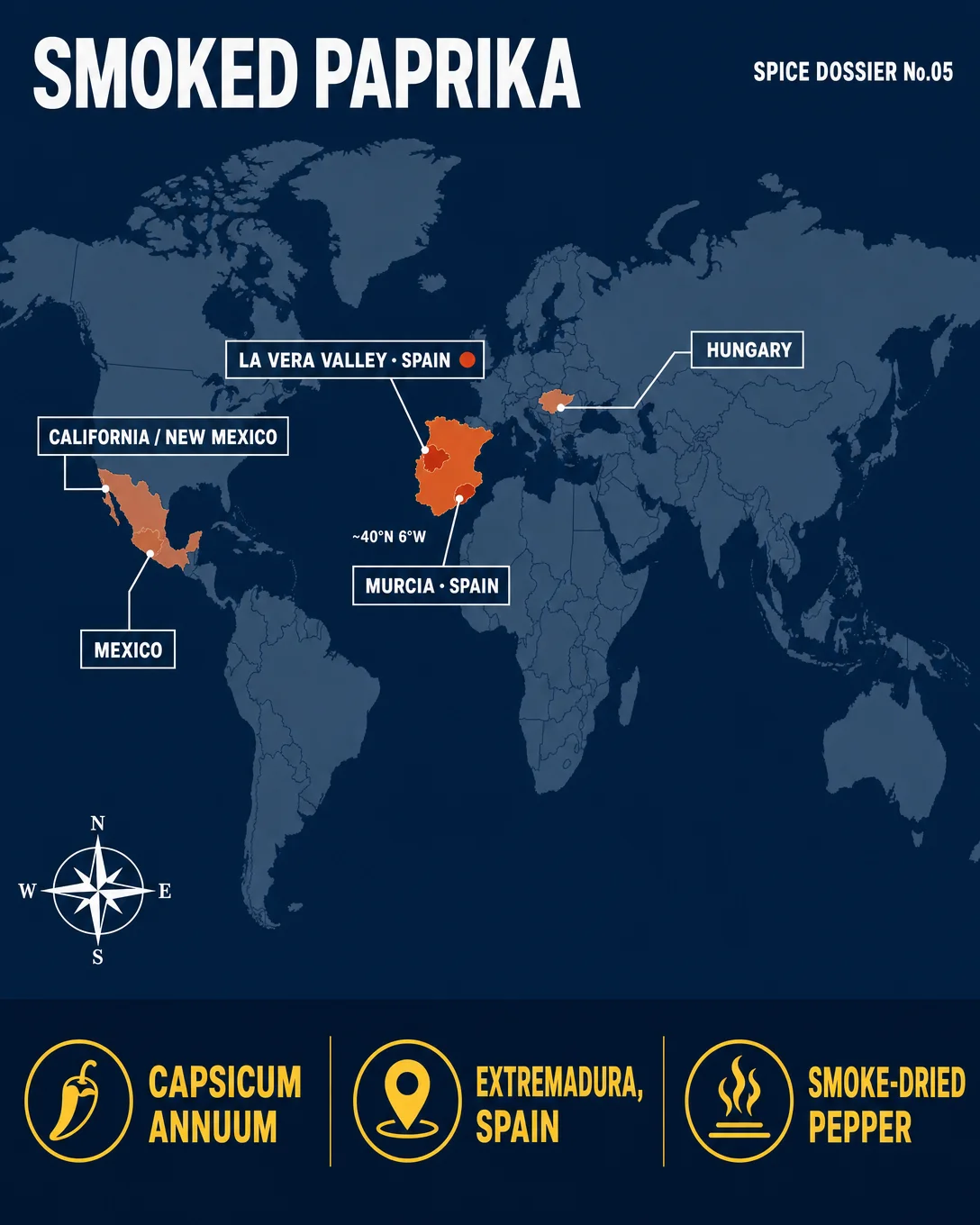

A valley in Extremadura, Spain. Oak smoke rising through the rafters. Capsicum pods turning from red to rust over weeks of slow heat. This is where Pimentón de la Vera begins — and there's nothing else quite like it.
Card A — Origin Map
Spain's La Vera valley sits at roughly 40°N, 6°W — hemmed in by the Sierra de Gredos mountains that trap the autumn moisture and hold the smoke. Murcia adds a second Spanish heartland. Hungary, California, New Mexico, and Mexico round out the global map, but La Vera still holds the EU's Protected Designation of Origin.
Card B — What You're Actually Buying
A whole dried Capsicum annuum pod. Ground into a deep brick-red powder. Hung and dried over smouldering holm-oak (encina) wood for up to two weeks. The smoke doesn't just flavour the pepper — it fundamentally changes its chemistry, creating those haunting, earthy bottom notes you can't fake with liquid smoke.
Card C — Five Centuries in Five Dates
1493 → Columbus returns, Capsicum first touches European soil.
~1550 → Yuste monastery monks start smoke-drying over oak.
1905 → First commercial mills open in La Vera.
2005 → EU grants PDO status to Pimentón de la Vera.
2010s → Global smoky food trend carries it into every supermarket on the planet.
Card D — The North American Dish
Pollo al Pimentón — a Spanish-American roast chicken whose mahogany, paprika-lacquered skin has become a fixture from home kitchens to BBQ culture. The spice isn't a garnish here; it forms the entire crust, delivering smoke, colour, and that slow earthy warmth all at once.
That La Vera valley PDO represents centuries of accumulated knowledge — the specific oak species, the drying duration, the hand-turning of the peppers. It's one of the few spices where geography is so baked into the flavour that a map isn't just context — it's the recipe.
#SpiceDossier #SmokedPaprika #PimentonDeLaVera #Spices #FoodHistory #SpanishCuisine #DataViz #InfoGraphic #FoodEducation #ChiliPepper
コメント
ログインするとコメントできます。