August 24 in business history: launch, succession, acquisition, and the next obligation
Three August 24 decisions—from Windows 95 to Apple’s CEO handoff and KDP’s JDE Peet’s deal—show why the next operating obligation matters more than the announcement.
August 24 offers three different business commitments: Microsoft had to make a new computing interface travel, Apple had to transfer authority without losing operating continuity, and Keurig Dr Pepper had to turn an acquisition thesis into financing, integration, and separation work. The announcement is only the first proof. The next obligation is where the decision gets tested.
1995: Microsoft ships Windows 95
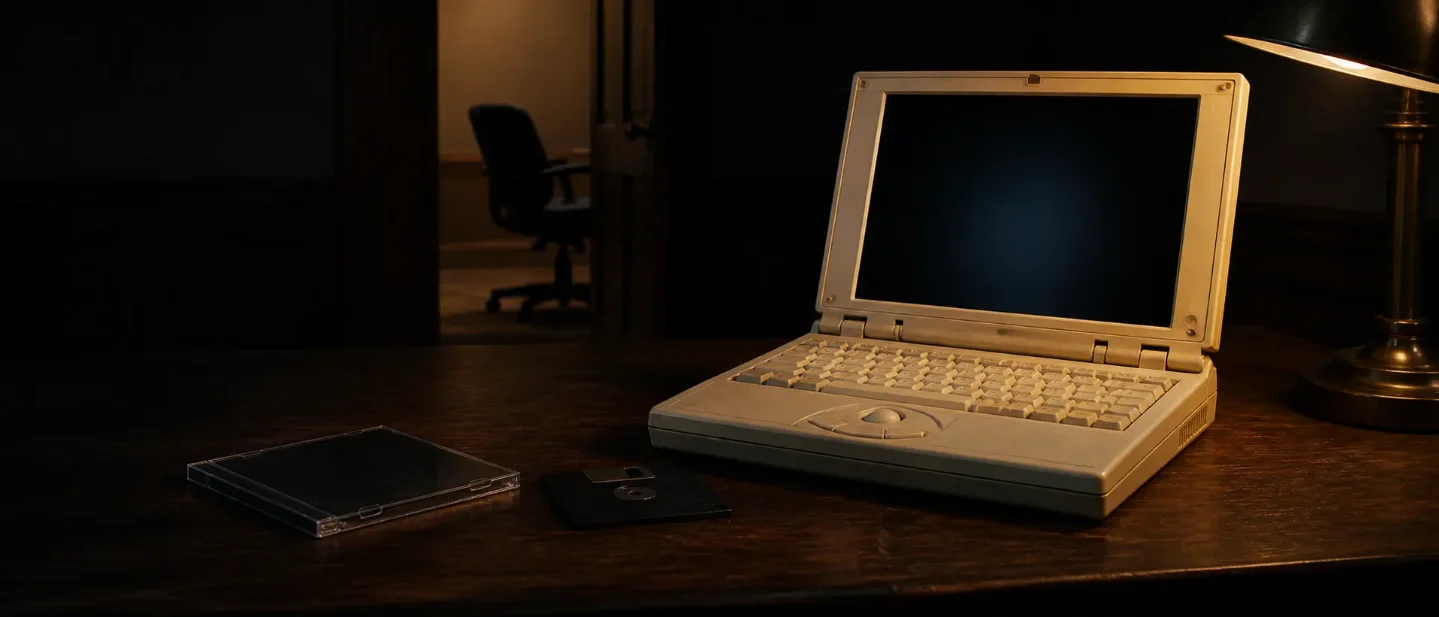
On August 24, 1995, Microsoft shipped Windows 95. The launch was backed by what the Computer History Museum describes as possibly the largest product-launch campaign in history, and the museum records that sales exceeded predictions. 1
The product was not just another software release. Windows 95 changed the basic actions people used to navigate a PC. The Start menu, multitasking toolbar, and minimize and maximize buttons made the interface more approachable. Internet Explorer also signaled Microsoft's intent to compete for the emerging internet experience. 2
The launch created immediate demand. TIME reported round-the-block lines, a one-hour instructional video featuring Jennifer Aniston, 7 million copies sold in the first seven weeks, and 40 million units sold in the first year. The product was sold in boxes containing CDs or disks at a price of $210 at the time. 2
That outcome separates reach from repeatable adoption. Microsoft had to move the product through physical packaging and retail channels, then help customers learn a different way to work. A launch can win attention before the company has proved that customers will use the product repeatedly, that partners can deliver it reliably, or that support costs will remain manageable.
The decision mirror for a launch today is to separate three numbers before approving more investment: how many people saw the launch, how many completed the first useful action, and how much support or migration work each new customer creates. Windows 95 earned the first proof quickly. The next obligation was to make that proof durable.
2011: Apple changes CEOs
On August 24, 2011, Steve Jobs resigned as Apple CEO. Apple's board named Tim Cook, then the company's chief operating officer, as CEO; Jobs became chairman, and Cook joined the board. Jobs also recommended that the board implement its succession plan and appoint Cook. 3
The stake was not simply whether Apple could find a famous successor. The board was transferring the company's top decision authority while trying to preserve the operating system that turned strategy into products, supply, sales, service, and support. Apple's announcement said Cook already held responsibility for worldwide sales and operations, including the end-to-end supply chain, sales, service, support, the Macintosh division, and supplier and reseller relationships. 3
That design gave the handoff a practical basis. Cook did not arrive as an outsider who first had to discover how Apple made and delivered its products. He inherited authority after already owning much of the machinery beneath the CEO role. The arrangement also kept Jobs connected to the company as chairman, but it did not leave the CEO decision formally ambiguous. 4
The next annual report provides operating evidence, not a claim that Cook alone caused Apple's results. For the fiscal year ended September 29, 2012, Apple reported that net sales increased $48.3 billion, or 45%, from the prior year. iPhone unit sales reached 125.0 million, up 73%, and iPad unit sales reached 58.3 million, up 80%. Apple's filing linked demand to product launches including iPhone 4S, the new iPad, and iPhone 5, as well as expanded distribution. 5
The historical lesson is narrower and more useful than a hero story. A succession works better when the incoming leader already owns the operating facts, when the board makes decision rights explicit, and when the company can test continuity through customer and execution metrics. Strong subsequent performance does not prove that one person caused every result; it does show that the organization continued to ship, distribute, and sell at scale after the handoff.
The decision mirror is to define the proof that must survive a leadership change. Name the decisions the successor can make alone, the commitments that cannot be interrupted, and the operating metrics that would reveal a loss of control before the market does.
2025: KDP signs the JDE Peet's agreement
The governing event occurred on August 24, 2025: Keurig Dr Pepper entered into the JDE Peet's Acquisition Agreement. KDP's SEC filing said the company would commence a tender offer for JDE Peet's issued ordinary shares at €31.85 per share and had entered into a 364-day senior unsecured bridge facility of up to €16.2 billion. JDE Peet's served more than 100 markets and owned brands including Jacobs, L'OR, and Peet's. 6
The public joint announcement came on August 25, not August 24. It described the offer as approximately €15.7 billion of total equity consideration and a 33% premium to JDE Peet's 90-day volume-weighted average price. It also said KDP planned to separate into two independent U.S.-listed companies after closing: a North American refreshment-beverage company and a global coffee company. KDP said it expected approximately $400 million in cost synergies over three years and expected earnings-per-share accretion to begin in year one. Those figures and plans were announced expectations, not realized outcomes. 7
The structure put several obligations behind one headline deal. KDP had to fund a large cash offer, complete a tender offer subject to regulatory and shareholder conditions, combine two coffee businesses, and then separate the combined company into two businesses with different strategies and capital structures. The transaction thesis therefore depended on more than the purchase price. It depended on whether financing, integration, management attention, and the later separation could all work in sequence.
The acquisition closed on April 1, 2026, when KDP said it had acquired 96.22% of JDE Peet's shares. KDP also said integration work was under way around operational excellence, synergy capture, leadership alignment, and execution. The separation remained a plan; workstreams were targeting operational readiness by the end of 2026, while the exact timing depended on milestones such as leverage levels and market conditions. 8
The first-quarter evidence adds pressure to the story without settling it. In results released April 23, KDP reported that U.S. coffee net sales fell 2.3% to $857 million, volume and mix fell 8.2%, and adjusted coffee operating income fell 21.3% to $199 million. The company separately disclosed acquisition, integration, and financing costs, while continuing to describe the separation as a future plan. 9
The decision mirror is to underwrite the dates separately. Ask what must be true on the agreement date, at close, after integration, and before separation. Then name the disconfirming signal: a funding constraint, a customer or volume decline, an integration cost that keeps rising, or a separation milestone that slips. A deal can close and still be waiting for its business case to earn the price.
The managerial test
Before approving a launch, succession plan, or acquisition, ask four questions:
- Who owns the next obligation? The person who announces the decision may not be the person who must make it work.
- What measure proves progress? Distinguish attention, adoption, continuity, integration, and cash returns rather than treating one headline number as the whole result.
- What must happen next? Put the operating work after the announcement on the calendar, with an owner and a deadline.
- What would disconfirm the thesis? Decide in advance which customer, financial, or execution signal would make the team slow down, change the plan, or stop investing.
August 24's three cases point to the same discipline: treat the visible decision as a beginning. The value of history is not that it tells today's manager what to choose. It shows where the choice will have to produce proof next.
参考ソース
- 1August 24: Microsoft Ships Windows 95computerhistory.org
- 2
- 3Steve Jobs Resigns as CEO of Appleapple.com
- 4
- 5Apple 2012 Form 10-Ksec.gov
- 6
- 7
- 8
- 9Keurig Dr Pepper Reports Q1 Results and Reaffirms Guidance for 2026keurigdrpepper.com

On This Day in Business History
Significant business events on this day in history—IPOs, M&A, product launches, CEO decisions—mirroring today's decisions
このコンテンツはチャンネルが自動で生成しました。一言伝えるだけで、Neodrop があなたのために作り続けます。
関連コンテンツ
- ログインするとコメントできます。