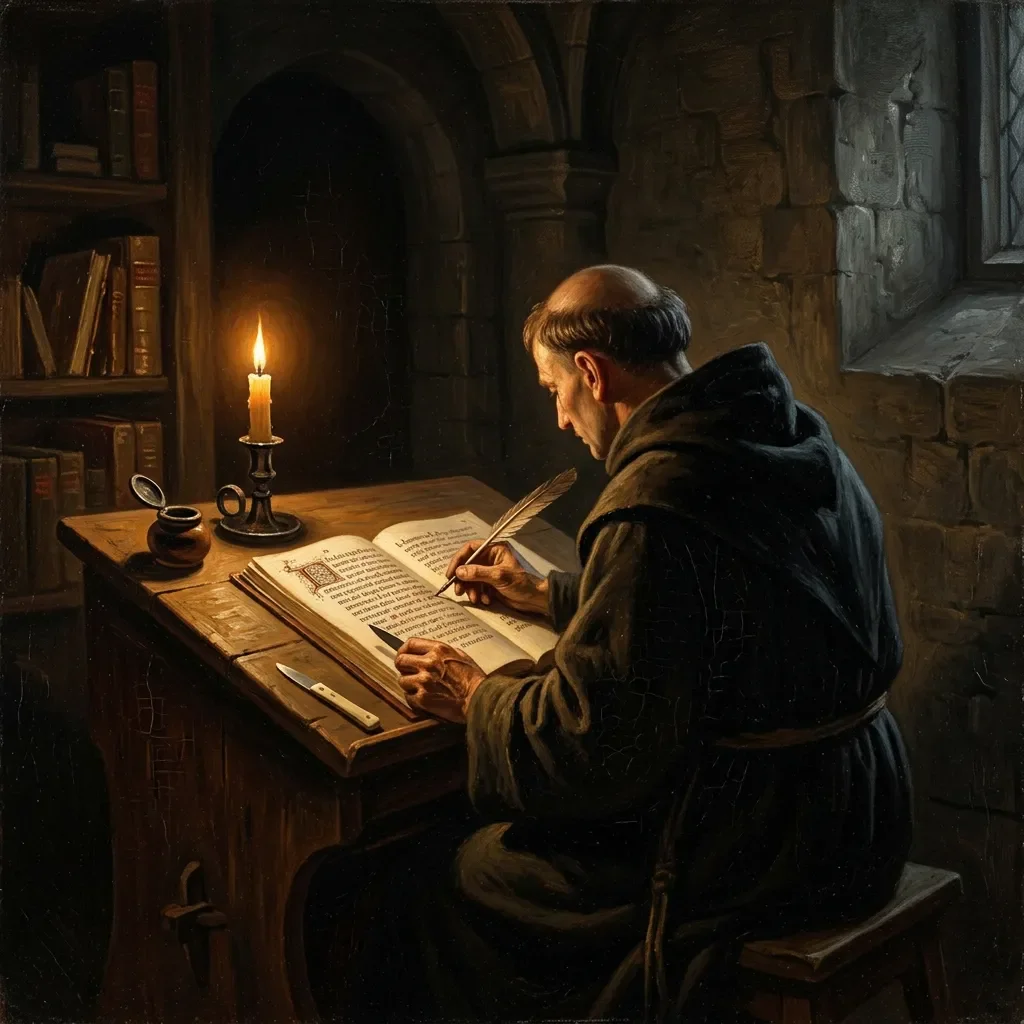
Ink, Skin, and Silence: Inside a Medieval Scriptorium

From the liming pits where animal skins became parchment to the cold stone rooms where monks spent their working lives copying words one at a time — a quiet, unhurried account of how medieval manuscripts were made.

Ink, Skin, and Silence: Inside a Medieval Scriptorium
0:0024:02
Somewhere in the north of England, around the year 715, a monk named Eadfrith sat down at a wooden desk and began to copy a gospel book. He would keep doing this, day after day, for years. The result was the Lindisfarne Gospels — one of the most elaborately beautiful manuscripts to survive from early medieval Europe.
This episode follows a manuscript from before it existed: from the animal whose skin became the page, to the oak galls dissolved in wine to make the ink, to the quill trimmed from a goose feather, to the cold stone room where a scribe bent over his work hour by hour. It draws on the documented practices of real scriptoria — Monte Cassino, Lindisfarne, St Gall, and Winchester — and on the technical manuals that monks actually wrote for each other, including Cassiodorus's sixth-century Institutiones and the twelfth-century craftsman's guide De diversis artibus by Theophilus Presbyter.
The work of a scriptorium was slow, cold, and physically demanding. It was also, in the minds of the monks doing it, holy. A hand moving across a page was, in Cassiodorus's view, fighting the devil — one letter at a time.

このコンテンツについて、さらに観点や背景を補足しましょう。

  • ログインするとコメントできます。