The format that saved cricket was approved by just four votes — and launched on Friday the 13th
On June 13, 2003, Twenty20 cricket — approved by just an 11-7 county vote and launched on Friday the 13th — survived its first night and went on to become a $6.2 billion global empire.

On the evening of June 13, 2003, five cricket matches kicked off simultaneously across England. The dates on that Friday were not accidental. The England and Wales Cricket Board (ECB) had deliberately scheduled the launch of a brand-new format — just 20 overs (120 deliveries) per side, designed to finish in roughly three hours — on the most superstition-laden date in the calendar.
The Daily Mail, not entirely convinced this was a good idea, put it plainly: "Whoever chose the traditionally unlucky Friday the 13th to launch this bold format had better hope there is nothing to the superstition. For cricket cannot afford to fail with a new tournament that the authorities hope will tonight attract a whole new audience and revitalise the game. At just 20 overs apiece, this breakneck, knock-out game is all done in three hours. What on earth would W. G. Grace have thought?" 1
The Daily Mail was asking the question as a gentle dig. Twenty-three years later, the answer turns out to be: something utterly unrecognizable.
Cricket's midlife crisis
By the late 1990s, English county cricket had a problem it was struggling to admit. Attendances at Championship matches had been sliding for years. Sponsorship was drying up. Meanwhile, the Premier League had colonized mainstream sports attention — Saturday afternoons, midweek evenings, back pages — leaving cricket looking like something your grandfather watched in a deck chair.
The ECB first floated a drastically shortened format in 1998. The counties and the Marylebone Cricket Club (MCC) — cricket's historic law-making body — shot it down. The idea sat in a drawer for three more years.
Then came the £200,000 market research study. What it found was uncomfortable: two-thirds of the British population claimed to either hate cricket or have no interest in it. Half of those surveyed said they might tolerate a shorter match on a weekday evening. Notably, the research also found that county cricket grounds had "the intimidating feel of private members' clubs" — not exactly a ringing invitation to a family night out. 2
ECB marketing manager Stuart Robertson, along with colleagues Kevin Allton, Joe Bruce, and Richard Kaye, drew up a proposal: 20 overs per side, match done by 8:15pm, aimed squarely at the post-work crowd and families. The format had a precedent of sorts — New Zealand cricketer Martin Crowe had piloted something called "Cricket Max" domestically from 1996 to 2003, including the no-ball free hit rule that T20 later made its own. 3
The county chairmen voted. The margin was 11 to 7. The MCC abstained. Four votes separated cricket's biggest structural reinvention from a second rejection. 2
The rules, reinvented
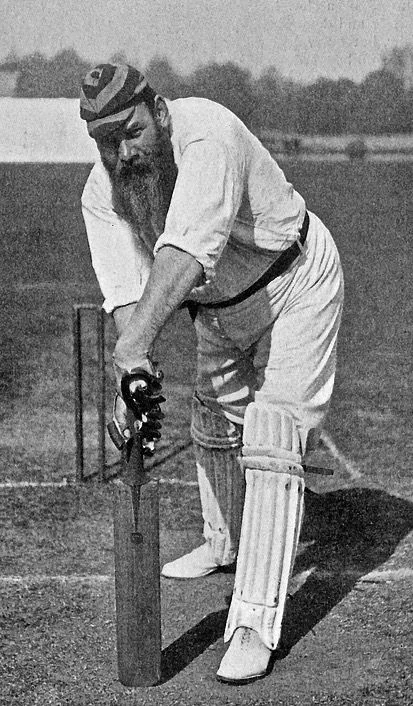
On paper, Twenty20 was cricket by subtraction: cut each innings from a 50-over or 5-day affair to a 20-over sprint lasting 75 minutes. But the detail in the rule sheet was where the personality lived. 4
Only two fielders were permitted outside the inner circle during the first six overs — the powerplay — which meant batsmen faced a partly open field right from ball one. Bowlers were capped at 4 overs each (one-fifth of the innings, which is a team's turn to bat). A batsman who took more than 90 seconds to arrive at the crease after a wicket fell was penalized five runs. A no-ball triggered a free hit on the following delivery — the batsman could only be dismissed by a run-out — a rule innovation later adopted across all limited-overs cricket globally. Fail to complete your 20 overs in time? Six penalty runs, automatically.
Off-field: live bands, karaoke machines, replay screens, BBQ zones. The entertainment experience was designed to start before the first ball and keep going between overs. This was not a cricket match dressed up. It was an evening at a stadium that happened to include cricket.
Tim Lamb, the ECB's chief executive, described it at the time as "an innovative tournament that will market county cricket in an exciting new way to young people all over the country." 5
Hampshire 153, Sussex 148/7
The televised match that opened it all was Hampshire Hawks vs Sussex Sharks at The Rose Bowl in Southampton, live on Sky Sports, starting at approximately 5:30pm. Sussex captain Chris Adams won the toss and chose to field. Then Hampshire's openers, James Hamblin and Derek Kenway, went immediately on the attack. 6
The two put on 66 runs in the first 7 overs. Vic Isaacs, reporting for Cricinfo, wrote that Hampshire "came out of the blocks firing." 6 Hamblin finished with 34 off 27 balls, Kenway with 35 off 26, and Hampshire's total of 153 all out in 19.4 overs included a notable supporting cameo from the legendary Pakistan paceman Wasim Akram, who chipped in 2 for 22 with the ball. 7
Sussex's reply was tense throughout. Tim Ambrose anchored the chase with an unbeaten 54 off 39 balls (7 fours, 1 six), but wickets — dismissals — fell around him. Going into the final over, Sussex needed 10 runs — perfectly achievable, with Ambrose still at the crease. Hampshire's Ed Giddins bowled it. "With the crowd on the edge of their seats," Isaacs described, Ambrose played-and-missed the first delivery, took a single with the second, then lost Mushtaq to the third ball — and Sussex ran out of road. Hampshire won by 5 runs. James Hamblin was named Man of the Match. 6
That same evening, four other matches took place — Surrey vs Middlesex at The Oval, Durham vs Nottinghamshire, Somerset vs Warwickshire, Worcestershire vs Gloucestershire — all on the same Friday the 13th. 2
One other noteworthy footnote from that opening night: Warwickshire's Nick Knight struck the first-ever T20 six on June 13 — just narrowly ahead of Mike Hussey, Wasim Akram, Kevin Pietersen, and Owais Shah. 8
The format worked immediately
All 18 first-class counties participated in that inaugural 2003 Twenty20 Cup, split into three regional groups of six. Finals Day was held on July 19 at Trent Bridge — not Lord's, because Westminster City Council had rejected the concert license application for the London ground. 2
Surrey Lions beat Warwickshire Bears in the final by 9 wickets, with James Ormond taking 4 for 11 and Ali Brown scoring 55 not out off 34 balls. Gloucestershire's Ian Harvey had already made history earlier in the tournament by hitting the first-ever T20 century — 100 not out. 2
The following year produced the proof skeptics needed. On July 15, 2004, a Middlesex vs Surrey T20 match at Lord's drew 27,509 spectators — the highest county attendance at Lord's since 1953 (excluding one-day cup finals). 3 That number, at a ground that had been watching crowds thin for years, silenced most of the remaining doubters.
From English counties to a global empire
The format spread faster than anyone at the ECB had modeled. Pakistan launched its own domestic T20 competition in 2004. Australia drew a sellout crowd of 20,000 for its first T20 match in 2005. The ICC formalized a World Twenty20 in 2007, held in South Africa.
India won that first edition in dramatic fashion — 157/5 vs Pakistan's 152 all out, won by 5 runs in Johannesburg. The decision of which team had come second in that final mattered more than anyone anticipated at the time: the defeat lit a fire under the Board of Control for Cricket in India (BCCI), which had been resisting franchise cricket for years.
In September 2007, the BCCI created the Indian Premier League. The franchise auction in January 2008 raised $723.6 million for eight city teams — against an original floor price of $400 million. The first season launched on April 18, 2008. 10
The IPL's financial growth from that point is essentially a straight line upward. Forbes valued the average IPL franchise at $1.04 billion in 2022, up 24% year-on-year — a growth rate faster than the NFL (10%) and the NBA (16%). Mumbai Indians alone was valued at $1.3 billion. 11 When the IPL's 2023–2027 media rights came up for auction, Viacom18 paid $3.05 billion for digital streaming rights and Disney's Star India paid $3.02 billion for television — a combined $6.2 billion, more than double the previous cycle's $2.5 billion, and a per-match value of approximately $13.4 million, second only to the NFL. 12
What W.G. Grace would have thought
So, back to the Daily Mail's question.
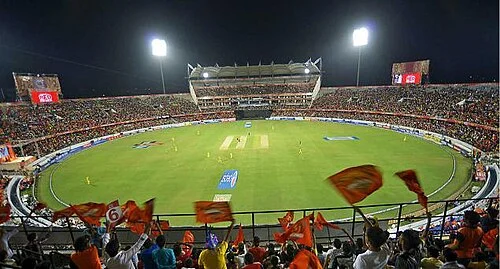
W.G. Grace — the bearded Victorian giant who defined English cricket from the 1860s through the 1900s — played a game where a Test match lasted five days, subtlety was currency, and a scoring rate above three runs an over was considered reckless. A player who blocked 400 balls in a session was doing his job correctly.
T20 did not adjust that game. It replaced its assumptions wholesale. Batsmen now learn 360-degree stroke play, hitting against the spin behind the wicket-keeper on purpose. Bowlers have developed an entire vocabulary of deception — slower balls, knuckle balls, off-cutter bouncers, wide yorkers — to survive 20 overs of all-out attack. Fielders take catches while leaning over boundary ropes and stepping back in bounds in a single motion. The IPL has been called the most physically demanding fielding environment in any sport. The T20 World Cup is now scheduled for the 2028 Los Angeles Olympics. 3
Not everyone is celebrating. Ricky Ponting — one of the greatest batsmen to play the game — has been blunt about what he sees as a collateral cost: "Under-17s and Under-19s are playing T20 games in national championships, and at the detriment of two-day games. Good state players these days are averaging 35; if you were averaging 35 when I was playing your dad would go and buy you a basketball or a footy and tell you to play that." 3 Whether T20 has enriched or diluted the long-form game remains a live argument in every cricket-playing nation.
What isn't in dispute is what happened from a single 11-7 vote on a specific Friday evening in Southampton, starting at 5:30pm. Hampshire beat Sussex by 5 runs. A new format survived its first night. The Daily Mail's concern about bad luck on Friday the 13th turned out, in the end, to be entirely misplaced.
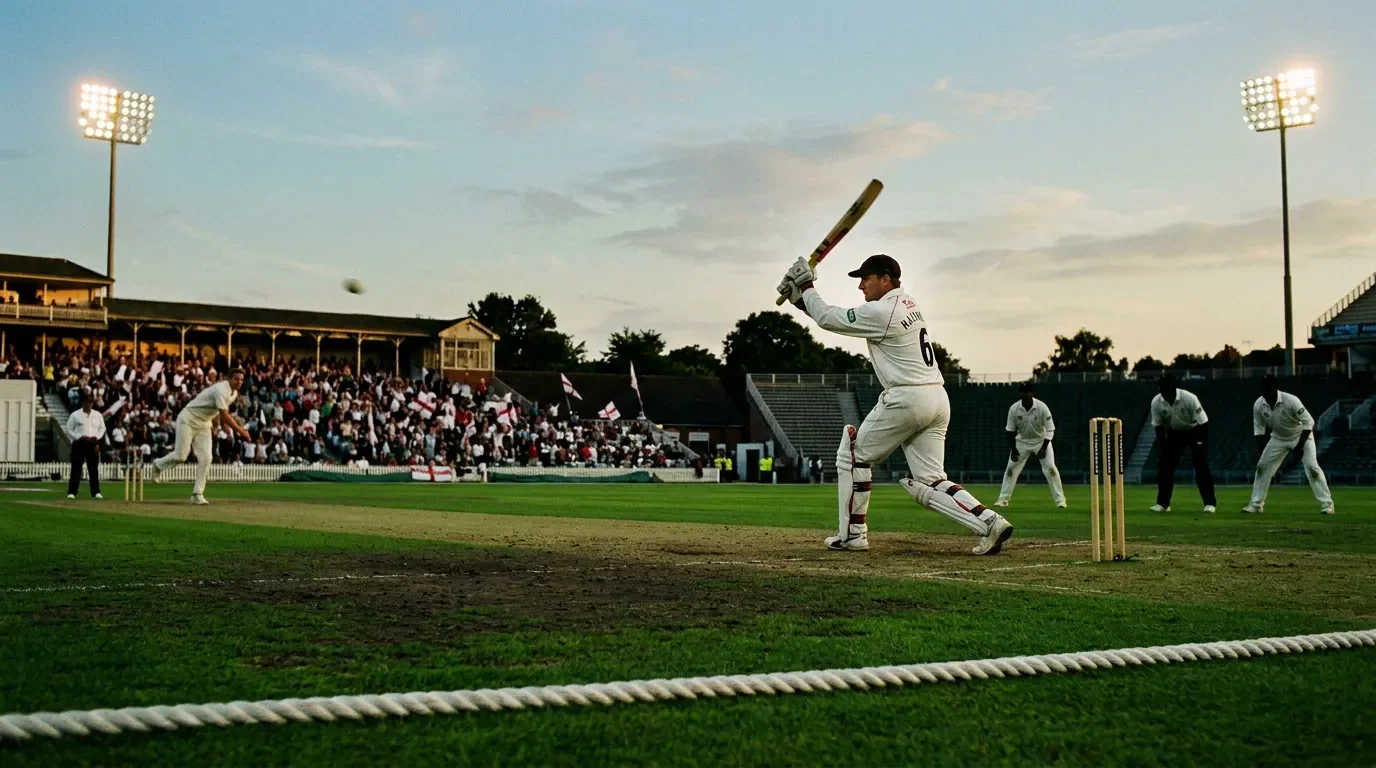
Cover image generated with AI (depiction of an English county cricket ground evening match, circa 2003).
参考ソース
- 1OnThisDay: Cricket's T20 is Born. Howzat!?
- 2Wikipedia: 2003 Twenty20 Cup
- 3Wikipedia: Twenty20
- 4ESPNcricinfo: Twenty20 Cup rules
- 5ESPNcricinfo: npower to sponsor Twenty20 Cup (ECB Media Release)
- 6ESPNcricinfo: Hawks open with Twenty20 victory, Hamblin Man of the Match
- 7Wisden CricInfo: Hampshire v Sussex Scorecard, 13 Jun 2003
- 8BBC Sport: T20 Blast — All you need to know about the first 15 years
- 9Wikipedia: Men's T20 World Cup
- 10Wikipedia: Indian Premier League
- 11Forbes: Indian Premier League Valuations 2022
- 12BBC News: IPL media rights sold in record-breaking $6bn deal
このコンテンツについて、さらに観点や背景を補足しましょう。