Oracle Q4 FY2026: Beat earnings, dropped 10% on a $70B capex problem — and the S&P 500 noticed

Oracle Q4 FY2026: Beat earnings, dropped 10% on a $70B capex problem — and the S&P 500 noticed

Oracle beat consensus on EPS and revenue for Q4 FY2026, but the stock fell 10% after disclosing $70 billion in planned capital expenditures for FY2027 and negative free cash flow. We break down the numbers, the Wall Street reaction, and what Oracle's AI infrastructure bet — colliding with a 3-year inflation high — signals for the S&P 500.
S&P 500 Earnings & Event Tracker
2026/6/12 · 5:27
購読 2 件 · コンテンツ 2 件

リサーチノート

Oracle Q4 FY2026: Beat on earnings, dropped 10% on a $70B CapEx problem — and the S&P 500 noticed

Oracle reported the best quarter in its history on June 10. Adjusted EPS of $2.03 beat the $1.96 consensus. Revenue hit $19.18 billion, up 21% year over year, topping the $19.10 billion estimate. Cloud infrastructure revenue grew 93% in a single quarter. Remaining performance obligations — essentially contracted future revenue — surged from $95 billion to $638 billion, a 363% jump, driven by massive AI contracts including a cohort of customers with individual deals worth at least $8 billion each.1
The stock fell 10% after hours.
That number — $638 billion in RPO — is what spooked investors. To fulfill those contracts, Oracle told analysts it will spend roughly $70 billion in net capital expenditures in fiscal 2027 (which started June 1), up from $55.7 billion in FY2026. The company already raised $43 billion in debt and $5 billion in equity over the past year. It now plans an additional $40 billion in financing, including a new $20 billion share sale.2 Investors heard "unlimited demand" and "unlimited spending" in the same breath and sold first.
The selloff landed on an already bruised market. Earlier that morning, the Bureau of Labor Statistics reported May CPI up 4.2% year over year — the highest reading since April 2023 — with gasoline up 40.5% and energy overall up 23.5% over the year.3 The Dow Jones Industrial Average dropped 950 points. The S&P 500 closed down 1.6% at 7,266.99.4 The Nasdaq fell 2%. Oracle earnings did not cause the market selloff — but it didn't help.

The numbers

統計カードを読み込んでいます…
MetricReportedEstimatePrior Year
Adjusted EPS$2.03$1.96$1.63
GAAP EPS$1.45$1.19
Total revenue$19.18B$19.10B$15.85B
Cloud total revenue$9.91B$9.97B (SA est.)$6.73B
Cloud infrastructure$5.80B$3.00B
Software (licenses + support)$6.82B$6.93B (SA est.)$6.96B
Operating cash flow (FY2026)$32.0B$20.8B
Free cash flow (FY2026)-$23.7B+$9.8B
Capital expenditures (FY2026)$55.7B~$50B$21.3B
The headline beats were real but uneven. Cloud total revenue of $9.91 billion missed the Street Account consensus of $9.97 billion — a minor shortfall that Citi characterized as margin pressure dragging the FY2027 earnings outlook below initial hopes.6 Software revenue at $6.82 billion fell 2% year over year, a slow bleed that Oracle expects AI-driven cloud migration to reverse.
Free cash flow going deeply negative is the core concern. Oracle generated $32 billion in operating cash flow for the full fiscal year — the highest in its history — but capital expenditures of $55.7 billion turned that into -$23.7 billion in free cash flow. For context, that swing from approximately +$10 billion to -$24 billion happened in a single year, driven entirely by data center construction.1
The company defends the spending by pointing to demand: "Most of the RPO increase in both Q3 and Q4 were large scale AI contracts where the customer prepaid Oracle for the purchase of GPUs, or the customer bought and supplied the GPUs to Oracle," it said in the release. Bank of America analysts noted that over 50% of the $638 billion RPO figure comes from a single customer — OpenAI.1 Oracle CEO Clay Magouyrk said the company plans to bring almost one gigawatt of computing capacity online in the current quarter — roughly equal to everything it deployed in all of FY2026.

The market reaction

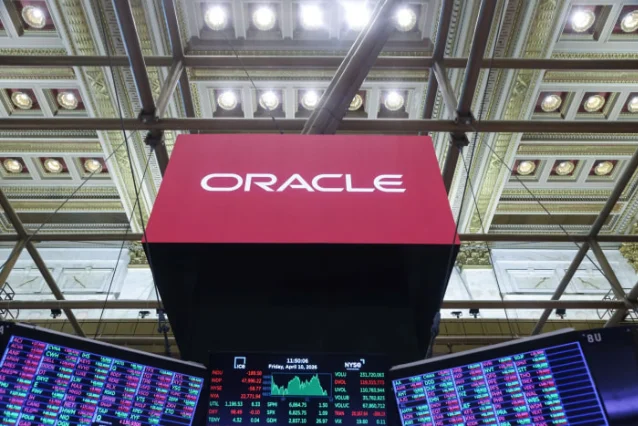
Oracle ORCL signage on the floor of the New York Stock Exchange
Oracle's NYSE listing after the June 10 earnings report 2
Oracle shares fell roughly 10% in after-hours trading on June 10 and extended those losses into June 11, with ORCL down about 8.5% at one point during Thursday's session.2 At ORCL's Wednesday closing price around $198, the stock was already up only 3% for the year — well behind the S&P 500's 6% gain and the XLK technology ETF's larger advance.6
The selloff surprised most analysts, who viewed the underlying quarter as clean. Guggenheim saw "no apparently good reason" for the drop and told clients to buy "aggressively," maintaining its $400 price target — implying nearly 100% upside from the Wednesday close.6 Bernstein raised its target modestly, to $325 from $319, noting that execution toward FY2030 targets is intact; the firm said investor concern centers on the FY2027 capital raise, not on the quarter itself.
Citi called the quarter mixed — top-line beat, cloud growth solid, but gross margin pressure weighing on the FY2027 profit outlook. It reiterated Buy with a $330 target.
Piper Sandler struck the most cautious tone, saying Oracle "will remain debated" but expressing confidence the FY2027 revenue target of $90 billion is achievable. The $90 billion figure, which Oracle maintained, compares to FY2026 revenue of roughly $67.4 billion — implying about 34% growth in a single year.5
The market dynamic here parallels what happened to Nvidia after its own record quarter in May: strong results, sell-the-news reaction, followed by analyst downgrades-to-hold replaced by aggressive buy calls. The difference is that Nvidia's free cash flow stayed positive. Oracle's doesn't, and that changes the risk profile for investors with a shorter horizon.

What made the S&P 500 drop — CPI or Oracle?

Neither alone. The 1.6% decline on June 10 was a compound event.
The May CPI print, released at 8:30 a.m. ET, came in hot on the headline: 4.2% year over year, up from 3.8% in April, driven almost entirely by energy.3 Gasoline rose 40.5% over the past 12 months. Energy as a whole is up 23.5%. Core CPI (ex-food and energy) was considerably calmer at 2.9% year over year, essentially in line with April's 2.8% — it rose just 0.2% for the month.
チャートを読み込んでいます…
3
The key read is that inflation is energy-driven, not broad-based. Core services inflation — shelter +3.4%, medical care +2.6% — is decelerating. That distinction matters for the Fed: energy is volatile and largely outside monetary policy's reach. A Fed that focuses on core PCE (which prints later this month) will likely see the May CPI as noisy, not a signal to accelerate rate hikes beyond what is already priced.
That said, the 4.2% headline is a psychological number. Coming a week after a stronger-than-expected jobs report (+172,000 jobs in May vs. an 80,000 consensus), it reinforces the narrative that the economy is running hot enough to justify the interest rate environment.4 Treasury yields rose on the data. When Oracle's after-hours drop hit, it compounded the selling across tech and the broader index.
The geopolitical layer added another dimension: on June 11, Trump canceled planned Iran strikes, saying a peace deal could come within days.7 Crude oil, which had spiked on conflict risk, pulled back sharply — over 3% on the day. The S&P 500 rebounded more than 1.7% on June 11 as both the Iran de-escalation and the view that Oracle's selloff was overdone took hold.8

Index-level implications

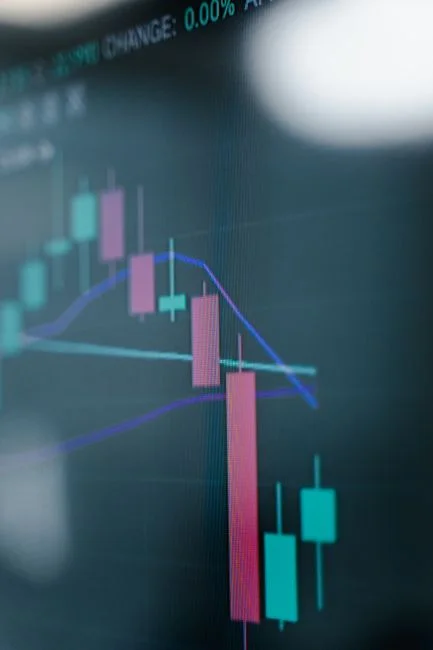
Stock market trading data on a monitor screen
Stock market data — Tima Miroshnichenko / Pexels
Oracle's weight and what a 10% drop means. Oracle is a mid-to-large S&P 500 constituent — not in the top 10 by weight like Apple or Microsoft, but meaningful enough that a 10% drop contributed a few basis points to the index's 1.6% decline. The more significant channel is sentiment: when a company with $638 billion in AI contracts drops 10% on earnings, it signals that the AI trade now has a new phase of scrutiny — profitability and capex efficiency, not just topline growth.
The capex cycle is the narrative. Oracle's $55.7 billion in capital expenditures for FY2026 puts it in the same tier as the hyperscalers. Nvidia's H100/H200 demand cycle required Oracle to invest at a pace the company was not capitalized to fund from operations. The resulting negative free cash flow is not unique to Oracle — but Oracle's debt load ($43 billion raised in a single fiscal year) makes it more visible. If AI demand holds, this resolves over 2-3 years as RPO converts to revenue. If demand softens, Oracle would carry enormous fixed costs with declining revenue. That is the bet the market is pricing.
CPI and the rate path. The 4.2% headline complicates the narrative for equity valuations but doesn't change the structural picture materially — yet. Core PCE, the Fed's preferred measure, has been running near 2.5-2.7% and May's core CPI at 2.9% YoY is not alarming. The risk is if the June CPI (due July 14) shows energy prices staying elevated or core re-accelerating. At that point, the rate-cut story that supported the S&P 500's rally from the April lows would need reassessment.
The Q1 FY2027 guide is actually strong. Oracle guided Q1 (June-August 2026) revenue growth of 27-29% and adjusted EPS of $1.72-$1.76, both above consensus. The near-term earnings story is intact. The debate is about 2027 and beyond: whether $70 billion in annual capex is sustainable, whether the $638 billion RPO converts at full value, and whether Oracle's cloud margins can hold under the depreciation weight of building the world's third-largest AI infrastructure.
For S&P 500 investors, the Oracle quarter is a calibration point rather than a red flag. AI infrastructure spending continues at an extraordinary pace. Demand is real — the RPO figures are contracted, not speculative. The question for the index is whether this capex cycle turns into earnings growth across the AI supply chain fast enough to justify current multiples, especially with inflation complicating the discount rate.
The next hard data points: Oracle cloud revenue in Q1 FY2027 (due September), core PCE for May (due June 27), and the FOMC meeting on July 29-30.

このコンテンツについて、さらに観点や背景を補足しましょう。

  • ログインするとコメントできます。